New York City Mayor Bill de Blasio has announced plans to introduce a bill banning the construction of glass skyscrapers, forming part of efforts to reduce citywide greenhouse emissions by 30 percent. Unveiling the plans, he described all-glass façade skyscrapers as “incredibly inefficient” because of heat loss, according to NBC New York.
https://www.archdaily.com/915656/new-york-citys-mayor-is-planning-to-ban-new-glass-skyscrapersNiall Patrick Walsh
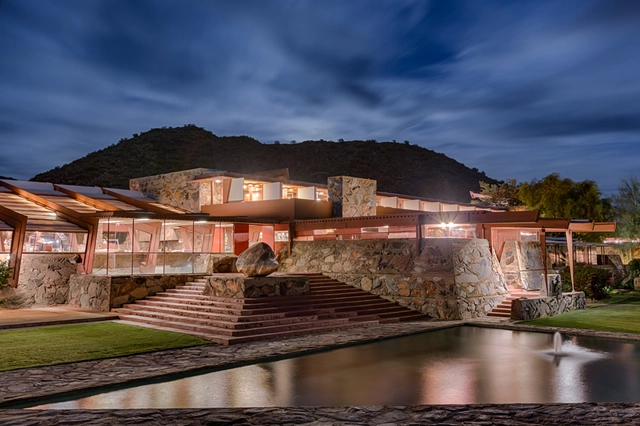
The Frank Lloyd Wright Foundation has used Earth Day, April 22nd, 2019, to launch a new initiative focused on educating the public about how sustainable practices are used in the conservation of National Historic Landmark sites, including the renowned architect’s Taliesin (Wisconsin) and Taliesin West (Arizona) residences. Taking place throughout the year, the Foundation’s efforts will aim to show how these practices can serve as examples for other facets of society.
https://www.archdaily.com/915558/frank-lloyd-wright-foundation-will-use-taliesin-west-to-educate-about-living-with-natureNiall Patrick Walsh
As the world recognizes Earth Day 2019, the public discourse is increasingly dominated by citizen action across the world manifesting a widespread fear and frustration at a perceived lack of action by governments and officials to confront the issue forthrightly. From the Extinction Rebellion protests that have gripped London, to school student strikes across 125 countries, global cities are increasingly finding themselves on the front line of a battle to limit the effects of global warming.
https://www.archdaily.com/915510/how-three-major-us-cities-are-preparing-for-climate-changeNiall Patrick Walsh
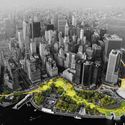
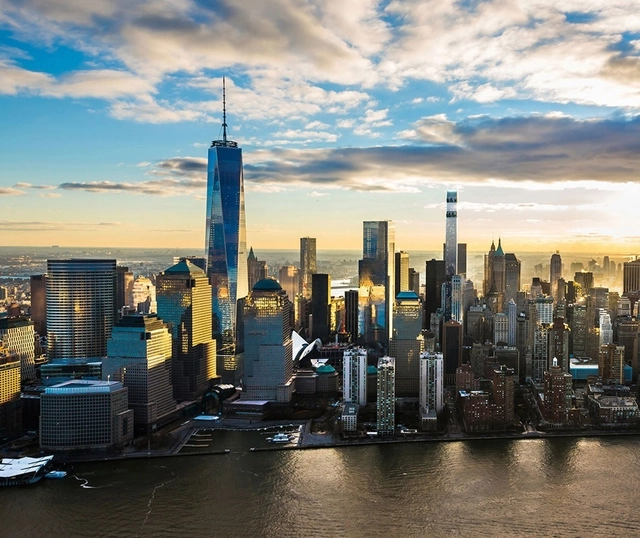
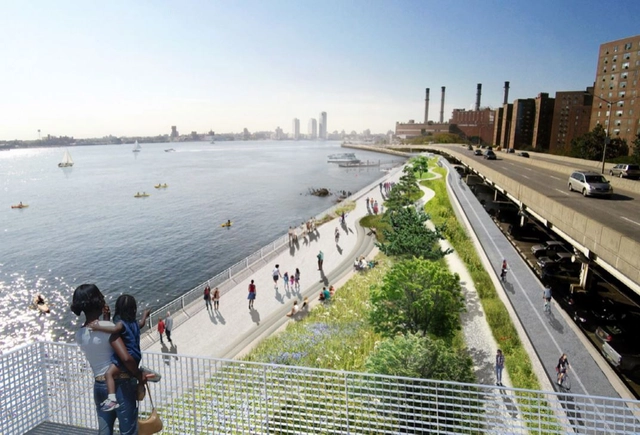
New York City Mayor Bill de Blasio has announced plans for a $10 billion coastal resilience project, designed to protect Lower Manhattan from flooding. In an editorial piece in New York Magazine, Mayor de Blasio outlined the ambitious plans to alter the waterfront of the Financial District, constructing a major infrastructural element up to 500 feet into the East River.
Part of the Lower Manhattan Climate Resilience Study, and designed in collaboration with climate scientists and local offices, the Mayor describes the scheme as “one of the most complex environmental and engineering challenges [New York] has ever undertaken and will, literally, alter the shape of the island of Manhattan.” The multi-billion dollar project is designed to protect Manhattan through the year 2100.
https://www.archdaily.com/913743/new-york-city-to-combat-rising-sea-levels-by-extending-the-manhattan-coastlineNiall Patrick Walsh
Back in 2008, ArchDaily embarked on a challenging mission: to provide inspiration, knowledge, and tools to the architects tasked with designing cities. In an effort to further align our strategy with these challenges, we recently introduced monthly themes in order to dig deeper into topics we find relevant in today’s architectural discourse. From architects who don't design to reframing climate change as a global issue, we are celebrating our 11th birthday by asking 11 editors and curators to choose ArchDaily's most inspiring articles.
About the Jose Marti Park Redesign RFQ: Through this RFQ, Van Alen and the City of Miami seek to commission a multi-disciplinary design team for the project that offers the full range of professional urban design, landscape architecture, and engineering services and includes at least one Florida-licensed firm. The design team will work with Van Alen Institute and the City to ensure that this treasured public space serves the present and future needs of the Little Havana community. Innovative and thoughtful design should allow the park to minimize flood impacts to the neighborhood, adapt to sea level rise over time, and enhance waterfront access for residents. Ideally this project results in a solution that can be replicated in other places experiencing similar conditions.
It is, once again, the time of year where we look towards the future to define the goals and approaches that we will take for our careers throughout the upcoming year. To help the millions of architects who visit ArchDaily every day from all over the world, we compiled a list of the most popular ideas of 2018, which will continue to be developed and consolidated throughout 2019.
Over 130 million users discovered new references, materials, and tools in 2018 alone, infusing their practice of architecture with the means to improve the quality of life for our cities and built spaces. As users demonstrated certain affinities and/or demonstrated greater interest in particular topics, these emerged as trends.
https://www.archdaily.com/910525/the-trends-that-will-influence-architecture-in-2019Pola Mora
The latest UN special report on climate change, released in October 2018, was bleak - perhaps unsurprisingly after a year of recording breaking temperatures, wildfires, floods, and storms. The report, released by the UN Intergovernmental Panel on Climate Change (IPCC), reiterated the magnitude of climate change’s global impact, but shed new light on the problem’s depth and urgency. Climate change is a catastrophe for the world as we know it and will transform it into something that we don’t. And we have just 12 years to prevent it.
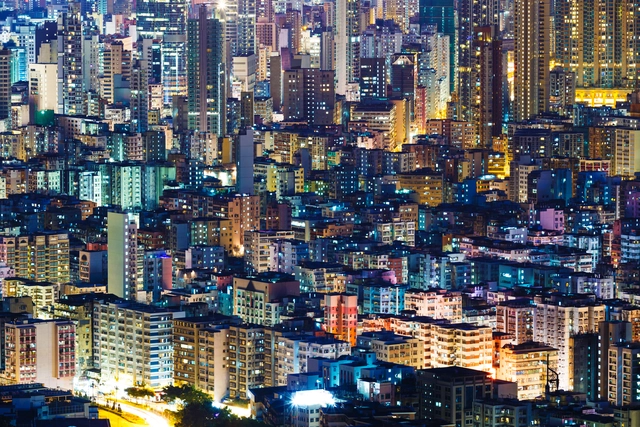
Hong Kong is one of the most densely populated cities on earth. Image via Shutterstock
Cities are hotter than surrounding areas because of a climate phenomena that is known as the urban heat island (UHI). While scientists have studied this effect for decades, new information has recently come to light that points to the way we arrange our cities as a key contributor to raised temperatures. The results could help city planners build our future cities better.
https://www.archdaily.com/909476/how-urban-planning-can-help-us-cope-with-climate-changeTaahirah Martin
For thousands of years, concrete has been a foundation of the built environment: the most widely used man-made material on the planet. However, as architects, and the public alike, sharpen their focus on the causes and effects of climate change, the environmental damage caused by cement has become a subject of unease.
As exhibited in a recent in-depth article by Lucy Rodgers for BBC News, cement is the source of about 8% of global CO2 emissions. The piece was written off the back of the UN’s COP24 climate change conference in Poland and found that in order to meet the requirements of the 2015 Paris Climate Agreement, annual cement emissions must fall by 16% by 2030.
https://www.archdaily.com/909187/the-environmental-cost-of-cement-and-what-to-do-about-itNiall Patrick Walsh
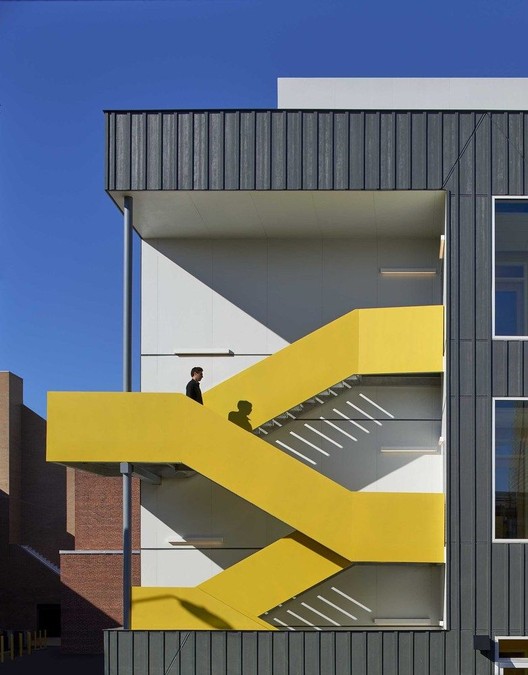
Mundo Verde at Cook Campus / Studio Twenty Seven Architecture
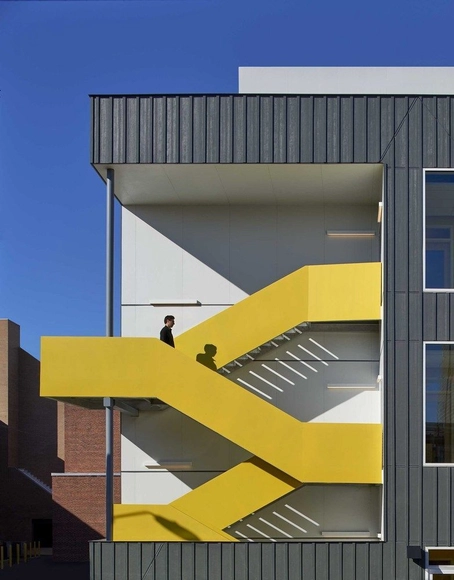
A misconception often surfaces in design circles that architectural beauty and evidence-based environmental performance are mutually exclusive. To address this, the American Institute of Architects (AIA) Committee on the Environment (COTE) is releasing a new tool that can assist architecture firms in designing high-performance energy-efficient buildings.
Despite the federal stance on paramount environmental issues, the AIA upholds and advocates for the responsibility of architects to mitigate against the effects of climate change. Aware that the construction industry consumes nearly 40% of the energy supply nationwide, the AIA COTE® Top Ten Toolkit presents a series of strategies to promote sustainability without compromising the design.
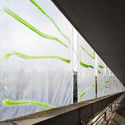
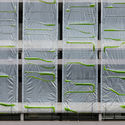
London-based architectural and urban design firm ecoLogicStudio has unveiled a large-scale “urban curtain” designed to fight climate change. “Photo.Synth.Etica” was developed in collaboration with Climate-KIC, the most prominent climate innovation initiative from the European Union, to “accelerate solutions to global climate change.”
Photo.Synth.Etica, currently on display at the Printworks Building in Ireland’s Dublin Castle, captures and stores one kilogram of CO2 per day, the equivalent to that of 20 large trees.
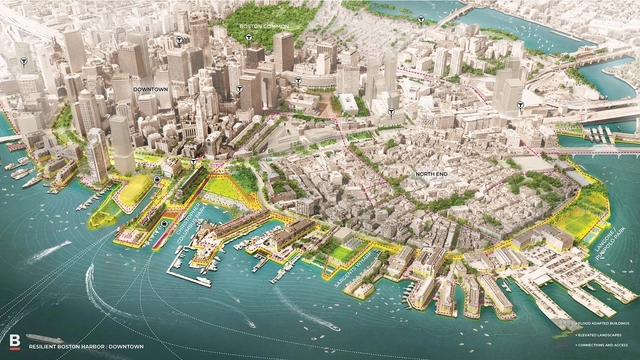
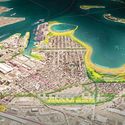
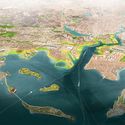
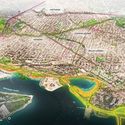
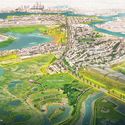
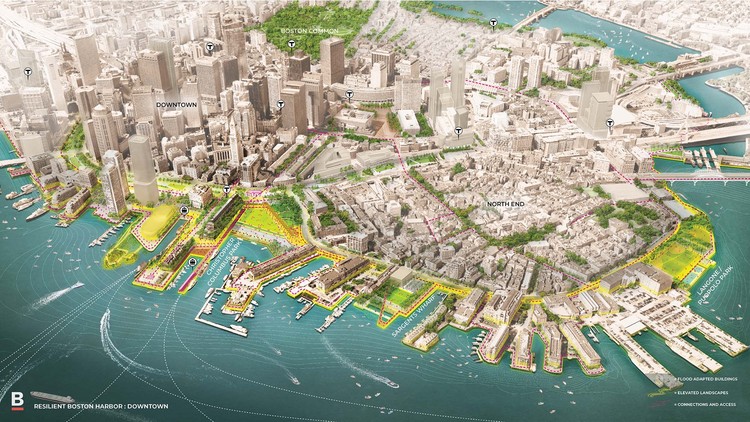
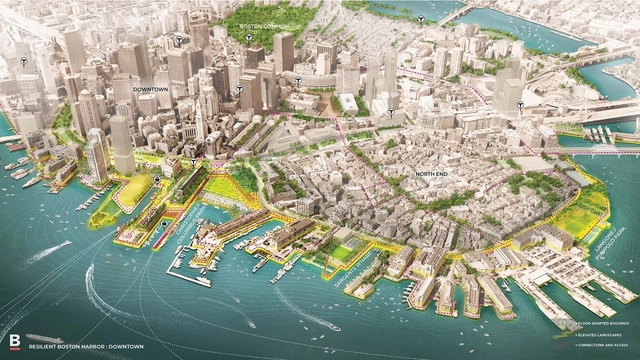
The Mayor of Boston and SCAPE Landscape Architecture have collaborated on a vision to protect the city’s 47 miles of shoreline against climate change. The scheme lays out strategies which will “increase access and open space along the waterfront while better protecting the city during a major flooding event.”
The vision forms part of the Imagine Boston 2030 initiative while using the city’s Climate Ready Boston 2070 flood maps, targeting infrastructure along Boston’s most vulnerable flood pathways.
https://www.archdaily.com/904610/boston-publishes-radical-scape-plans-to-combat-climate-changeNiall Patrick Walsh
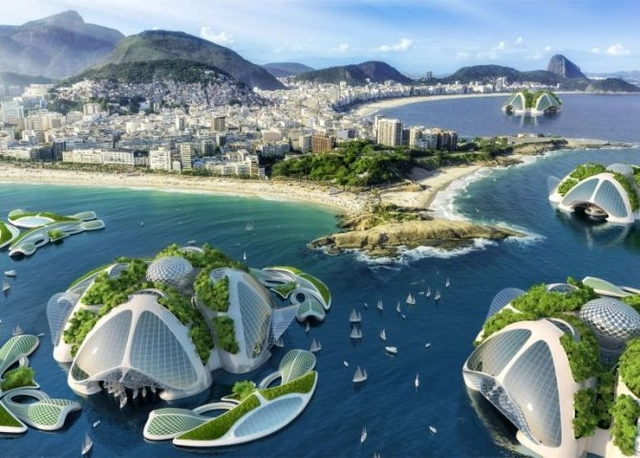
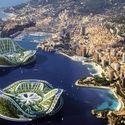
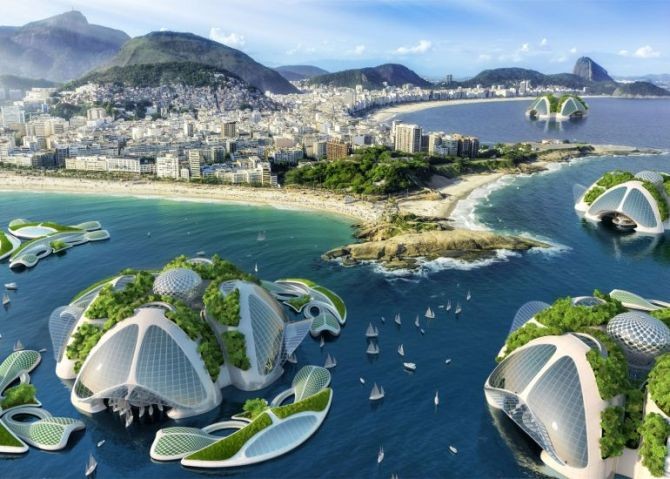
Belgian architect Vincent Callebaut proposes recycling ocean trash as building materials for his futuristic floating cities.
Migration as a result of changing climate has already begun. And while this poses enormous challenges for governments - particularly at a global moment that seems indisposed towards immigration and immigrants - there is also the concern that heritage will inevitably be lost. In places like Scotland, rising sea levels have put ancient sites at risk; the same is the case in island nations in the Pacific. As mounting environmental risks become more inevitable day by day, cities around the world are turning to more resilient forms of architecture and urban planning to combat both short term shocks and longer term pressures as a means of ensuring their future.
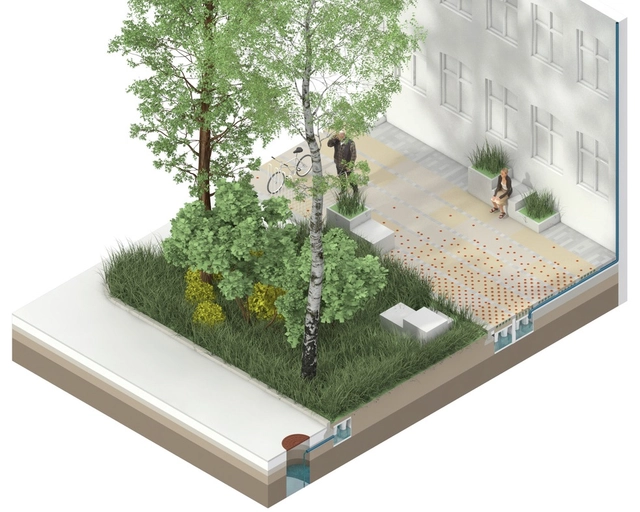
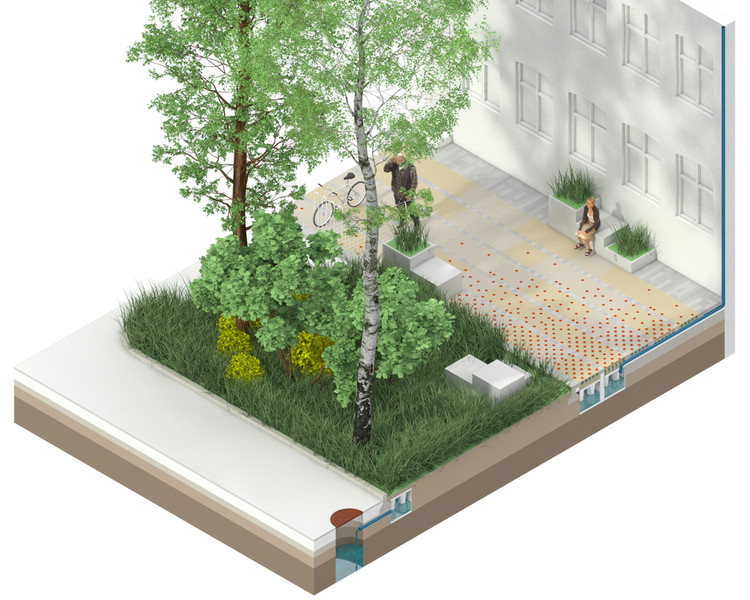
The Climate Tile is a pilot project designed to catch and redirect 30% of the projected extra rainwater coming due to climate change. Created by THIRD NATURE with IBF and ACO Nordic, the project will be inaugurated on a 50m pavement stretch at Nørrebro in Copenhagen. The first sidewalk was created as an innovative climate project that utilizes the Climate Tile to create a beautiful and adaptable cityscape. Aimed at densely populated cities, the tile handles water through a technical system that treats water as a valuable resource.
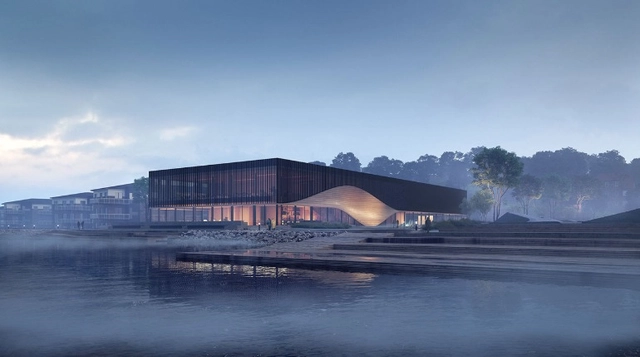
3XN, working in collaboration with Orbicon and SLA, have won a competition for the design of a new climatorium in Lemvig, Denmark. The scheme seeks to form a modern interpretation of the area’s nature and fishing culture, while also influenced by local climate conditions.
The predominantly timber scheme balances a dual role of a public amenity serving science and the arts and a working laboratory geared towards the mitigation of climate change.
https://www.archdaily.com/901126/3xns-waterfront-climatorium-pays-tribute-to-the-fishing-culture-of-lemvig-denmarkNiall Patrick Walsh
The Berlin AA Visiting School, an arm of Architectural Association School of Architecture, is still accepting registrations for their cutting edge lecture- and seminar series from the 6th till the 17th of August 2018. Participants will learn to adapt their design perspectives from anthropocentric to human-animal co-perspective, design and construct “The Insectarium”, and actively participate in Berlin’s political, ecological, and planning scene through talks and interactive sessions with an amazing roster of speakers ranging from legendary Raoul Bunschoten, Francois Roche, UNStudio, ARUP, Emanuele Coccia and Ricardo de Ostos!
The immersive multisensory experience will enhance the practical applications of helping wildlife



.jpg?1548884950&format=webp&width=640&height=580)