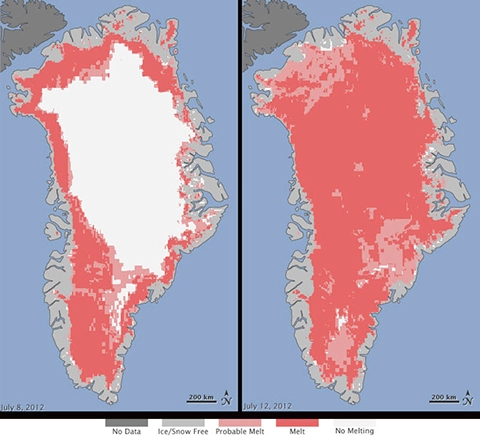
Former New York mayor Michael Bloomberg has been appointed to be the U.N. special envoy for cities and climate change. Upon receiving the news, Bloomberg tweeted: "Cities are taking measurable action to reduce emissions, emerging as leaders in the battle against climate change... I look forward to working with cities around the world and the UN to accelerate progress [to combat global warming].” You can read more here on USNews.
The challenges of sea-level rise cross boundaries of all sorts: geographic, political, social, economic. Proposed mitigation strategies will also necessarily shift and overlap. Here, we present five case studies from across the globe that offer intriguing ways—some operational, some philosophical—to address the threats associated with climate change. Drawing on a research initiative focused on vulnerabilities in Boston, a team at Sasaki Associates developed these additional design-strategy icons to illustrate the layered approaches. They are adaptable, the better to meet the unique demands of each coastal community.
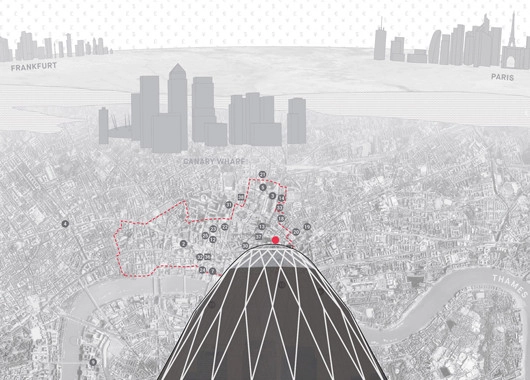
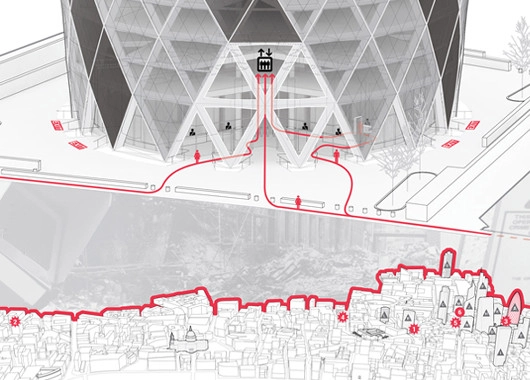
This four part series (originally published on Aggregate’s website) examines the Gherkin, the London office tower designed by Foster + Partners, showing how the urban icon engaged and leveraged perceptions of risk. In part one, author Jonathan Massey introduced the concept of "risk design” to describe how the Gherkin’s design managed the risks posed by climate change, terrorism, and globalization. In parts two and three, Massey examined the building’s treatment of risks associated with climate change and terrorism. In this final installment, Massey concludes by addressing the building’s engagement with risks posed to the City of London by globalization.
Unlike New York and other cities in which zoning codes entitle landowners to some kinds of development “as of right,” the City of London regulates property development through case-by-case review by planning officers, who judge how well the proposed construction conforms to City-wide plans and guidelines regarding factors such as building height, development density, access to transit, and impact on views and the visual character of the area. In order to develop the Gherkin, the property owners and Swiss Re had to secure planning consent from the City Corporation through its chief planning officer, Peter Wynne Rees. The review and permitting process that culminated in the granting of planning consent in August 2000 spanned the planning office as well as the market, the courts, and the press. Rees brokered a multilateral negotiation so intensive that we could almost say the building was designed by bureaucracy. Part of that negotiation entailed imagining and staging risk: climate risk, terrorism risk, and, especially, the financial risks associated with globalization.
This four part series (originally published on Aggregate’s website) examines the Gherkin, the London office tower designed by Foster + Partners, showing how the urban icon engaged and leveraged perceptions of risk. In part one, author Jonathan Massey introduced the concept of "risk design” to describe how the Gherkin’s design managed the risks posed by climate change, terrorism, and globalization. In part two, Massey examined the building’s treatment of climate risk. In part three, below, he explains how the Gherkin redesigned the risk imaginary associated with terrorism.
Mornings the Zamboni scrubs the plaza. Moving across the pavement in parallel lines connected by tight turns, the sweeper cleans the stone of cigarette butts and spilled food and beer left the night before by the underwriters and bankers who patronize the bar and shops in the building’s perimeter arcade as well as the adjacent restaurant that in fair weather sets up outdoor tables and chairs.
By pulling away from its irregular property lines, the tower achieves almost perfect formal autonomy from its context. The gap between the circular tower base and trapezoidal site boundaries forms a privately owned public space, a civic and commercial amenity in this densely built part of the City.
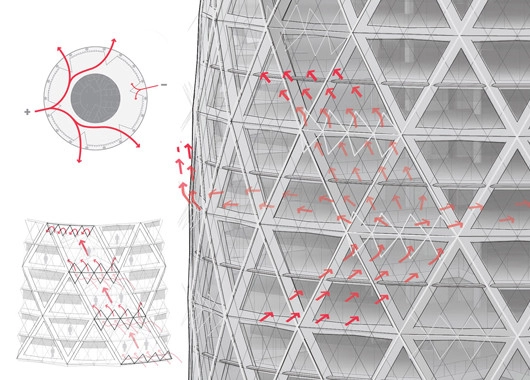
This four part series (originally published on Aggregate’s website) examines The Gherkin, the London office tower designed by Foster + Partners, showing how the urban icon engaged and leveraged perceptions of risk. In part one, author Jonathan Massey introduced the concept of "risk design” to describe how the Gherkin’s design managed the risks posed by climate change, terrorism, and globalization. In part two, below, Massey examines the Gherkin’s enclosure and ventilation systems in detail to explain how the building negotiated climate risk.
In a poster promoting London’s bid to host the Olympic Games, the Gherkin supported gymnast Ben Brown as he vaulted over the building’s conical peak. The image associated British athleticism and architecture as complementary manifestations of daring and skill, enlisting the Gherkin as evidence that London possessed the expertise and panache to handle the risk involved in hosting an Olympic Games.
But a poster created three years later offered a very different image. Created by activists from the Camp for Climate Action to publicize a mass protest at Heathrow Airport against the environmental degradation caused by air travel, this poster shows the Gherkin affording only precarious footing to a giant polar bear that swats at passing jets as its claws grasp at the slight relief offered by spiraling mullions and fins.
How does design change the nature and distribution of risk? In this, the first of four installments examining the Gherkin, the London office tower and urban icon designed by Foster + Partners, author Jonathan Massey introduces the concept of “risk design.” The series, originally published on Aggregate's website, explains how the Gherkin leveraged perceptions of risk to generate profits, promote economic growth, and raise the currency of design expertise.
Designing Risk
Back the Bid. Leap for London. Make Britain Proud. Emblazoned across photomontages of oversized athletes jumping over, diving off, and shooting for architectural landmarks old and new, these slogans appeared in 2004 on posters encouraging Londoners to support the city’s bid to host the 2012 Olympic Games. Featured twice in the series of six posters—along with Buckingham Palace, Nelson’s Column, the Tower Bridge, the London Eye, and the Thames Barrier—was 30 St Mary Axe, the office tower known colloquially as the Gherkin for its resemblance to a pickle, or as the Swiss Re building, after the Zurich-based reinsurance company that commissioned the building and remains its major tenant.
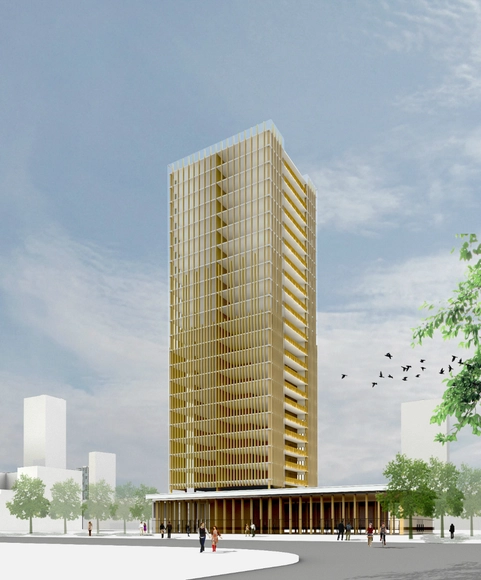
Michael Green is calling for a drastic paradigm shift in the way we build. Forget steel, straw, concrete and shipping containers; use wood to erect urban skyscrapers. In a 240 page report - complete with diagrams, plans, renders and even typical wooden curtain wall details - Green outlines a new way of designing and constructing tall buildings using mass timber, all the while addressing common misconceptions of fire safety, structure, sustainability, cost and climate concerns.
https://www.archdaily.com/443626/the-case-for-tall-wood-buildingsJose Luis Gabriel Cruz
This past Monday, President Obama made climate change and sustainable energy the focal points of his Inaugural Address when he declared that choosing to ignore these key environmental issues "would betray our children and future generations." This is the first time in the last few months that the President has taken a firm stand for the future of our Earth, a direct result of Super Storm Sandy and a smart choice to reveal controversial policies only after re-election. Although Monday morning was not the time to outline a specific political strategy, President Obama made it very clear that this time around, denial of scientific judgment and Congressional opposition would not be reasons for failure to act.
While this is a sentiment easier said than done and there is doubtlessly a long and difficult road ahead for the President and his administration. The White House has revealed that it plans to focus on what it can do to capitalize on natural gas production as an alternative to coal, on "reducing emissions from power plants, [increasing] the efficiency of home appliances and [on having] the federal government itself produce less carbon pollution" (NYTimes). According to the New York Times, they aim to adopt new energy efficiency standards for not only home appliances but for buildings as well, something that should spark the interests of architects and urban planners already committed to designing with climate change and sustainable energy in mind.
In Bangladesh, where rising sea levels are having profound effects on the landscape, one nonprofit organization called Shidhulai Swanirvar Sangstha run by architect Mohammed Rezwan is fighting back by adapting, a true quality of resilience. Rising water levels and the tumultuous climate is displacing people by the thousands; a projected 20% of Bangladesh is expected to be covered in water within twenty years. For a country that is one of the densest populated state on the planet, this figure has disastrous consequences for a population that has limited access to fresh water, food, and medicine. In response to these conditions, Shidhulai has focused on providing education, training and care against the odds of climate change by adapting to the altered landscape: moving schools and community centers onto the water – on boats.
Last week I asked how architecture can ramp up its efforts to do all it can to help limit climate change. Sandy is a turning point. It will take action on the part of the profession and its members to make this turning point meaningful. Turning points are easily forgotten after the panels have been convened and the articles written. The vicarious thrill of crisis abates and everyone returns to business as usual, feeling better for having contributed to the discussion. If we listen to the scientists, we must not lose that sense of crisis and we must do more.
“…clutching our crystals and nervously consulting our horoscopes, our critical faculties in decline, unable to distinguish between what feels good and what’s true, we slide, almost without noticing, back into superstition and darkness.”
Carl Sagan, The Demon Haunted World
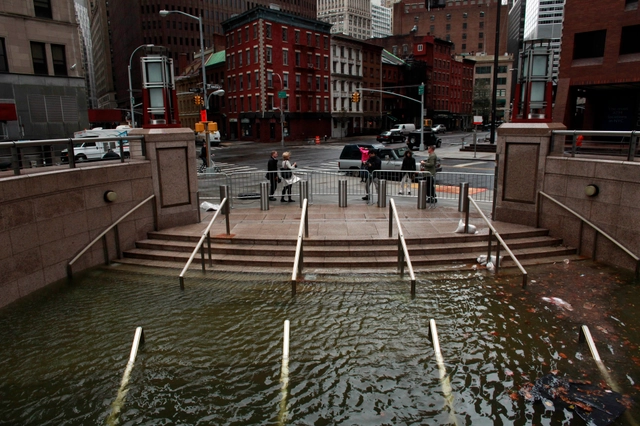
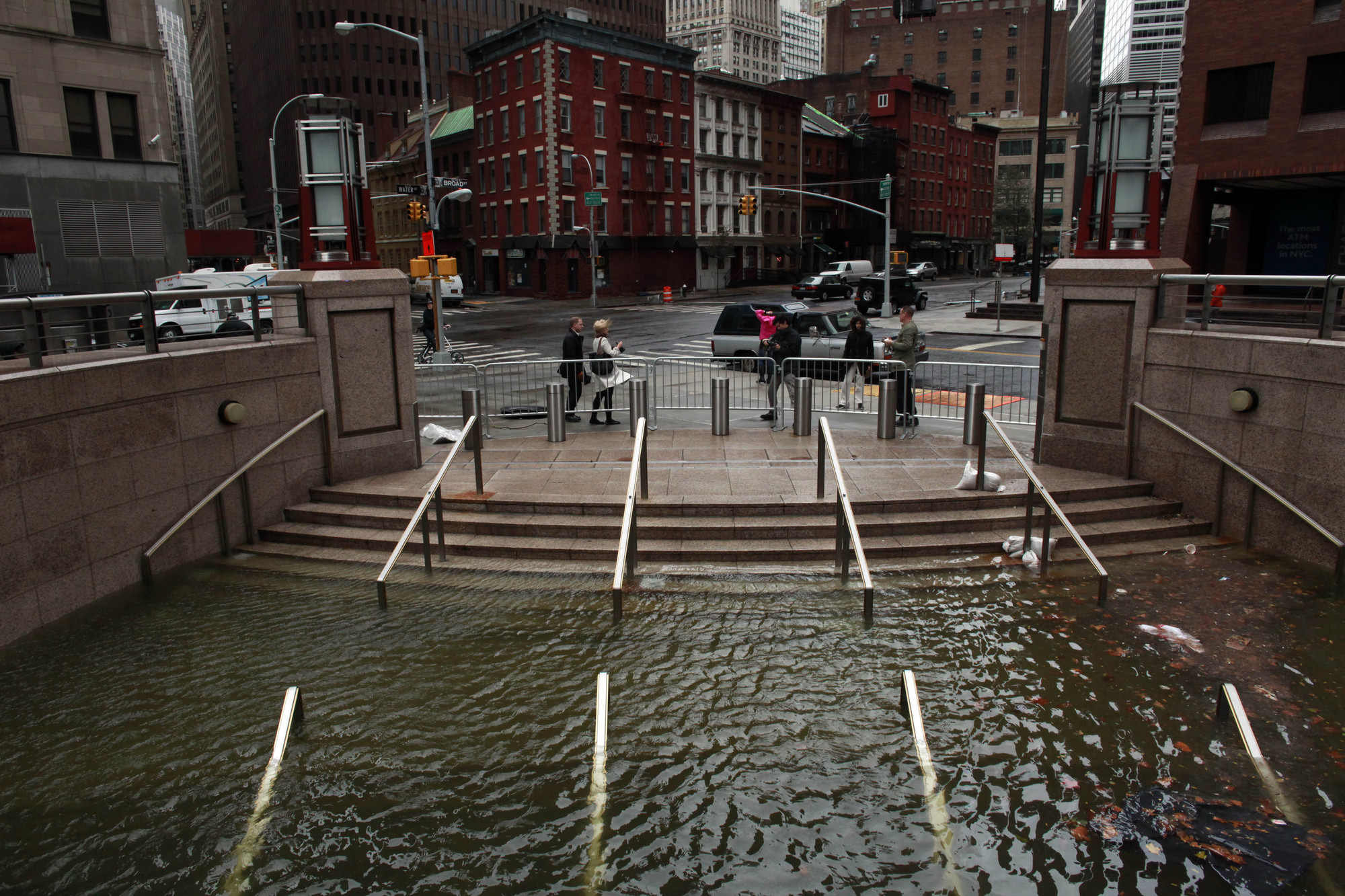
Hurricane Sandy painfully clarified the deadly implications of climate change. In fact, the superstorm was so forceful as a reminder of just what climate change means in real terms that it played a decisive role in the presidential election.
Here in the US, the issue defines political divides. A recent Pew Research Center survey shows 85% of Democrats believe climate change is a scientific fact, while only 48% of Republicans believe so. Another poll shows 68% of Americans believing climate change is a serious problem and 38% believing it is a very serious problem.
The impact of Sandy may have played a role in bumping these numbers up but there is still no slam dunk on the issue when roughly 30% of the population still believes climate change is not real. For those of you outside the US this is your cue to roll your eyes and say, Stupid Americans.