According to the Royal Institute of British Architects (RIBA), the number of people aged over 60 is expected to increase by 40% over the next twenty years, suggesting that "our post-retirement years will be longer and healthier." There is no doubt, therefore, that people in this age group will have a greater economic, social and political power - but how will this affect our cities?
Think traffic is bad now? One billion cars are already on the road today and another billion is expected to join in the coming decade. Pollution and stressful commuting is at an all time high, empowering many politicians and bicycle activists to declare war on the multi-billion dollar car industry which has profoundly impacted city development worldwide.
The BMW Guggenheim Lab, a mobile think-tank focused on the study of urban life, has returned to New York City for its homecoming exhibition currently on view at the Guggenheim Museum till January 5, 2014. After two years of research and touring Berlin and Mumbai, the lab aims to present major urban themes in art, architecture, education, science, sustainability and technology."100 Urban Trends: A Glossary of Ideas" is a compilation of definitions of the most pressing issues in urban centers today, contextualized to reflect how different cities interpret them. Architects, planners and students take note: From street facades to bailouts, gentrification to trash mapping, this resource archives years of discussion into one user-friendly interface. Explore the glossary, here.
https://www.archdaily.com/441064/100-urban-trends-a-glossary-of-ideasJose Luis Gabriel Cruz
How do we solve the problem of the suburbs? Urbanist Jeff Speck shows how we can free ourselves from dependence on the car - which he calls "a gas-belching, time-wasting, life-threatening prosthetic device" - by making our cities more walkable and more pleasant for more people.
The Museum of Modern Art (MoMA) has collaborated with Vienna’s Museum of Applied Arts (MAK) to launch a 14-month initiative that will examine new architectural possibilities that address the rapid and uneven growth of six global metropolises: New York, Rio de Janeiro, Mumbai, Lagos, Hong Kong, and Istanbul.
Organized by Pedro Gadanho, Curator, Department of Architecture and Design, Uneven Growth: Tactical Urbanisms for Expanding Megacities enlists six interdisciplinary teams of international architecture and urbanism scholars, experts, and practitioners to participate in a series of workshops, with each team focusing on a specific city.
When national leaders get too caught up in political games to make real change, who steps in? Lately, cities have been setting the pace for policy change, tackling issues from climate change to immigration. This development, termed "glocalization," seems to be a growing trend, and indicates a shift of influence from the national to the local level. The Atlantic's Emma Green explains and explores the term, and lays out why mayors might be the ones to change our world. Read the full article here.
https://www.archdaily.com/432198/will-mayors-save-the-worldKatherine Allen
A study published in Nature Climate Change, has compiled a list of cities most vulnerable to coastal flooding. Taking in consideration elevation, population distribution and available flood protection from 136 coastal cities worldwide, in addition to forecasts of sea level rise and ground sinking due to groundwater depletion, the study determines that if no mitigating steps are taken, coastal flooding will cause damage totaling $1 trillion annually by the year 2050.
Topping the list as the most vulnerable city is Guangzhou, China, followed by Mumbai and Kolkata in India, Guayaquil, Ecuador and Shenzen, China. Almost all cities at the highest risk of flooding damage were in North America or Asia.
Danish practice ADEPT has won an international, invited competition to master plan the 17KM2 site of Laiyan New Town and Binjian District in Hengyang, China. Their winning proposal, “Green Loops City” was lauded for developing an innovative and sustainable way to accommodate rapid urban growth while preserving Hengyang’s cultural heritage and lush surrounding landscape.
Aidi Su from ADEPT stated: “Much of Hengyang’s cultural and natural resources are still very much intact when compared to other Chinese cities facing rapid urban development. This is an incredible opportunity for us to make a difference in Chinese cities.”
The world’s biggest design prize, INDEX: Award has announced their 2013 recipients. From the Danish capital’s pioneering plan of how to address the changing climate to a Dutch take on intelligent roads of the future, each of the five recipients will receive a €100,000 award to implement their ideas which all offer sustainable solutions to global challenges.
What was once a symbol of Caracas' bright financial future is now the world’s tallest slum: Venezuela's Tower of David. Squatters took over this unfinished 45-story skyscraper in the early 1990s, after its construction was stopped due to a banking crisis and the sudden death of the tower’s namesake, David Brillembourg.
Now, as the government is grappling with a citywide housing shortage, many residents have spent most of their life within the walls of David. And despite the tower’s reputation as being a hotbed of crime, residents have managed to build a self-sustaining community complete with a communal electrical grid and aqueduct water system.
Sociologist Saskia Sassen's researches and writes about the social, economic and political dimensions of globalization, immigration, and networked technologies in cities around the globe. Her books and writings—published in over sixteen languages—have sustained the interests of architects and planners who seek to better understand the city via the systemic conditions that find expression in the reality of urban space.
Now actively involved in teaching Columbia University, we caught up with Sassen at the Arquine Congress in Mexico City, where she shared some interesting views on the role of architects, her contemplations on the future of the city, and her thoughts on the impact of the internet on the city.
Check out a full transcript of our interview with Sassen after the break.
Since Mayor Bloomberg took office in 2001, the fabric of New York City has been in constant flux. In just 12 years, Bloomberg has lead an effort to rezone 37 percent of the city to create opportunities for high-density growth, as well as aided the construction 40,000 new buildings and 450 miles of bike lanes. Putting these efforts in perspective, the New York Times has released the interactive feature “Reshaping New York” that compares statistics with drastic ‘before and after’ comparisons. Check it out and read our report on Bloomberg’s lasting affect on the Empire State here.
Videos
This satellite image of Bolivia shows dramatic deforestation in the Amazon Basin. Courtesy of Google.
NASA, in cooperation with TIME and Google, has unveiled startling timelapse images of Earth from orbit collected by NASA's Landsat program since 1984. This program, created not for spycraft but for monitoring the way in which humans are rapidly altering the surface of the planet, consists of eight satellites that have collected millions of pictures in the course of two generations. When sifted through, cleaned up and stitched together, these pictures come together to create a high-definition slideshow that reveals some of the drastic changes our planet is undergoing - most notably through widespread urbanization.
Spirit of Spacehas shared with us their most recent collaboration with Phil Enquist of Skidmore, Owings & Merrill: Art in the City. Pairing powerful quotes with imagery from the Chicago’s most prominent works, the film "expresses the vitality and vibrance that public art can bring to the urban environment by experientially including the viewer in the making of place.” As Spirit of Space describes, “The art is a reflection of the City, the art becomes a part of the City, the art is instrumental in making the City.”
Renowned architect, urban design consultant, and founding partner of Gehl Architects, Jan Gehlwill participate in a 30-minute audio interview on August 14 with UBM’s Future Cities. During the program, and in advance of his keynote at the upcoming Future of Cities Forum, Gehl will discuss building cities for people, the importance of public spaces that promote public life, and how to design cars out of our future cities. Listeners can stream the conversation live and directly ask Gehl questions via a live chat discussion here.
OMA’s Taipei Performing Arts Center Set for Completion in 2015.
Taipei has been selected by the International Council of Societies of Industrial Design (Icsid) as the only municipality to move on to the next phase in the process towards becoming the 2016 World Design Capital (WDC). The selection committee is expected to conduct an onsite evaluation and comprehensive report prior to releasing an official announcement in September.
Dharavi - Asia’s largest slum of one million with an average density of 18,000 residents per acre - is amidst a heated debate between its people, the government and private investors as it sits on some of India’s hottest real estate in Mumbai. While the government is grappling for solutions on how to successfully dismantle the low-rise slum and relocate its residents to a high-rise podium style typology, the investor’s profit-driven approach has placed residents on the defense, “rendering Dharavi a perfect storm of contested urbanism," as architect, urban designer and author William Hunter describes.
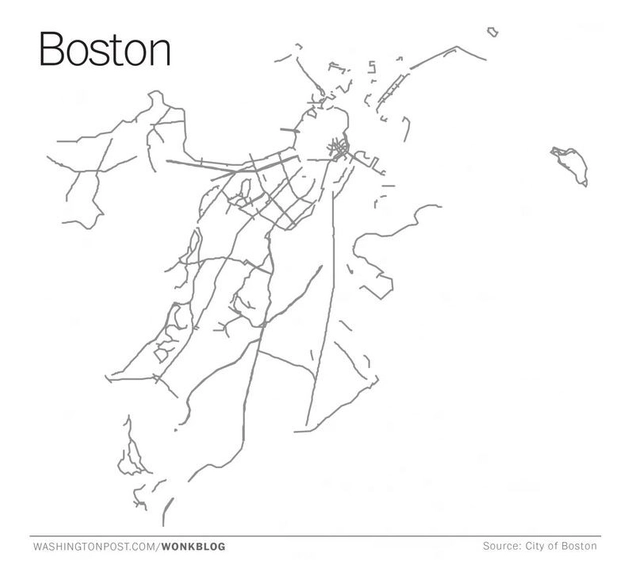
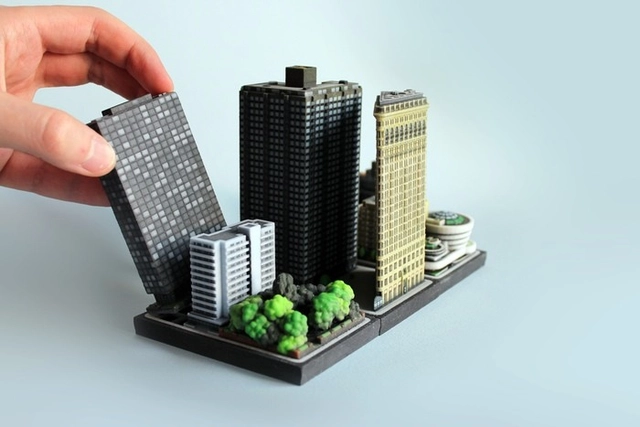
For the last fifty years Richard Wurman - architect, graphic designer and founder of the TED Conferences - has been dedicated to creating a platform that compares cities. In Wurman's early studies, he quickly learned that comparing global cities was no easy task. Cities use very different languages to describe their assets, from planning principles to land use types to social statistics. "They don’t collect their information the same way. They don’t describe themselves with the same legend," he tells Nate Berg of Next City.
Thanks to sophisticated mapping tools, delving into the statistical data of numerous cities has become far more manageable than in 1962, when Wurman produced his first comparative analysis using clay models of 50 different cities. Wurman's analog-driven statistical analysis has turned into the Urban Observatory, a website that allows users to choose from 15 variables and easily compare the public data of up to 16 cities around the world in real time.