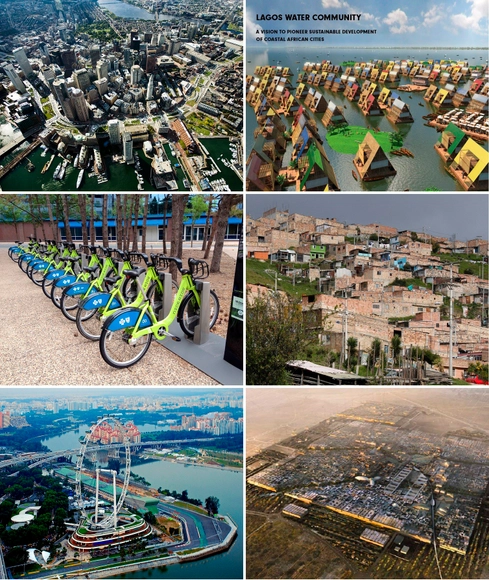
President Giorgio Napolitano and Renzo Piano (2012). Image Courtesy of La Repubblica
In The New Yorker's latest Postcard from Rome Elizabeth Kolbert talks to Renzo Piano in his Senate Office at the Palazzo Giustiniani, just around the corner from the Pantheon. Piano, who was named a Senator for Life by Italian President Giorgio Napolitano in September 2013 (when he was 75 years of age), immediately "handed over the office, along with his government salary, to six much younger architects." He then "asked them to come up with ways to improve the periferie - the often run-down neighborhoods that ring Rome and Italy’s other major cities." Kolbert attests to Piano's belief in the power of museums and libraries and concert halls. For him, "they become places where people share values [and] where they stay together." "This is what I call the civic role of architecture."
View of the comprehensive city plan. Image Courtesy of Vincent Callebaut Architecture
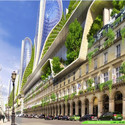
Addressing Paris’ housing and density issues, French firm Vincent Callebaut Architectures has developed a proposal for multiple high-rise buildings with positive energy output (BEPOS). Comprised of eight multi-use structures inhabiting various locations within Paris, the plan strives to address major sustainability problems affecting each district, while providing key functions for the city.
Sleek, contemporary, and unapologetically eclectic, the work of Norwegian firm Snøhetta is as diverse as it is synonymous with modern Scandinavian design. Spanning everything from architecture and master planning to installation art and product and packaging design, Snøhetta's projects are characterized by the marriage of efficiency, quirky charm, and an eye for beauty. Offering a broad selection of suggestions for visitors to Oslo, Snøhetta's guide to the nation's capital is no different. Reflecting the favorite attractions of architects, artists, and brand designers from within the firm, the guide includes a windowless bar, jazz-punk band, and the Norwegian National Opera and Ballet, even encompassing the work of Oslo-based design contemporary, Element Arkitekter, in Lærernes hus. Read the rest of the seven travel selections here.
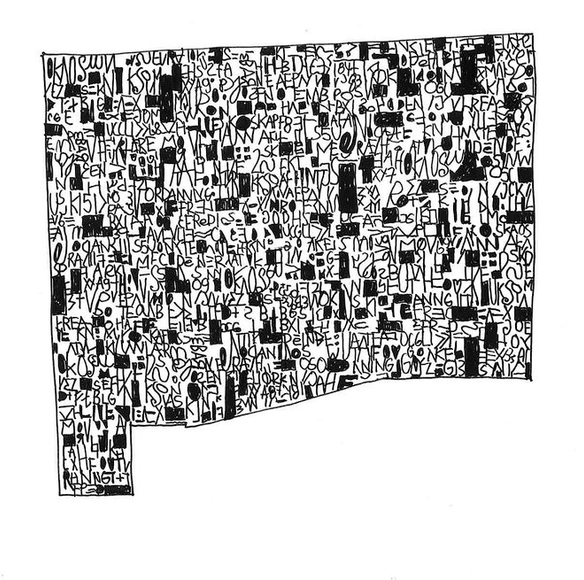
What is a city? To technologist Dave Troy, a “city is the sum of the relationships of the people that live there.” By mapping the interests of dwellers in some of the world’s most populated cities by looking at what they share online, Troy has generated a new and incredibly detailed way to view a city’s diversity beyond race. This rich data, as Troy believes, provides a real opportunity to design cities that are truly desired.
In the UK, urban issues are starting to see something of a renaissance, with problems such as the nation's housing shortage increasingly being subjected to scrutiny in ever more public arenas - in fact earlier this year housing overtook transport as the biggest concern among London voters. All of this means that 2015 will be "a golden opportunity to fix some of the worst city problems," according to the Guardian Cities, who have asked their architecture critic Oliver Wainwright to offer up a wishlist of positive changes that could benefit the nation's urban centres. From councils building more council housing to a tax on empty homes, Wainwright's four-point list offers straightforward policy advice that could truly transform the lives of British urbanites - and perhaps most promisingly, in three of these cases he explains how there are nascent movements already being made to bring his recommendations to fruition. You can read the full article here.
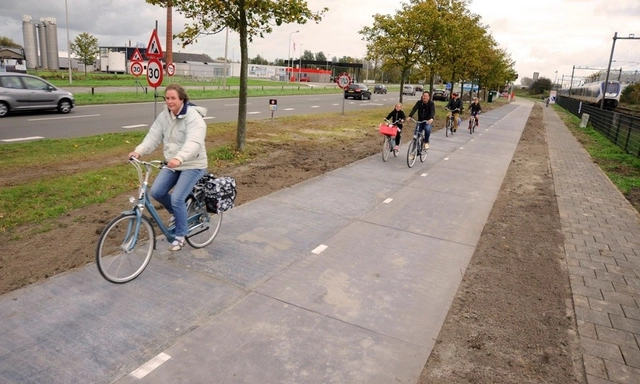
A popular bicycle lane and public road that connects the Amsterdam suburbs of Krommenie and Wormerveer has been impregnated with solar panels, making it the world’s first. The 70-meter stretch, serving 2,000 daily cyclists, was embedded with crystalline silicon solar cells encased within concrete and covered with a translucent layer of tempered glass. It is expected to be extended an additional 100-meters in 2016, providing enough energy to power three households. More information, here.
Has the concept of the smart city "crystallised into an image of the city as a vast, efficient robot?" In the age of the "Internet of Things," where does the citizen fit in? In this article from The Guardian, journalist Steven Poole takes a critical stance against the purported utopian ideals of smart cities. Poole delves into the nuances of who the smart city is truly meant to serve, questions the debate over whether it should develop along a top-down or bottom-up approach, and poses the provocative thought: "a vast network of sensors amounting to millions of electronic ears, eyes and noses - also potentially enable(s) the future city to be a vast arena of perfect and permanent surveillance by whomever has access to the data feeds." Questions of control, virtual reality, free-will, and hierarchies of power, Poole asserts are critical to the discussion of technology's powerful role in the future. Read the full article to learn more about the possible potential of the smart city to "destroy democracy," here.
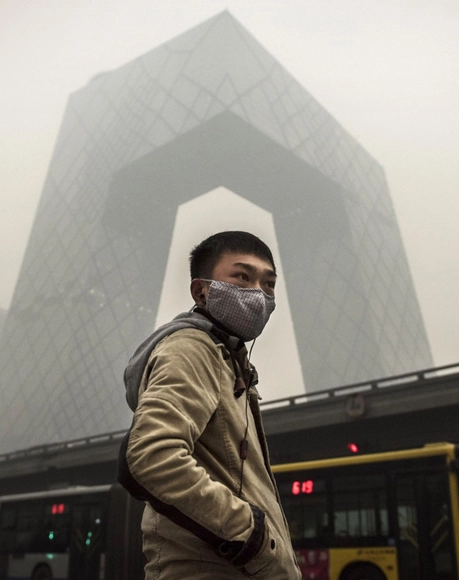
In an article for The Guardian, Oliver Wainwright steps "inside Beijing's apocalypse": the poisonous, polluted atmosphere that often clings to the Chinese capital. He explores ways in which those who live in this metropolis have started to redefine the spaces they frequent and the ways in which they live. Schools, he notes, are now building inflatable domes over play areas in order to "simulate a normal environment." The dangers were made clear when "this year’s Beijing marathon [...] saw many drop out when their face-mask filters turned a shade of grey after just a few kilometres." Now, in an attempt to improve the living conditions in the city, ecologists and environmental scientists are proposing new methods to filter the air en masse. Read about some of the methods here.
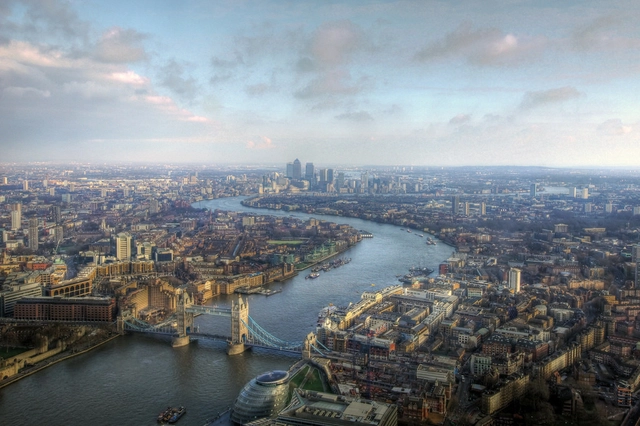
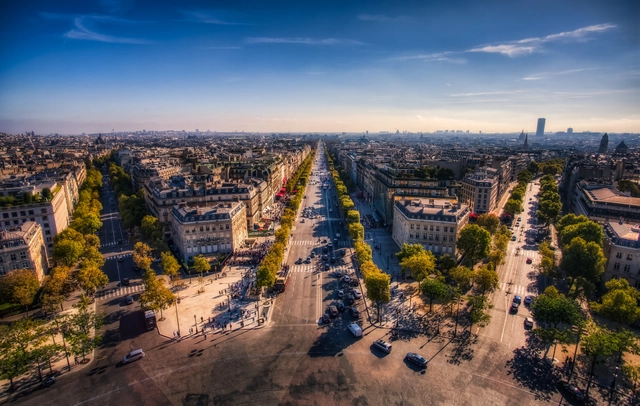
While you might not recognize him, you know his work; much of today’s most famous buildings are being archived through the lens of Iwan Baan. As the go-to photographer for many of the world’s leading architects, Baan is constantly on the move and exploring new places. And, just as he describes in the NOWNESS video above, he has found that the best way to understand a new city is to “go up” and view it from above.
Though the competition cannot guarantee that the winning design will be built, partial funding has already been budgeted for the bridge’s future construction and it is hoped that the winning design can be used to attract further interest and funding. Continue reading to learn more.
First inspired with a grand vision to transform Rio de Janeiro’s most notorious slum into a community united by color, artists Jeroen Koolhaas and Dre Urhahn of Haas&Hahn have found an ingenious and stunning way to empower some of the world’s most impoverished communities through art.
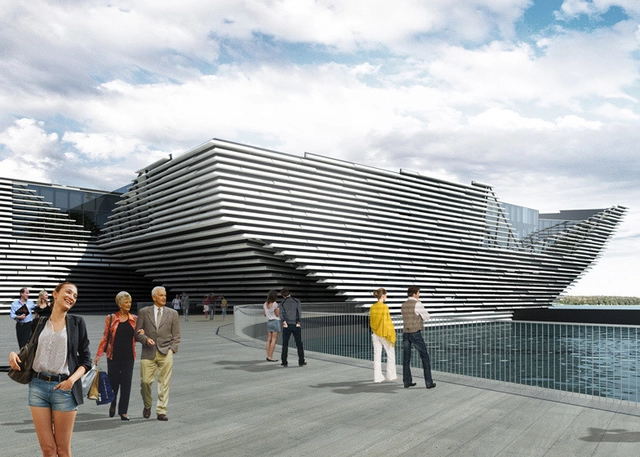
Dundee, Bilbao, Curitiba, Helsinki and Turin are often considered the cultural epicenters of their respected countries. Therefore it is no surprise that these five metropolises are the latest to achieve UNESCO’s City of Design status. Joining a list of 12 other cities, the newest City of Design selections are being recognized for the international influence on design. By awarding them “City of Design” status, UNESCO hopes to help further the development of creative industries and encourage cross-city cultural exchange in each selected metropolis.
In this interview, conducted by the Council for Tall Buildings and Urban Habitat, Ole Scheeren discusses the ideal height for sustainable buildings. Drawing reference from two of his projects, MahaNakhon and The Interlace, he speaks to the difference between height and density, and how those two interplay when creating livable spaces in urban areas. He goes on to talk about how large buildings such as skyscrapers can be made more open to the surrounding city, both visually through programming. Watch the full clip above!
Why do cities exist and how will they grow and change? As more than half of the world’s population now lives in cities it is becoming increasingly important for urban designers and planners to seek answers to these questions. This article by Laura Bliss from City Lab presents the “science of cities,” and the ways in which the urban-planning world is moving away from traditional methods of simply putting cities into categories, in favor of a more evolutionary theory. Benefiting from the vast amounts of data available today on statistics such as crime and voting patterns across cities, researchers have worked to establish the quantifiable characteristics of urban areas as a whole, and recent studies in this area reveal how the shapes of cities themselves could be connected to internal economic and social processes. Learn more about these radical developments in the full article from City Lab.
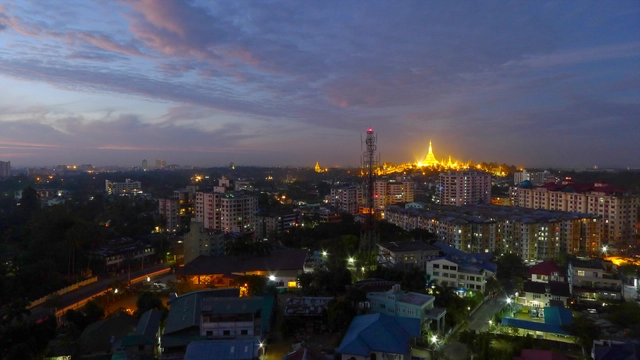
Preservationists are in a race to document and preserve some of Yangon’s most admired cultural icons. Myanmar’s largest city, Yangon is experiencing an all to familiar story: rapid development taking precedence over preservation. As the National Geographic reports, “Hulking monoliths of concrete and blue-plated glass are replacing fine old residential and government buildings…Although much has already been lost, many architecturally or esthetically significant structures have hung on. The question now is how long they will last.” Read the complete story, here.
New York City. Image Courtesy of Stephen Von Worley
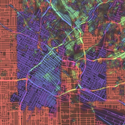
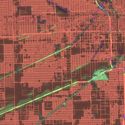
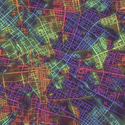
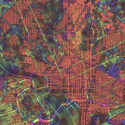
A new series of maps by California-based artist-scientist Stephen Von Worley give colour coding an entirely new meaning. With his latest algorithm-generated project, "Crayon the Grids," Von Worley has taken maps of ten major metropolitan areas and coloured them based on geographical orientation of the urban grid. Each street is assigned a colour specific to its orientation, varying in hue and weight depending on its cardinal direction and length. The result is a dizzying technicolor of urban planning, creating completely new demarcations for some of the world's most recognizable cities.
Enter the chromatic world of coloured city grids after the break
Last year the UN General Assembly issued a resolution to “designate 31 October, beginning in 2014, as World Cities Day.” A legacy of the Expo 2010 Shanghai, the first World Cities day is being hosted today in Shanghai, with the aim of focusing on global urbanization and encouraging cooperation among countries to solve and promote sustainable urban development worldwide.
“In a world where already over half the population lives in urban areas, the human future is largely an urban future, said UN Secretary-General Ban Ki-moon, on the importance of World Cities Day. “We must get urbanization right, which means reducing greenhouse emissions, strengthening resilience, ensuring basic services such as water and sanitation and designing safe public streets and spaces for all to share. Liveable cities are crucial not only for city-dwellers but also for providing solutions to some of the key aspects of sustainable development.”
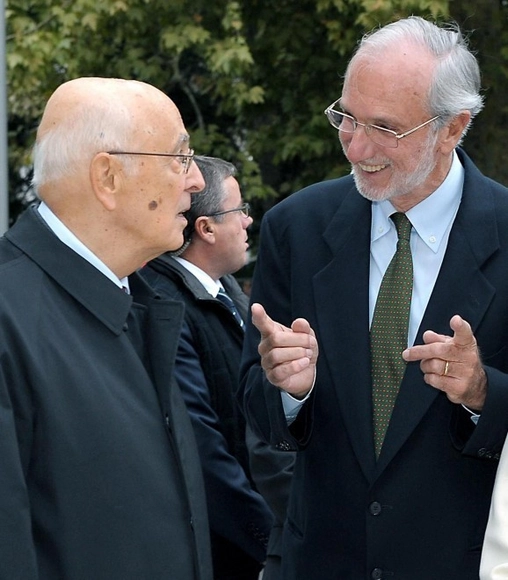
To celebrate World Cities day, we’ve rounded up 23 articles that you can’t miss on critical issues relating to our cities, ranging from sustainability to addressing equality and creative solutions for integrating cycling into our cities.
Think we’ve missed something? Let us know in the comments below.


.jpg?1420687878&format=webp&width=640&height=580)

.jpg?1420687878)