1. ArchDaily
  2. Cities

Cities: The Latest Architecture and News

City of the Future Elaborates on Responsive Architecture

City of the Future is a bi-weekly podcast from Sidewalk Labs that explores ideas and innovations that will transform cities.

In the final episode of season 2, hosts Eric Jaffe and Vanessa Quirk discuss the past, present, and future of responsive architecture with Sidewalk Labs’ director of public realm Jesse Shapins, engineer and microclimate expert Goncalo Pedro, Bubbletecture author Sharon Francis, and renowned architect Liz Diller of Diller Scofidio + Renfro.

Côte d'Ivoire: Modern Architecture Along Africa's Ivory Coast

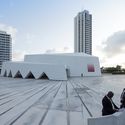
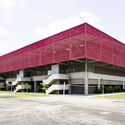
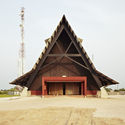
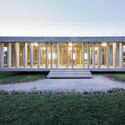
The Ivory Coast is creating a new design language in West Africa. Located between Ghana and Liberia, Côte d'Ivoire is home to a range of modern architecture. Before colonization, the Ivory Coast was home to Gyaaman, the Kong Empire, and Baoulé, with ties that would shape its identity. Now, local architecture is rethinking past traditions to create a model for the future.

Côte d'Ivoire: Modern Architecture Along Africa's Ivory Coast - Imagem 1 de 4Côte d'Ivoire: Modern Architecture Along Africa's Ivory Coast - Imagem 2 de 4Côte d'Ivoire: Modern Architecture Along Africa's Ivory Coast - Imagem 3 de 4Côte d'Ivoire: Modern Architecture Along Africa's Ivory Coast - Imagem 4 de 4Côte d'Ivoire: Modern Architecture Along Africa's Ivory Coast - More Images+ 6

Are Architects and Developers Finally Addressing the Same Global Concerns?

Subscriber Access | 

Architects and developers have always been on opposite ends of the construction world. While the first wanted to create dreamy spaces, the latter just wanted to cater to the basic needs. In these past few years, the world has witnessed significant changes, with the aggravation of climate-related issues, the evolution of technological solutions, and the newly acquired awareness and growth of the population.

While everything is transforming, building trends also evolved, mainly due to an alteration in people’s perceptions and priorities. However, one question remains unanswered: Could all these changes mean that the never-ending conflict between architects and developers reached some sort of common grounds? And could they finally be seeking one same goal, of a sustainable, resilient and inclusive future?

Are Architects and Developers Finally Addressing the Same Global Concerns? - Image 1 of 4Are Architects and Developers Finally Addressing the Same Global Concerns? - Image 2 of 4Are Architects and Developers Finally Addressing the Same Global Concerns? - Image 3 of 4Are Architects and Developers Finally Addressing the Same Global Concerns? - Image 4 of 4Are Architects and Developers Finally Addressing the Same Global Concerns? - More Images+ 19

Data from 350,000 Smartphones Visualize the Urban Segregation in Chile

Subscriber Access | 

Regardless of where you live or work or who you’re friends with, you usually move around the same neighbourhoods and streets of your city. It may be London, Santiago, Shanghai, or Moscow, but in any of these places, there are always districts you have never set a foot in. Have you ever considered how many ‘cities’ are within your own city?

A research article published in The Royal Society Open Science and signed by Chilean researchers utilizes big data to analyze and visualize urban segregation, delivering spatial tools that allow us to develop strategies in a city of many cities. "We know there are [social] bubbles in Santiago, Chile, and that therefore, there is segregation," says Teodoro Dannemann, co-author of the research paper The time geography of segregation during working hours, in a conversation with ArchDaily. “We know that each person explores only a small fraction of the city, which is basically the home-work trajectory. This implies that we only engage with a small group of citizens," he adds.

What Can Design do in Chile's Social Crisis? Nothing.

Subscriber Access | 

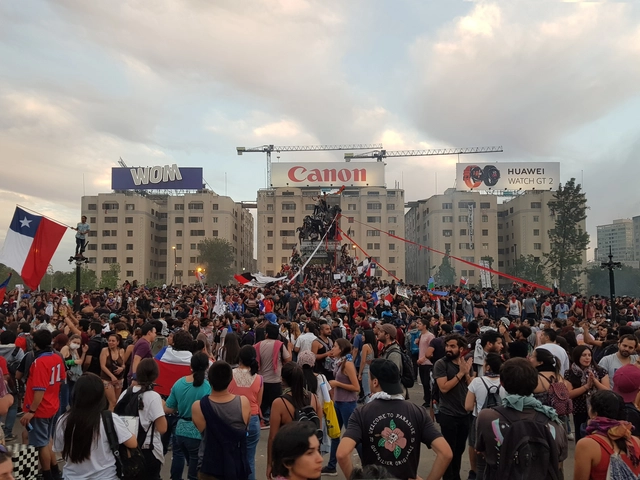
This article was originally published in ArchDaily en Español last October 30, twelve days after the social crisis in Chile escalated. Some ideas of the analysis may feel outdated since some structural reforms were recently announced, but the author decided to keep the original spirit of the piece.

A 4 cent fair increase for the Metro in Santiago sparked mass fare-dodging protests in Chile starting on October 6. Alongside spontaneous street demonstrations, the protests spilled into widespread violence across Santiago during the following days until October 18. That day, the Metro network collapsed, the riots multiplied across the city, and looting and fires were out of control. That night, President Sebastian Piñera declared a state of emergency.

What Can Design do in Chile's Social Crisis? Nothing. - Image 1 of 4What Can Design do in Chile's Social Crisis? Nothing. - Image 2 of 4What Can Design do in Chile's Social Crisis? Nothing. - Image 3 of 4What Can Design do in Chile's Social Crisis? Nothing. - Image 4 of 4What Can Design do in Chile's Social Crisis? Nothing. - More Images

City of the Future Examines the Future of Electrification

City of the Future is a bi-weekly podcast from Sidewalk Labs that explores ideas and innovations that will transform cities.

In the fourth episode from season 2, hosts Eric Jaffe and Vanessa Quirk discuss the future of electrification with Gretchen Bakke, author of The Grid: The Fraying Wires Between Americans and Our Energy Future, and Sidewalk Labs’ director of sustainability Charlotte Matthews.

City of the Future Explores the Future of Mobility in Cities

City of the Future is a bi-weekly podcast from Sidewalk Labs that explores ideas and innovations that will transform cities.

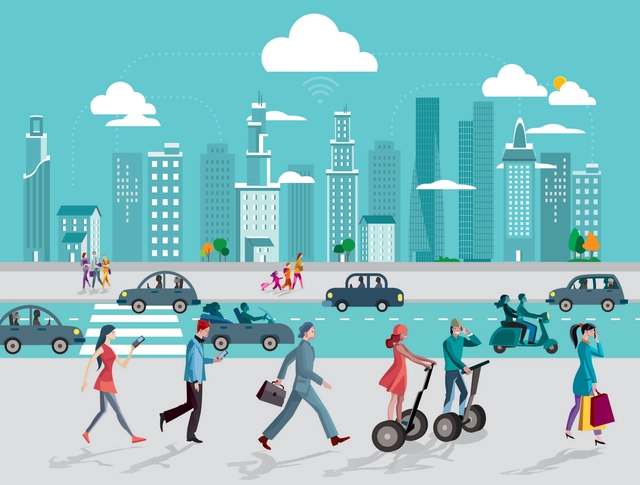
In the third episode from season 2, hosts Eric Jaffe and Vanessa Quirk discuss the future of mobility in cities and share ideas that would make it way easier to get around without owning a car. In the podcast, author Horace Dediu talks about micro-mobility; TriMet's Bibiana McHugh tells the story behind GTFS and the OpenTrip Planner; MaaS Global CEO Sampo Hietanen explains the concept of Mobility as a Service (MaaS); and Sidewalk Labs' Corinna Li explains what Mobility on Demand could be like in the city of the future.

Sustainable Parking Space for an Eco-Responsible Generation

Subscriber Access | 

Every year, France uses 66,600 tons of plant protection pesticides for its agriculture and produces 4.5 million tons of plastics, of which only 22% are recycled. Almost 48,000 deaths are attributed to fine particle pollution and automobile activity, and the planet is still expected to endure. In such grave situations, urban developments have become subject to new ecological criteria that focus on finding biodiverse solutions for both public and private sectors.

In compliance with the United Nations Sustainable Development Goals Agenda 2030 that aims to find eco-responsible urban solutions, Studio NAB created Car Parks 2.0, an ecological parking space that rethinks commercial parking areas and transforms it into a more sustainable and humane place.

Sustainable Parking Space for an Eco-Responsible Generation   - Imagen 1 de 4Sustainable Parking Space for an Eco-Responsible Generation   - Imagen 2 de 4Sustainable Parking Space for an Eco-Responsible Generation   - Imagen 3 de 4Sustainable Parking Space for an Eco-Responsible Generation   - Imagen 4 de 4Sustainable Parking Space for an Eco-Responsible Generation   - More Images+ 18

City of the Future Shares Thoughts on Retail and Vibrant Streets

City of the Future is a bi-weekly podcast from Sidewalk Labs that explores ideas and innovations that will transform cities.

In the second episode from season 2, hosts Eric Jaffe and Vanessa Quirk discuss the future of retail with author Mark Pilkington, social entrepreneur Sarah Filley, Sidewalk Labs’ Director of Development Carrie Jackson, and others.

City of the Future Discusses Affordability by Design

City of the Future is a bi-weekly podcast from Sidewalk Labs that explores ideas and innovations that will transform cities.

In this episode, the first from season 2, hosts Eric Jaffe and Vanessa Quirk discuss the future of housing with Ori CEO Hasier Larrea, architect Eric Bunge, Starcity CEO Jon Dishotsky, Sidewalk Labs housing expert Annie Koo, and others.

Idealism as the Impetus of American City Planning

Subscriber Access | 

The Truman Show is a 1998 dramedy starring Jim Carrey as Truman Burbank, the unwitting star of a 24-hour reality show that began at his birth. Set in Seahaven, a city-scale television studio designed to covertly record Truman's entire life, the show attempts to divert Truman from any potential suspicion that every single person he meets is an actor or actress.

Architecture Has Limits to Achieve Urban Equity. What Should We Do?

Accessibility and mobility. When perceived through the architectural lens, these terms often evoke a range capped by two extremes. On the one end, the flexibility of circulation systems; the universality of egress networks; and the technicalities of minimums and maximums. On the other end, a project’s capacity to support broad ranges of socioeconomic narratives; its malleability in the face of rapid fluctuations of program and function; and its reactivity in maintaining a productive role amidst the ebbs and flows of societal dynamics. 

Why Do We Travel?

Everyone wants to travel the world, whether it's to meet new people, taste new food, or visit new places. Travel is consequently an extremely lucrative industry, but tourist destinations are getting more crowded than ever and associated pollution emissions are only worsening the climate emergency.

Why do we travel? In this edition of Editor's Talk, four editors from ArchDaily based in Lebanon, the United States, and Chile share their thoughts on the meaning of travel, and why tourists enjoying a beach in a location like Brazil should also care about the cities they visit.

The Cities with the Hightest Cost of Living in 2019

Subscriber Access | 

In the 25th addition of Mercer's ranking for the cost of living for cities, Hong Kong again took the first place spot, continuing the trend of Asian cities as being the most expensive places to live for foreign workers.

The factors determining the cost of living in this edition are food, housing, living and personal care expenses, alcohol and tobacco, clothing, housing maintenance, public services, transportation, recreation, and entertainment. 

Check out the ranking of the top 10 most expensive cities in the world for cost of living and the top 5 most expensive by region: North America, South America, Asia, Pacific, Eastern Europe, Western Europe, the Middle East, and Africa.

The Temperature Rise of 520 Cities by 2050 (is Grim)

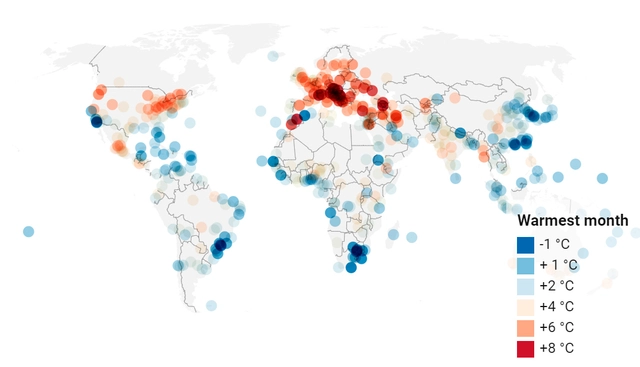
The climate in Madrid in 2050 will look more like the climate in Marrakesh, Morocco today. Stockholm will feel more like Budapest, London like Barcelona, Moscow like Sofia, Seattle like San Francisco, and Tokyo like Changsa in China. 

The research "Understanding Climate Change Starting with an Analysis of Similar Cities" published in the scientific magazine PLOS ONE by The Crowther Lab of ETH Zurich, paints a grim picture of the future for the world's urban centers.

The 20 Most Bike-Friendly Cities in the World, According to Copenhagenize 2019

Subscriber Access | 

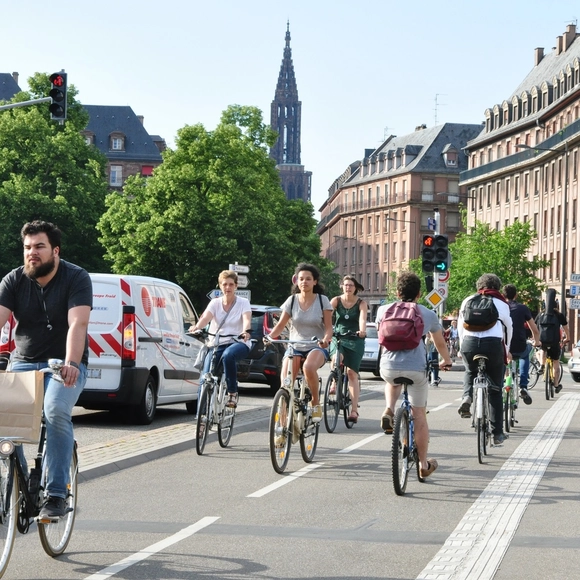
It should come as no surprise that one of the most respected surveys about bicycle use comes from a Danish organization. This ranking by Copenhagenize Design Company uses a point system to compile a list of the cities looking to re-establish the bicycle as an accepted and practical mode of transportation.

These Are The 20 Most Livable Cities in Latin America in 2019

Subscriber Access | 

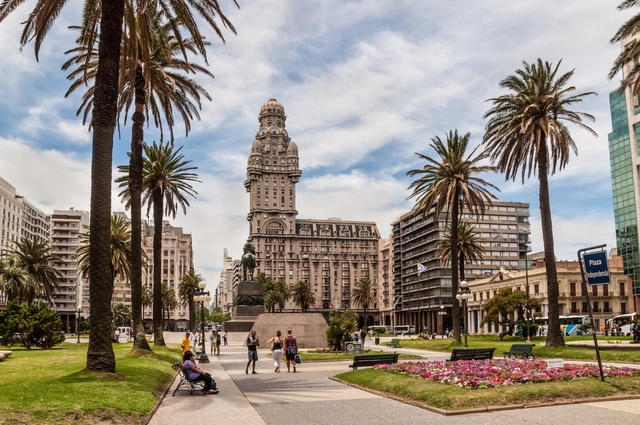
Vienna, Austria has been ranked as the city with the best quality of life in the world for ten consecutive years. The ranking made by multinational consultancy Mercer is dominated by Western European cities in the highest positions, while Vancouver, Canada reached third place, becoming the highest-ranking city in North America for the last 10 years.

The Good Metropolis: From Urban Formlessness to Metropolitan Architecture

From the Publisher:
The book presents the first historical analysis of the productive tension between the city and the architectural form. It introduces 20th-century theories to construct a historical context from which a new architecture-city relationship emerged. The book provides a conceptual framework to understand this relationship and comes to the conclusion that urbanization may be filled with potential, i.e. be a Good Metropolis.