Courtesy of OUTCOMIST, Diller Scofidio + Renfro, PLP Architecture, CRA - Carlo Ratti Associati and Arup
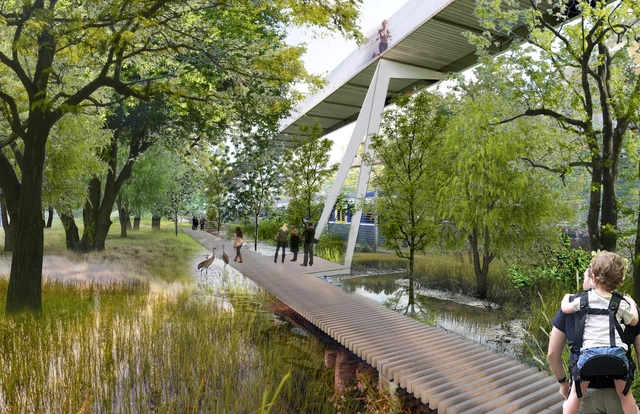
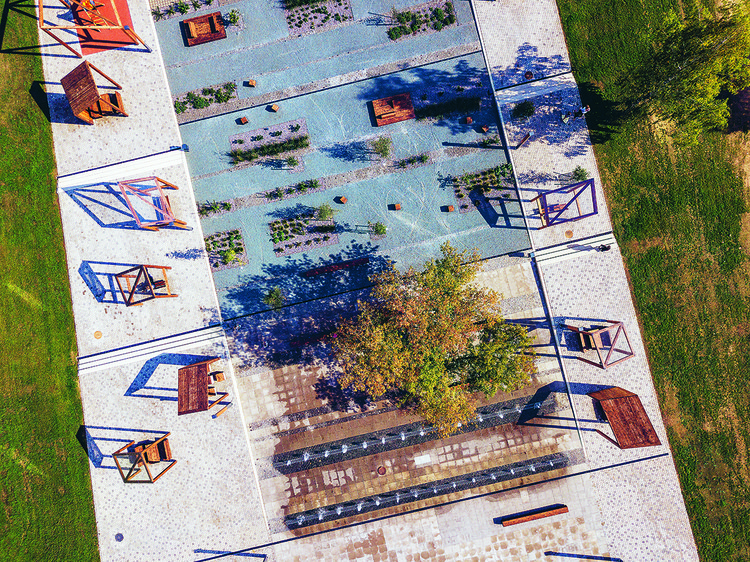
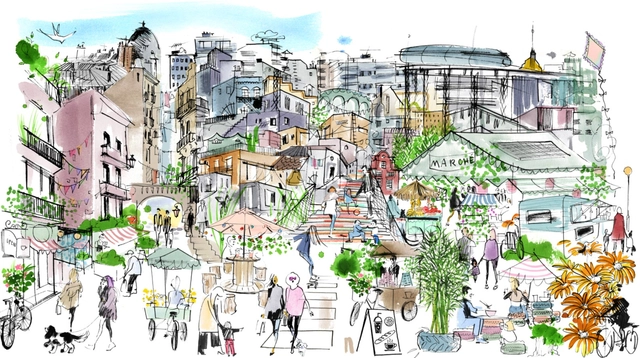
Led by OUTCOMIST, an international design team including Diller Scofidio + Renfro, PLP Architecture, CRA - Carlo Ratti Associati, and Arup won the competition to revitalize the Porta Romana Railway Area, transforming the industrial site into a diverse green neighborhood in Milan. Rehabilitating a disused railway yard into a connective tissue that links the southeast area of the city to the center, the development will generate a rich biodiverse public space, including a large urban park.
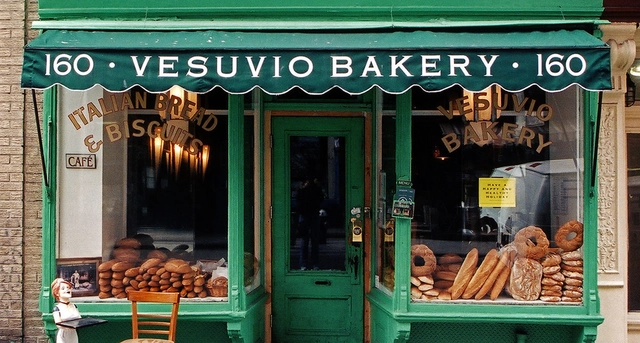
Few businesses in the United States are regarded with more fondness than mom-and-pop retailers. There’s an “all’s right with the world” quality about owner-run shops that meet a neighborhood’s everyday needs and, through repeated face-to-face exchanges, help people feel they’re members of a mutually supportive community. And yet for a long time, mom-and-pop stores have been under stress. In the half-century after 1950, cars shifted much of United States’s retailing to unwalkable roadside strips and winnowed the ranks of neighborhood-scale mom-and-pops. In the past two decades, the burgeoning of the internet has intensified the pressure on brick-and-mortar retail, a situation worsened by the pandemic.
For the 17th international architecture exhibition – la biennale di Venezia 2021, Austria is creating a platform of debate around how we envision the architecture of the future. In fact, the Austrian contribution, entitled “Platform Austria”, curated by Peter Mörtenböck and Helge Mooshammer, seeks to articulate the profound changes established by the development of digital platforms in our built environment.
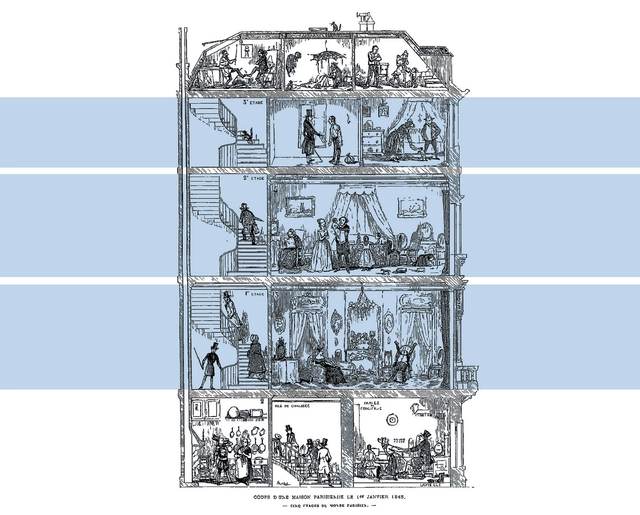
The introduction of new techniques and materials, along with innovations in indoor plumbing systems, resulting from the industrial revolution, paved the way for vertical living. Investigating specifically a period of time where a flux of population was driven to cities, and social class divisions were being questioned, this article looks back at the evolution of the house plan in Europe between 1760 and 1939.
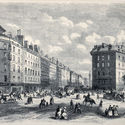
Tackling the transformation of the housing unit during the industrial revolution all the way to the interwar period, this feature highlights four prominent examples that rethought traditional layouts and responded to the challenges of their time. Still influential today, the mentioned models, restored for use, happen to be part of the 21st-century urban fabric. Located in London, Paris, Amsterdam, and Moscow, the plans showcase the ever-changing interior wellbeing standards, directly linked to a broader metamorphosis, equalizing and providing for growing urban populations. Discover the evolution of living units from the Back to Back Houses to the Garden Cities of England; the Haussmannien Block, a Vertical Living for a Modern Bourgeoisie; the Extension of Amsterdam, from Alcove Housing to Social Housing Blocks; and the Transition Type House in Russia.
The Estonian Centre for Architecture is presenting the exhibition “Square! Positively shrinking” curated by Jiří Tintěra, Garri Raagmaa, Kalle Vellevoog, Martin Pedanik, and Paulina Pähn, in the Pavilion of Estonia at the 17th International Architecture Exhibition of La Biennale di Venezia. Hosted in the Arsenale complex, the project will “explore the role of high-quality urban space in enhancing the future development of small towns that are in jeopardy of depopulation, […] sparking a debate on the lesser-known facet of urbanization”.
As income inequality has widened in recent years, the role of philanthropy has been called into question. Is charitable giving by wealthy individuals and powerful corporations always a positive force, or is that connection to wealth and power an inevitable compromise? Whose agenda does philanthropic giving really benefit, the grantees or the granters? These are complicated questions. But truly enlightened giving is a transformative force. It can not only fund worthy causes but if properly timed can sow the seeds of social change.
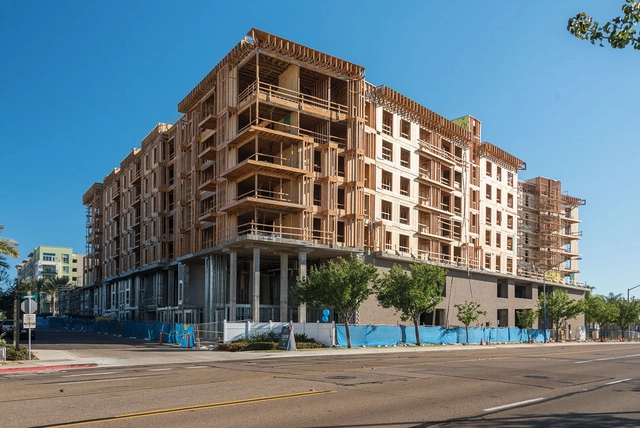
In an ideal world, architects would have free reign to design whatever they imagined. But the reality of the profession is that it comes with strings attached, and our visions are limited by clients, budgets, and perhaps the most dominating force, building codes. These codes have restricted and reshaped architecture so much, that it has forged a new type of building- the “stick frame over podium”, or “five over two” design. The result is a very distinct aesthetic of buildings and a notable monotony that has nearly redefined mid-rise residential architecture across the country.
In recent years, several movements in Brazil and around the world have contributed significantly to society by emphasizing the need to occupy public spaces in the cities to claim quality and freedom of use for the community. The Ocupe Estelita movement in Recife, Brazil, for example, confronted the growing real estate speculation in the region and challenged the aggressive commercial urban planning on the banks of the Capibaribe River. Based on cases like this one, professor, critic, and curator Guilherme Wisnik, in an interview with Fora, addressed the issue of public space as a place of conflict.
WELCOMEPROJECTS’s The Breadbox ADU. Image Courtesy of Los Angeles Department of Building and Safety
It’s a rather unfortunate platitude that good design and government programs don’t mix. More than unfortunate, it’s also untrue, as a new initiative from the City of Los Angeles demonstrates.
The newly launched Accessory Dwelling Unit (ADU) Standard Plan Program offers homeowners 20 eye-catching, pre-approved designs for the increasingly popular typology, which many see as a viable alternative to costlier mid-rise apartment buildings. Administered by the Los Angeles Department of Building and Safety (LADBS) in United States and featuring designs from firms including SO – IL and LA-Más, the program is a bid to fast-track permits for these humble, backyard homes—better known as ADUs—as well as making them “more accessible, more affordable, and more beautiful,” said L.A. Mayor Eric Garcetti in a press statement.
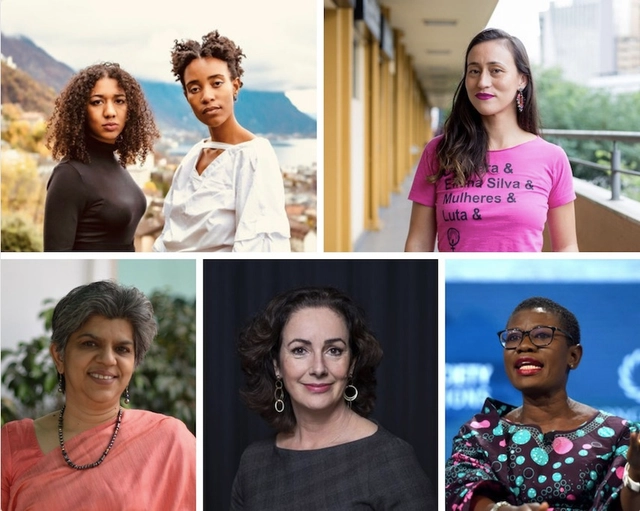
While in a lot of countries around the world, the construction, architecture, engineering, and urban planning sectors, are still reserved for men, initiatives that empower women in these fields are surfacing everywhere around the globe. Playing a huge role in the integration of female power into these disciplines, these movements take on many forms such as organizations, websites, platforms, etc. working with professionals, artisans, and workers.
From providing skills, connecting outstanding females, ensuring exposure, and promoting the works of pioneers, these initiatives have the common purpose of encouraging women to have an impact on their built environment.
HerCity is a platform that involves women in urban development, in order to make better cities for everyone. Turning the tables and putting girls in the expert position, the digital toolbox aims to create more inclusive, equal, and sustainable cities and communities. The initiative makes methods and tools available to urban actors globally, in order to support cities in integrating girls’ participation in their long-term strategies.
Launched on Women’s day 2021, the guide for urban planning and design is a collaborative effort between UN-Habitat and Global Utmaning, the Swedish independent think tank. ArchDaily had the chance to talk with the team behind this digital toolbox, discussing the narratives, the process, and inclusive planning on a worldwide level.
In theory and practice, in the modern era, the idea of spatial separation between home and work was related to the traditional sexual division of men and women, and of their role in life. Going back to the earliest feminist thinking in architecture, in western industrialized communities, we are elaborating in this article on women’s changing role in the 20th century and its impact on the space we experience today.
What kind of cities do we want to live in? What do we believe is important for a good life? And what makes a good home for all of us?SPACE10 with gestalten have teamed up to gather insights from world-renowned experts to explore a better urban future for humanity. Compiled in a book entitled The Ideal City, the findings draw five core principles: The city of tomorrow should be resourceful, accessible, shared, safe, and desirable.
Taking a holistic and multidisciplinary approach to rethinking how we could design, plan, build and share our cities going forward, the publication unfolds projects from 53 different cities in 30 different countries. Discover in this article, excerpts from the book, with the foreword by Bjarke Ingels and the last word by Xiye Bastida.
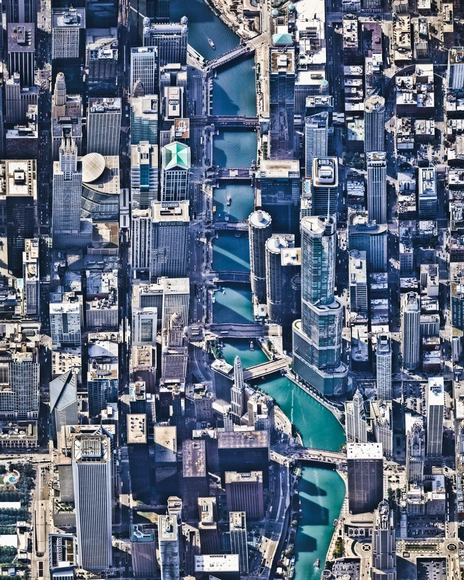
Chicago, United States. Created by @overview. Source imagery: @nearmap
Because of the decrease in the availability of land area and the ever-increasing price per square meter, cities often tend to grow vertically. When we picture large metropolitan areas, we almost always imagine high-rise buildings, and the recognizable skyline becomes an icon that immediately evokes the places in which they are located.
It didn’t take long for the coronavirus pandemic to inspire both cutting-edge architectural design solutions and broad speculation about future developments in the field. Many of the realized innovations have been contracted by or marketed to the real estate sector. But as firms compete to provide pandemic comforts to rich tenants, the COVID-19 technology that directly affects working-class communities is mostly limited to restrictive measures that fail to address already-urgent residential health hazards or administrative conveniences for developers that allow them to circumvent public scrutiny. These changes had been long-planned, but they have found a new license under the pretext of coronavirus precaution. In terms of “corona grifting,” this sort of thing takes the cake.
Religion is a uniquely human reality. As are cities. As we emerge from our burrows of sequestration, the silent cities and places of worship will become human again, versus the present sad memory of what they once were.
We will recover from another human reality, the pandemic and when we do we will be forced to address some questions. Before this century, the automobile was once seen as the way Americans could create a new reality: a huge middle class that could control its life by using the freedom that cars gave them to go where they wanted, when they wanted, and to live where they wanted. Before this latest change of sequestration, that vision of what cars meant to our culture was changing —especially in cities.









.jpg "Residential houses \"Eigen Haard\", Spaarndammerplantsoen, Amsterdam, Original state, 1915. Image Courtesy of Wikimedia")


.jpg?1615390051&format=webp&width=640&height=580)
.jpg?1541081334 "Praça das Artes. © Nelson Kon")
.jpg?1541081352 "Image Cortesia de USINA CTAH. ImageVista do Mutirão Paulo Freire")

.jpg?1615390051)
.jpg?1615577970&format=webp&width=640&height=580)



.jpg?1614899251 "Courtesy of Charlie Hui, Viswerk. 2020.")
.jpg?1614898654 "© Juju Berzô")