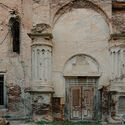
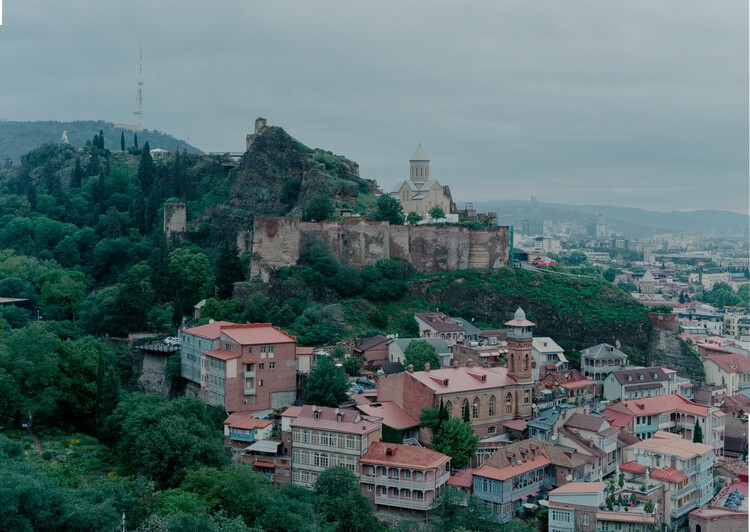
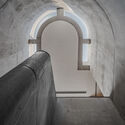
Narikala Fortress (Earliest parts dates back from 4th century), Tbilisi, Georgia. Image Courtesy of National Archives of Georgia
Ubani — Tbilisi Cityscape Research Center has released "Kala," the first publication in its new Guide to Tbilisi Districts series, offering an in-depth look at one of the Georgian capital's oldest urban areas. As a non-profit organization dedicated to researching and promoting Tbilisi's architectural heritage and landscape, Ubani develops public programs, exhibitions, workshops, and events aimed at making the city's built environment more widely understood. This inaugural guidebook continues that broader mission, situating Kala within the long-term evolution of Tbilisi's urban fabric.
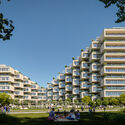
How does the construction sector shape the future of cities? What challenges does it face? At the crossroads of demographic, social, energy, and climate pressures, the construction sector is changing fast. Professionals, institutions, and citizens are working together to build environments that improve health and well-being, encourages durable and place-responsive solutions, cut carbon emissions, withstand climate risks, and provide affordable, high-quality housing.
The fragility—and temporal beauty—of neon has captivated audiences since the early 1900s. First shown commercially by French engineer Georges Claude at the 1910 Paris Motor Show, neon spread rapidly, achieving broad popularity in the United States from the 1920s through the 1950s. Mid-century America saw it everywhere: from the casinos of the Las Vegas Strip to roadside motor inns along Route 66 and the spectacle of Times Square. By the latter half of the century, however, many signs were scrapped or left to decay, and numerous municipalities restricted neon as visually garish or power-hungry—despite the technology's comparatively modest energy use. In the U.S., renewed interest in neon arguably didn't meaningfully return until the early 2000s.
In Hong Kong, by contrast, neon was embraced with unusual enthusiasm at a time when it began to lose popularity elsewhere. Even as installation slowed in recent decades—largely due to updated ordinances requiring removal of overhanging signs whose support structures failed to meet safety standards—the city's affinity for neon never fully disappeared.
Every year on 3 December, the International Day of Persons with Disabilities brings renewed attention to the need for inclusive, equitable environments, both socially and spatially. The 2025 theme, "Fostering disability inclusive societies for advancing social progress," highlights how persistent barriers in employment, social protection, and access to services continue to affect more than one billion people worldwide. Within this broader context, the built environment plays a decisive role: architecture can either reinforce exclusion or open pathways toward autonomy, dignity, and participation in daily life.
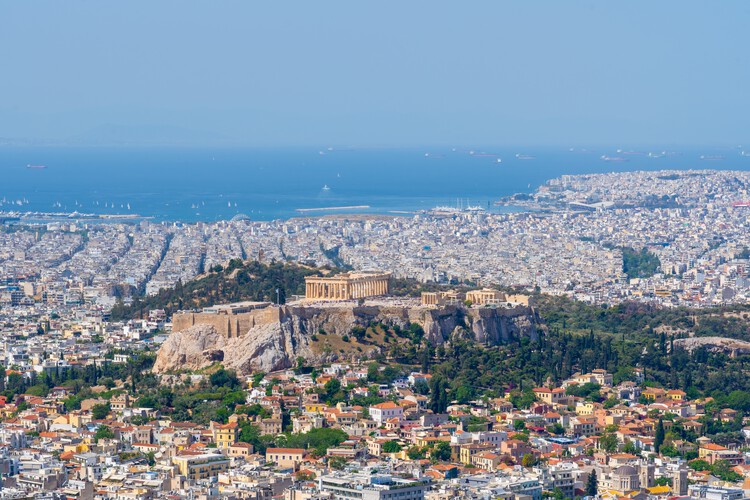
Greece's built environment is shaped by the coexistence of multiple architectural layers, where historic structures, modern interventions, and evolving urban systems intersect. Classical landmarks and their surrounding urban fabrics continue to inform the spatial character of cities, while postwar developments, infrastructural upgrades, and contemporary projects add new dimensions to the country's architectural landscape. This continuity between past and present provides the foundation for current design approaches, which increasingly focus on balancing heritage, environmental considerations, and contemporaryurban needs.
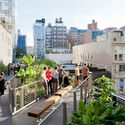
What does optimism feel like in cities that can no longer rely on perfection as their ultimate ambition? Across the world, urban environments bear the weight of overlapping pressures: climate volatility, spatial inequality, political fragmentation, public distrust, and chronic infrastructural disinvestment. These realities render the idea of an ideal city increasingly detached from lived experience. Yet the hope for building better systems persists. While utopian visions may seem like an escape from the growing complexities of the modern world, the greater challenge for contemporary city-making is to confront those complexities rather than avoid them.
Urban renewal is inherently fraught—financially complex, politically exposed, stakeholder-dense, and almost guaranteed to leave someone dissatisfied. Precisely for these reasons, many cities default to inertia rather than risk the upheaval that comes with reworking entrenched urban fabrics, their residences, and their dynamics; once the "sleeping bear" is prodded, unexpected complications tend to multiply.
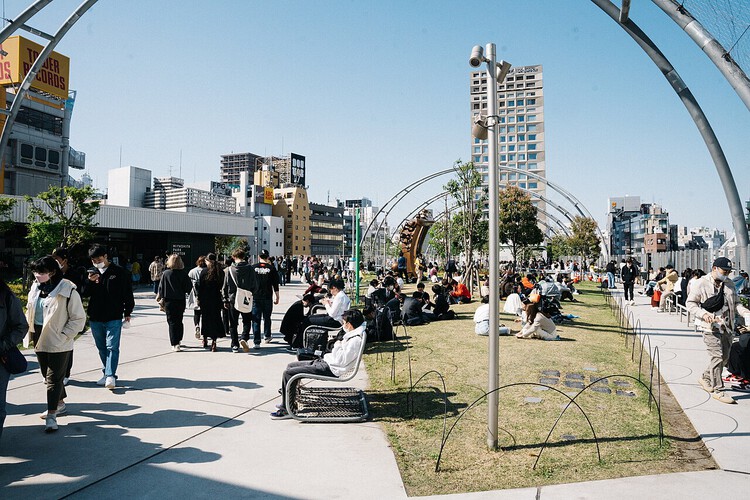
Miyashita Park (Miyashita Kōen), located in Shibuya, Tokyo, crystallizes this dilemma. Its current form—a layered, mixed-use complex balancing commercial activity with a publicly accessible park—emerged from years of negotiation, critique, and recalibration. The result is a distinctive example of a public-private partnership that seeks to align urban amenity, everyday leisure, and economic viability, producing a new piece of city that hosts public life while underwriting its own upkeep.
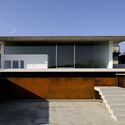
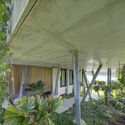
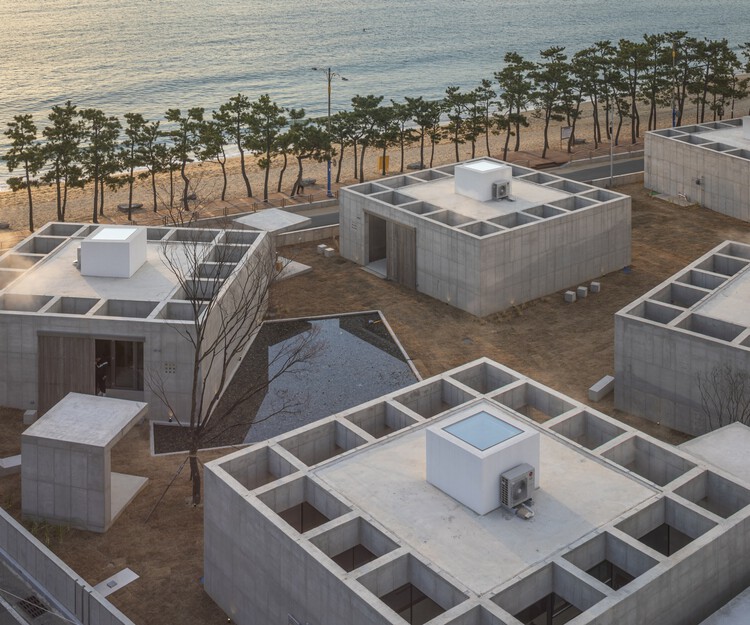
Living by the beach has long been a defining aspiration—drawn by the promise of tempered nature, privacy, and immediate access to the water. Historically, beach houses tended to be rustic and pared back: partly because servicing remote sites and delivering materials was difficult, and partly because their charm lay in being closer to the elements—simpler, rougher, more direct.
Accordingly, many early beach houses were built in timber. Wood offered clear advantages: it was lightweight, adaptable, quick to work with, and could be erected with minimal heavy machinery. While timber weathers and fares poorly in salt-laden humidity, exterior-grade lumber carries a raw, natural character that reinforced the appeal of the beach-house ideal.
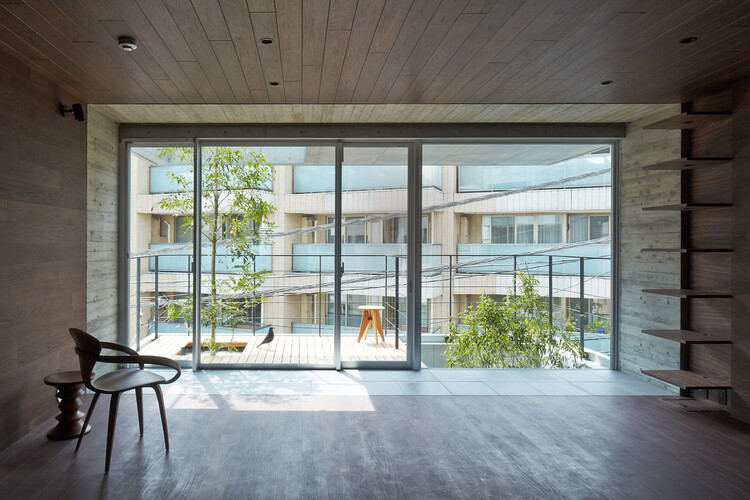
Balcony House / Ryo Matsui Architects. Image Courtesy of Ryo Matsui Architects Inc
We walk on "flat" ground every day and rarely think twice—but how flat is it, really? In the city, curbs are chamfered, sidewalks pitch toward grates, and roadways are crowned to shed water into shallow gutters. In suburbs and on unpaved paths, irregular terrain is the norm. Inside buildings, by contrast, we pursue near-perfect horizontality—structural frames, slabs, and finishes are all disciplined to create level walking surfaces in the name of safety and accessibility. Yet flatness is inherently at odds with water. A closer look reveals a quiet repertoire of accommodations: slight falls at entries, thresholds raised a few millimeters, wet areas with barely perceptible pitches. The floor is read as flat, but it is in fact carefully tuned—micro-topographies masquerading as plane—to manage water without calling attention to themselves.
What are the common ways architects "keep things flat" while actually managing water—the perennial enemy of buildings? A useful way to look at it is by zooming into three recurring conditions: exterior or roof decking, bathrooms and other wet rooms, and exterior ground planes. Each relies on a slightly different toolkit—pedestal systems over sloped waterproofing, micro-gradients to floor traps, hidden perimeter drains, split slopes—to maintain the illusion of a seamless, level surface. Studying these situations side by side reveals just how much design effort goes into reconciling perceptual flatness with the messy reality.
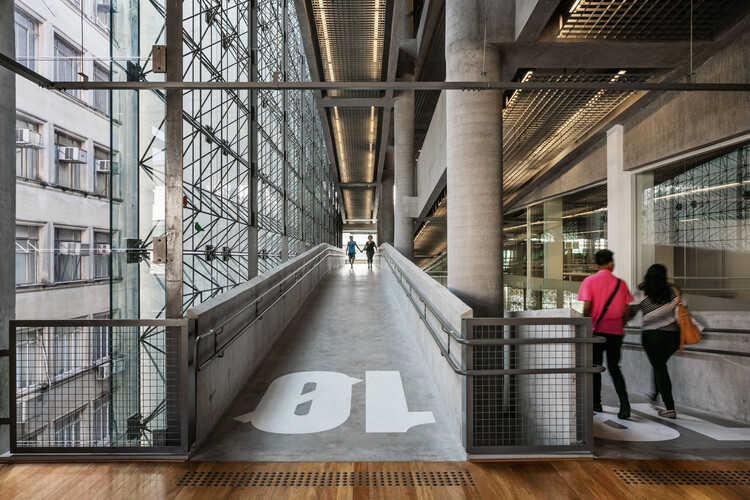
Domestic workers in Hong Kong and Singapore are the city's quiet infrastructure. In Hong Kong alone, there are a total of roughly 300,000 domestic workers, serving a portion of the approximate 2.7 million households. Their care labor sustains dual-income family routines: childcare, eldercare, cooking, cleaning, and the everyday logistics that make professional life possible. Yet the people who hold this balance together remain largely invisible in policy—and, crucially, in space.
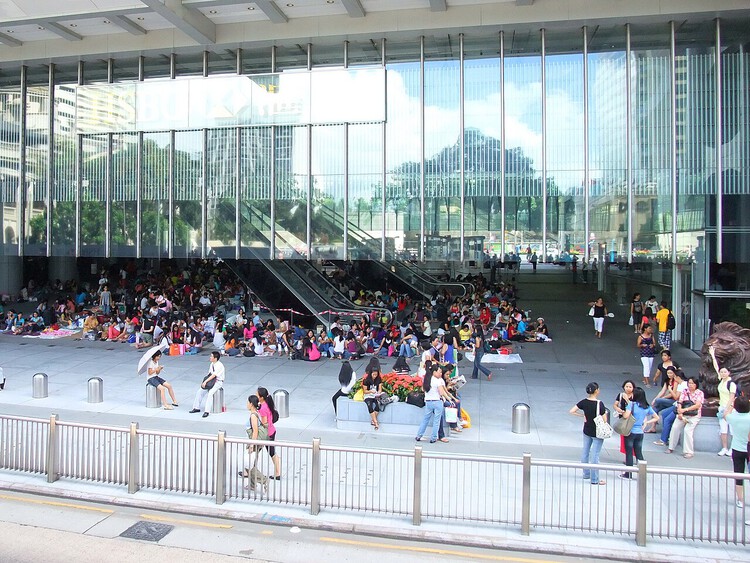
On Sundays in Hong Kong's financial district, that invisibility becomes visible. Elevated walkways and podium forecourts—underused on weekends—turn into ad-hoc commons. With cardboard mats, small tents, towels, food and water, and a music speaker or two, domestic workers assemble places to sit, rest, and socialize. These improvised rooms in the city are often their only chance to exercise spatial agency—something they rarely have in the homes they maintain or in formal public infrastructure. In the absence of sanctioned, serviced places for rest, quieter bridges and passages become practical stand-ins.
Architecture—one of the few cultural artifacts made to be publicly lived with, preserved, and often capable of standing for centuries—contributes significantly to the cultural identity of places and people. Historically, buildings have expressed institutional attitudes, influence, and power; they are clear demonstrations of culture. Yet longevity complicates preservation: when a structure is rebuilt, repaired, or entirely reassembled, in what sense is it still the same building?
There's the classic Ship of Theseus puzzle from Plutarch. if a ship's planks are replaced one by one over time, is it still the same ship? Thomas Hobbes adds a twist—if the original planks are reassembled elsewhere, which ship is "the original"? The paradox tests what grounds identity: material fabric, continuous use and history, or shared recognition. In architecture and conservation, it reframes preservation as a choice among keeping matter, maintaining form and function, or sustaining the stories and practices that give a place meaning.
Historically—like other cultural forms—architecture has been documented, shared, and promoted primarily through print. Books, journals, and magazines carried the discipline's arguments and images, and because architectural practice relies so heavily on visual communication, printed journals created a bridge between academic publications and commercial magazines. Through the postwar decades, beautifully produced volumes curated a collective point of view, signaling what the field broadly considered discussion-worthy or exemplary.
Across major cultural centers, a handful of publications shaped this discourse: Their perspectives were typically sophisticated, professional, and carefully edited—distilling an unruly global output into a small constellation of remarkable projects. The system arguably privileged certain practices and geographies, but it also amplified architecture for wider audiences. Buildings began to lodge in public imagination; cultural travel—journeys taken expressly to experience architecture—moved from rarity toward ritual.
The museum and gallery visit has long been a highly curated experience. Visitors are guided through a carefully orchestrated sequence of rooms, with hand-picked works arranged to tell a specific narrative, supported by signage, graphics, scenography, and calibrated lighting. Even the rarely changed exhibitions - the permanent collections, also typically rely on a strong curatorial voice— led by noted artists or curators—to set institutional stance and shape interpretation.
At the same time, storage areas for museums and galleries are typically kept separately—often within the same building but under tightly controlled access, and not infrequently off-site in dedicated facilities, such as the Louvre Conservation Centre. These zones have long been understood as highly controlled spaces not only in terms of access, but also in relation to climate, humidity, archival order, handling protocols, maintenance, and repair. For fear of thefts and that the spatial, environmental, and sequencing requirements of the archive could be disturbed, storage has traditionally been somewhat secretive and primarily serves academic researchers and art practitioners by request. Rarely does the general public gain a comprehensive picture of the works safeguarded by any given institution.
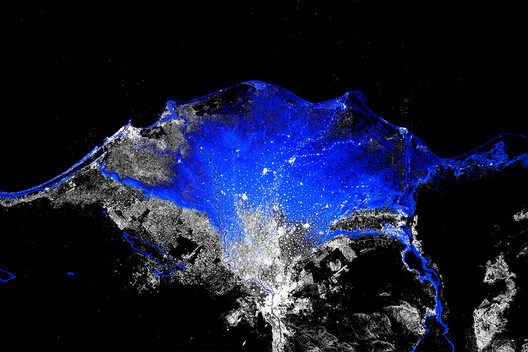
The Nile Delta, in blue the rise of mean sea level with a 2°C increase above pre-industrial levels, Sentinel data. Territorial Agency: Oceans in Transformation, 2020
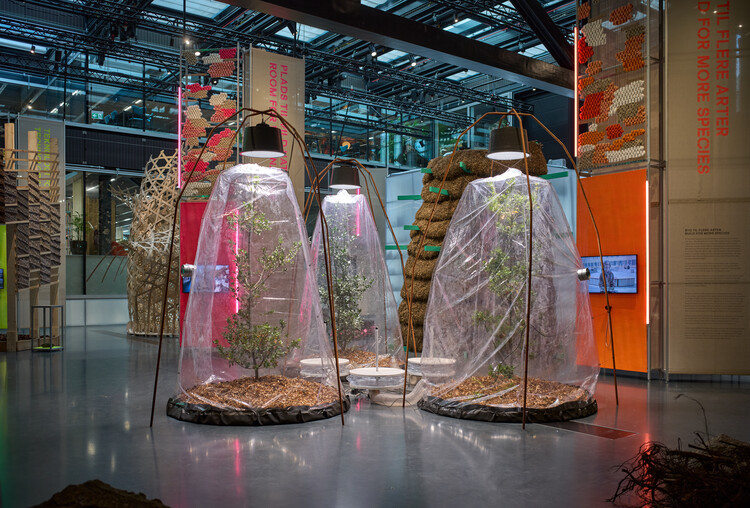
How heavy is a city, and what does that weight mean for our collective future? This provocative question guides the 7th edition of the Lisbon Architecture Triennale, which proposes an inquiry into the transformations of urban life and the material, social, and environmental consequences of inhabiting the planet today. From October 2 to December 8, Lisbon will once again host one of Europe's most significant architectural events.
Curated by Ann-Sofi Rönnskog and John Palmesino, founders of the practice Territorial Agency, the Triennale investigates the magnitude of contemporary cities and their planetary impact. Composed of nearly 30 trillion tons of materials, global cities form a dense and intricate web of continuously evolving structures. To unpack these complexities, the Triennale opens itself as a space of learning, curiosity, imagination, and debate — a meeting ground for architects, researchers, artists, and the wider public.
https://www.archdaily.com/1034626/how-heavy-is-a-city-exploring-the-lisbon-architecture-triennale-2025ArchDaily Team
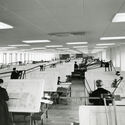
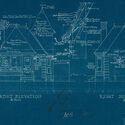
Architecture's design process has always been shaped by the tools at hand. We once drew with pen and ink on fragile sheets, copied by blueprint and guarded against smudges and tears; then Mylar arrived, making revisions and preservation easier and nudging drawings toward a leaner, more deliberate economy of lines. Computer-aided drafting followed, speeding coordination and changing how we think about scale and precision. Today, AI adds another layer—gathering information in seconds and spinning images on command—promising new efficiencies while raising fresh questions about authorship and craft. What we make, and how we make it, has evolved with each tool; the history of our methods is the history of our ideas.
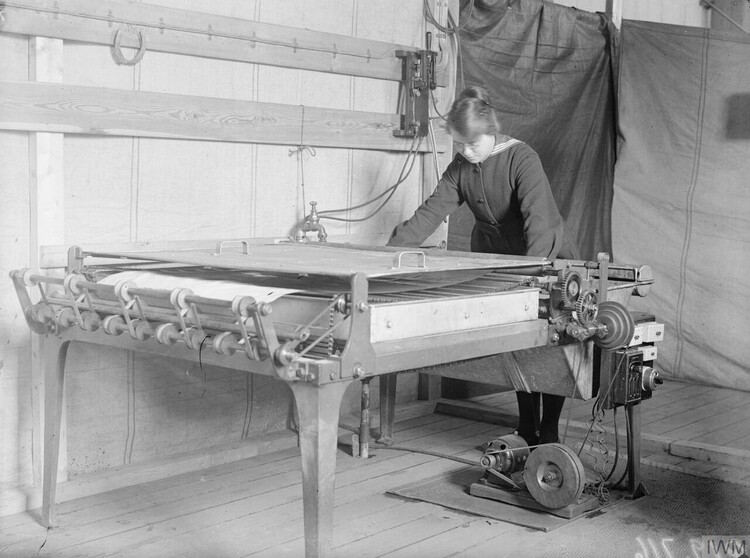
Beginning in the post-war era, Mylar (developed in the 1950s) eased drawing reproduction and hastened the shift from blueprint to whiteprint processes. Before Mylar, simply preserving drawings—keeping an idea intact, legible, and undamaged—was a significant task. Post-war design priorities often leaned toward efficiency, simplicity, and an industrial minimalism aligned with reconstruction needs. The tools reinforced this: architectural work remained predominantly hand-drawn, where every line took time to lay down and even more time to erase. That labour sharpened the economy of drawing; each stroke had to earn its place.
This year marks 20 years since the first VELUX Daylight Symposium—two decades of shared insights, ideas, and exploration into the role of daylight in our built environment. Since its humble beginnings in 2005, the symposium has grown into a leading international forum for cross-disciplinary dialogue on daylight.
The 10th edition, taking place in the heart of Copenhagen, will once again bring together researchers, architects, engineers, and policymakers to examine the evolving role of daylight in architecture and design. It's a space where science and practice meet to reflect on past learnings and look ahead to the future of daylight in our cities and spaces. Join the livestream on September 18th, 2025, from 09:00 to 17:30 (CEST).