Global construction company Skanska is teaming up with Foster + Partners and the engineers at Loughborough University (LU) to create the world’s first commercial 3D concrete printing robot. The company has signed an agreement with LU, who has been working on the project since 2007, to partake in an 18-month initiative with a consortium of partners focused on developing a robot capable of printing complex structural components with concrete.
A video about LU's research on 3D concrete printing and Foster + Partner's involvement, after the break.
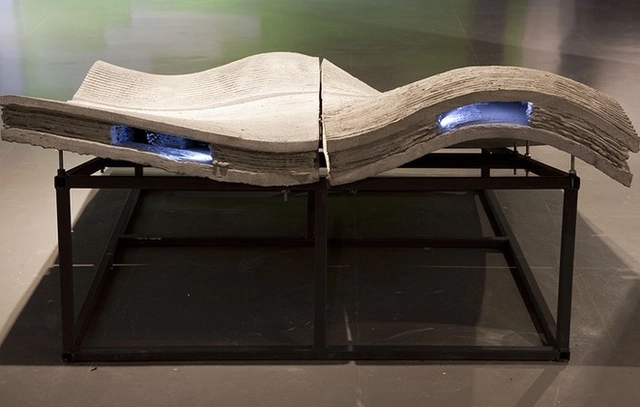
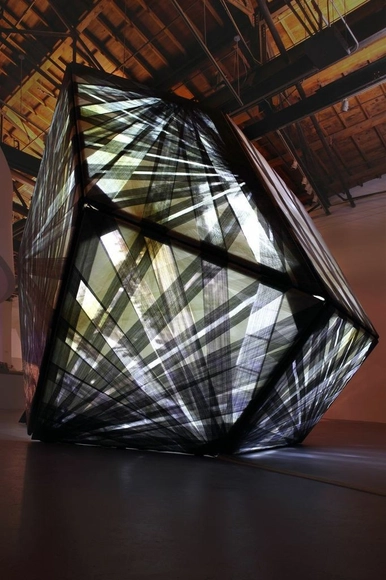
Plastic Stereotomy / Justin Diles. Image Courtesy of TEX-FAB
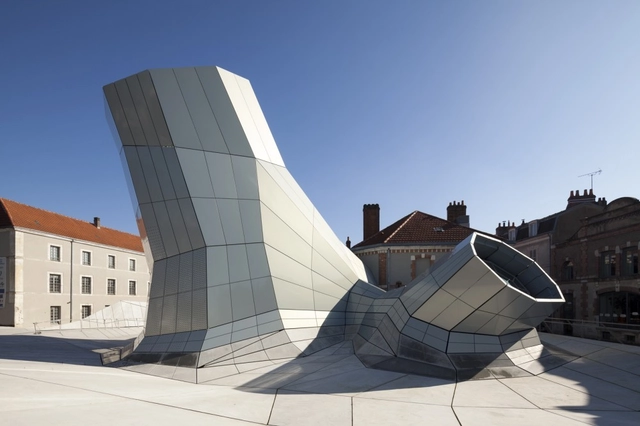
Ohio State University assistant professor Justin Diles has been announced as winner of the TEX-FAB Plasticity International Design Competition for his proposal, Plastic Stereotomy. Selected from 70 entries by a jury consisting of Craig Dykers, Bill Kreysler, Roland Snooks and Greg Lynn, Diles’ entry received top honors for its “approach to blending structural capacity with anthropologic sensitivity,” and for being “aesthetically interesting.”
More about the potential of Plastic Stereotomy, after the break.
Behrokh Khoshnevis of the University of Southern California has won Grand Prize in the NASA Tech Briefs magazine’s “Create the Future” contest for his entry, "Robotic Building Construction by Contour Crafting.” The revolutionary construction method was awarded for being a “major innovation” that could potentially 3D print entire neighborhoods in half the time and at 30 percent less cost than traditional building methods.
Though some have visions of using Contour Crafting (CC) to sculpt the moon's first settlements, Khoshnevis primary desire is combat the world's housing shortage by using the automated construction method to rapidly deploy housing in impoverished and disaster areas.
More information and an interview with Khoshnevis on CNN, after the break.
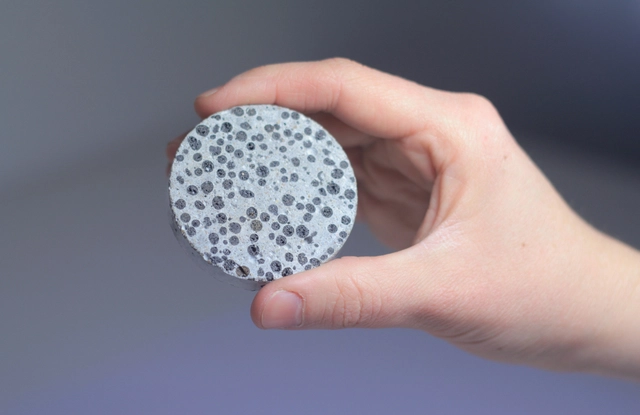
Buildings, regrettably, don't last forever. Until recently, the only way to increase a building's lifespan was ongoing maintenance, which can be expensive, time-consuming and in the case of infrastructure such as bridges or roads, inconvenient. Beyond that, periodic replacement of the entire structure was an option, however this is clearly not a sustainable solution, especially considering the amount of CO2-releasing concrete used in modern construction.
But in the 21st century, another alternative is emerging. This article on CityLab uncovers three self-healing materials that could significantly extend the lifespan of a construction, including Erik Schlangen's asphalt that re-sets itself with a dose of induction heating, concrete developed at TU Delft (and elsewhere) that patches up cracks with the help of its living bacterial aggregate, and a recent discovery by MIT scientists that some metals have self-healing properties.
Read the article in full here, or carry on after the break for our own coverage of Erik Schlangen and TU Delft's work in self-healing materials.
The architects of Emerging Objectshave devised a scheme for a 3D printed house made from locally harvested salt and concrete. Known as the “3D Printed House 1.0,” the case study residence was commissioned by the Jin Hai Lake Resort Beijing. It integrates traditional construction methods with renewable 3D printed materials, manufactured by Emerging Objects, to build a house that is sustainable, structurally sound and beautiful.
Jury chairman Winy Maas has announced three projects by Arup, Studio Tamassociatiand Elemental as winners of the 2014 Zumtobel Group Awards. With a goal to promote innovations for sustainability and humanity in the built environment, the awards represent three categories: Applied Innovations, Buildings and Urban Developments & Initiatives. This year’s winners were selected from 15 nominees, shortlisted from a competitive pool of 356 submissions.
The winning projects are marked by their innovative and ground-breaking character: “The voting to find the number one project was very close in all three categories, because in each case we were able to choose from among a large number of heterogeneous projects of high quality," Described Maas. "One key criterion for the jury this year was the innovation factor, both in a technical sense and with a view to planning and participation processes as well as ecological and social challenges.”
Imagine a material that shifts and moves according to the temperature of the outside air - like a flower opening up for sunlight and closing its petals at night. New high-tech smart materials have allowed this idea to thrive and the possibilities are endless. Originally posted on Design Curial, the designer and smart material guru Chris Leferti answers a few questions behind these mysterious materials.
There are many materials that are defining the future: renewable resources, completely new materials such as graphene, but one of the biggest and most fascinating groups -- that continues to grow -- is smart materials.
Find out more about these amazing materials after the break
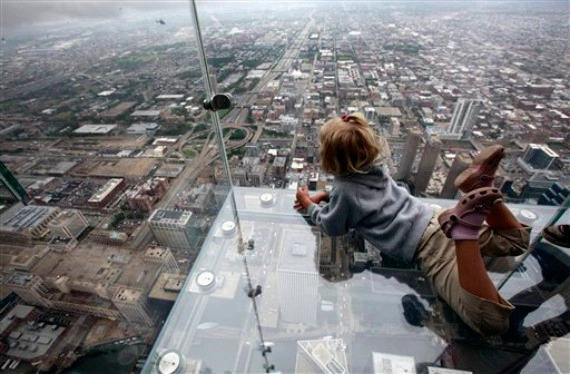
The Willis Tower's Glass Balcony. Image Courtesy of Jared Newman, DesignCrave.com
Imagine standing on a glass platform with Chicago 1300 feet directly below. Suddenly, the glass holding you begins to crack. This actually happened to Alejandro Garibay at the Willis Tower (formerly the Sears Tower) just last week. Luckily, Garibay wasn't hurt, but the occurrence begs the question: how safe is glass - the most common material used in skyscrapers nowadays - really? Karrie Jacobs At Fast Company - Design, asked materials experts to find out "The Truth Behind Building With Glass."
The Zumtobel Group Awards, now in its fourth year, has recognized 15 projects for their innovative contributions to sustainability and humanity in the built environment. Winy Maas of MVRDV and Kazuyo Sejima of SANAA were part of the seven person jury in which selected the winners within three categories: “Buildings,” “Urban Developments & Initiatives,” and the newly implemented “Applied Innovations.”
Ranging from Arup’s photo-bioreactor facade system to Lacaton & Vassal architectes’ “House of Transformation,” the awarded projects have been deemed sustainable exemplars for their contributions to the built environment.
Andrew Carnegie once said, “Aim for the highest.” He followed his own advice. The powerful 19th century steel magnate had the foresight to build a bridge spanning the Mississippi river, a total of 6442 feet. In 1874, the primary structural material was iron — steel was the new kid on the block. People were wary of steel, scared of it even. It was an unproven alloy.
Nevertheless, after the completion of Eads Bridge in St. Louis, Andrew Carnegie generated a publicity stunt to prove steel was in fact a viable building material. A popular superstition of the day stated that an elephant would not cross an unstable bridge. On opening day, a confident Carnegie, the people of St. Louis and a four-ton elephant proceeded to cross the bridge. The elephant was met on the other side with pompous fanfare. What ensued was the greatest vertical building boom in American history, with Chicago and New York pioneering the cause. That’s right people; you can thank an adrenaline-junkie elephant for changing American opinion on the safety of steel construction.
So if steel replaced iron - as iron replaced bronze and bronze, copper - what will replace steel? Carbon Fiber.
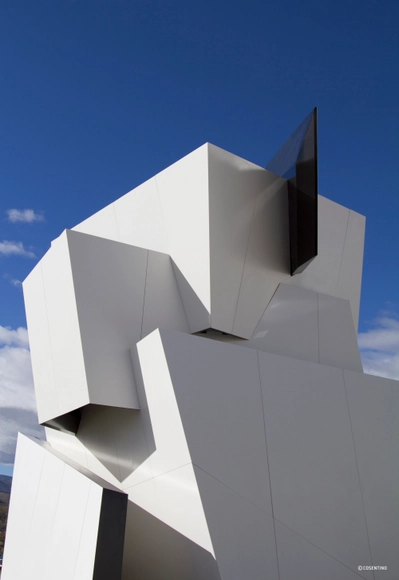
Beyond the Wall / Daniel Libeskind for Cosentino Group
Daniel Libeskind has unveiled a permanent sculpture at the Cosentino Group world headquarters in Almeria: “Beyond the Wall.” Inspired by the “infinite possibilities of the spiral,” the installation is intended to exhibit how the company’s ultra-compact, innovative surfacing material, Dekton® can be used to clad contemporary facades.
“This is not a traditional spiral with a unique center and axis, but a contemporary spiral that opens multiple paths in many different directions,” describes Cosentino in a press release. “In short, a polycentric spiral energy is projected to a dramatic peak.”
Inspired by the woods of Vermont, a US biotechnology startup have developed a system for using agricultural byproducts with fungal mycelium (a natural, self-assembling binder) to grow high performance insulation. Ecovative Mushroom® Insulationis seen as a viable competitor to plastic foams that can be found in both in packaging and building insulation, for which the project recently won second place in the Cradle to Cradle Product Innovation Challenge.
This past September marked the commencement of ArchiLab 2013 at the newly completed FRAC Centre in Orleans, France. Forty architects, designers and artists gathered for the annual architectural exposition and conference’s ninth edition to discuss the deepening overlap between digital architecture and the sciences, particularly molecular biology. Under the theme “Naturalizing Architecture,” two international symposiums took place which provided the opportuntiy for architects and scientists to present, and debate, the latest research revolving this subject and its ever-evolving role within the living world.
To encourage the continuation of discourse, we have complied a video list of all the discussions from the symposium for your viewing pleasure. Enjoy them, after the break, and feel free to share your thoughts in the comment section below.
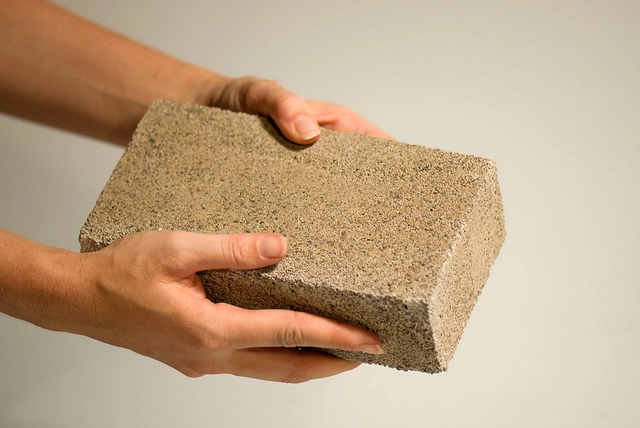
A unique biotechnology start-up company have developed a method of growing bricks from nothing more than bacteria and naturally abundant materials. Having recently won first place in the Cradle to Cradle Product Innovation Challenge, bioMason has developed a method of growing materials by employing microorganisms. Arguing that the four traditional building materials - concrete, glass, steel and wood - both contain a significant level of embodied energy and heavily rely on limited natural resources, their answer is in high strength natural biological cements (such as coral) that can be used "without negative impacts to the surrounding environment."
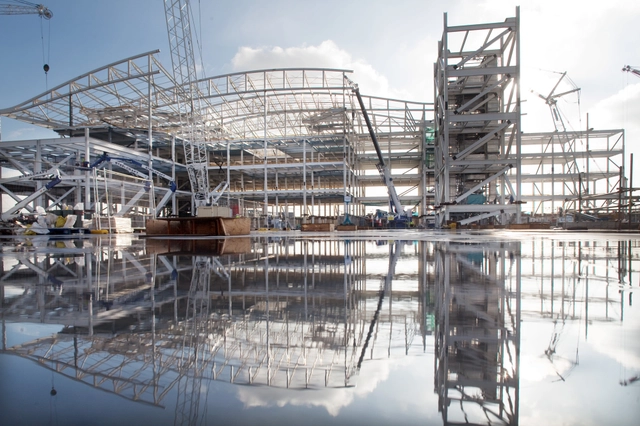
In Progress: Terminal 2A Heathrow / Luis Vidal + Architects. Image Courtesy of LHR Airports Limited
The materials we select and specify to make up our buildings have a real meaningful impact on human health and the environment. Unfortunately, due to a lack of material transparency, that impact is frequently negative, damaging the environment and harming populations across the globe.
In February of this year, Chinese authorities were forced to face the tragic facts and admit that “cancer villages” existed in areas where harmful chemicals, many of which are banned in developed nations, are prevalent in current manufacturing processes. There are many that believe these chemicals are contributing to make cancer the number one killer in China, surpassing cardiovascular disease.
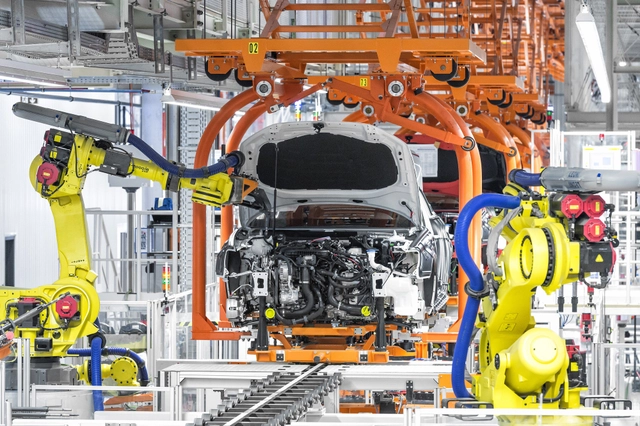
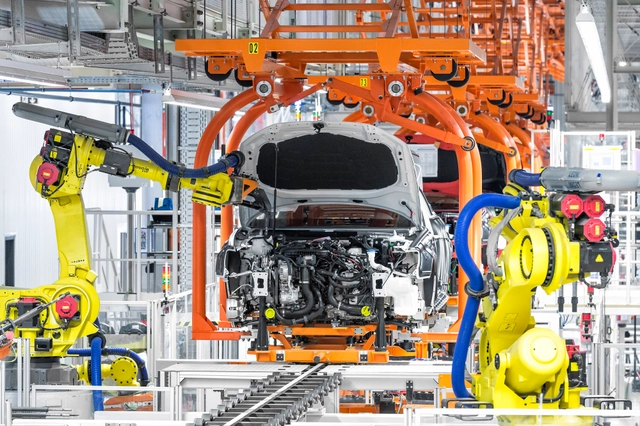
Where does architecture and the automobile industry meet? Many architects, including Le Corbusier, have tried to understand how building construction can be more like car manufacturing, with mass-produced parts that can be easily assembled on site. Ford recently explored the idea at their Design with a Purpose: Built Tough panel discussion held at New York's Center for Architecture. Click here to read The New York Times' coverage of the discussion, and check out ArchDaily editor-in-chief's thoughts on cars and architecture here.
Since the dawn of the modern era, there has been a strong relationship between architecture and the car, especially in the works of Le Corbusier.
Le Corbusier was fascinated by his car (the Voisin C7 Lumineuse); the aesthetics of this functional, mass produced machine deeply influenced his designs. Its focus on function translated into his concept that houses should be "machines for living" and inspired a series of experiments of mass produced, pre-fab houses (such as the Maison Citrohan). Most of these concepts were later materialized in the iconic Villa Savoye, whose floorplan was even designed to accommodate the car's turning radius.
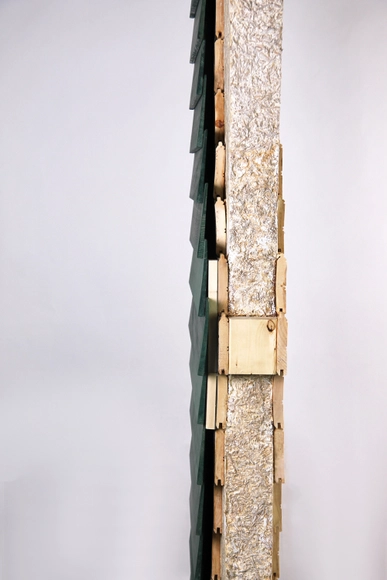
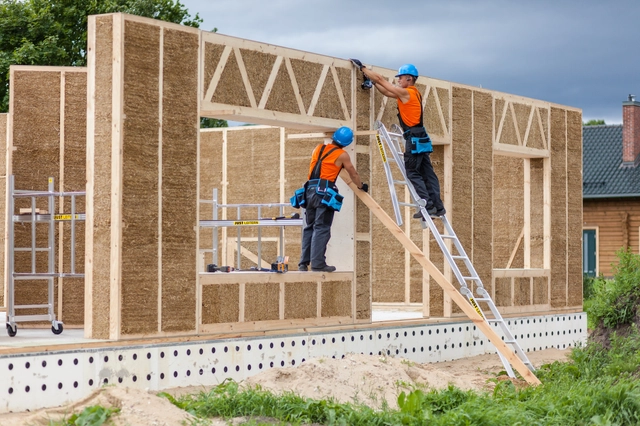
Straw Paneling System Among Finalists. Image Courtesy of Ecococon via Cradle to Cradle
In attempts to better define what it really means to be green, the Cradle to CradleProducts Innovation Institute, in partnership with Make it Right, has selected products from ten companies as finalists in the Product Innovation Challenge. 144 applicants were screened by toxicologists and building professionals, proposing new alternatives from insulation grown from fungi and bricks from living organisms, to roofing made from waste limestone and recycled plastic. The ten finalists represent the shared values of practical sustainability and entrepreneurship, creating "a building product that is safe, healthy, affordable, effective and designed to be returned safely to nature or industry after use."
Three winners will ultimately be announced on November 15, 2013 at the Institute's Innovation Celebration in New York City, offering a $250,000 cash prize: $125,000 for first place, $75,000 for second and $50,000 for third. The jury members, who include executives from Google, US Green Building Council and the Schmidt Family Foundation, will judge each product based on five categories: material health, material reutilization, water stewardship, renewable energy and social fairness.
Without further ado, the 10 finalists are…
https://www.archdaily.com/429522/finalists-create-next-generation-of-sustainable-building-productsJose Luis Gabriel Cruz