If you are missing the capacity to create emotion, then it doesn’t work, it’s not enough. – Renzo Piano
In this in-depth biographical video by the Louisiana Channel, Renzo Piano talks about his earliest influences, why traveling is essential, the pleasures of drawing, what creativity really means, how “computers are a bit stupid,” the way “beauty can change the world,” and more.
https://www.archdaily.com/886603/renzo-piano-creativity-is-only-possible-when-you-share-creativityZoya Gul Hasan
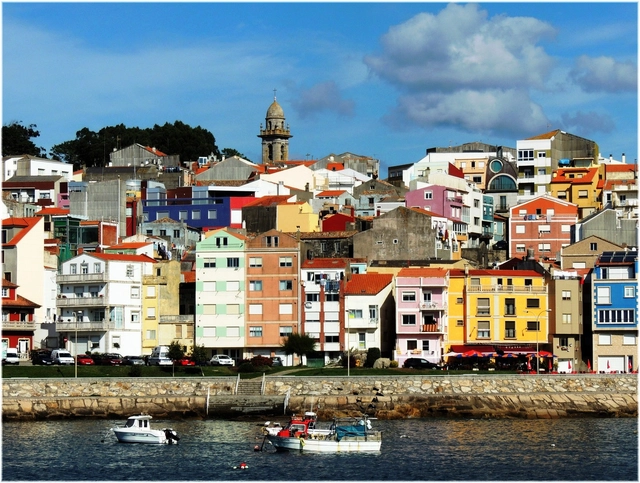
Last October 23, in the small Galician city of Ares (Spain), the "Guide of colors and materials" was publicly presented, with which the administration of the Galician community - in collaboration with the Galicia College of Architects (COAG) - aims to establish aesthetic criteria and recommendations in the search for a better image and urban quality of Galician populations.
This document is composed of fourteen volumes and its publication was made possible by a laborious process in which, for a year, architects, historians, and graduates of Fine Arts, had analyzed more than 3,800 buildings in rural, urban and peri-urban areas, as well as in industrial properties in the four Galician provinces.
https://www.archdaily.com/885343/galicia-publishes-a-guide-to-colors-and-materials-of-its-traditional-architectureJavier García Librero
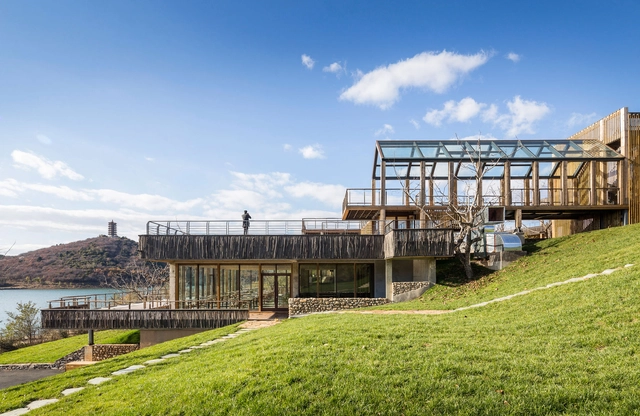
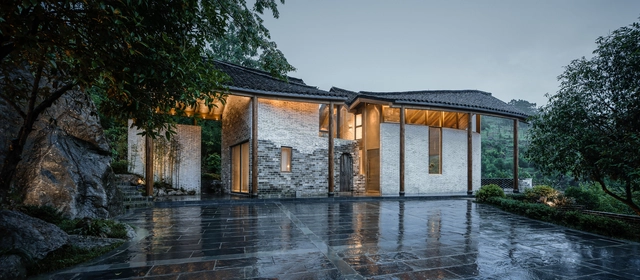
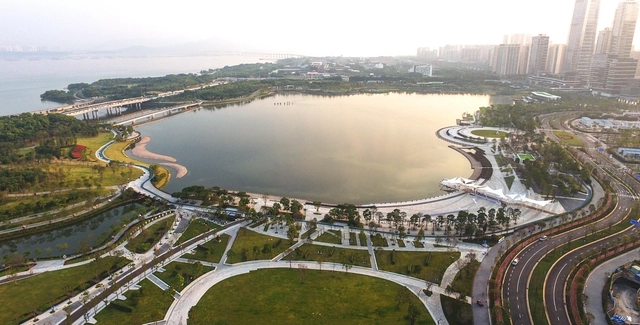
https://www.archdaily.com/884246/tianjin-sino-canadian-ecological-demonstration-zone-exhibition-and-reception-center-ccdi-progressive-atelier罗靖琳 - Jinglin Luo
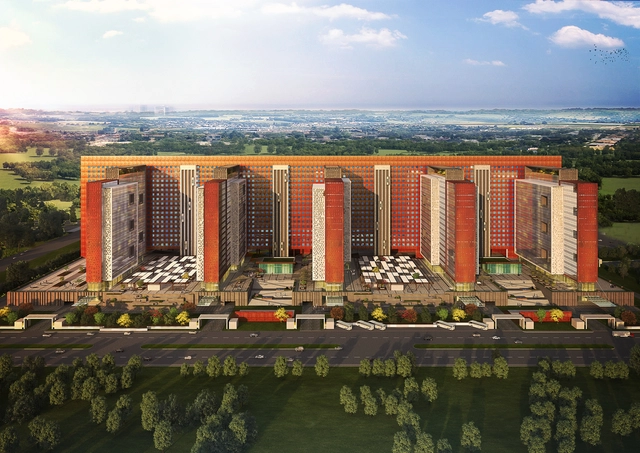
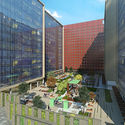
Could you ever imagine working in a small city? A new massive office building by Morphogenesis is being built to accommodate over 45,000 people for the Surat Diamond Bourse office in Surat, Gujarat, India. At 6.5 million square feet, and housing over 4,000 offices, it will be the second largest office building in the world, placing only behind the Pentagon in Washington D.C. Although its physical footprint may be large, the office building was designed in a manner to minimize its ecological footprint. Passive design strategies such as day-lit workspaces, natural ventilation, and indoor/outdoor spaces not only make the Surat Diamond office an efficient climate-responsive design, but also a key player for achieving aesthetic and comfortable working spaces.
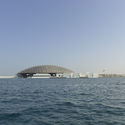
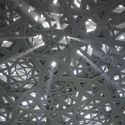
Earlier this month, Abu Dhabi’s much-awaited “universal museum,” the Louvre Abu Dhabi designed by Pritzker Prize-winner Jean Nouvel, was opened to the public. After several years of delays and problems including accusations of worker rights violations, revisions in economic strategies, and regional turmoil, the completion of the museum is a feat in itself. Critics, supporters, naysayers, artists, economists, and human rights agencies, have all closely followed its shaky progress, but now that it’s finally open, reviews of the building are steadily pouring in.
Read on to find out how critics have responded to Nouvel’s work so far.
Cities are universes in themselves; furiously spawning, spewing, hissing through time and space. They are cudgeled, raked, plastered, worshipped, fought over, set on fire; they are slippery wombs that cradle wars, victories, blood and brilliant storms. The built environment has always been indicative of its inhabitants’ fears, desires, and ideals. As such, it is one of the earliest, most powerful forms of human expression. For World Cities Day 2017, the new BBC Designed section of the BBC Culture website commissioned motion graphics designer Al Boardman to create The Perfect City, an animated video covering a brief history of humankind’s quest for the "ideal" and the "perfect" in urban design. With a voiceover and script by renowned architecture critic and writer Jonathan Glancey, the video is a remarkable 2-minute overview of some prominent examples in city planning, both old and new, successful and unsuccessful.
https://www.archdaily.com/882688/playful-animation-tells-the-story-of-humankinds-quest-for-a-perfect-cityZoya Gul Hasan
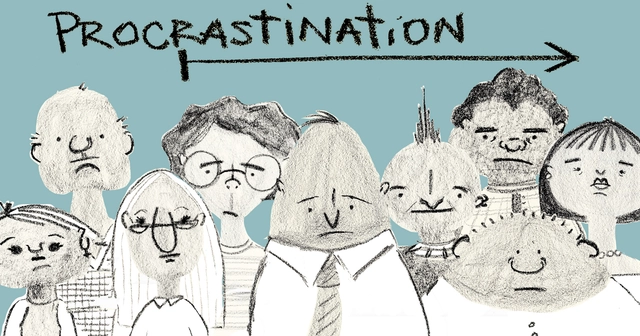
In a hilarious TED talk by world-famous blogger Tim Urban, the procrastinating brain is explained using three squiggly characters: Rational Decision Maker, Instant Gratification Monkey, and Panic Monster. For most of us who procrastinate without fail, the Monkey dominates while the Decision Maker suffers. Panic Monster enters the moment a deadline looms dangerously close—and that’s when all the actual work is done, amid much grumbling, self-loathing and lofty promises of never procrastinating again. But of course, we fail to keep our promises and the wheel keeps turning!
While the internet is full of lists and guides on how to stop procrastinating, for quite a lot of people, those somehow just don’t help at all. And while deadlines, as Urban points out, work for some in terms of getting the work done sooner or later, “long-term procrastination” affects those who must set their own deadlines—think business owners, PhD students, or freelancers. So, how do you get yourself to stop? You don’t! What you need to master is John Perry’s concept of “structured procrastination”—the same concept that Piers Steel earlier explained as “productive procrastination.” Read on for some advice gleaned from pro-procrastination literature.
https://www.archdaily.com/883297/how-to-use-structured-procrastination-to-get-the-best-out-of-your-bad-habitsZoya Gul Hasan
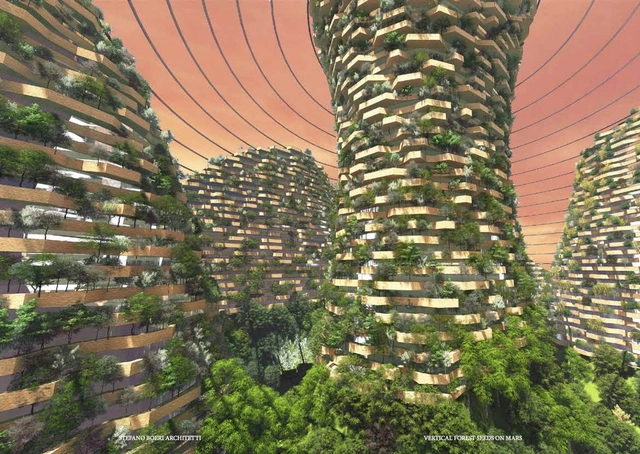
Can architecture and design reverse climate change? Architect and founding partner of Stefano Boeri Architetti (SBA), Stefano Boeri believes it can. Boeri’s Vertical Forest, a project which marries the natural and urban spheres through biodiversity and reforestation, has already come to fruition in Milan, is currently under construction in Beijing, and soon to be constructed in Shanghai. (Watch the video to learn more about Boeri’s Vertical Forest projects.)


.jpg?1513786994)
.jpg?1513786984 "© Xia Zhi")
.jpg?1513786942 "© Xia Zhi")
.jpg?1513786963 "© Xia Zhi")
.jpg?1513786685 "© Xia Zhi")
.jpg?1513787005)
















.jpg?1510240297&format=webp&width=640&height=580)
.jpg?1510240074 "Courtesy of BWAO")
.jpg?1510240251 "Courtesy of BWAO")
.jpg?1510320149 "Courtesy of BWAO")
.jpg?1510319997 "Courtesy of BWAO")
.jpg?1510240297)
.jpg?1511265934&format=webp&width=640&height=580)
_%C2%A9_Louvre_Abu_Dhabi_-_Photography_Marc_Domage.jpg?1511018413 "© Marc Domage")
.jpg?1511018528 "© Roland Halbe")
.jpg?1511265934)