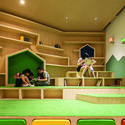
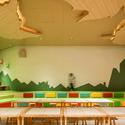
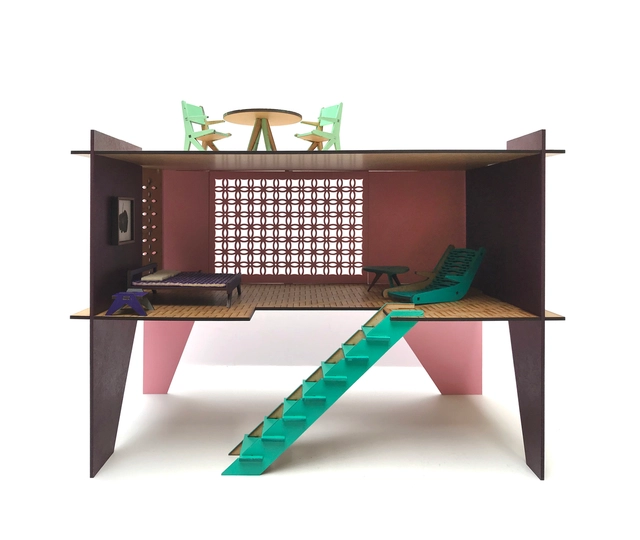
Most architects who are parents have thought, at some point, about designing and building toys for their children. Paula Zasnicoff, a partner at Arquitetos Associados, along with designer Andrea Gomes, decided to go for it and created the Bubud brand.
https://www.archdaily.com/911448/inspire-imagination-and-play-with-architecture-toys-to-assemblePedro Vada
Celebrate Bauhaus 100 through the world's number one visual storytelling platform, Instagram. An essential tool for designers, Instagram is a constantly growing digital database of market sharing and stimulation. Social media has changed not only how we gather precedents and market our designs, but also our designs themselves. "Instagram Culture" drives designers to create more shareable moments. As we continue to seek these dynamic encounters, let us not forget our forefathers of user experience design and the Bauhaus school.
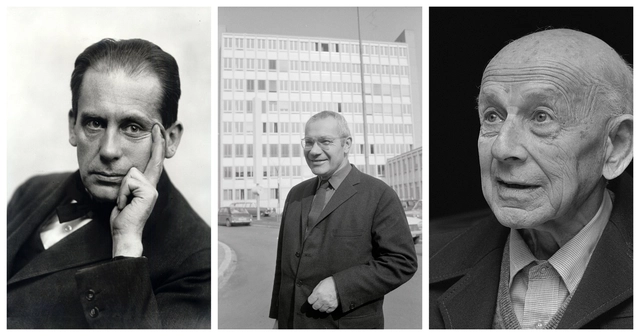
After the dissolution of the Bauhaus due to Nazi political pressure in April 1933, the ideas, teachings, and philosophies of the school were flung across the world as former students and faculty dispersed in the face of impending war. Of the numerous creative talents associated with the Bauhaus, many went on to notable careers elsewhere. Some made a living as artists or practitioners, others either continued or began careers as teachers themselves - and many did both throughout the course of their lives.
The A’ Design Award was "born out of the desire to underline the best designs and well-designed products." It is an international award whose aim is to provide designers, architects, and innovators from all design fields with a platform to showcase their work and products to a global audience. This year's edition is now open for entries; designers can register their submissions here.
Have you ever found yourself losing a good night’s sleep due to an overly warm room? Or wearing four jackets and a scarf just to tolerate your office’s frigid air conditioning? Truth be told, you can’t please everyone when it comes to adjusting an indoor climate, and there is always that one unfortunate individual who ends up sacrificing their own comfort for the sake of others.
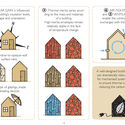
Evidently, there are no ‘universal standards’ or ‘recommended comfort ranges’ in designing building systems, since athletes training in a gym in Mexico will not feel comfortable in an interior with the same building systems of a nursing home in Denmark, for instance. Which is why, if we were to briefly define ‘thermal comfort’, it is the creation of building systems that are adapted to the local environment and functions of the space, cooperatively.
Sculptor and jewelry designer, Cydney Ross explores the architectural passage of time through unconventional ceramics and mixed media. By over-firing, freezing, and thawing her materials, she simulates the swaying, slumping, and even collapsing of structure.
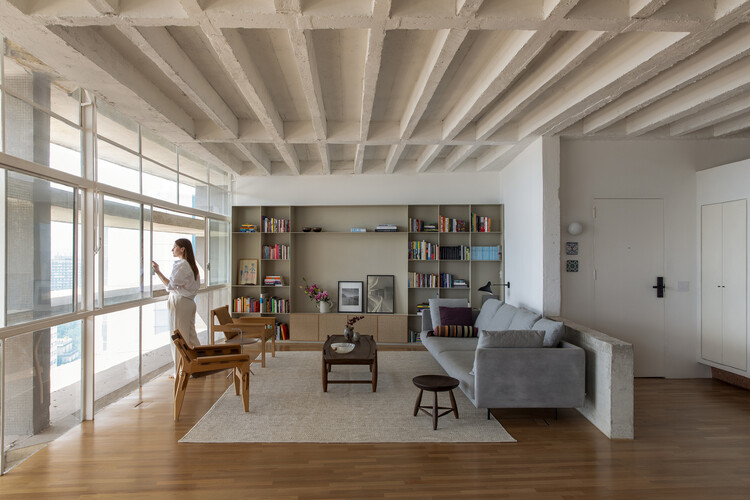
Living in residences designed by renowned names in modern architecture is a dream sought after by many. Projects that have become iconic are major attractions for new residents who value both the authorial signature and history of the building, as well as the innovative architectural solutions that have contributed to the prominence of such projects.
In regards to the work of Oscar Niemeyer, fluidity and flexibility may best express his plans and typologies. These features provide great potential for architects working on renovations within these buildings. São Paulo’s Copan Building is a prime example: its 1,160 units, spread over six blocks, vary from 25m² studio apartments to larger units of over 150m². Niemeyer’s extensive portfolio includes other residential landmarks in São Paulo — like the Montreal, California, and Eiffel buildings — plus others in Belo Horizonte and Brasília, reaching as far as Berlin with the Interbau Apartment House.
For the fresh architecture student, the “jury,” “review,” or “crit” is far from glorious—sounding more like a death knell than a customary critique session. The concept, as Kathryn Anthony explores in DesignJuries on Trial: The Renaissance of the Design Studio, goes as far back as the 1980s when the Ecole Nationale et Speciale des Beaux-Arts in Paris became the first art and architecture school to experiment with a format that would soon be adopted by architectural schools across the world. While some schools have taken steps to loosen traditional hierarchies, others continuing to reinforce them, much to the terror of fledgling first-year students who aren’t used to being “tried.”
So what can one really do to ease into this rather uncomfortable aspect of architectural education? Below is a fairly simple list of dos and don’ts that could go a long way in helping you out.
https://www.archdaily.com/886451/dos-and-donts-for-your-very-first-jury-in-architecture-schoolZoya Gul Hasan
Why do we build? How do we build? Who do we ultimately build for? These have been questions that have dominated the worlds of both practice and pedagogy since the early ages of architecture. On a basic level, those questions can be answered almost reflexively, with a formulaic response. But is it time to look beyond just the simple why, how, and who?
In a world where the physical processes of architecture are becoming increasingly less important and digital processes proliferate through all phases of architectural ideas and documentation, we should perhaps be looking to understand the ways in which architects work, and examine how we can claim the processes—not just the products—of our labors.
If asked about comfort, what is the first thing that comes to mind? Luxurious finishes, plush chairs and sleek interiors? Few would think of their office, and the likely culprit is a fundamental ignorance of an alternative definition of comfort. When defined as a state of physical well-being derived from the provisions that are necessary for occupants to perform space-specific tasks, it’s apparent that architects play a key role--and that comfort is not just about spaces that are comfortable for leisure activities.
Architects and designers are responsible for the visual, thermal and acoustic qualities of spaces, not to mention the indoor air quality of our offices and homes. This is fundamental considering that the typical 21st century urbanite spends an average of 90% of time indoors. We constantly experience physical, psychological and physiological consequences of the balance (or imbalance) of indoor environmental design .
With this in mind, thermal comfort seems obvious (and it is) but unfortunately comfort as a holistic goal of architecture has not been taken seriously enough. Beyond measuring the acoustic and visual aspects of a built space, architects must have a solid understanding of the underlying concepts that drive the best practices. A solid grasp on how material selections will affect qualitative assessments of conferences rooms, homes, theaters, etc. can improve basic tectonic decision making that can, in turn, create more comfortable spaces.
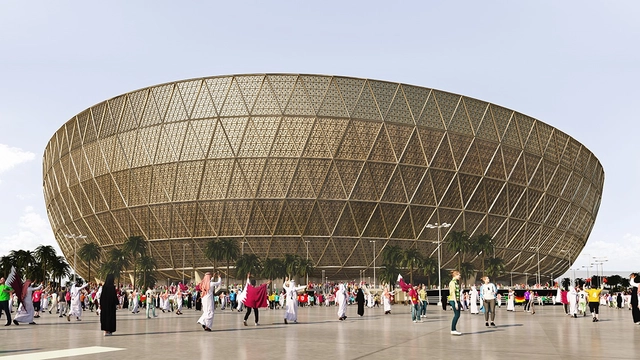
The organizers behind the FIFA 2022 Qatar World Cup have released new images of the Foster + Partners-designed Lusail Stadium. Merging contemporary and historical influences, the “sleek, bold shape” of the arena is inspired by the bowls and vessels used in the Middle East across centuries.
Architects are often driven by forces which are stronger than aesthetics or even client whims and desires. To some extent we’re captive to the tools and materials we use, and the legal limitations placed on us as architects. Today a new code definition has changed one type of building in all of the ways architects usually control.
It's easy to feel overwhelmed by the massive production of architecture today. Scroll through ArchDaily for more than a minute and even we'd forgive you for losing track of it all. But what seems like an endless scroll of architectural production doesn't quite fit with the popular movements surrounding resource sharing and community.
Hidden among the mass production that has defined architecture in the last century is a germ - one that seems to be marching to the forefront of practice today. More and more designers seem to be taking on locally-focused and/or adaptive reuse works. Award shortlists today highlight not icons by recognizable names, but sensitive international works that are notable for their process as much as their product.
The common image of the architect may be of one obsessed with ego and newness, but practice today doesn't bear that out as much as it used to. This week's news touched on issues of reduction, reuse, and a radical rethink what architecture is in the 21st century.
https://www.archdaily.com/906505/this-week-in-architecture-reduce-reuse-rethinkKatherine Allen
Home automation, or Domotics, is a set of technologies applied to a residence to control lighting, climate, entertainment systems, and appliances. Its systems allow for efficient management of energy consumption, security, accessibility, and the general comfort of the building, becoming an important issue to consider when designing, building, and living.
Domotic systems are based on the collection of data by sensors, which are then processed to issue precise orders to the executors, varying the environmental quality of each enclosure according to the needs of the user. The pace of current life and the technological advances we have experienced in recent years have led to new ways of living, motivating the design of homes and more human, multifunctional and flexible buildings. What was once a luxury is now a feasible and effective solution for all types of projects.
In this article, we've compiled a collection of smart homes where domotics have been used.
From city master plans to pocket-sized products, Zaha Hadid Architects (ZHA) have explored architectural formalism through innovative digital design methods. In 2006, the collaboration with furniture-makers and fashion houses led to the creation of Zaha Hadid Design that served both as an iterative process for and a resultant of ongoing architectural design.
A pop-up exhibition, located suitably on the ground floor of ZHA's renowned condominium along the High Line in New York City, features a scale model of the building itself on display. To honor and present the work produced by the firm in the last four decades, the Zaha Hadid Gallery showcases a series of projects in a wide range of mediums including the six 'Silver Models' that represent eight of the firm's key works.
This article was originally published on ArchDaily on 13 February 2018.
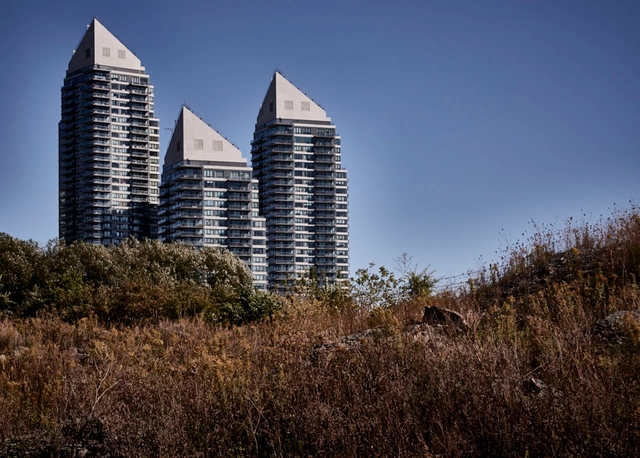
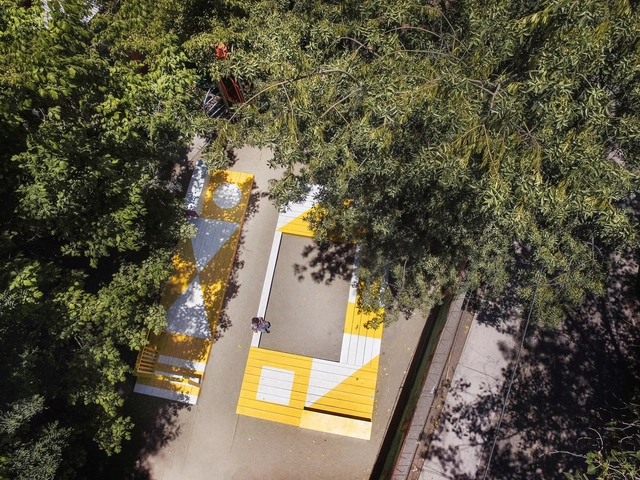
The City of Toronto has a long, fraught relationship with development and vacancy. The map of the initial Toronto Purchase of 1787 between the Mississaugas of the New Credit First Nation and the British Crown, which would later establish the colonial territory that became Toronto, conceives of the landscape as a single, clearly defined vacant lot anxious for development. Or, as artist Luis Jacob better described it, “signifying nothing but an empty page waiting to be inscribed at will.” Over two-hundred years later, as housing availability, prices, and rental shortages drive vertical condominium developments in the city, the politics of the vacant lot have never felt so palpable.











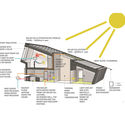
-45.jpg?1545636155 "© Saint-Gobain / illustration by Elisa Géhin")
-44.jpg?1545636138 "© Saint-Gobain / illustration by Elisa Géhin")



.jpg?1530466848 "© María González")