Until the recent outbreak of the COVID-19 pandemic, the climate crisis was perhaps the fundamental design problem of our Anthropocene era. The threat of climate change has forced us as designers to reevaluate how we realize designs at all scales. Eco-friendly interior finishes, net-zero energy skyscrapers, and strategies to prevent the rising sea levels from pushing residents in coastal cities more inland are just some of the innovative solutions that have come from the increased urgency to mitigate the effects of the climate on our world.
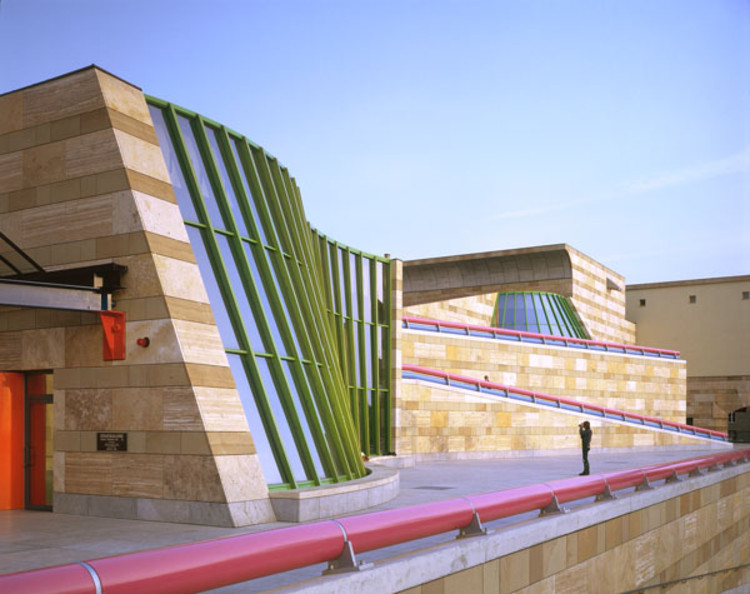
Staatsgalerie, Stuttgart, Germany (1977–1984), 1984. Alastair Hunter, photographer. Image Courtesy of Canadian Centre for Architecture
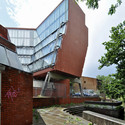
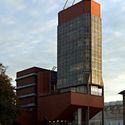
British architect and Pritzker LaureateSir James Stirling(22 April 1926 – 25 June 1992) grew up in Liverpool, one of the two industrial powerhouses of the British North West, and began his career subverting the compositional and theoretical ideas behind the Modern Movement. Citing a wide-range of influences—from Colin Rowe, a forefather of Contextualism, to Le Corbusier, and from architects of the Italian Renaissance to the Russian Constructivist movement—Stirling forged a unique set of architectural beliefs that manifest themselves in his works. Indeed his architecture, commonly described as "nonconformist," consistently caused annoyance in conventional circles.
Nothing is more rational than using the wind, a natural, free, renewable and healthy resource, to improve the thermal comfort of our projects. The awareness of the finiteness of the resources and the demand for the reduction in the energy consumption has removed air-conditioning systems as the protagonist of any project. Architects and engineers are turning to this more passive system to improve thermal comfort. It is evident that there are extreme climates in which there is no escape, or else the use of artificial systems, but in a large part of the terrestrial surface it is possible to provide a pleasant flow of air through the environments by means of passive systems, especially if the actions are considered during the project stage.
This is a highly complex theme, but we have approached some of the concepts exemplifying them with built projects. A series of ventilation systems can help in the projects: natural cross ventilation, natural induced ventilation, chimney effect and evaporative cooling, which combined with the correct use of constructive elements allows improvement in thermal comfort and decrease in energy consumption.
The “smart” movement has gained traction and generated buzz over the last decade, but despite all of the hype, what even is a smart city? The dogma behind its loose definition and goals has been rather elusive, and while some claim that it relies on digitization of all urban aspects, others argue an increase in personal data collection is the sole method for improving urban lifestyles. One person’s digital paradise is perhaps another person’s technophobic doomsday. Extending beyond the mere definition of these cities, what role do designers and researchers play in creating this loosely identified futuristic landscape? As Corbusier once defined a home as a machine for living, it’s time to redefine how our buildings shed their passive exteriors and become the true machines for working that they were always meant to be.
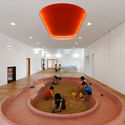
Although we know how important it is to allow children to play in public and outdoor spaces, it is difficult to deny that there are few cities offering adequate prepared environments for children - fun and safe spaces that allow them to experience urbanity and become conscious citizens of community life. For this reason, it is also understandable that families have increasingly instituted leisure spaces in indoor environments, giving their children the freedom and security necessary to learn and grow.
In this article, we have selected 11 incredible examples that demonstrate how interior architecture can help create play spaces for kids of all ages, helping them take their first steps in this world with greater autonomy and confidence.
It is truly odd how we always find ourselves in a bad mood at work and our productivity keeps decreasing as the week passes by. To be fair, we can’t keep blaming our colleagues, clients, or Monday for our rough day; sometimes it’s the chair we are sitting on, the fluorescent lighting above our computer, or the constant “chugging” sound of the printer near the desk.
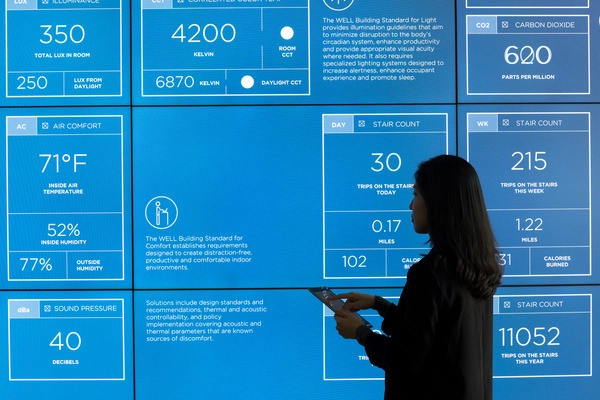
Other than the fact that people spend about 70-80% of their time indoors, almost 9 hours of their day are being spent at work; and studies have indicated that the environmental quality of an office has short and long term effects on the comfort, health, and productivity of the people occupying it. While research on the comfort conditions of workplaces is still relatively minimal, we have put together a list of factors that have proved to be highly influential on the comfort of individuals in workplaces.
Labor gives rise to design. As the aggregate of physical and mental effort used in the creation of goods and services, labor is tied to both what we create and our process. In a field shaped by production, architecture and design depend on labor from a broad range of professionals. But as workers increasingly put in longer hours and traditional measures of security change, questions of labor practices have arisen amid broader conditions of contemporary work culture.
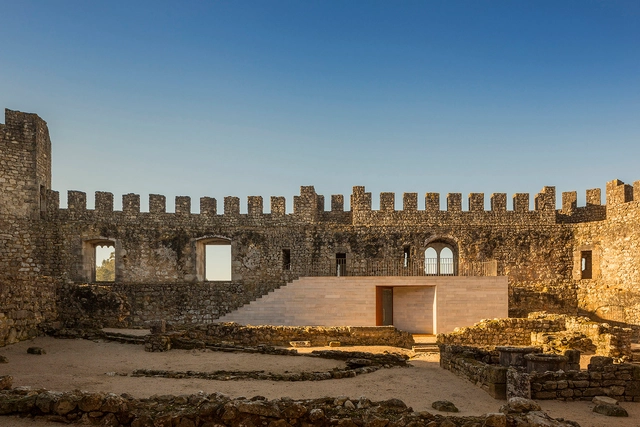
The passage of time will alter, erode, and in most cases, degrade any architectural structure. Whether this be the result of climate, adaptation, misuse, or even war, all buildings are subject to the same life cycles of steady, or extreme, decline. In recent decades, “adaptive reuse” has gained significant traction as a means of breathing new life into an old structure, offering an often complex challenge for designers, architects, and indeed everyday users, who walk a fine line between a respectful restoration of history, and significant adaption for modern needs.
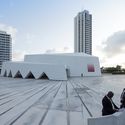
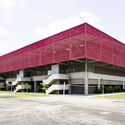
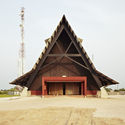
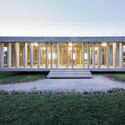
The Ivory Coast is creating a new design language in West Africa. Located between Ghana and Liberia, Côte d'Ivoire is home to a range of modern architecture. Before colonization, the Ivory Coast was home to Gyaaman, the Kong Empire, and Baoulé, with ties that would shape its identity. Now, local architecture is rethinking past traditions to create a model for the future.
For the 1957 International Builders Fair, Oscar Niemeyer developed the Interbau Apartment House, a modernist eight-storey building that sits on V-shaped pillars in the city of Berlin. While the building's facade consists of uniform windows and loggias clad with primary-colored mosaics, it is interrupted by enclosed pathways that connect the structure to the external elevator.
Architectural photographer Bahaa Ghoussainy explored the building and highlighted the complementary relationship between its uniform modernity and dynamic suspensions.
Wherever there is a center, there is by necessity a periphery. This in itself should not generate any headlines; we live in a world of centers, and peripheries that continually stretch those centers, whether it be politics, countries, or societal norms. It also applies to architectural practice. In a complex, interconnected world, members of the architectural profession around the world are constantly expanding into new peripheries, generating new visions for how practice should operate, influenced by technological, political, cultural, and environmental changes.
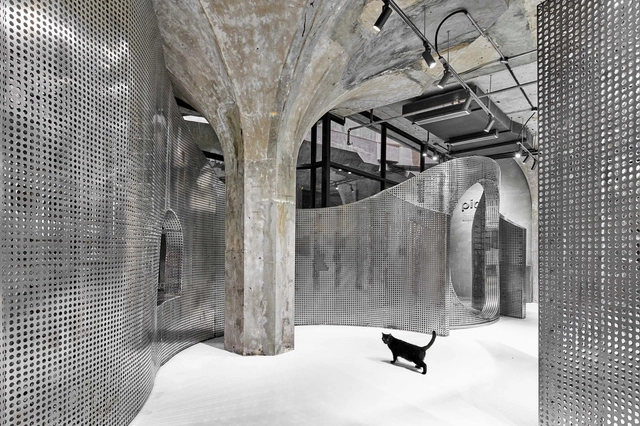
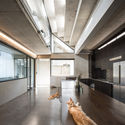
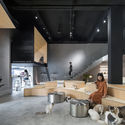
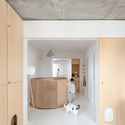
Cats just don’t care. They don’t care if you bought them gourmet food. They don’t care if you got them customized furniture or luxury cardboard boxes, and they definitely don’t care if they are barging into an architectural photo shoot (although, we do think it’s their way of being the center of attention).
Don't believe us? Here's a collection of photographs collected from our projects database where cats are clearly not trying to steal the spotlight.
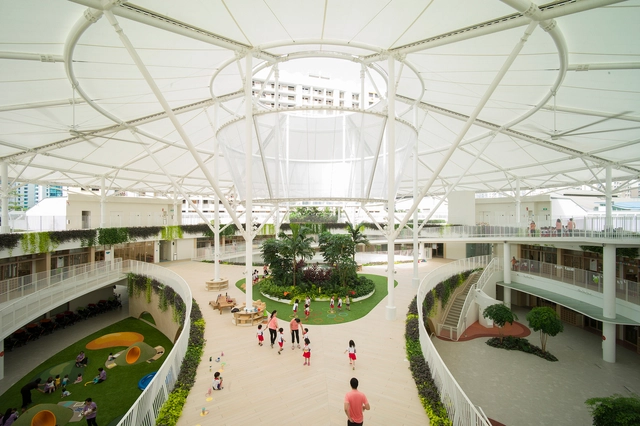
The most important part of children's education happens in the playground, instead of in the classroom. Despite this, many times we find huge empty school playgrounds.
Due to its importance and meaning, many schools and educational institutions have broken traditional paradigms and have opted to explore new possibilities. We have selected innovative examples, in which, through the use of specially designed equipment, strident colors and a variety of textures, they allow recreation areas to promote exchange, learning, and discovery.


_Paolo_Rosselli__DSC2950.jpg?1588226670&format=webp&width=640&height=580)

.jpg?1515030902)


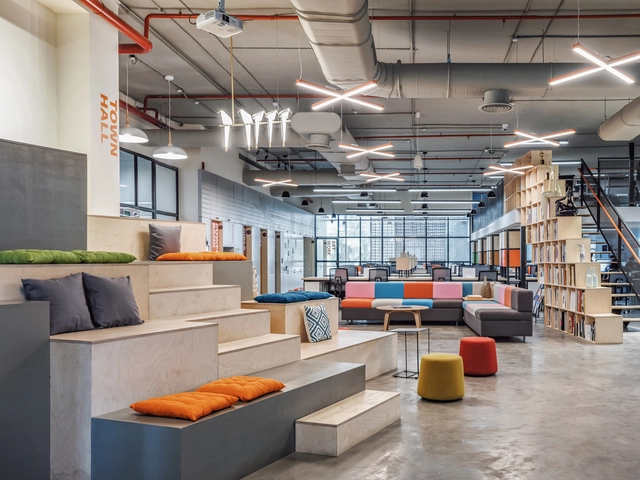
_9546.jpg?1580726149 "BIG Offices. Image © Laurian Ghinitoiu")



__by_Rinaldo_Olivieri__1973._Image_Iwan_Baan.jpg?1576526438&format=webp&width=640&height=580)
__by_Rinaldo_Olivieri__1973._Image_Iwan_Baan.jpg?1576526438)
.jpg?1575455535&format=webp&width=640&height=580)
.jpg?1575455403 "© Bahaa Ghoussainy")
.jpg?1575455498 "© Bahaa Ghoussainy")
.jpg?1575455479 "© Bahaa Ghoussainy")
.jpg?1575455317 "© Bahaa Ghoussainy")
.jpg?1575455535)






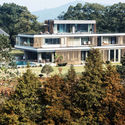
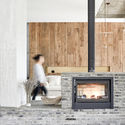
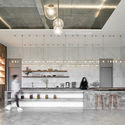
.jpg?1529457519 "1F Restaurant (custommade lamps and reclaimed wood table. Image © Sven Zhang")