It would be an understatement to say that architecture is a profession that closely mirrors economic conditions. In this practice, we’ve all heard the stories or felt the experiences of recessions that were quickly followed by projects put on hold, a decreased pipeline of new business, and the unfortunate impact of layoffs and furloughs. The cyclical nature of the design field, paired with the pressure to meet the spatial needs for a growing global population in a time where the value of land has continued to sky-rocket means that architecture is naturally subjected to economic impacts in a significant way. But some economic theories predict that instead of the economy dictating the ebbs and flows of the design profession, architecture might be one of the influences causing economic downturns.
Rodrigo Escandón Cesarman and Ricardo Roxo Matias of APRDELESP. Image Courtesy of APRDELESP
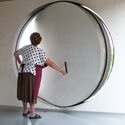
The Architectural League of New York has announced the 6 winners of 2021 Prize for Young Architects + Designers Awards, the North American annual competition that celebrates the works of young architects and designers who have completed their bachelor’s or master’s degree within the last ten years. This year's theme was Housekeeping, which asked participants to explore how the domestic settings have changed over the past couple of years, changing the definition of "ideal residence".
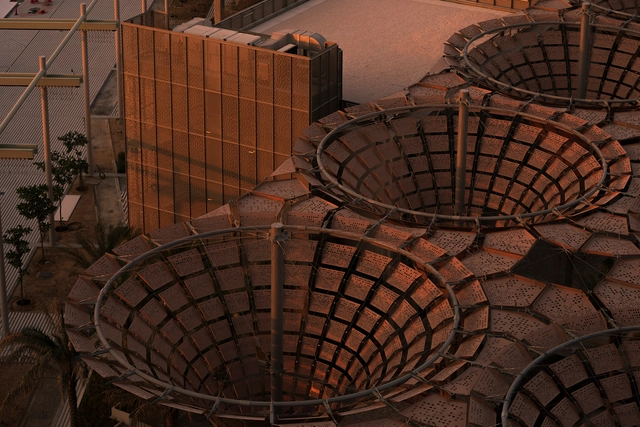
With less than half a year to go until the opening, Expo 2020 Dubai released a series of images of the venues hosting the event, which intends to bring together 192 national pavilions, as well as businesses and educational institutions. As the program was delayed for a year due to the coronavirus pandemic, the world expo site is mainly complete, awaiting its opening on October 1st.
Rare are the fields, from arts and culture, that have so many things in common with architecture, as film does. Acknowledging that this is far from new, this topic has been debated by theorists and authors from both fields ever since the beginning of the 20th century. Architecture has been trying to embody subtle and poetical features from film while cinema has historically served as a means to discuss, represent, and denounce topics tightly related to architecture and cities.
An interesting example of this overlapping can be found in the contemporary production of French-Italian film company Bêka & Lemoine, whose works show a sensible look towards the details and the simplicity of the architecture and urban spaces. Currently encompassing thirty feature films, Ila Bêka's and Louise Lemoine's portfolio casts light on the everyday life of different cities around the world, revealing an attentive gaze to the most trivial aspects of human existence in the urban realm.
When we are discussing the definition of “structure”, the term varies within different disciplines. In the context of the built environment, "structure" refers to anything that is constructed or built from different interrelated parts with a fixed location on the ground.
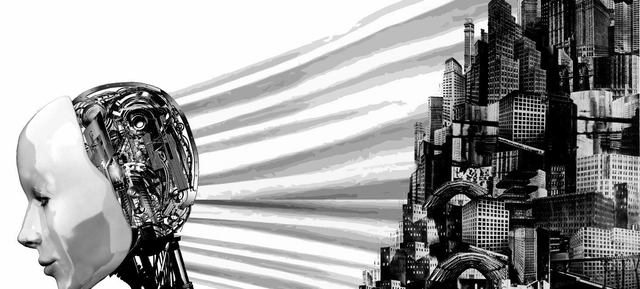
Martin C. Pedersen discusses with Frank Stasiowski, the founder and president of PSMJ Resources, his take on AI and the future of the profession. The author explains that six years ago he "interviewed Frank Stasiowski, the founder and president of PSMJ Resources, a management consulting firm that specializes in architecture, engineering, and construction firms. In addition to advising firms on strategic and growth planning, leadership and succession plans, mergers and acquisitions, and a host of other issues, Stasiowski spends a lot of his time analyzing where the industry is likely to evolve in the future, especially as technology takes an increasingly important role". Finding him one of the keenest observers of the industry, Pedersen talked to Stasiowski to get his opinion on AI and the future of the architectural profession.
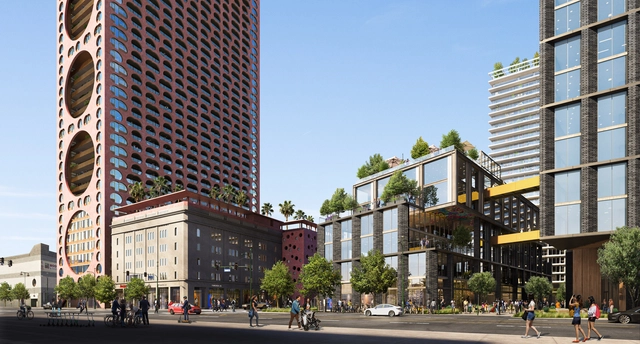
Courtesy of Studio One Eleven and Adjaye Associates
Adjaye Associates and Studio One Eleven, along with Continuum Partners will transform an industrial facility in downtown Los Angeles into a dynamic mixed-use master plan of residential, commercial, hospitality, and retail facilities. Titled Fourth & Central, the project proposes ten buildings, ranging in heights, design, and functions, transforming the area into a pedestrian-oriented community. The project, which is expected to break ground in 2024, will reflect the area's dynamic character with uniquely designed buildings that compliment the neighboring Arts District and Little Tokyo neighborhoods.
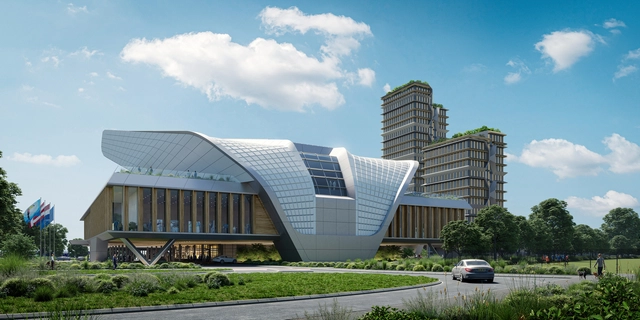
UNStudio is part of the consortium that recently won the competition for a new congress and conference centre in the Netherlands, a project intended to further establish the Brainport Eindhoven region as one of Europe’s leading technology hubs. The Elysion Congress Centre expands an exiting, similarly programmed venue, striving for low impact on the surroundings while incorporating numerous sustainable features.
The Berlinische Galerie's exhibition Anything Goes? recounts how a global, contradictory Postmodernism took root on both sides of the Berlin Wall in the 1980s. Florian Heilmeyer in his piece originally published on Metropolis discusses the ambitious exhibition that was able to look simultaneously at both sides of the German city at that time.
Courtesy of Sou Fujimoto Architects & Donghua Chen Studio
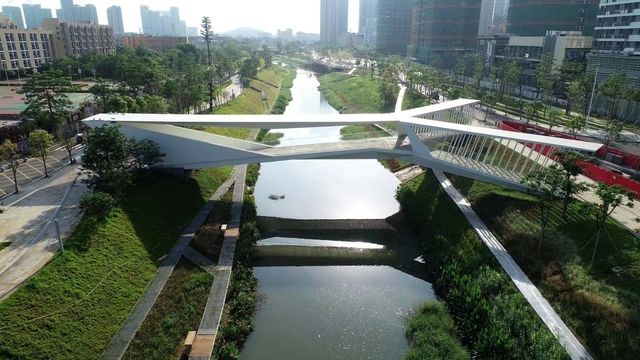
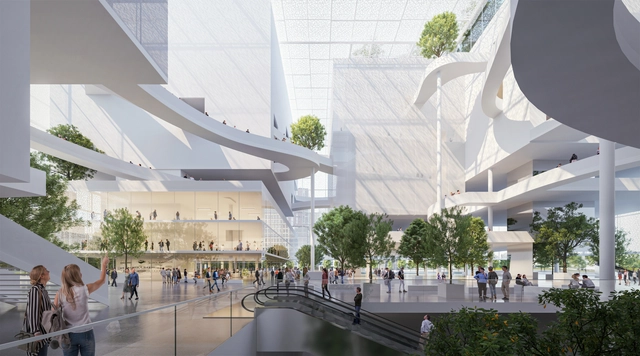
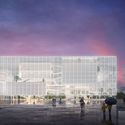
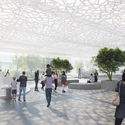
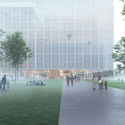
Japanese studio Sou Fujimoto Architects alongside Chinese office Donghua Chen Studio have designed a large scale exhibition complex in the heart of Futian District. The Shenzhen Reform and Opening-up Exhibition Hall adopts the city's characteristics as a contemporary entrepreneurial hub, welcoming innovative international businesses in a garden-inspired structure wrapped with white perforated facades. The design proposal was the winning entry of an international competition in Futian, and will be a part of the Shenzhen Ten Cultural Facilities of New Era promoted by the Municipal Government, once completed.
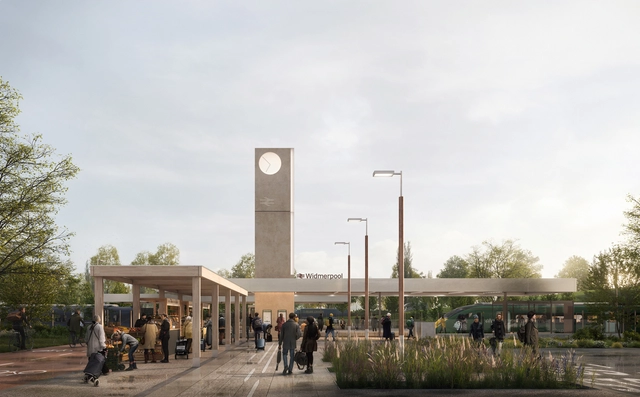
RIBA and Network Rail recently announced the winner of the Re-imagining Railways design competition, which invited architects, engineers and designers to rethink small and medium-sized train stations to improve the travel experience. The winning design, signed by Edinburgh-based architectural practice 7N Architects, features a reinterpreted clock tower serving as a local landmark and a modular station layout that can be adapted to a variety of sites.
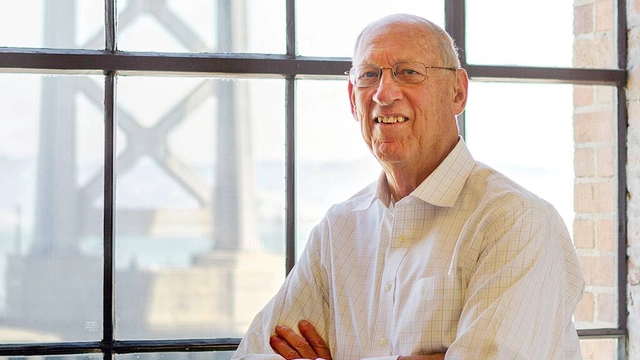
Art Gensler, the founder of one of the largest architecture businesses in the world, Gensler, has passed away at 85, as reported by the company’s Instagram Account. The architect and businessman founded Gensler back in 1965, in San Francisco, and in his 65 years of career, he managed to turn his practice into one of the leading worldwide firms with 50 locations across Asia, Europe, Australia, the Middle East, and the Americas.
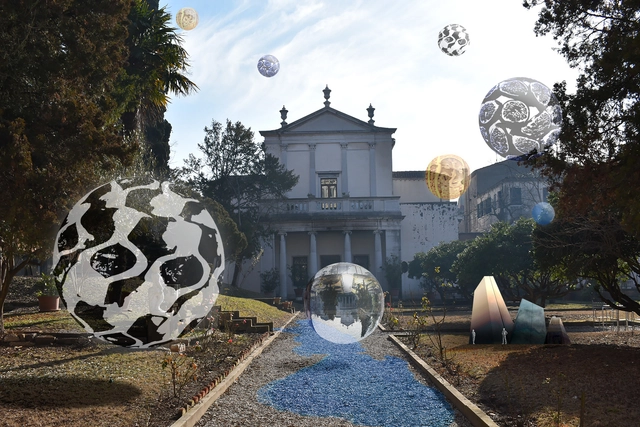
Titled "Yuan-er, a Courtyard-ology: From the Mega to the Micro", the Chinese pavilion at the 17th International Architecture Exhibition – La Biennale di Venezia answers the question of how architecture can contribute to equality, connectivity and unity by resorting to familiar Chinese residential typologies. Curated by Zhang Li, the pavilion will be on display from May 22nd to November 21st, 2021.
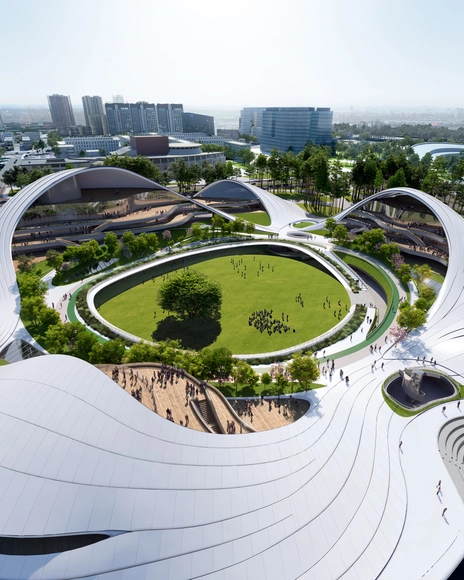
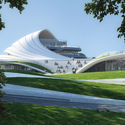
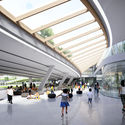
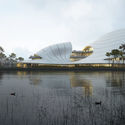
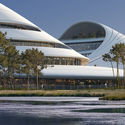
Led by Ma Yansong, MAD Architects have released their design for the Jiaxing Civic Center, a project that explores the relationship between city, nature, and people. The proposed center will be a new place of attraction for children, adults, and seniors, sitting on the city's central axis and surrounded by its South Lake, Haiyan River, and Central Park. The master plan will house three venues: the Science and Technology Museum, the Women and Children Activity Center, and the Youth Activity Center, all organized around a central green open space. The firm's latest public project in Jiaxing City, which is expected to be complete by the end of 2023, comes shortly after they unveiled their design for the Jiaxing Train Station earlier this year.
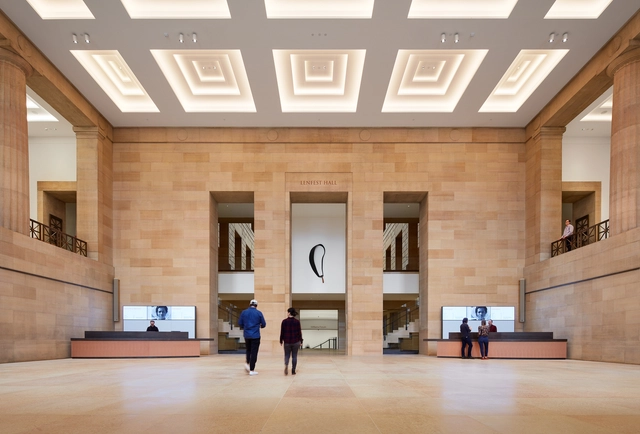
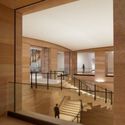
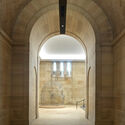
Philadelphia Museum of Art opened to the public earlier this month after completing an extensive four-year renovation and interior expansion project led by Frank Gehry. The intervention, dubbed the Core Project, focused on renewing the museum's infrastructure, creating galleries and public spaces while leaving the 1928 exterior untouched. The culmination of two decades of planning and design, the project led by the renowned architect creates a compelling vision for the future of the museum while honouring the landmark building.
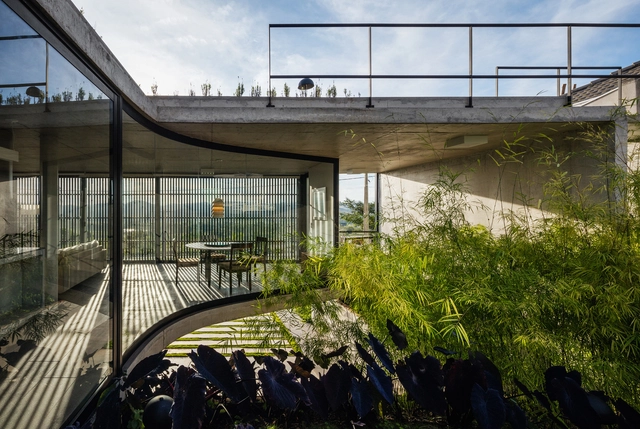
Modern architecture, in its early days, was based on innovative technologies of construction and a rejection of ornament, which established the use of straight lines in building design. However, thanks to the plasticity of concrete and other materials, new patterns began to emerge, resulting in more organic and curvy lines.
https://www.archdaily.com/960506/beyond-straight-lines-curves-in-brazilian-housesEquipe ArchDaily Brasil
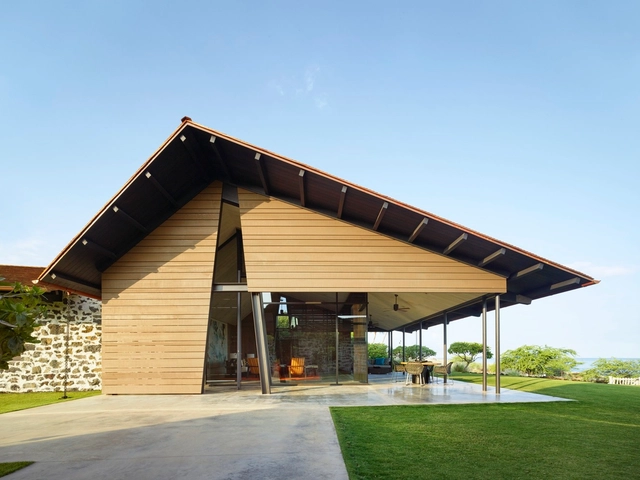
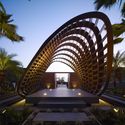
Hawaii has become a place that defines paradise. From pristine beaches and a warm climate to natural scenery and active volcanoes, the islands are home to incredible landscapes and culture. With indigenous and modern building styles, the state’s architecture is intimately tied to the environment. Reinterpreting historic building techniques and traditions, contemporary Hawaiian architecture balances a desire to honor the past while celebrating new experiences and modern culture. This has led to the formation of incredible spaces to live and dwell.