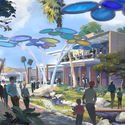
Disney, the multinational entertainment and media conglomerate announced its new addition to its Signature Experiences Program. Titled "Cotino", part of its new Storyliving by Disneyventure, the master plan is Disney's first master-planned community project, and will feature distinctly-designed housing units and neighborhoods, along with commercial and civic amenities and man-made beaches in the heart of Rancho Mirage, California's Coachella Valley.
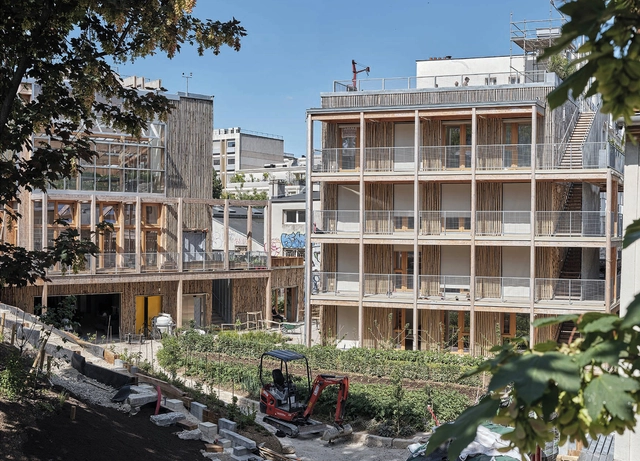
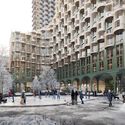
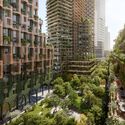
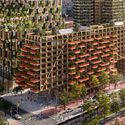
A consortium comprising developers Dream Unlimited and Great Gulf together with lead architects Alison Brooks Architects, Adjaye Associates, Henning Larsen and landscape design practice SLA were selected to develop Toronto's Quayside into a new neighbourhood containing affordable housing, robust public spaces and new business opportunities. The design for the 4.9 hectares site on Toronto's waterfront proposes over 800 affordable housing units, together with an 8,000 square-metres forested green space and an urban farm, accompanied by arts venues and flexible educational spaces.
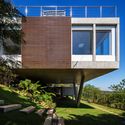
The strategy of raising houses off the ground gained popularity in the 1920s when Le Corbusier announced structures on pilotis as one of the 5 points of modern architecture. A great contribution, especially in the urban issue, as it enables the creation of a free space with greater connection between the public sphere of the street and the private sphere of the building. His iconic Villa Savoye is a paradigmatic example of the use of pilotis that preserves the natural terrain and, as Le Corbusier himself said, places the house on the grass like an object, without disturbing anything. In addition, the pilotis also served as a strategy for the flow of vehicles, which can be seen in Lina Bo Bardi’s equally emblematic Casa de Vidro and its slender steel tubes. Arranged in a modulation of four modules in width by five in depth, they maintain the house as a transparent floating box in the midst of nature, respecting the terrain and assisting in the building's thermal comfort by allowing air circulation.
‘’We’re in a seismic area. Beirut has been buried seven times, so it has to resist any earthquake, and that’s why it also resisted the explosion in the port,’’ expresses Lina Ghotmeh in conversation with Louisiana Channel, in regards to the Stone Garden. A building constructed with resilience in mind, in a city that has been buried within rubble and rebuilt multiple times.
Lina Ghotmeh was interviewed by Marc-Christoph Wagner at her studio in Paris in November 2021. Renowned for her Humanist approach to Architecture, the Stone Garden offers a very personal relationship as the first building to be constructed in Ghotmeh’s hometown of Beirut. Positioned on the edge of the city center, it is very much a form of vernacular architecture echoing the lives of the people who reside here.
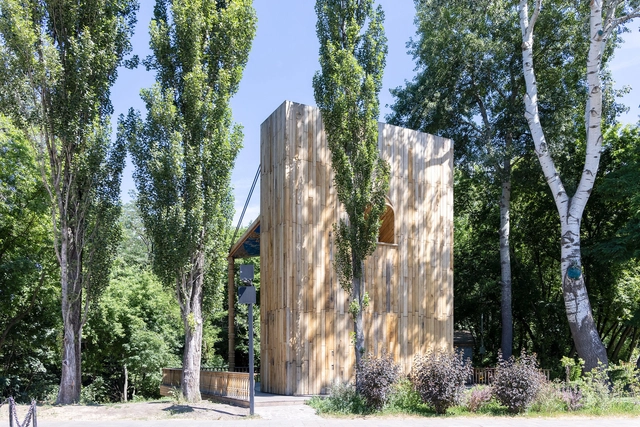
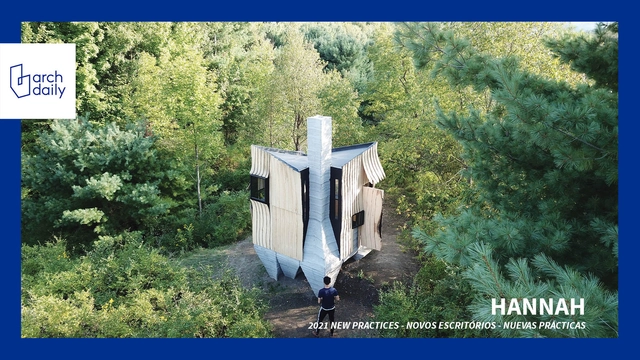
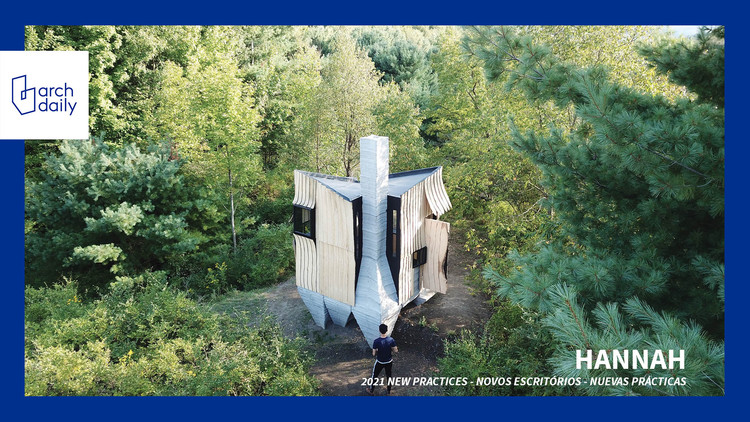
HANNAH Office is a US-based experimental research and design studio whose work focuses on advancing architecture and contemporary construction practices by examining the possibilities of new digital routines and fabrication technologies. Selected as one of Archdaily's Best New Practices of 2021, HANNAH Office was founded in 2012 by Leslie Lok and Sasa Zivkovic and constitutes a platform for exploring technology and material methods across a variety of scales, from furniture to urbanism in search of new design outcomes.
As part of their ‘Essence of Design’ programme, the Hong Kong Design Institute (HKDI), Hong Kong Institute of Vocational Education (IVE), and the HKDI Gallery present “Zaha Hadid Architects: Vertical Urbanism”, an online exhibition that showcases ZHA's innovations in architecture through a display of technical drawings, computer-generated visualizations, architectural models, video projections, and VR experiences. The immersive exhibition is now online and enables visitors to explore the world of ZHA, offering them an insider look into the details of the office's formative projects.
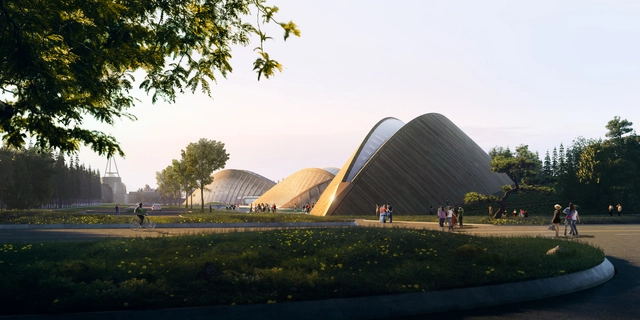
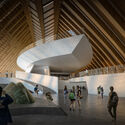
MAD Architects unveiled the design for the Sanxingdui Ancient Shu Cultural Heritage Museum, a project meant to immerse visitors in the still largely unknown Shu civilization. Comprising a series of curved wooden structures scattered within the existing environment of dense greenery and clear waters, "The Eyes of Sanxingdui" weaves together architecture and landscape into a cultural public space.
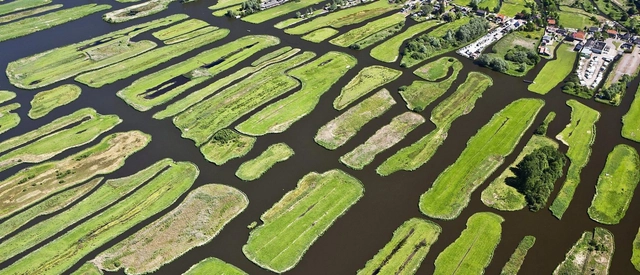
In April 1782, just six years after the Declaration of Independence was signed, John Adams arrived in Amsterdam as the first U.S. Ambassador to The Netherlands. Three months later, a consortium of Dutch bankers provided a 5 million guilder loan (equivalent to $150 billion today) to the new republic, a clear sign of my country’s confidence in the U.S. While I can’t provide a loan, as a Dutch water engineer I can offer something else to Americans: my country’s five centuries of experience living, working, and thriving below sea level. This is surely knowledge and knowhow that the U.S. will desperately need as water levels continue to rise and countless coastal communities are threatened.
https://www.archdaily.com/977124/sea-level-rise-could-the-netherlands-polder-system-work-in-theJan H. de Jager
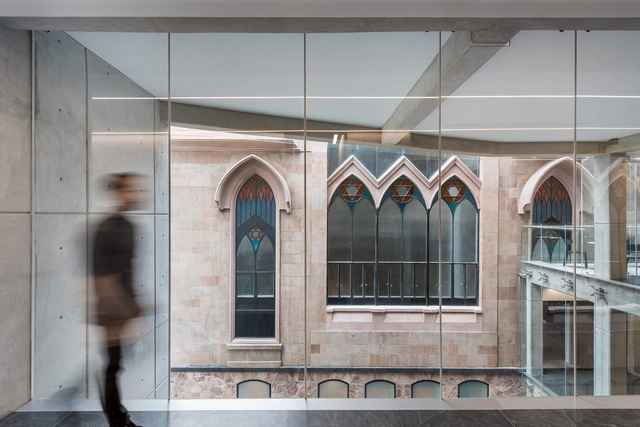
Few religions have as much history and symbolism as Judaism. As the world's oldest monotheistic religion, it dates back nearly 4,000 years. In Judaism, architecture and houses of worship serve as places not only for liturgical services but also for assembly and study. Today, architects are rethinking the design of synagogues and community gathering spaces to celebrate Judaism, reflection and community.
The American Institute of Architects (AIA) has selected 11 projects as winners of its 2022 Architecture Awards. The annual Architecture Award program celebrates the best contemporary architecture, and highlights how spaces can cater to their residents and context and include a sense of place, purpose, history, and environmental sustainability. The selected projects include commercial, residential, and civic typologies, all designed by US-licensed architects.
CHYBIK + KRISTOF revealed the design of a skyscraper in the Czech Republic city of Ostrava. The project reframes the typology of the skyscraper as a dynamic social hub and activates public space in support of the post-industrial city’s reactivation and socio-economical transformation. Upon completion, the 235-metre Ostrava Towerwill be the tallest building in the country.
Vista aérea da Av. Paulista. Imagem ilustrativa. Foto de Gabriel Ramos, via Unsplash
468 years ago, at Pateo do Collegio, the largest city in Latin America was born: São Paulo. A metropolis in constant movement that, among so many complexities and conflicts, presents both cultural and human diversity, which makes it deeply rich.
In each of our nostrils, two types of nerves play an essential role in our health. The olfactory and trigeminal nerves capture odors and send information to the brain, more specifically to the olfactory bulb, for interpretation. In turn, this communicates with the cortex, responsible for the conscious perception of odors, but also with the limbic system, which controls mood and unconscious emotions. This is the body's defense against bad smells or irritating or strong odors, creating aversion to those that could harm us in some way.
But not all pollutants can be detected through this sophisticated system, and they have an intrinsic ability to positively or negatively influence our health. In fact, research has shown that air quality can be quite poor and even worrying in many indoor environments, where we spend about 90% of our lives. This is usually caused by inadequate ventilation of the space, external pollution, and biological contaminants; but mainly chemical contaminants from internal sources. That is, the building materials used in space. Therefore, there are some products that should be avoided whenever possible.
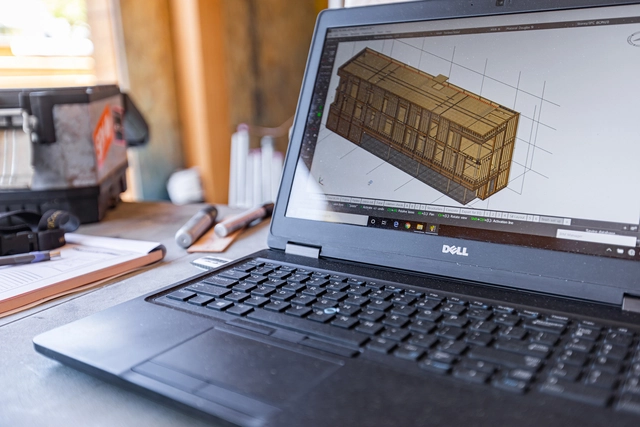
In the original design for the Sydney Opera House, Jørn Utzon envisioned the shells supported by precast concrete ribs under a reinforced concrete structure, which turned out to be prohibitively expensive. As one of the first projects to use computational calculations, the final solution - reached jointly between the architect and the structural engineer - consisted of a precast ribbed system of concrete shells created from sections of a sphere. At the Guggenheim Museum in Bilbao, the project team used CATIA software (typically used by the aerospace industry) to model and materialize the complex curvilinear shapes of the titanium-coated volume designed by Frank Gehry. Challenging projects tend to spark the creativity of those involved to make them possible, but there are constructive systems that interact well with existing technologies. This is the case, for example, with engineered wood and the BIM system. When used simultaneously, they usually achieve highly efficient and sustainable projects.
Babyn Yar Synagogue by Manuel Herz, image by Iwan Baan. Image Courtesy of BYHMC
Babyn Yar, a ravine in the Ukrainian capital Kyiv, witnessed the killing of more than 33,000 Jewish men, women, and children, on September 29 and 30, 1941. The site of one of the largest single massacres perpetrated by occupying German troops against Jews during World War II, Babyn Yar became a symbol of the Holocaust by Bullets.
While the main tragic event took place in 1941, throughout the occupation, the site was used as a killing location by the German forces. In fact, it is reported that 70 to 100 000 people lost their lives in Babyn Yar. With no architecture to the tragedy and only a remaining “broken” landscape, people struggled with achieving memorialization and public recognition.
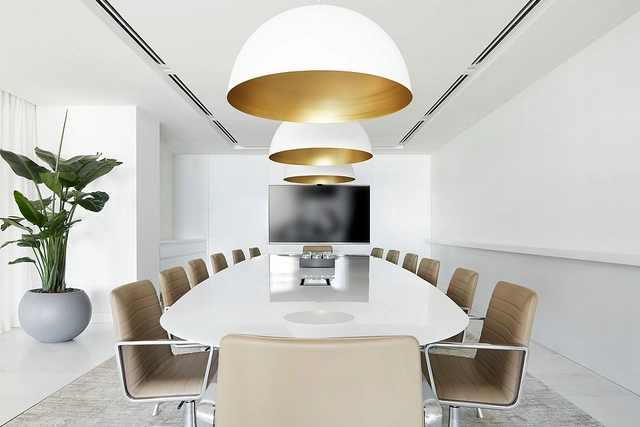
Interior Furniture in Coromandel Offices | Andreu World. Image Courtesy of Andreu World
Having a physical location as a workspace has many inherent benefits, such as bringing employees together in a collaborative environment and giving companies the opportunity to create culture and identity. But when hybrid and remote work began to rise in the early stages of the pandemic, many wondered it this meant the end of the physical office. However, now that two years have passed, the pattern has been clear: instead of being completely replaced by remote methods, many companies have adapted to new employee needs and conditions by opting for team-based, comfortable and flexible spaces that foster creativity, collaboration, and productivity.
The European Commission and the Mies van der Rohe Foundation have announced the 7 finalists that will compete for the 2022 European Union Prize for Contemporary Architecture – Mies van der Rohe Award. The finalists include 5 projects in the Architecture category and 2 in the Emerging Architecture category, all of which "encourage and become models and references for local city policies". The winners will be announced in April 2022 and the Award ceremony will take place in May 2022.
Danish Architecture Center's most recent exhibition, A Space Saga, explores life in a lunar habitat, providing an insight into the considerations that would shape space architecture, as new lunar missions are on track for 2025. The exhibition presents the lunar habitat LUNARK developed by Danish architecture studio SAGA Space Architects, a study on physical and mental well-being in extreme environments that can also inform high-tech architecture on Earth.









.jpg?1642689075 "Casa Redux / Studio MK27 - Marcio Kogan + Samanta Cafardo. © Fernando Guerra | FG+SG")




.jpg?1645172274&format=webp&width=640&height=580)


.jpg?1645172274)