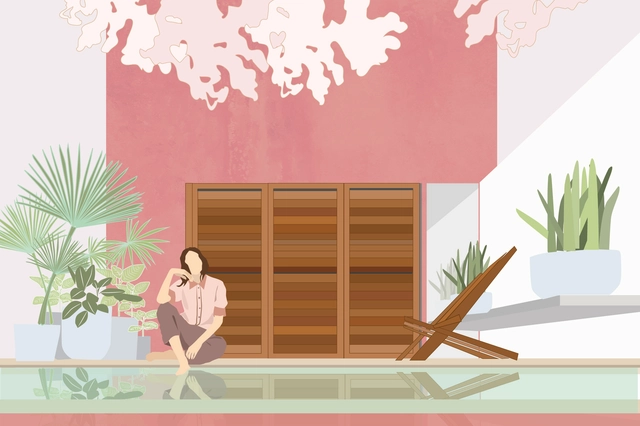
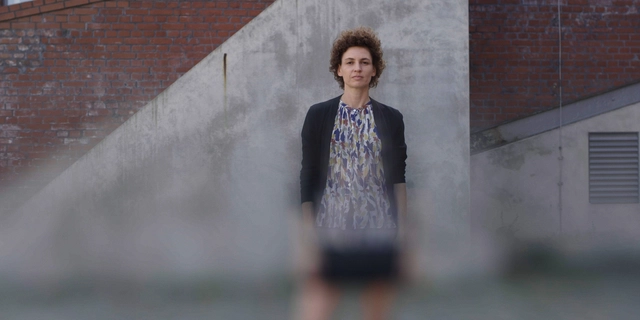
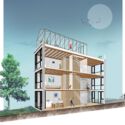
The Great Wars of the early 20th century brought several social transformations, including the introduction of women into the labor market. Decades later, work dynamics are different, but the market continues to reinforce the division of labor by gender and to explore the triple shift. However, there are gaps for possible transformations.
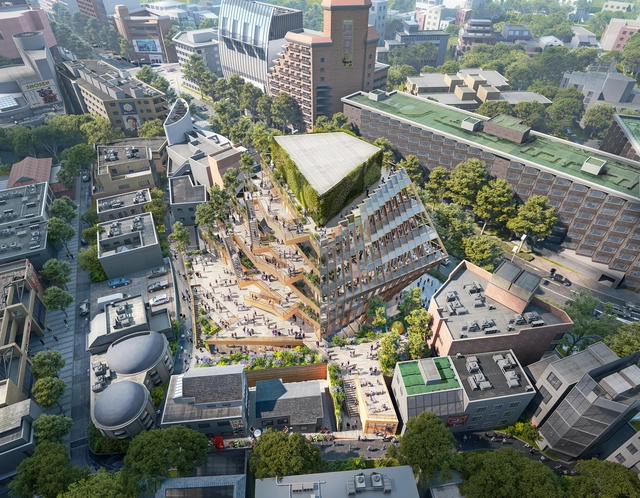
The Harajuku Quest, designed by Shohei Shigematsu and OMA New York, represents a renewed commercial and cultural center in the Harajuku district of Tokyo. Located on a site in between Omotesando and Oku-Harajuku, the building is the newest phase of NTT’s “With Harajuku”, a larger urban development that aims to facilitate the flow of people through a series of squares and commercial areas. Harajuku Quest plans to draw people and activities from both Omotesando and Oku-Harajuku and connect the two areas for the first time. Construction is expected to complete in 2025.
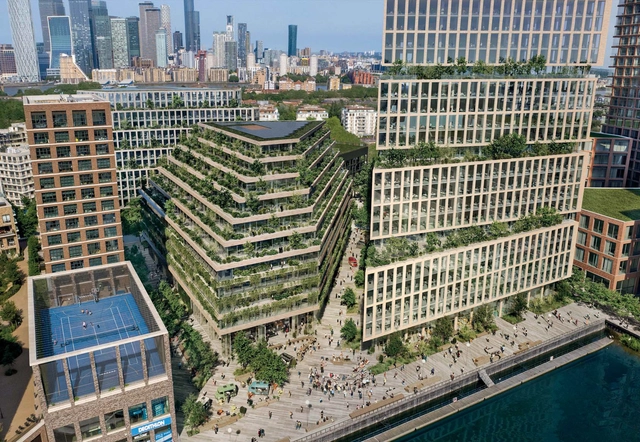
New York-based firm HWKN will create 18,200 square meters of urban development in the commercial quarter of the new Canada Water regeneration plan. In collaboration with the scheme's master planner, BIG – Bjarke Ingels Group, the developer Art-Invest Real Estate UK, and the local community, HWKN makes its UK architectural debut by designing one of the three buildings at the Dockside, London. The building will blend innovative workspaces, commerce, and communal amenities.
The Canada Water Masterplan will transform a total of 215,000 square meters and is expected to deliver up to 3,000 new homes, 280,000 square meters of workspace, and community space in central-south London. The first new town center in London in 50 years would become the UK's most sustainable new urban hub after completion, expected in 2035.
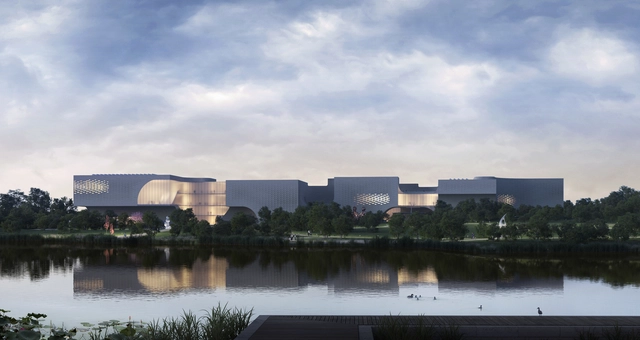
Ennead Architects has revealed the design for the Wuxi Art Museum in the historic port city of Wuxi, China. The competition-winning design proposes a new center for art and culture that builds upon the tradition of the Chinese gardens, a practice with a long legacy in the region. The complex is located in the Shangxianhe Wetland Park, a natural environment that informs and influences the museum experience. According to the designers, the architecture behind the Wuzi Art Museum is conceived as a Taihu Scholar Stone, a contemplative spatial structure sitting quietly in the broader natural context and inviting visitors to pause.
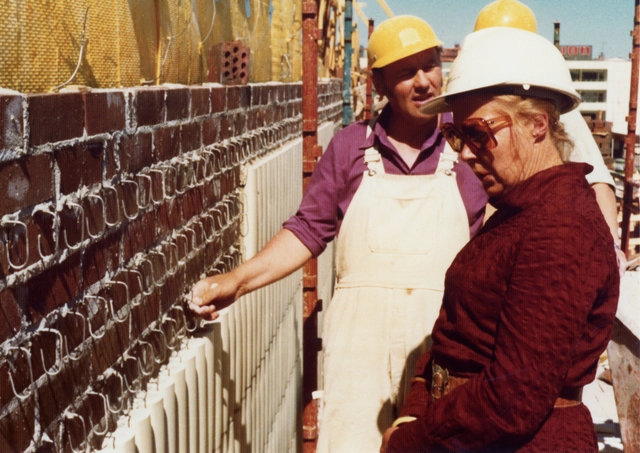
To commemorate the centenary of Elissa Aalto (1922-2022), the Alvar Aalto Foundation brought into tour an exhibition showcasing the life's work of this talented and influential Finnish architect and designer. From September to November 23, 2022, the exhibition sheds light on her public and private role in the everyday life of Alvar Aalto's architect's office alongside her famous architect husband. The tour will take place in the Cities of Rovaniemi, Alajärvi, and Tammisaari, home to many buildings designed by the legendary Finnish architect couple.
From ending up by accident in architectural studies, to eventually falling in love with the complexity of the field and the multitude of its layers, Johanna Meyer-Grohbrügge was amazed by the dual nature of architecture; its intellectual aspect, and physical outcome. Founder of Meyer-Grohbrügge in Berlin, the architect, and her studio seek to spatialize content, create relationships, and find solutions for living together.
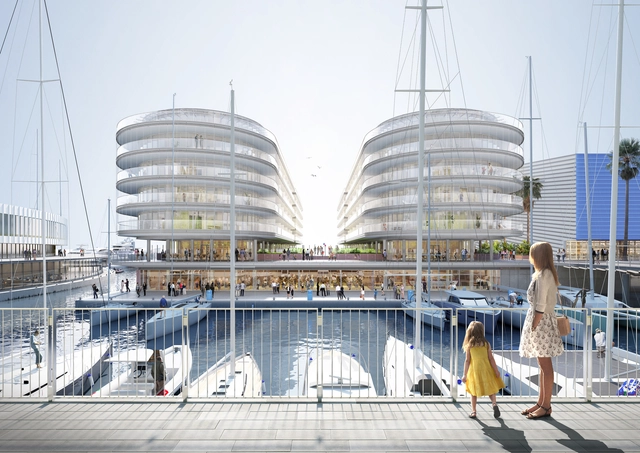
First drafted by Renzo Piano and developed by RPBW and OBR, the Waterfront di Levante is a project that aims to transform what was previously the back of a port into a new urban front on the sea. The development is planned to become a new landmark on the seafront of Genoa, Italy, by bringing new urban and port functions, both public and private, to an underutilized area. By controlling the built-to-open area ratio, it also seeks to enhance the connection between the city and the sea. The project introduces functions such as the new Urban Park, a new dock, residences, offices, student housing, retail facilities, apart-hotels, and a new sports hall.
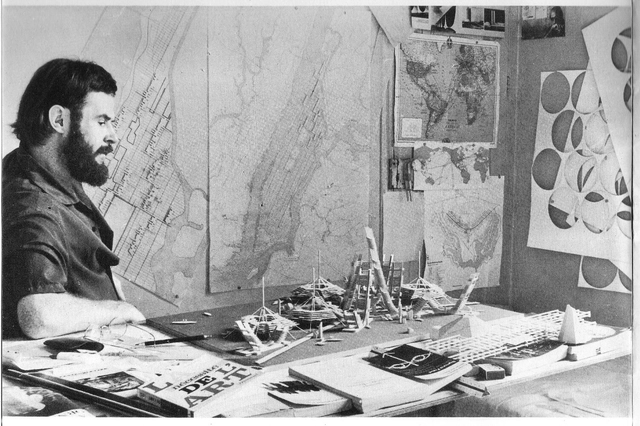
Thimel y su proyecto para Rio de Janeiro. Image Cortesía de Ricardo Rocha
Ricardo Rocha writes about the German-Brazilian architect Hartmut Thimel. Forgotten by canonical historiography, he worked with Georges Candilis, Yona Friedman, and later with Oscar Niemeyer. His work is a bridge between 1970s Brazil, addressing the international avant-garde - Team X, Metabolism, Spatial Urbanism, and Prospective, among others.
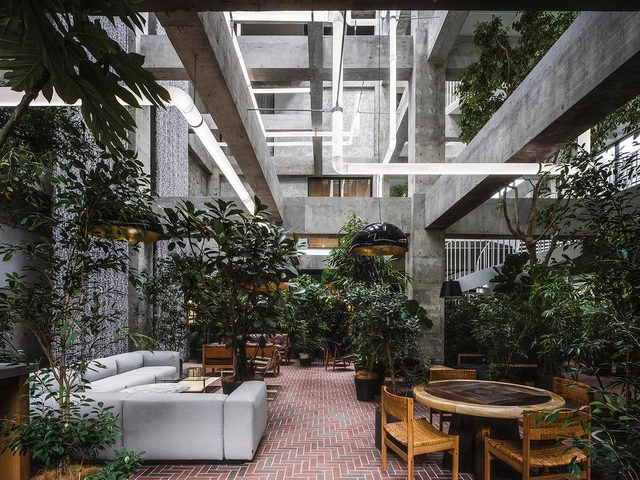
Widely recognized as being responsible for 8% of global CO2 emissions, concrete should be a blacklisted material, relegated to the shameful annals of architectural history. Rapid global urbanization, however, will ensure its unequaled production simplicity and structural strength help retain concrete’s firm grip on the construction industry.
If you can’t beat it, improve it: is the industry’s mantra on innovation, currently developing various alternatives to concrete or its constituent parts and admixtures. So with a concrete set for the environmental green list, the concrete revolution –using the material as an aesthetic exterior facade, interior decoration and fittings, or even in furniture and lighting, as well as a structural framework– is free to continue.
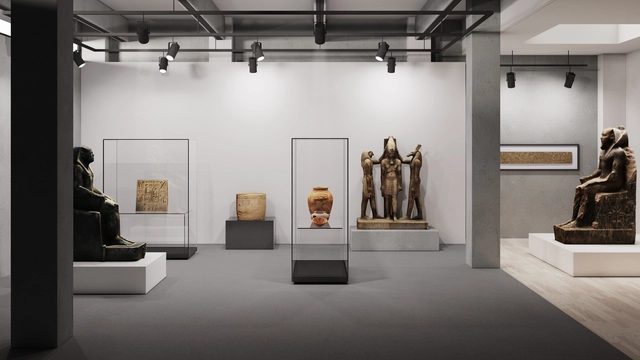
Museums play a critical role in preserving local cultures, promoting a better understanding of our collective heritage, and fostering dialogue, curiosity and self-reflection. In recent years –and largely driven by the Covid-19 pandemic– technological advances have enabled users from all over the world to visit exhibitions virtually, at any time and from the comfort of their own home. However, although online tours are a good way of increasing accessibility, there is something about the in-person museum experience that will never get old: the ability to witness, embrace and closely admire artefacts, paintings and sculptures in their true form, as well as the chance to experience the unique ambiance and essence of a traditional museum setting. Viewing the Mona Lisa virtually will never live up to appreciating it face-to-face at The Louvre, for instance.
The 1970’s were a dark time for New York City. While the economy was down, crime rates were at an all-time high. The negative public image also kept tourists away, driving the city into a financial crisis. To change perceptions about The Big Apple, the New York State Department for Economic Development approached advertising firm Wells Rich Greene to create an inviting marketing operation. After 45 years, the resulting I Love NY campaign remains fresh in the minds of locals and tourists, successfully revamping New York City’s brand. Cities across the world like Paris, Amsterdam and Jerusalem have similarly invested heavily in constructing magnetic brands for themselves.
In an effort to expand the debate around the issues and opportunities facing urban environments worldwide, UN-Habitat has designated October 31 as “World Cities Day”, an event celebrated annually since 2014. This year the events are centered around the theme “Act Local to Go Global”, with the aim to share experiences and approaches to local actions, the initiatives that were successful and those that were not, and to seek to understand ways in which local and regional governments can help create greener, more equitable and sustainable cities.
The theme was chosen based on the understanding that local actions are of critical importance in achieving the sustainable development goals set for 2030. The 2030 Agenda sets out the UN ambition to contribute to creating cities and human settlements more inclusive, safe, resilient, and sustainable. The world’s largest cities are often the most unequal. This year’s theme suggests that there is a path forward through incremental changes and localized actions. By adapting to site-specific conditions, these actions can better respond to the individual needs of the communities, and the natural conditions of climate and topography and can help strengthen the cultural identity of urban environments.
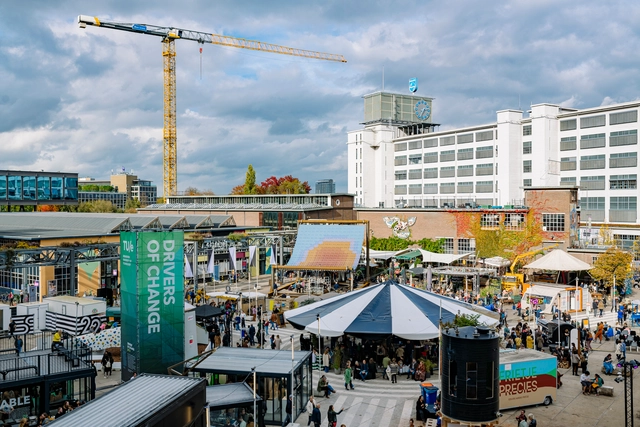
Under the motto "Get Set," the 2022 DDW exhibited more than 50 art and architectural installations to call out designers and communities for a shift from preparation to action facing the challenges of our time. Led by Miriam van der Lubbe, Creative Head of DDW, with Marjan van Aube and Formafantasma as ambassadors, the 21st edition of the Dutch Design Week took place the last week of October in Eindhoven, the Netherlands closing with a Graduation Show of over 200 students of the Design Academy Eindhoven.
Inspiring designers to incorporate innovation and sustainability and familiarize the public with all the technology has to offer, ArchDaily has selected 9 relevant works focused on bio-materials and modular systems. Highlighting ongoing design research, the list underlines projects that reinvent how we deal with nature and the space we live in.
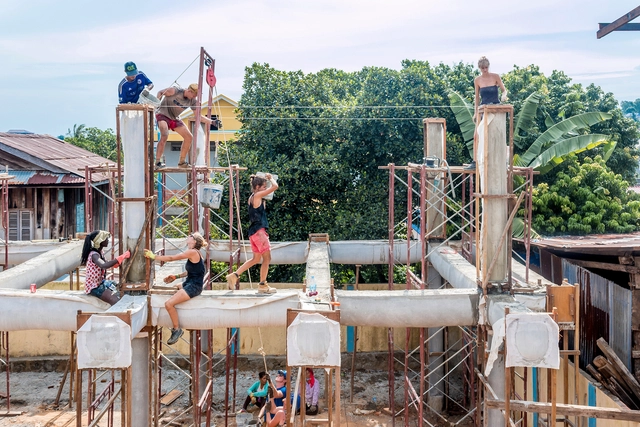
Site work has always been and remains a pivotal stage in forming our built environment. Most architects, designers or engineers have at one point or another been on the grounds and understand the importance of presence within the project development phases. Working on construction sites can be a valuable learning experience and allows different inputs from diverse experts to be considered in forming a better urban, living, and working environment for all. Starting from this idea, and as we delve into Women in Architecture as part of our ArchDaily topics, we published an invitation, encouraging our readers to share their opinion on gender-based discrimination on the construction site.
Sensory urbanism is a form of investigation of how non-visual information defines a city's character and affects its livability. Using methods that range from sound tracks and smell maps, wearables and virtual reality, researchers in this area have introduced other senses to urban centers.
If we previously brought in before and after plans of apartment refurbishments, we now focus on residential projects that have received needed improvements. In addition to the plans, the information contained in the memorial of each project helps to better understand the attitude taken in each architectural design. After all, each work brings with it different demands: deadlines, budgets, legislation and pre-existing conditions.
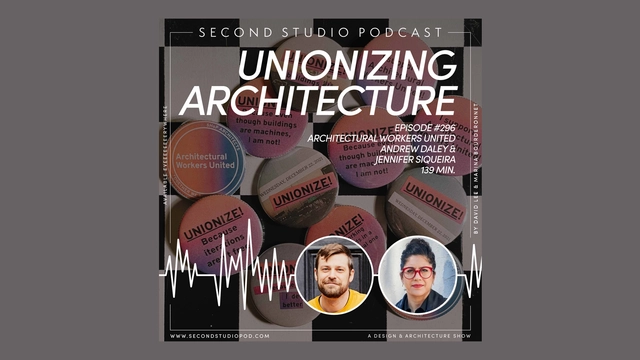
The Second Studio (formerly The Midnight Charette) is an explicit podcast about design, architecture, and the everyday. Hosted by Architects David Lee and Marina Bourderonnet, it features different creative professionals in unscripted conversations that allow for thoughtful takes and personal discussions.
A variety of subjects are covered with honesty and humor: some episodes are interviews, while others are tips for fellow designers, reviews of buildings and other projects, or casual explorations of everyday life and design. The Second Studio is also available on iTunes, Spotify, and YouTube.
This week David and Marina are joined by Architecture Workers United (AWU) Members Andrew Daley, Associate Organizer at IAMAW and Jennifer Siqueira, Project Architect at Bernheimer Architecture to discuss their involvement with the AWU; the fundamentals of unions and how to start one; the state of unionization in the profession; the pros and cons of forming a union; and more.
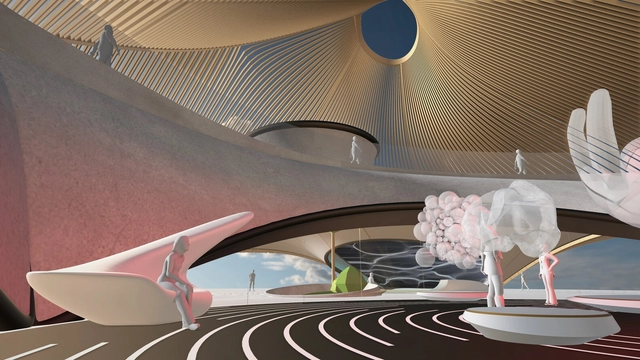
We live in a world where the experienced, remembered, and imagined, as well as different moments in space and time concerning the past, present, and future are inseparably blended. As of recent, we are being offered various mediums to gain access to other planes of existence, utilizing immersive technologies like virtual and augmented reality (VR and AR), creating a pathway to the metaverse in which we are transported to spaces that are capable of feeling more ‘real’ than anything we presently experience.