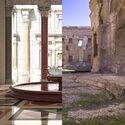
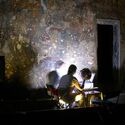
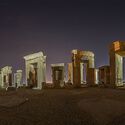
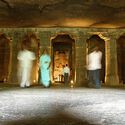
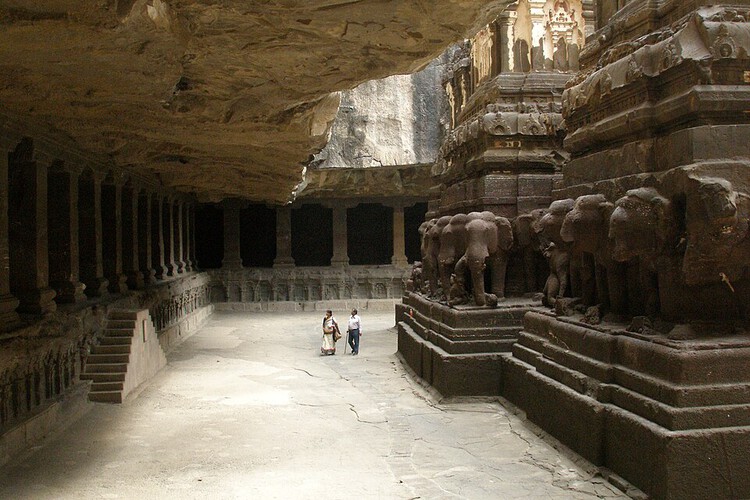
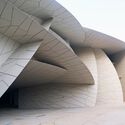
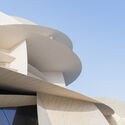
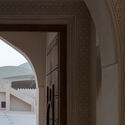
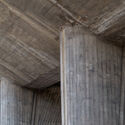
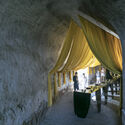
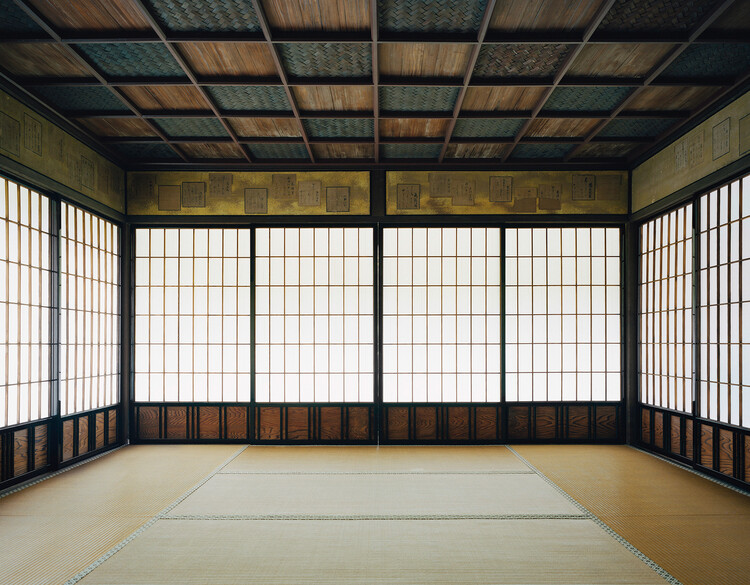
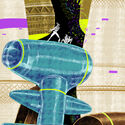
A cave in Maharashtra can now be entered without travelling to it. Through a virtual reality experience developed around Ajanta, visitors can move through a digitally reconstructed version of the caves from somewhere else entirely. The project raises an architectural question: if architecture is experienced through movement, scale, sequence and perception, what happens when those experiences can be recreated outside the physical site? IITM Pravartak's Digital Ajanta project uses 3D scanning, filming, modelling and virtual reality to document the caves and translate that record into an immersive experience.
This article is part of our new Opinion section, a format for argument-driven essays on critical questions shaping our field.
For centuries, most of the world has looked at itself through a 16th-century instrument of spatial representation. On September 4, the United Nations General Assembly voted to change that, adopting a resolution that asks governments, schools, media organizations, and technology companies to retire the Mercator projection wherever the relative size of countries actually matters, in favor of equal-area alternatives like the 2018 Equal Earth projection. The vote passed 164 to 1. The United States was the sole vote against.
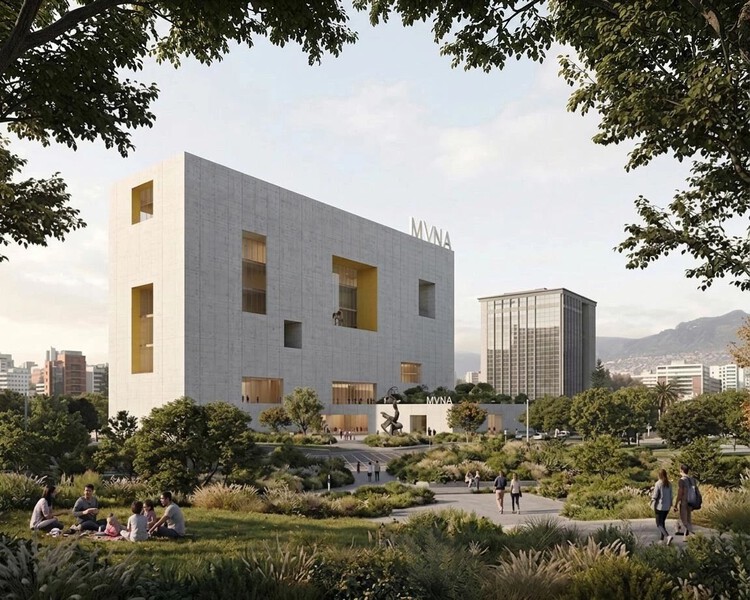
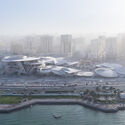
National Museum of Ecuador Proposal (MuNA). Image Courtesy of Studio Campo Baeza
The announcement of the winning proposal for Ecuador's new National Museum (MuNA) sparked one of the country's most significant architectural debates in recent years. The public response has since reshaped the competition itself while also raising broader questions about how a national museum gives architectural form to an interpretation of a nation. While the discussion began with a single design, it exposed a challenge that extends far beyond Ecuador.
National museums are not simply asked to represent a nation. They are asked to give it architectural form. Yet identity cannot be built directly. Before it becomes architecture, it must first be interpreted and translated through architectural decisions.
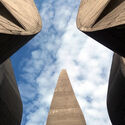
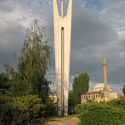
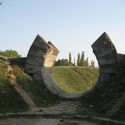
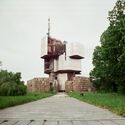
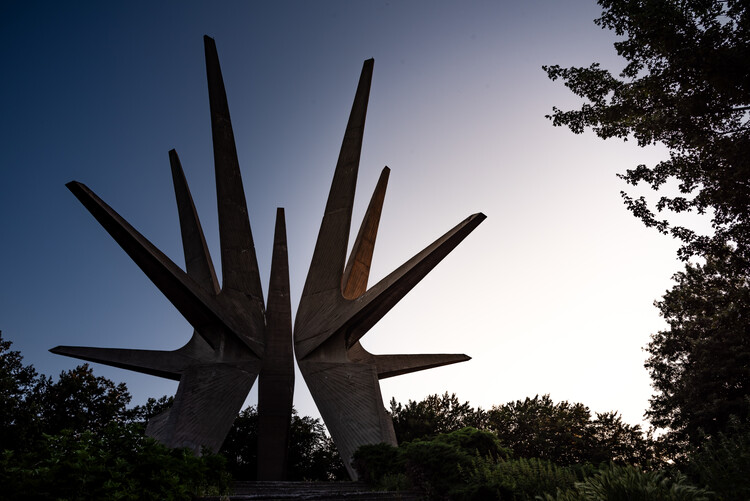
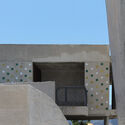
A monument is usually the most conservative building a state will commission. It is expected to stabilize memory, to make history legible, and to give public form to a shared narrative. Eastern Europe's twentieth century produced an entire body of work from the Baltic to the Balkans that resisted precisely those expectations, challenging the conventional relationship between monument, memory, and representation. Commonly grouped under the name spomeniks, these architectural exercises are perhaps the best-known examples of a much broader landscape of memorial architecture that emerged across the region. These were societies emerging from occupation, civil conflict, or revolution, and none of them possessed a single symbolic language capable of accommodating the complexity of their histories. Rather than searching for new heroes or new icons, many architects and artists turned to space itself as the medium through which remembrance could be constructed.
These monuments occupy an unusual position between sculpture and architecture. At one scale, they read as deliberate abstract compositions arranged with the clarity of a drawing by Kandinsky. At another, they seem less resolved, as if testing the limits of a spatial language still in formation. Their forms often appear caught between certainty and experimentation, the same monument readable as a controlled geometric object and as an open-ended search for how collective memory might inhabit space. But these readings coexist and give many of these works their enduring ambiguity.
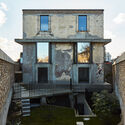
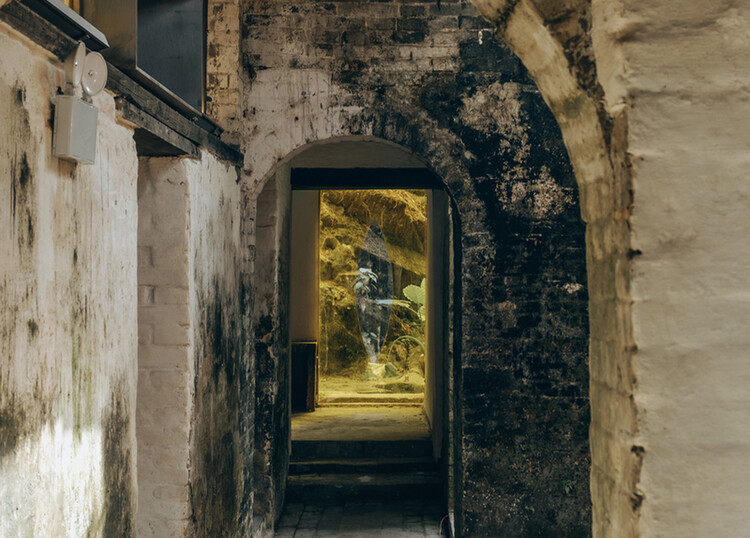
Contemporary architecture has learned to celebrate living matter. Mycelium panels, algae systems, living walls, life is now welcomed into buildings, framed as innovation. Yet the same discipline that celebrates these organisms treats mold as contamination. Both are biological. Both respond to moisture, temperature, and material conditions. The difference is not scientific. It is about which forms of life architecture is willing to accept, and which it prefers to remove.
Mold is not limited to abandoned buildings or poorly maintained interiors. It appears in homes, schools, offices, historic structures, and new construction, across different climates and contexts. This makes it harder to ignore as a minor or isolated problem. If mold keeps returning, what is it telling us about the environments buildings create?
Architectural schools usually leave lasting marks on their students, shaping their style and critical inquiry long after formal education has ended. For example, SCI-Arc, founded in 1972 and based in downtown Los Angeles, is an institution recognized for its culture of experimentation, critical investigation, and creative independence, building a reputation based on the idea that architecture should be understood as a field open to dialogue with art, technology, design, and contemporary culture. The diversity of trajectories of its alumni demonstrates how this environment can generate distinct professional approaches, but united by the same willingness to explore new possibilities.
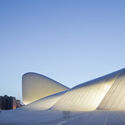
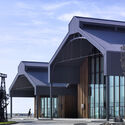
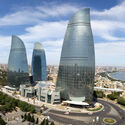
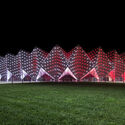
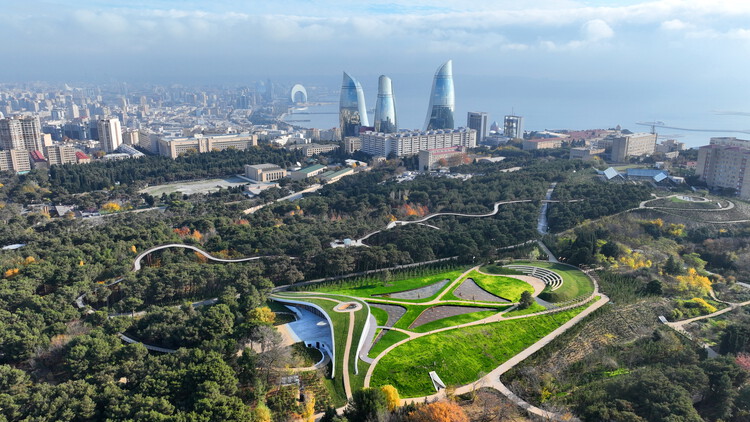
Some cities grow through continuity, others construct themselves through moments of acceleration. Baku, in Azerbaijan, seems to operate somewhere in between. Its historic core, the Icherisheher, still holds a spatial logic that resists expansion: dense, enclosed, defined by proximity and repetition. But just beyond its walls, the city begins to shift. Scale increases, distances expand, and the relationship between buildings becomes less about continuity and more about visibility.
Over the past two decades, Baku has been the site of a deliberate effort to construct an image of itself. Oil wealth provided the means, but architecture became one of its primary tools. Projects such as the Heydar Aliyev Center by Zaha Hadid Architects or the Flame Towers are symbols of this transformation, their forms designed to circulate as much through media as through the city itself. They are precise, controlled, and highly resolved objects. But they also introduce a different urban logic, one that privileges singularity over continuity and positions architecture as an agent of representation.
Each year, International Women's Day brings renewed attention to questions of gender within many professional fields, architecture among them. Public conversations often center on celebrating prominent figures or highlighting notable projects, moments that briefly illuminate the contributions of women within the discipline. Yet the visibility produced by these occasions sits within a longer and more complex trajectory. Over the past several decades, the architectural profession has undergone gradual shifts that have expanded opportunities and broadened participation, even as longstanding structures continue to shape how careers develop and how architectural work becomes visible.
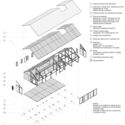
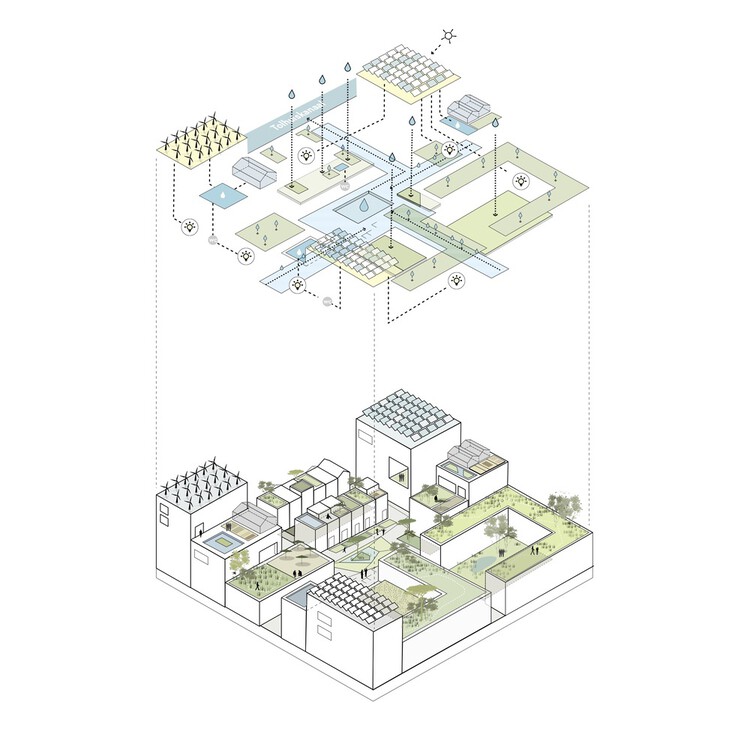
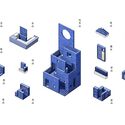
In the translation of three-dimensional reality onto a two-dimensional plane, axonometry stands as one of the graphic systems of representation that form the foundation of the language used by architecture and design professionals. Alongside plans, sections, and elevations, its exploded views often stand out for their ability to study the multiple layers that compose a project. Although axonometry is also employed in other disciplines such as engineering and urban planning, it consistently proves its capacity to function as more than a mere representational tool, strengthening the understanding not only of a project's construction processes, materials, and structural systems but also expanding the communication of the ideas and design processes that shape a project.
This article is part of our new Opinion section, a format for argument-driven essays on critical questions shaping our field.
Who designs architecture today? In a professional landscape increasingly defined by collaborative workflows, generative software, and distributed teams, the figure of the architect as a singular creative author feels both anachronistic and inadequate. This article argues that architectural authorship is no longer an individual act, but a collective and distributed condition shaped by institutions, technologies, and shared forms of labor. The transition from individual to collective authorship is not simply a consequence of larger offices or digital tools; it signals a deeper structural shift in how architecture is produced, communicated, and validated.
Cultural diplomacy refers to the use of cultural expression and creative exchange to foster understanding and build relationships between nations. In this context, architecture has long played a distinctive role. Beyond its functional and aesthetic dimensions, it serves as a medium of communication, a language through which countries express identity, values, and ambition on the global stage.
Architecture operates as a form of soft power — persuasive rather than coercive — enabling nations to project influence through material presence. From modernist embassies in the post-war era to monumental pavilions at world expositions, governments and institutions have recognized the built environment's potential to shape perception. By commissioning prominent architects and adopting specific design languages, countries have used architecture to signal modernity, tradition, innovation, or stability.
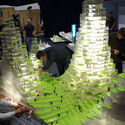
For centuries, models have been central to architectural design, providing architects with a tangible way to explore ideas, test concepts, and communicate their vision. From the Renaissance to Modernism, models have been instrumental in the construction and reflection processes, offering insights into form, proportion, and spatial relationships. However, in today's digital age, where 3D modelsand Virtual Reality(VR) have become powerful and efficient tools, the question arises: Are physical models still relevant in contemporary architecture?
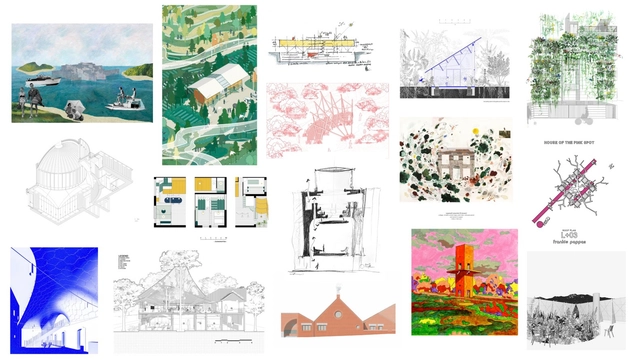
As another year draws to a close, ArchDaily's team of curators is pleased to present a selection of the best architectural drawings published throughout 2023, without which the projects' appreciation would certainly not be the same.
Architectural representation plays a fundamental role both in the design process - from the very first sketches to the finest construction details - and in its presentation to a wider audience. Thus, during the selection process, we were able to see a rich and varied set of designs that were part of the more than 4,000 project publications this year. We had the difficult task of coming up with the most representative and inspiring ones amongst them.
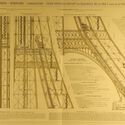
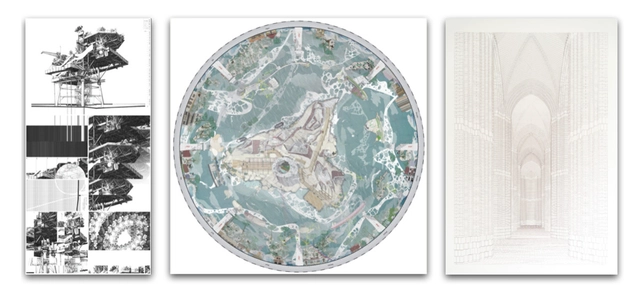
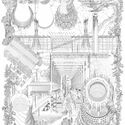
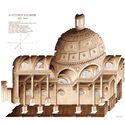
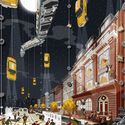
Left: ‘(Re)membering the See Monster’ by Eldry John Infante; Centre: The Archatographic Map of the Incomplete Landscape on Pedra Branca’ by Eugene Tan; Right: ‘Grundtvig’ by Ben Johnson. Image Courtesy of Architecture Drawing Prize
The Architecture Drawing Prize, now in its 7th edition, celebrates the art of drawing in three main categories: hand-drawn, digital, and hybrid. The Prize attracted nearly 250 drawings from around the world, a record for the competition, with the majority of entries being in the hand-drawn category. The winners of each category have been announced. The winning drawings, along with the shortlisted entries will be displayed at the World Architecture Festival in Singapore from 29 November until 1 December 2023, and at Sir John Soane’s Museum in London from 31 January to 3 March 2024. The Overall Winner will announced on 29 January 2024 as part of a webinar hosted by Sir John Soane’s Museum, ahead of the exhibition.
According to the jury, the technologies used by the entrants to find creative ways of depicting buildings generated probing discussions among the jury members, testing the nature and definition of architectural drawing. Sponsored by Iris Ceramica Group, the Architecture Drawing Prize is co-curated by Make Architects, Sir John Soane’s Museum and World Architecture Festival (WAF).
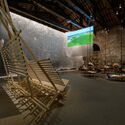
Courtesy of the South African Pavilion at Biennale Architettura 2023
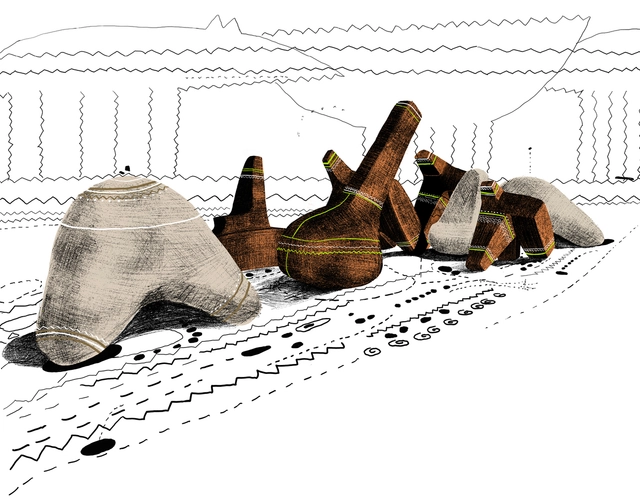
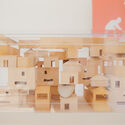
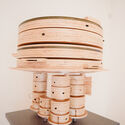
For the 18th International Architecture Exhibition – La Biennale di Venezia, the South African Pavilion explores the architectural representation of social structures through an exhibition titled “The Structure of a People.” Prior to the exhibition, the pavilion curators, Mr. Stephen Steyn, Dr. Emmanuel Nkambule, and Dr. Sechaba Maape, conducted a national architecture competition titled “Political Animals,” aimed at gathering artifacts crafted by lecturers and architecture students to represent the structures of their schools or universities. The resulting models and miniature architectures, produced by ModelArt, will be exhibited within Zone III, Political Animals, as part of the South African Pavilion.
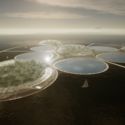
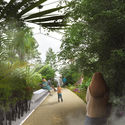
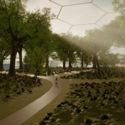
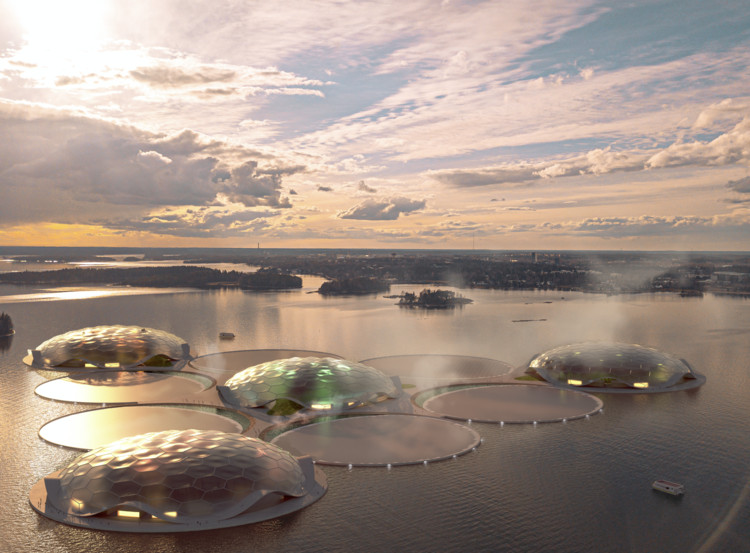
In 2021, CRA-Carlo Ratti Associati’s proposal to create sustainable alternatives for urban heating networks was selected as one of four winners of the global Helsinki Energy Challenge. The project entitled Hot Heart proposed “island-like, floating seawater reservoirs to heat the city of Helsinki in a green way”. Using Twinmotion, Epic Games’ real-time visualization platform for the architecture industry to design the intervention, the large scale infrastructural project needed a digital representation tool to possibly put scale into perspective, offer a real immersive experience to engage the client, and exhibit instant changes related to natural factors such as daylight. Come SpaceForm, a data-driven virtual presentation and design tool. Created to facilitate remote cooperation, the technology allows clients or stakeholders to be more immersed in the story of the design.
Courtesy of Juan Barrios Duarte (Labrantía Estudio)
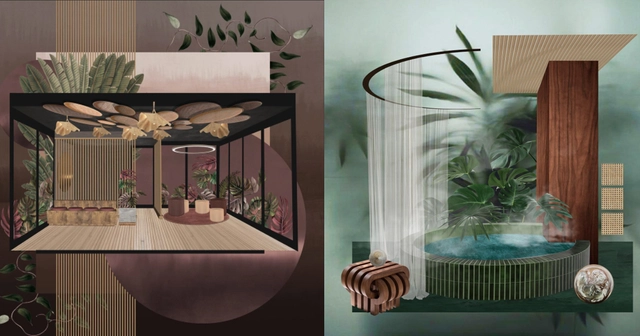
With an increasing amount of architectural visualizations being published on social media, it’s easy to get overwhelmed. Adding this to how the famous algorithm works, we end up always being exposed to social media publications that are, in many ways, similar to each other. But for us as architects, designers, and students, social media is not only a platform for networking and sharing our works. It also serves as a source of inspiration. If the algorithm isn’t helping us to discover new and different ideas, then it’s up to us to go out of our way and look for them.