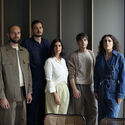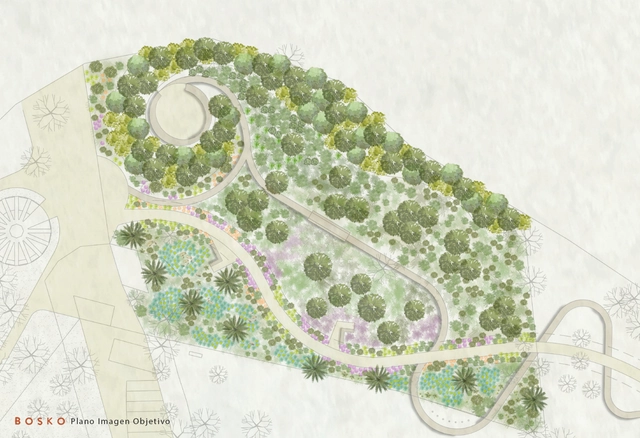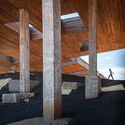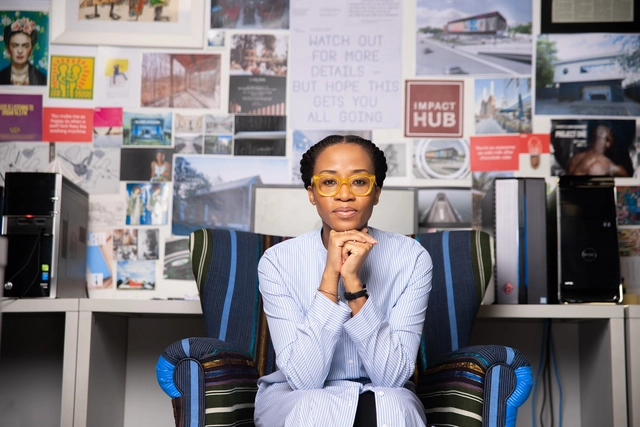
"It's all about attitude and adjusting to the existing circumstances", explains Boonserm Premthada, when asked about his conceptual process. Founder of Bangkok Project Studio, and one of today's most influential Thai figures in architecture, Premthada has been the subject of Bêka & Lemoine's latest documentary, ‘Big Ears Listen With Feet’. The film highlights the personal story of the architect, unveiling all the events and happenings that shaped his unique identity and sensibility. "Deaf from birth", the short movie looks at how the architect's disability led him to listen in a different way, learning from elephants. who "despite their large ears [...] perceive sound mostly through their feet."
ArchDaily had the chance to talk with Boonserm Premthada, during Milan Design Week 2022 at the DAAily bar. Recipient of the Design Prize 2021|22 for social impact curated by designboom, the architect shared insights about his beginnings, his office as well as his creative approach, and his projects.
It is a great privilege to amplify the voice of architects and other built environment professionals. It is also an enormous challenge as it requires a lot of investigation and time from our content team. However, the effort is gratifying. It puts us in contact with some of the most prominent talents in our field who have been discussing subjects such as cities, metaverse, community, environment, democracy, sustainability, building technology and interiors, to mention just a few.
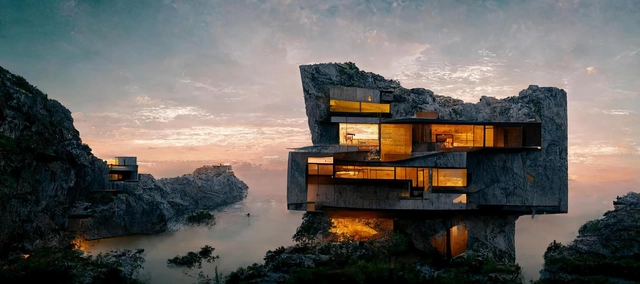
Technology is disrupting the creative industry and it's only getting better, and faster. Innovation in the architecture industry has never been as rampant as it is at this moment. The advent of artificial intelligence (AI) in architecture - the first genuine 21st-century design method - is changing the way buildings are imagined and designed. AI image generatorslike Midjourney and DALL-E provide an efficient and explorative way of conceiving architectural concepts. Generated in less than 5 minutes, these images unveil an interesting design aesthetic that is emerging. In an exclusive interview with ArchDaily, architect and educator Matias del Campo hypothesizes what the future of architectural aesthetics would be.
In the complex trade of architecture and construction, you are never alone. And behind every great building there is a strong team of professionals combining their expertise.
Hanif Kara OBE is a structural engineer and one of the founders of AKT II, one of the top engineering firms in the world. Based in London, he has been closely collaborating with some of the world’s most innovative architects, including Grafton Architects, David Chipperfield, Norman Foster, BIG, Zaha Hadid, Thomas Heatherwick, and many more.
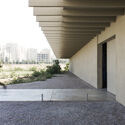
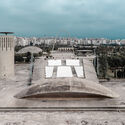
This year, one of the winners of the Aga Khan Award was the Renovation of the Niemeyer Guest House by East Architecture Studio. The project is located on Tripoli’s outskirts in Lebanon, and it is part of the Rachid Karami International Fair (RKIF), an unfinished masterpiece by Brazilian architect Oscar Niemeyer. ArchDaily’s Managing Editor, Christele Harrouk had the chance to sit with Charles Kettaneh and Nicolas Fayad, founders of the East Architecture Studio, on-site in "the Niemeyer Guest House Renovation" project. Talking about modern heritage and the challenges of renovations, the architects opened the conversation about the role of architecture in building platforms for change.
In these fast-paced and constantly evolving times, architecture has been adapting to new building technologies and complexities to serve today’s world needs. Teams of experts from all areas, architecture, engineering, construction, and a long list of professionals, come together to bring these solutions to our built environment. At ArchDaily we have been highlighting these actors in the architecture we curate and publish every day, but we often come across other types of projects, in which we spot different needs, and ways of building in certain places and communities, that equally require a highly qualified team, specific local techniques, and knowledge that are worth sharing.
The climate crisis has reshaped contemporary architecture. Sustainability has become a central guiding force in design, and in turn, architects are rethinking how to build today. For CO Adaptive Architecture, addressing the climate crisis begins with a process oriented practice. Together, Ruth Mandl and Bobby Johnston have created a firm that embodies how a values-based approach can tackle the most pressing issues of our time. The result is elegant and impactful architecture brought to life with poise and finesse.
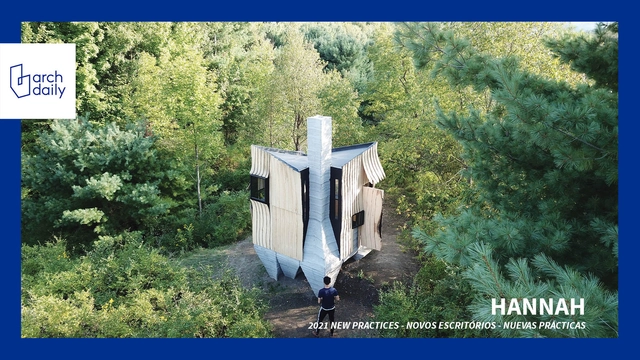
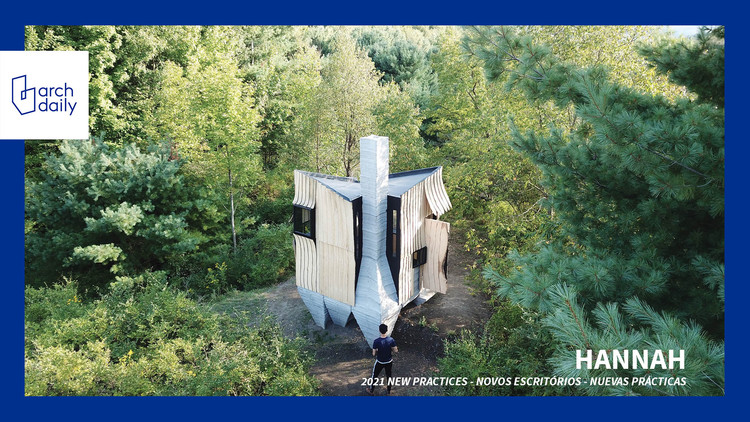
HANNAH Office is a US-based experimental research and design studio whose work focuses on advancing architecture and contemporary construction practices by examining the possibilities of new digital routines and fabrication technologies. Selected as one of Archdaily's Best New Practices of 2021, HANNAH Office was founded in 2012 by Leslie Lok and Sasa Zivkovic and constitutes a platform for exploring technology and material methods across a variety of scales, from furniture to urbanism in search of new design outcomes.
Urban Radicals is a design collective based in London, founded in 2019 by Era Savvides and Athanasios Varnavas. The practice operates at the intersection of multiple disciplines, exploring public space and the notion of collectivity across a variety of scales, contexts and design expressions. One of Archdaily's Best New Practices of 2021, Urban Radicals shrinks and grows organically through the projects, dissolving the boundaries between diverse fields of knowledge and circumventing traditional office structure to integrate a multiplicity of perspectives within architecture.
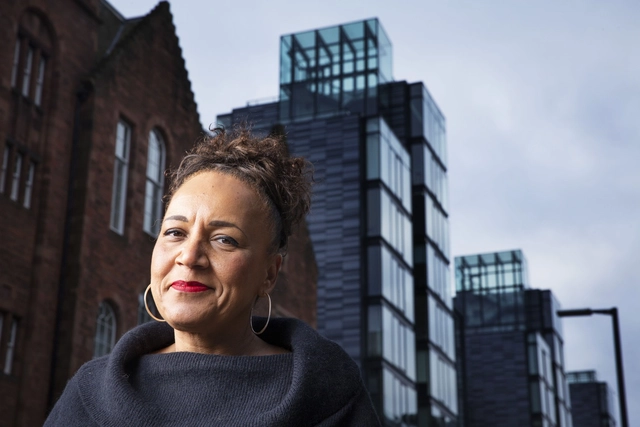
Lesly Lokko. Courtesy of Berlin Questions, Edited by ArchDaily
From the content universe we made available in 2021, interviews are, without a doubt, among those in which we invested more time and research. Making room for the voice of architects and other professionals in the built environment is a great pleasure but also an enormous challenge, as it requires a lot of research and dedicated time from our team of editors. It is also rewarding as it puts us in contact with some of the most prominent talents in our discipline, who have been discussing issues such as cities, community, environment, democracy, sustainability, building technology and interiors.
Courtesy of KARL LAGERFELD, Sierra Blanca Estates and One Atelier
During the past couple of years, luxury and fashion brands began venturing into architecture. Some built museums, foundations, and cultural organizations while others shaped residential structures that translated their identity into space. Following this same concept, KARL LAGERFELD, along with Spanish Developer Sierra Blanca Estates and the Design and Branding Firm The One Atelier, have developed the fashion house’s first “luxury architectural project”, the Karl Lagerfeld Villas in Marbella, Spain. Designed by The One Atelier, of which Andrea Boschetti is Head of Design, the project has low carbon impact, aligned with the brand’s commitment to the Fashion Pact - a global sustainability initiative that seeks to transform the fashion industry through objectives in climate, biodiversity, and ocean protection.
Asking what is “luxury architecture” and questioning why fashion brands are expanding into architecture, ArchDaily met with Andrea Boschetti to further understand the architect and urban planner’s take on the subject.
Salone is the most important furniture event in the world, strongly connected to the city and the design culture. This year we are seeing a new expanded format to mark the 60th anniversary of Salone del Mobile, titled "SuperSalone", a prequel to the 2022 edition, with a very accentuated focus on the materiality and the sustainable aspect.
Managing to put together the physical and the digital, in order to make the event more accessible for the world, Salone ran during the first week of September, at the Rho Fiera. During these design days, ArchDaily had the chance to speak with the curator, Stefano Boeri, discussing this very special edition, the relationship between the city of Milano and Salone, the democratization of design as well as the environmental quality in his projects around the world.
Questioning the new now, especially with the new challenges of Covid-19, around the world, cities are advocating for structural change and collective action. Berlin questions, an annual, multi-day conference and a platform for transdisciplinary dialogue, in its 2021 edition “Metropolis: The New Now”, tackled the immediate present, creating a place for debate. Dedicated to local solutions to global challenges, the event took on a hybrid format, at various locations in Berlin and online, resembling the world we live in.
ArchDaily had the chance to meet up with the winner of the Iconic Awards 2021 in the Architects of the Year category Dorte Mandrup, architect, founder, and creative director of Dorte Mandrup Arkitekter at Berlin Questions, to discuss the firm’s latest project in the German capital, the Exile Museum and to reflect on her career and visions.
Questioning the new now, especially with the new challenges of Covid-19, around the world, cities are advocating for structural change and collective action. Berlin questions, an annual, multi-day conference and a platform for transdisciplinary dialogue, in its 2021 edition “Metropolis: The New Now”, tackled the immediate present, creating a place for debate. Dedicated to local solutions to global challenges, the event took on a hybrid format, at various locations in Berlin and online, resembling the world we live in.
ArchDaily had the chance to meet up with Lesley Lokko, architect, academic, and novelist at Berlin Questions, to discuss her talk “Africa as the lab for the future”, her visions for the future of architecture education and the future of big cities on a social, cultural and urban level.
AARHUS, Image by Rasmus Hjortshoj . Image Courtesy of BIG
"The future is already here, it's not just very evenly distributed". Starting off with this William Gibson quote, BIG’s latest publication Formgiving looks at the past and present in order to determine the future. Talking of predictions that aren’t so far down the road, but rather than could occur in 5, 10, or 50 years, the book seeks to “give form to the future”, or to what has not taken shape yet.
ArchDaily had to chance to interview Kai-Uwe Bergmann, Partner at BIG-Bjarke Ingels Group, and discuss not only the firm’s latest manuscript but the trilogy of publications: Yes is More, an “Archicomic on Architectural Evolution”, Hot to Cold an “Odyssey of Architectural Adaptation”, and Formgiving, an “Architectural Future History”.
Technology has begun to radically transform operations in the AEC industries. For Robert Yuen, CEO and Co-Founder of Monograph, he's developed a cloud-based project management application that's tailored to address these changes. Trained as an architect and establishing himself as an entrepreneur, Robert utilizes his background to reimagine what the futures holds for managing design and construction.
Gallery of Furniture, Lukas Pelech. Image Courtesy of CHYBIK + KRISTOF
Great design builds upon the past with an eye to the future. For Ondrej Chybik and Michal Kristof, Co-Founders of CHYBIK + KRISTOF, architecture can best respect history by reinterpreting it. The Czech design practice is currently based in Prague, Brno and Bratislava, and was founded in 2010 by Ondřej and Michal. Operating with over 50 international team members, the practice aims to bridge the gaps between private and public space while transcending both generational and societal spheres.
JMZ Architects is a firm realizing both long-term visions and local spatial needs. With a background in planning and architecture, they are a Women-owned business creating campuses and new structures alike. Practicing from a single office of 23 employees in Glens Falls, New York, they have focused exclusively on architecture and planning for higher education institutions, primarily public colleges, and universities, and state higher education systems.