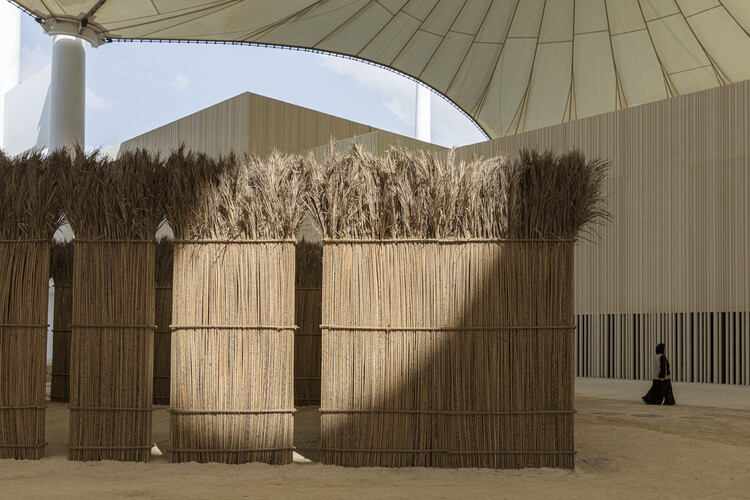
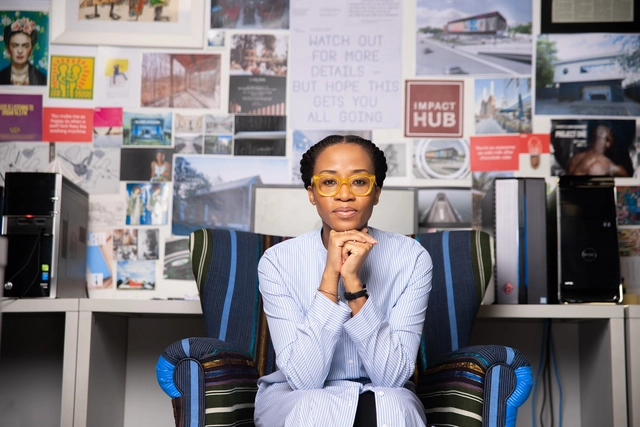
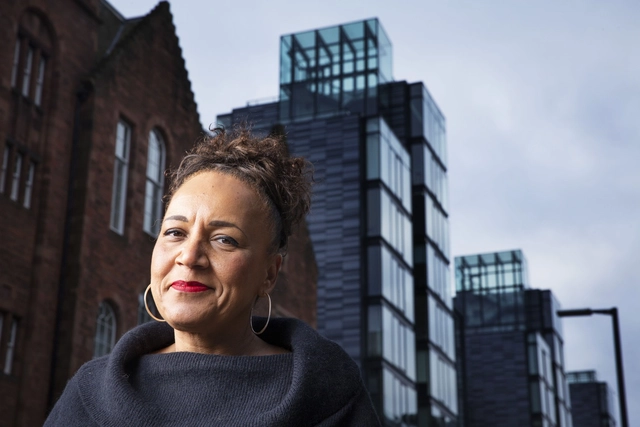
Sumayya Vally, architect, curator, and founder of Counterspace architecture office, joins the jury for the 2024 Obel Award. This international architectural prize, organized by the Henrik Frode Obel Foundation, honors projects that significantly impact people and the planet. The 2024 theme, "Architecture WITH," invites a re-examination of the architectural profession, emphasizing collaborative and co-creative processes that integrate diverse bodies of knowledge into the core of design. Vally's perspective on redefining architectural roles aligns with the theme's focus on non-hierarchical, co-creative approaches.
In Beirut, the Interdesign Building stands as a striking yet enigmatic structure. Never used since its conception in 1973, the building was designed by Lebanese architect Khalil Khouri and, in some ways, it represents a physical testament to the region’s hopes and struggles. During the inaugural edition of We Design Beirut, the exhibition “All Things Must(n't) Pass: A Subjective Recount Of Khalil Khouri’s Life And Career As A Designer” opened the building to the public, aiming to tell the story of its architect, Khalil Khouri, through the lens of his son and grandson, Bernard and Teymour Khoury. On this occasion, ArchDaily’s Editor in Chief, Christele Harrouk sat down with Bernard Khoury at his DW5 office to discuss the life of his father and a little-known chapter of Lebanese architectural history.
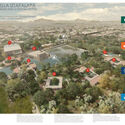
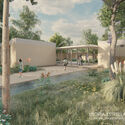
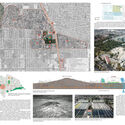
Located in Mexico City, the municipality of Iztapalapa has some of the most densely populated areas within the metropole. Serving a population of 1,800,000 people, many of them with lower incomes, the municipality struggles to provide sufficient public spaces and amenities. In an effort to correct this, the administration set out to take underutilized and abandoned plots of land and transform them for public use. Utopia Estrella is one of these initiatives. Located near Mexico City’s largest water treatment plant, the project combines a socially engaging architectural program with a pedagogical approach to the role of water infrastructures in the larger ecosystem. Designed by Cano Vera Arquitectura, the project has been recognized as the Gold Prize Winner of the Holcim Awards 2023 for Latin America. In a video interview for ArchDaily, Juan Carlos Cano of Cano Vera Arquitectura discusses the impact of this project, its goals, and the unique conditions that led to its development.
At the initiative of the Surf Ghana Collective, architects Glenn DeRoché and Jurgen Strohmayer, the co-founders of DeRoché Strohmayer, set out to transform a small waterfront plot in Busua, a surfing hotspot on Ghana’s western coast. The result is a dynamic community hub, complete with amenities for local surfers, but also providing spaces for the entire community to gather in and off-season. The project has been recognized as the winner of the Gold Prize of Holcim Awards 2023 for the Middle East and Africa commended for the profound local impact and the resourceful approach to construction techniques.In a video interview for ArchDaily, architects Glenn DeRoché and Jurgen Strohmayer discuss the development of this initiative and the innovations that shaped it.
In the evolving landscape of architecture and urban design, bioclimatic and biogenic envelopes present a compelling vision for future cities. Dr. Arta Yazdanseta, a Doctor of Design focused on energy and environments, dives into the intersection of design, building performance, and plant biophysical ecology. With a focus on bioclimatic and biogenic envelopes, Dr. Yazdanseta examines how these typologies can enhance socio-natural systems by leveraging their self-organizing potential. Dr. Yazdanseta’s academic journey includes earning a Doctor of Design and a Master of Design in Energy and Environments from the Harvard Graduate School of Design.
Her contributions as a researcher at the Harvard Center for Green Buildings and Cities include developing environmental design strategies and performance analyses for the HouseZero carbon retrofit project. In this interview, Dr. Yazdanseta explores the concept of bioclimatic envelopes and their interaction with passive architectural design principles. With a potential to revolutionize urban environments, the interview reveals insights into her research, the benefits of plant-based materials, and the future of sustainable architecture, emphasizing the critical connection between human and environmental health.
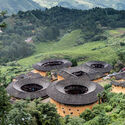
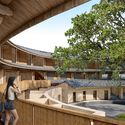
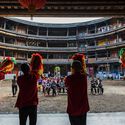
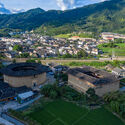
In the mountain valleys of China’s Fujian Province, thousands of large, rammed earth fortresses lay abandoned. Once used for both defense and collective housing, the tulou typology is an integral part of the region’s cultural heritage, with 46 of them being recognized by UNESCO as World Heritage Sites. Despite this, the rural communities surrounding them have struggled to find new roles and purposes for these buildings. Going beyond the need for conservation, architect Xu Tiantian of DnA_Design and Architecture set out to develop and adapt this heritage to reintroduce it into community life. The Fujian Tulou | Adaptive Reuse project recently won the Gold Prize of Holcim Awards 2023 for Asia-Pacific, recognized for creating “an exemplary model for building conservation initiatives.”In a video interview for ArchDaily, Xu Tiantian discusses the principles that underpin this initiative and the potential outcomes of adaptive reuse in rural communities.
The 3rd edition of Shaping the City, a forum on sustainable urban development, took place in Venice between November 24-25, following successful events in Chicago and New Orleans. Organized by the European Cultural Centre, this forum was running in parallel to the 2023 Venice Architecture Biennial exhibition, Time Space Existence. The event, hosted at Palazzo Michiel del Brusà in Cannaregio, brings together global urban planners, architects, academics, and politicians. Notably, Japanese architect Kengo Kuma was among the experts invited to explore the intersection of nature and the built environment in Japanese architecture.
Over two days, the conference set out to explore crucial themes such as education, urban commons, displacement, nature integration, and the future of architecture media, a subject discussed during a panel talk attended by ArchDaily’s managing editor, Christele Harrouk. While on-site in Venice, the ArchDaily team sat down with Kengo Kuma to discuss his unique approach to nature-inspired and site-specific designs.
Sumaya Dabbagh, the founder of Dabbagh Architects, based in the UAE, stands at the forefront of architectural innovation with a focus on identity and connection to place. Her recent participation in the Sharjah Architecture Triennial’s second edition “Earth to Earth" is a showcase of cumulative ideas that Dabbagh Architects has been fostering through their projects. Onsite in Sharjah, ArchDaily had the chance to speak to the architect about her exploration at the Triennial, as well as her broader architecture practice and its impact on the Global South.
In a moment in history when some seek alternatives on other planets and others find refuge in virtual worlds, paradoxically, the future seems to be Earth. This may be one of the significant lessons that 2023 has taught architecture. Understanding this also implies becoming aware that our planet is depleting before our eyes—and a generous portion of this responsibility belongs to the production chains involved in architecture and construction.
If there is still something that can be done to mitigate the climate and environmental crisis in which we find ourselves, it will necessarily involve a revision of all the paradigms that define the industry. It is necessary to change focus and seek other narratives on which to sustain the ways of making architecture on a planetary scale. These ideas resonated in many voices this year, and, at the same time as the possibility of a future for the planet was debated, equal attention was given to the scale, values, and local cultures. The selected interviews here tell stories about the community, environment, cities, practices, and new narratives for architecture in 2023 and beyond.
During this year’s edition of the Venice Architecture Biennale, ArchDaily had the chance to discuss with Giacomo Ardesio and Claudia Mainardi of Fosbury Architecture, the curators of the Italian Pavilion together with Alessandro Bonizzoni, Nicola Campri and Veronica Caprino. The curatorial project, titled “Spaziale: Everyone Belongs to Everyone Else,” aims to provide a distinctive and original portrait of Italian architecture within the international context. The curators discussed the origins of their office, their sources of inspiration and the thinking behind the design decisions that led to the creation of the curatorial project for the Italian Pavilion.
The UIA World Congress of Architecture 2023 is an international invitation for architects worldwide to explore the future of the built environment. The event this year that brought together 6,000 participants worldwide, focusing on “Sustainable Futures – Leave No One Behind”, was set on discovering how architecture influences the 17 UN Sustainable Development Goals (SDGs), ranging from Climate Adaptation, Rethinking Resources, Health, Inclusivity, and more. While visiting this year’s edition in Copenhagen, the ArchDaily team had the chance to sit down with Jan Gehl, the father of people-centered design. The discussion revolved around 50 years after the launch of his world-renowned book, Cities for People, the first publication to reflect on how to properly develop cities on the human scale. Moreover, the interview followed his keynote speech at the UIA 2023, “Cities for People – 50 Years Later."
Studio KO’s curation of the Uzbekistan Pavilion for the Venice Biennale is based on research, curiosity, workshopping, and experimenting with the senses. For over two years, the studio has worked alongside the Arts and Cultural Development Foundation, designing the Center for Contemporary Arts and their initiatives to restore and rehabilitate vernacular houses, transforming them into artist residencies. While exploring the 18th International Architecture Exhibition onsite in Venice, ArchDaily had the chance to speak with the founders of Studio KO, Karl Fournier, and Olivier Marty, curators of Uzbekistan National Pavilion. Their exhibition for this year’s theme, “The Laboratory of the Future,” focuses on the country’s rich heritage as a potential tool and inspiration for developing a more sustainable future.
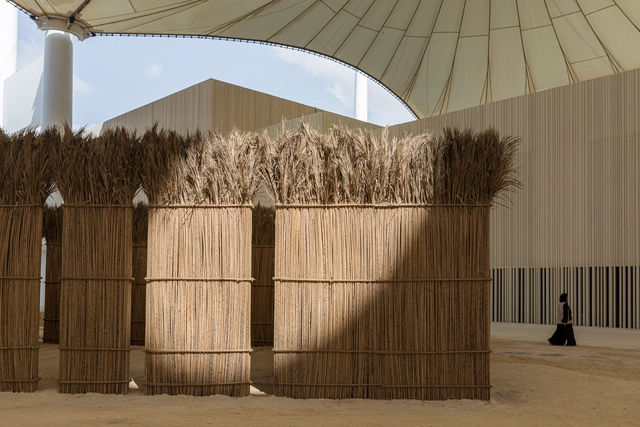
The First Islamic Arts Biennale, artistically directed by Sumayya Vally, opened on January 2023 and is still ongoing until May 23, 2023, in Jeddah, Saudi Arabia. The inaugural event was commissioned and produced by the Diriyah Biennale Foundation and was curated by Vally alongside Dr. Julian Raby, Dr. Omniya Abdel Barr, and Dr. Saad Al-Rashid. The biennale re-imagines the Western Hajj Terminal at King Abdulaziz Airport, designed by Skidmore, Owings & Merrill and winner of the 1983 Aga Khan Award, as a cultural space to redefine Islamic Arts from "within, in a way, that connects some of these art forms and forms of artistic expression to the experience and rituals" of those that live it.
Sumayya Vally is a South African architect, founder, and director of the Johannesburg-based collaborative architectural studio Counterspace. Designer of the Serpentine Pavilion in 2020/2021, she was the youngest architect to get this commission. Part of Time’s 100 emerging leaders who are shaping the future, in 2021, the only architect to make the list at that time, Sumayya started her career as a curator and teacher, and recently she was appointed as artistic director of the first Islamic Arts Biennale in Jeddah. ArchDaily had the chance to talk with Vally about her contribution to this biennale, her vision of the exhibition, the venue, the scenography, and the participating architects. Sumayya also shared some exclusive info about her entry for the 2023 Venice Architecture Biennale, starting on May 20th, in Venice, Italy.
Founder and Director of the African Futures Institute (AFI) based in Accra, Ghana, Lesley Lokko, is a Ghanaian-Scottish architect, educator, and novelist. With a career that spans Johannesburg, London, Accra, and Edinburgh, she has held several teaching positions and is widely recognized in her field. Professor Lokko was appointed as the curator of the 18th International Architecture Exhibition, La Biennale di Venezia in December 2021, after serving as a jury member for the Golden Lions Awards for the previous edition of the Venice Biennale. In her first interview with ArchDaily, after she was appointed curator of the 2023 Architecture Biennale, Lesley Lokko shares insights about the preparations, the theme, and this 18th edition.
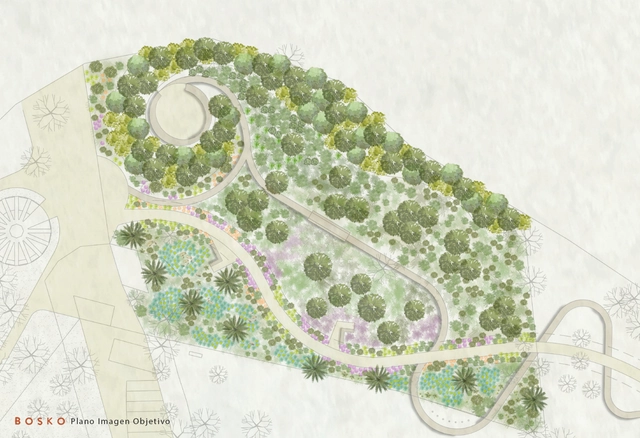
Jardín Nativo Adriana Hoffmann, Museo Interactivo Mirador (MIM) en Santiago de Chile. Image Cortesía de Bosko
During the 19th century, efforts to improve the quality of urban life focused on creating gardens and parks, marking the beginning of the evolution of landscaping as a modern discipline. However, despite remarkable examples worldwide, excessive structure and artificiality in urban parks have gone against the motivations that gave rise to them. In many cases, their design has resulted in decontextualized and inefficient public spaces that are highly demanding on resources and far from being truly sustainable.
The strict use of geometry and the imposition of species that are difficult to adapt and care for are gradually giving way to a more organic approach to landscaping, tailored to local ecosystems and more efficient in its development and conservation. Native forests embody all these positive aspects. They not only ecologically restore degraded areas but also improve air quality and retain rainwater, creating biodiverse green spaces that deeply connect people with nature. We spoke with Magdalena Valdés, founder and director of Bosko, who explains why native forests are the right path towards conscious and truly ecological landscaping.
With offices in Zürich, Barcelona and Majorca, the work of Gus Wüstemann Architects is a constant evolution between matter and context. From the strong heritage of timber and concrete construction in Switzerland, to the blurry boundaries of inside and outside found in Mediterranean architecture, Gus' work always put an emphasis on the core values of the local construction and craftsmanship, mixed with the cross learnings of working across different regions.
Currently working on projects such as A Barn, for Demna’s Atelier and Loïc’s Studio, and a mixed use hybrid concrete/timber in Feldmeilen, along with several residential projects in Italy and the Balearic Islands, Wüstemann's architecture can be seen as archetypical, essential or even raw. The interiors are a direct expression of these core concepts, with a brut aesthetic.
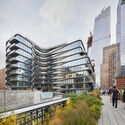
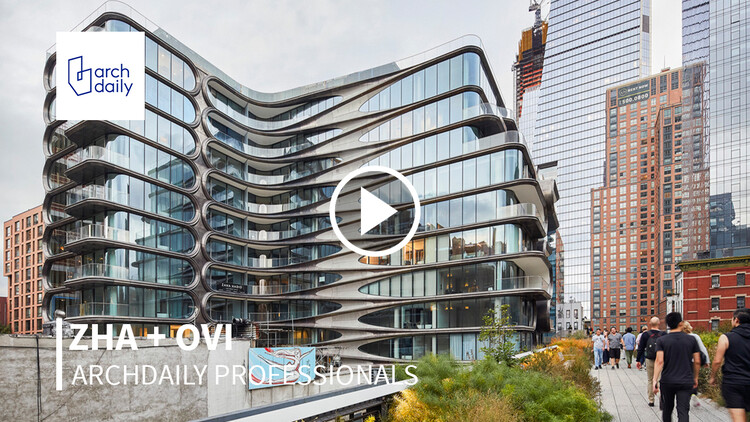
With more than 900 projects in over 40 countries, every project that Zaha Hadid Architects designs and builds has an impact on the narrative of contemporary architecture. At ArchDaily, we know that each architectural project has a team of professionals behind it which makes it possible. In this edition of the ArchDaily ProfessionalsVideo Interviews, we talked to Johannes Schafelner, associate director at Zaha Hadid Architects, and Enrique Peiniger, founder of OVI-Office for Visual Interaction about their long-standing collaboration in projects merging design and lighting.