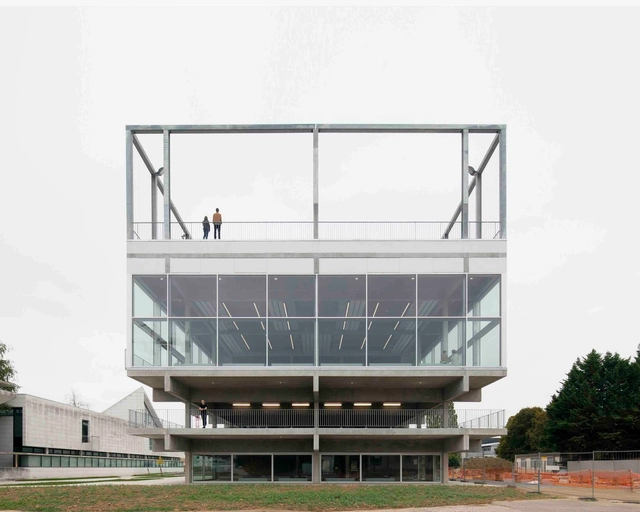
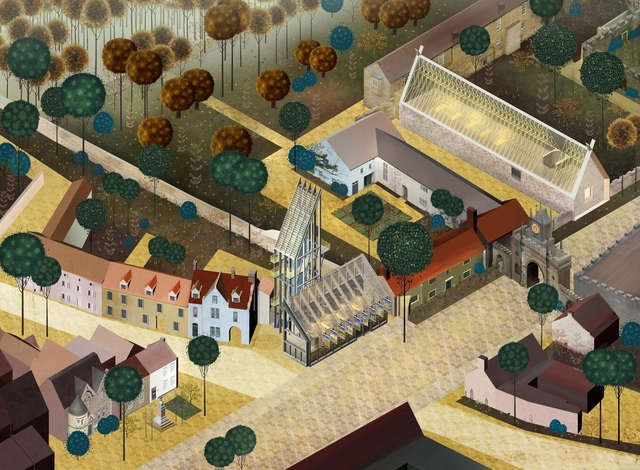
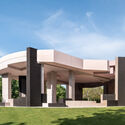
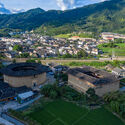
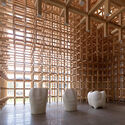
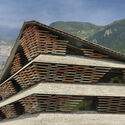
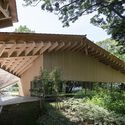
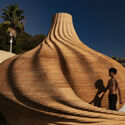
The architecture of Studio Muoto is one that encompasses endless definitions of what architecture should be, but most importantly, of what architecture can become. The scope of work of the Paris-based practice founded in 2003 by Gilles Delalex and Yves Moreau includes projects in the fields of architecture, exhibition design, urban planning, teaching, and research. All of this has led to an architecture of minimal structures that age gracefully, an architecture that evolves and adapts with time, and that is sustainable economically and environmentally.
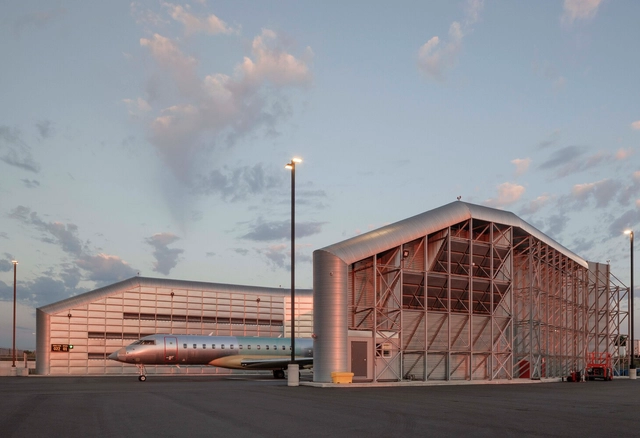
Adjacent to Toronto's Pearson International Airport, the Bombardier Aircraft Assembly Center represents a landmark project in Canadian aerospace design. Located next to Canada's largest airport, it blends 70,000 m2 (750,000 ft2) of technical precision with a focus on people. ArchDaily's editor Moises Carrasco had the opportunity to speak with Lilia Koleva, partner at NEUF architect(e)s and founder of the firm's Toronto office, which led this project. Koleva shared insights into her professional journey and reflected on the challenges of building and growing NEUF's Toronto-based office. She also discusses the Bombardier Campus, describing it as a defining project in her career, and how it showcases NEUF's ability to tackle large-scale, technically demanding projects while maintaining a focus on the people who use the space. This project builds on the office's prior expertise in industrial design and expands its portfolio of human-centered architectural solutions. Koleva also reflects on the importance of fostering collaboration, adaptability, and a clear understanding of client needs; qualities that have defined her approach to architecture and leadership at NEUF.
In an era marked by rapid urbanization, climate emergencies, and evolving societal needs, architecture has a complex role to play and a responsibility to engage actively yet sensibly with cultural, political, and economic considerations. In this context, Níall McLaughlin stands out for his balanced approach rooted in historical contexts, yet aware and responsive to contemporary challenges. His studio, Niall McLaughlin Architects, embraces a dialogue-centric approach, fostering a collaborative environment. ArchDaily's senior editor Maria-Cristina Florian had the chance to sit down with Níall McLaughlin and discuss his perspective on the role of architecture in today's society and the emerging challenges of architectural education.
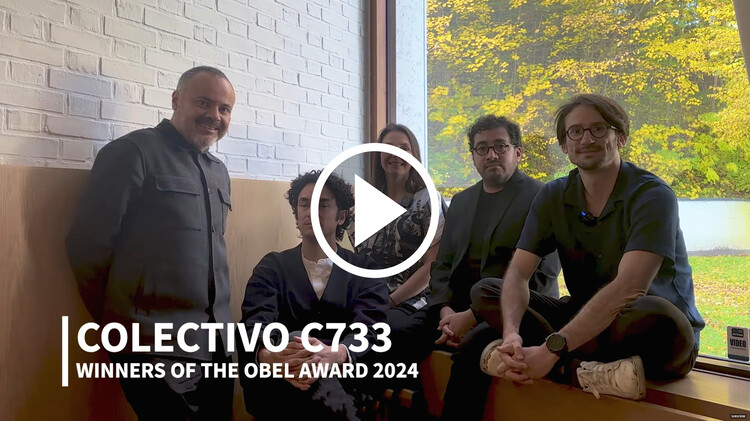
Recognized for completing 36 distinct yet cohesive public projects across Mexico in just 36 months, Colectivo C733 showcases the impact of collaborative design on public spaces and communities. The 36 projects were part of a national effort to revitalize vulnerable urban and rural areas in Mexico, earning them the 2024 Obel Award focused on the theme of "Architectures With". The team behind the designs, Colectivo C733, is a collaborative group formed by the joint offices of architects Gabriela Carrillo (Taller Gabriela Carrillo), Carlos Facio, and José Amozurrutia (TO), along with Eric Valdez (Labg), and Israel Espin. In a recent conversation with ArchDaily's Editor-in-Chief, Christele Harrouk, the collective discussed their approach to public architecture, the process of integrating diverse voices, and remaining flexible to the challenges of local conditions.
Office ParkScheerbarth, selected as one of ArchDaily's 2024 Best New Practices, was founded in Berlin in 2019 by principals Moojin Park and Benjamin Scheerbarth. Together, they create a synthesis between architecture, urban planning, and social science, drawings on cultural and educational contexts from Korea, the US, and Germany. Their work creates spaces that welcome versatility, challenges, and growth. The duo embodies a fusion of cultures, nationalities, and diverse disciplines, approaching each project from multiple perspectives and emphasizing adaptability, respect for ownership, and the continuous pursuit of knowledge and innovation. Challenging norms and regulations of the built environment, Moojin Park and Benjamin Scheerbarth share a commitment to pushing and exploring design boundaries. They met during their Master's studies in the US, where their shared vision took shape and marked the beginning of their journey together.
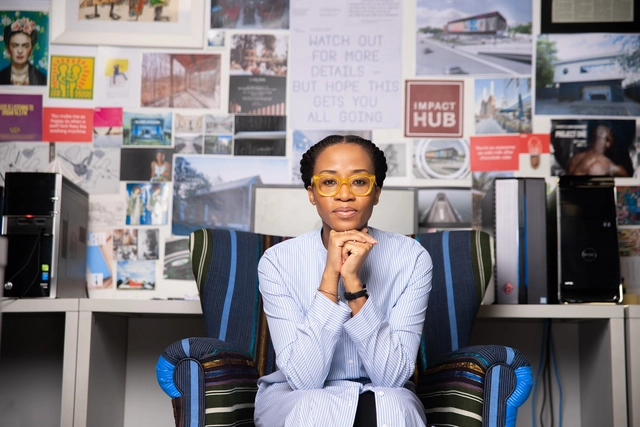
Sumayya Vally, architect, curator, and founder of Counterspace architecture office, joins the jury for the 2024 Obel Award. This international architectural prize, organized by the Henrik Frode Obel Foundation, honors projects that significantly impact people and the planet. The 2024 theme, "Architecture WITH," invites a re-examination of the architectural profession, emphasizing collaborative and co-creative processes that integrate diverse bodies of knowledge into the core of design. Vally's perspective on redefining architectural roles aligns with the theme's focus on non-hierarchical, co-creative approaches.
In Beirut, the Interdesign Building stands as a striking yet enigmatic structure. Never used since its conception in 1973, the building was designed by Lebanese architect Khalil Khouri and, in some ways, it represents a physical testament to the region’s hopes and struggles. During the inaugural edition of We Design Beirut, the exhibition “All Things Must(n't) Pass: A Subjective Recount Of Khalil Khouri’s Life And Career As A Designer” opened the building to the public, aiming to tell the story of its architect, Khalil Khouri, through the lens of his son and grandson, Bernard and Teymour Khoury. On this occasion, ArchDaily’s Editor in Chief, Christele Harrouk sat down with Bernard Khoury at his DW5 office to discuss the life of his father and a little-known chapter of Lebanese architectural history.
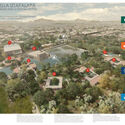
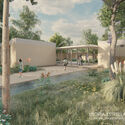
Located in Mexico City, the municipality of Iztapalapa has some of the most densely populated areas within the metropole. Serving a population of 1,800,000 people, many of them with lower incomes, the municipality struggles to provide sufficient public spaces and amenities. In an effort to correct this, the administration set out to take underutilized and abandoned plots of land and transform them for public use. Utopia Estrella is one of these initiatives. Located near Mexico City’s largest water treatment plant, the project combines a socially engaging architectural program with a pedagogical approach to the role of water infrastructures in the larger ecosystem. Designed by Cano Vera Arquitectura, the project has been recognized as the Gold Prize Winner of the Holcim Awards 2023 for Latin America. In a video interview for ArchDaily, Juan Carlos Cano of Cano Vera Arquitectura discusses the impact of this project, its goals, and the unique conditions that led to its development.
At the initiative of the Surf Ghana Collective, architects Glenn DeRoché and Jurgen Strohmayer, the co-founders of DeRoché Strohmayer, set out to transform a small waterfront plot in Busua, a surfing hotspot on Ghana’s western coast. The result is a dynamic community hub, complete with amenities for local surfers, but also providing spaces for the entire community to gather in and off-season. The project has been recognized as the winner of the Gold Prize of Holcim Awards 2023 for the Middle East and Africa commended for the profound local impact and the resourceful approach to construction techniques.In a video interview for ArchDaily, architects Glenn DeRoché and Jurgen Strohmayer discuss the development of this initiative and the innovations that shaped it.
In the evolving landscape of architecture and urban design, bioclimatic and biogenic envelopes present a compelling vision for future cities. Dr. Arta Yazdanseta, a Doctor of Design focused on energy and environments, dives into the intersection of design, building performance, and plant biophysical ecology. With a focus on bioclimatic and biogenic envelopes, Dr. Yazdanseta examines how these typologies can enhance socio-natural systems by leveraging their self-organizing potential. Dr. Yazdanseta’s academic journey includes earning a Doctor of Design and a Master of Design in Energy and Environments from the Harvard Graduate School of Design.
Her contributions as a researcher at the Harvard Center for Green Buildings and Cities include developing environmental design strategies and performance analyses for the HouseZero carbon retrofit project. In this interview, Dr. Yazdanseta explores the concept of bioclimatic envelopes and their interaction with passive architectural design principles. With a potential to revolutionize urban environments, the interview reveals insights into her research, the benefits of plant-based materials, and the future of sustainable architecture, emphasizing the critical connection between human and environmental health.
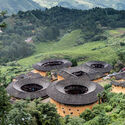
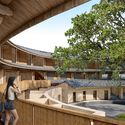
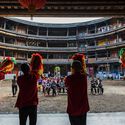
In the mountain valleys of China’s Fujian Province, thousands of large, rammed earth fortresses lay abandoned. Once used for both defense and collective housing, the tulou typology is an integral part of the region’s cultural heritage, with 46 of them being recognized by UNESCO as World Heritage Sites. Despite this, the rural communities surrounding them have struggled to find new roles and purposes for these buildings. Going beyond the need for conservation, architect Xu Tiantian of DnA_Design and Architecture set out to develop and adapt this heritage to reintroduce it into community life. The Fujian Tulou | Adaptive Reuse project recently won the Gold Prize of Holcim Awards 2023 for Asia-Pacific, recognized for creating “an exemplary model for building conservation initiatives.”In a video interview for ArchDaily, Xu Tiantian discusses the principles that underpin this initiative and the potential outcomes of adaptive reuse in rural communities.
The 3rd edition of Shaping the City, a forum on sustainable urban development, took place in Venice between November 24-25, following successful events in Chicago and New Orleans. Organized by the European Cultural Centre, this forum was running in parallel to the 2023 Venice Architecture Biennial exhibition, Time Space Existence. The event, hosted at Palazzo Michiel del Brusà in Cannaregio, brings together global urban planners, architects, academics, and politicians. Notably, Japanese architect Kengo Kuma was among the experts invited to explore the intersection of nature and the built environment in Japanese architecture.
Over two days, the conference set out to explore crucial themes such as education, urban commons, displacement, nature integration, and the future of architecture media, a subject discussed during a panel talk attended by ArchDaily’s managing editor, Christele Harrouk. While on-site in Venice, the ArchDaily team sat down with Kengo Kuma to discuss his unique approach to nature-inspired and site-specific designs.
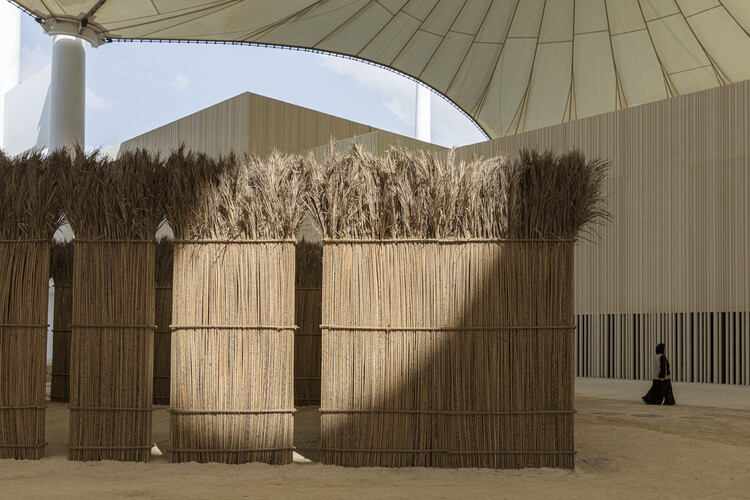
Sumaya Dabbagh, the founder of Dabbagh Architects, based in the UAE, stands at the forefront of architectural innovation with a focus on identity and connection to place. Her recent participation in the Sharjah Architecture Triennial’s second edition “Earth to Earth" is a showcase of cumulative ideas that Dabbagh Architects has been fostering through their projects. Onsite in Sharjah, ArchDaily had the chance to speak to the architect about her exploration at the Triennial, as well as her broader architecture practice and its impact on the Global South.
In a moment in history when some seek alternatives on other planets and others find refuge in virtual worlds, paradoxically, the future seems to be Earth. This may be one of the significant lessons that 2023 has taught architecture. Understanding this also implies becoming aware that our planet is depleting before our eyes—and a generous portion of this responsibility belongs to the production chains involved in architecture and construction.
If there is still something that can be done to mitigate the climate and environmental crisis in which we find ourselves, it will necessarily involve a revision of all the paradigms that define the industry. It is necessary to change focus and seek other narratives on which to sustain the ways of making architecture on a planetary scale. These ideas resonated in many voices this year, and, at the same time as the possibility of a future for the planet was debated, equal attention was given to the scale, values, and local cultures. The selected interviews here tell stories about the community, environment, cities, practices, and new narratives for architecture in 2023 and beyond.
During this year’s edition of the Venice Architecture Biennale, ArchDaily had the chance to discuss with Giacomo Ardesio and Claudia Mainardi of Fosbury Architecture, the curators of the Italian Pavilion together with Alessandro Bonizzoni, Nicola Campri and Veronica Caprino. The curatorial project, titled “Spaziale: Everyone Belongs to Everyone Else,” aims to provide a distinctive and original portrait of Italian architecture within the international context. The curators discussed the origins of their office, their sources of inspiration and the thinking behind the design decisions that led to the creation of the curatorial project for the Italian Pavilion.
The UIA World Congress of Architecture 2023 is an international invitation for architects worldwide to explore the future of the built environment. The event this year that brought together 6,000 participants worldwide, focusing on “Sustainable Futures – Leave No One Behind”, was set on discovering how architecture influences the 17 UN Sustainable Development Goals (SDGs), ranging from Climate Adaptation, Rethinking Resources, Health, Inclusivity, and more. While visiting this year’s edition in Copenhagen, the ArchDaily team had the chance to sit down with Jan Gehl, the father of people-centered design. The discussion revolved around 50 years after the launch of his world-renowned book, Cities for People, the first publication to reflect on how to properly develop cities on the human scale. Moreover, the interview followed his keynote speech at the UIA 2023, “Cities for People – 50 Years Later."