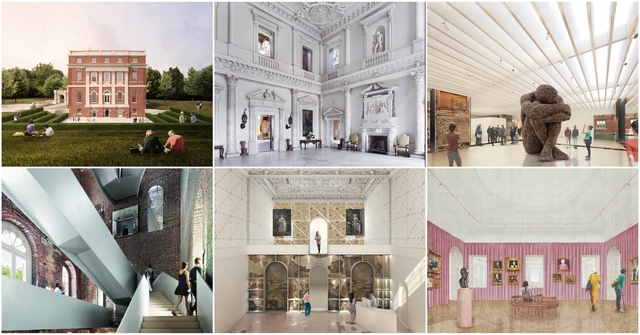
Six teams have been shortlisted in a competition to restore and renovate the historic Clandon Park mansion in the county of Surrey, England, after the National Park property received heavy damage from a fire in 2015.
Organized by Malcolm Reading Consultants, the competition tasked teams with restoring and updating the interiors of the 18th-century Palladian house, as well as designing new flexible event spaces and visitor facilities within the existing building footprint.
What is the relationship between art and architecture? What makes a great space for art? How do buildings inform what and how we see? Leading architects will be in conversation with museum directors, gallerists and artists to discuss major international projects and the role of architecture in shaping the cultural landscape.
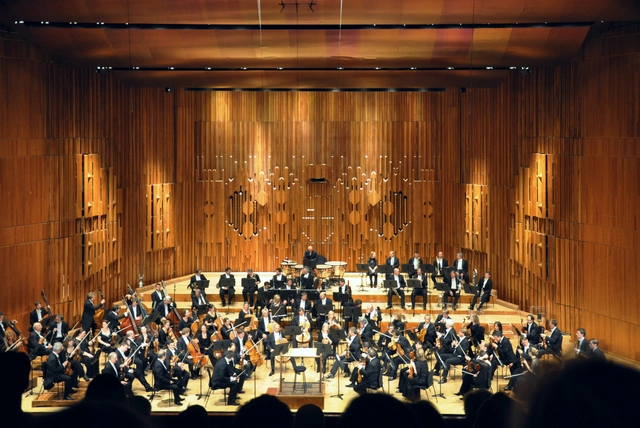
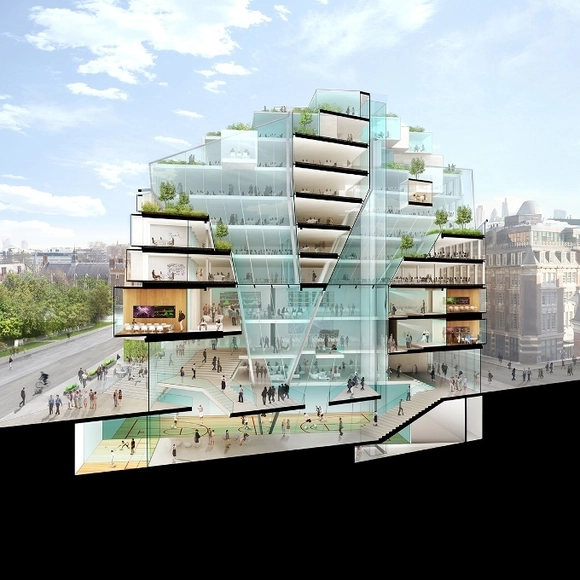
Six internationally-acclaimed teams have been selected as finalists in a competition to design a new home for London Symphony Orchestra and Guildhall School of Music & Drama to be known as the Centre for Music London.
Planned to contain a world-class concert hall, education, training and digital spaces, top-grade facilities for audiences and performers, and a number of supporting commercial areas, the Centre for Music building will become a new landmark within the heart of London, aimed at becoming “a place of welcome, participation, discovery and learning fit for the digital age.”
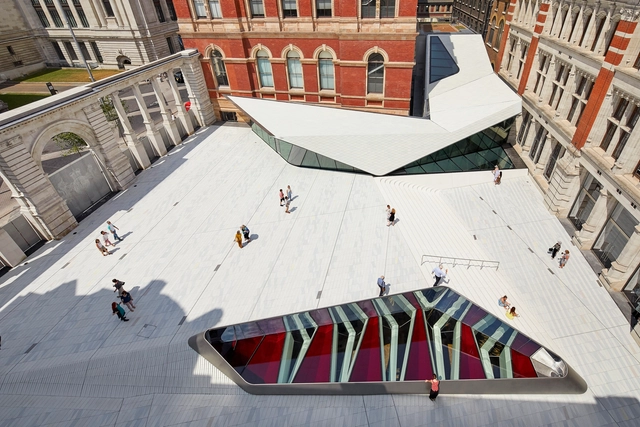
I really believe that the role of the museum is to go beyond the boundaries of the building and to engage in contemporary life, so by creating a new public outdoor space – a new courtyard, a new place – we’ve renegotiated the relationship between street and museum
In this video from CNN Style, director Matthew Donaldson takes us inside the just completed courtyard entrance and extension of London’s V&A Museum, the world's largest museum of decorative arts and design. Designed by AL_A, the newly completed space features 11,840 square feet of flexible gallery space and the world’s first public courtyard constructed entirely of porcelain, paved with 11,000 tiles in 15 different patterns handcrafted by Koninklijke Tichelaar Makkum, the Netherlands' oldest registered company.
Featuring narration by Amanda Levete, founder of AL_A, the video offers an intimate look at the project’s above- and below-ground spaces, including the entry pavilion, sleek new stair and skylight-lit galleries.
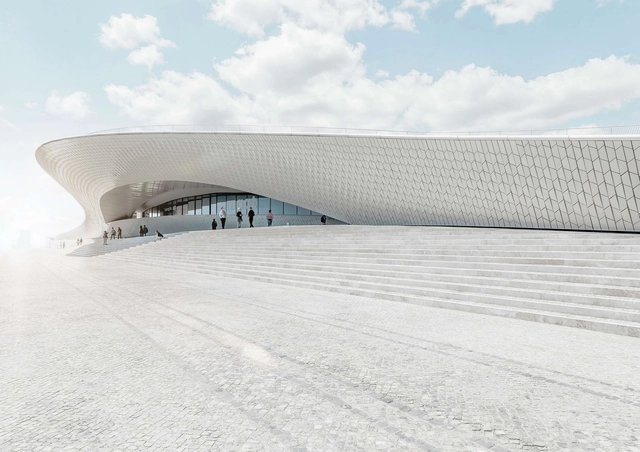
After a study of Madrid’s exuberantly geometric architecture, Digital Designer and Creative Director Joel Filipe continues his formal exploration in a series of photos of the MAAT by AL_A that celebrates the delicate impression of its undulating white tile facade against the bright Lisbon sky. Situated on the Tagus River, architect Amanda Levete creates a reunion between the river and the city with MAAT’s walkable rooftop terrace that draws visitors from the nearby streets of Belem, and with the promenade which steps down to meet the water. The roof provides a gathering space during the day and a place to screen films at night. The low-lying gentle arch of the building allows for a clever play of shadows and light, along with a nod to rippling water.
Designing a museum is always an exciting architectural challenge. Museums often come with their own unique needs and constraints--from the art museum that needs specialist spaces for preserving works, to the huge collection that requires extensive archive space, and even the respected institution whose existing heritage building presents a challenge for any new extension. In honor of International Museum Day, we’ve selected 23 stand-out museums from our database, with each ArchDaily editor explaining what makes these buildings some of the best examples of museum architecture out there.
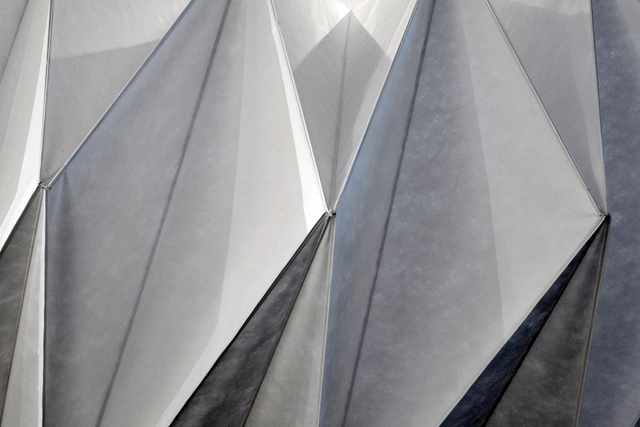
Located along banks of the Tagus in the Lisbon neighborhood of Belém, AL_A's recently completed Museum of Art, Architecture, and Technology (MAAT) has brightened up the Lisbon waterfront with its sleek form and glimmering materiality since its opening last October. These qualities have now been captured in a 4K timelapse video by photographer and filmmaker Alejandro Villanueva. The video shows how the building’s presence transforms throughout the day, as the sun reflects off of its unique ceramic facade.
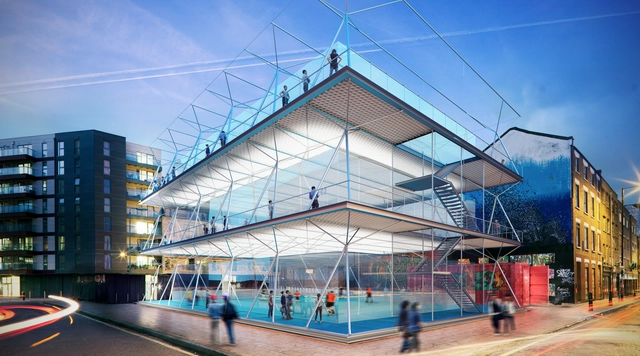
Architectural firm AL_A has unveiled its design for Pitch/Pitch, a series of 5-a-side soccer pitches designed for unused or temporarily vacant lots across London, as well as in other cities internationally.
Created as a response to shortage of sport space in inner cities, the project is meant to be fast and easy to construct, “meaning it could be set up for a fortnight to coincide with a World Cup tournament, or last for a year, bringing use to vacant sites that might otherwise lie dormant.”
After working with Arup, the practice developed a modular system that utilizes a lightweight carbon-fiber structure, a material generally associated with the aerospace industry, but that is emerging architecturally at larger scales.
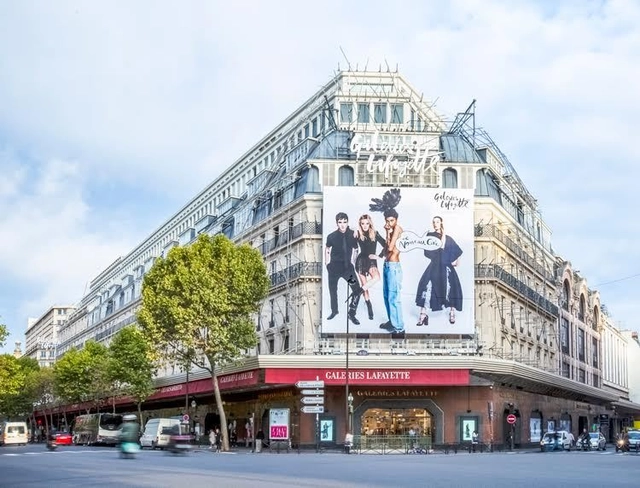
French department store Galeries Lafayette has selected London based AL_A to transform their historic flagship store on Boulevard Haussmann in Paris. Galeries Lafayette selected them with the goal of “building the department store of the 21st century” which will be designed to bring a completely new shopping experience to customers. The remodeling of the 40,000 square meter store is scheduled to begin in early 2017.
The EDP Foundation has announced that MAAT, the Museum of Art, Architecture, and Technology in Lisbon, will open to the public on October 4-5. The museum, with a new kunsthall building designed by AL_A, will “become the centerpiece of one of the Portuguese capital’s most popular cultural areas, the historic riverside district of Belém."
Pedro Gadanho, who previously held a role as a curator in the Department of Architecture and Design at the Museum of Modern Art (MoMA) in New York, has been appointed the first Director of MAAT.
AL_A's MPavilion 2015 has been gifted to the City of Melbourne. It will be relocated from the Queen Victoria Gardens to a permanent site at Collins Street park in Docklands, says Naomi Milgrom, chair of the Naomi Milgrom Foundation.
“In its new permanent home, Amanda Levete’s MPavilion 2015 will continue to inspire and be part of our city’s cultural heritage as a public amenity of Melbourne. Amanda’s magical, forest-like structure joins a growing family of architectural masterpieces to be enjoyed by the people of Melbourne for years to come,” Milgrom said.
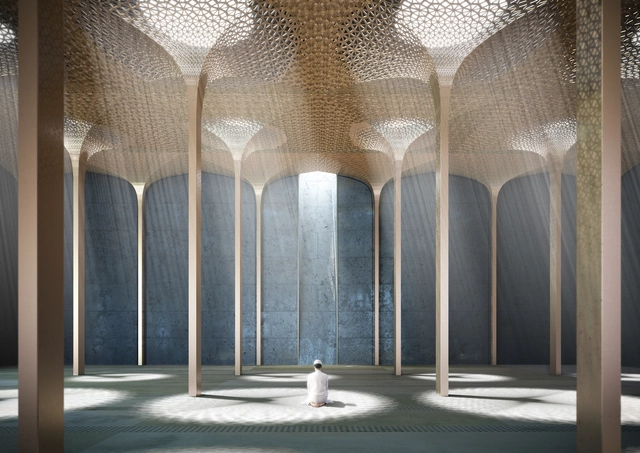
AL_A has won a competition to design a new mosque within the Foster + Partner-designed World Trade Center complex in Abu Dhabi. The 2000-square-meter project, envisioned as a "pathway to serenity" rather than a single building, leads visitors on a journey through an informal park of palm trees that slowly align with the mosque's shifted grid as users approach the Prayer Hall. Once inside, visitors are facing towards Mecca.
"The mosque is envisaged as a piece of the city, one that reflects the journey from the temporal to the spiritual," said AL_A director Ho-Yin Ng. "The mosque and the garden become one, with the trees and the columns forming an informal vertical landscape and allowing Friday prayers to spill outside."
“The amount of analysis and intellectual effort that has gone into the designs from each team is staggering and the results are impressive and very exciting. Given its size and prime location on Lincoln’s Inn Fields we want this to be a seminal university building; its legacy will endure for many generations so it is vital that we make the right decision,” said Julian Robinson, LSE’s Director of Estates.
All six schemes are being publicly exhibited at the LSE's Saw Swee Hock Student Centre through March 17. Read on for a glimpse of each.
UPDATE: AL_A has won planning permission for their Southampton Maggie's Center design. According to a report by the Architects' Journal, the 420 square-meter "disappearing" building will be the charity's 19th center. It is set to open in 2017.
Amanda Levete Architects (AL_A) has submitted plans for a new Maggie's Center in the English coastal city of Southampton. Sited at the Southampton General Hospital, the proposed center will provide free practical, emotional and social support for people with cancer and their family and friends. The new building aims to provide a warm and welcoming sanctuary within the built-up hospital environment.
"Bringing a bit of magic to the place, the building emerges from this wild naturalistic landscape with an almost ethereal clarity," described AL_A. "Subtle, understated and imbued with light, it is designed to lift the weight from the shoulders of all who visit and work there."
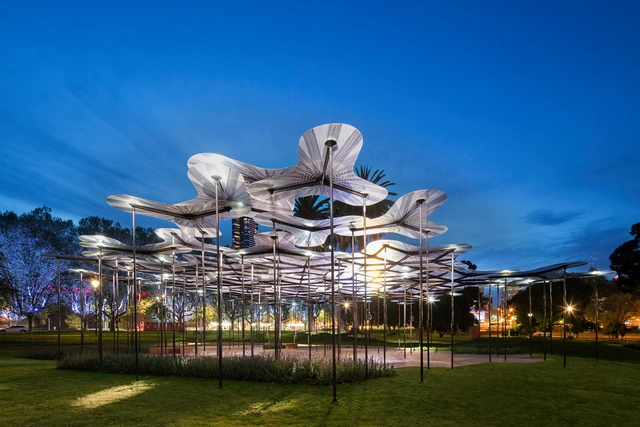
AL_A has completed Melbourne's second annual MPavilion. The temporary installation, initiated by Naomi Milgrom Foundation, was unveiled today in Queen Victoria Gardens. For the next four months, the public is welcome to populate the artificial "forest canopy," whose translucent petals were developed using aerospace technology to demonstrate how an ultra-lightweight structure that can "sit lightly on the landscape and gently respond to the climate." "Each petal is fitted with LED lights that are activated by the sunset to give a light performance synchronized with music," says the organizers.
British architect Amanda Levete of London-based studio AL_A has been selected to design Melbourne's second annual MPavilion. The temporary structure will be used to house talks, workshops, performances and installations in the "downtown oasis" of Queen Victoria Gardens starting this October.
"I’ve visited Australia three times in the past six years and without doubt Melbourne is my favorite city," said Levete, commenting on her commission. "It’s people that make a city creative – and that’s why I love Melbourne. The brief from the Naomi Milgrom Foundation is a great opportunity to design a structure that responds to its climate and landscape. I’m interested in exploiting the temporary nature of the pavilion form to produce a design that speaks in response to the weather."
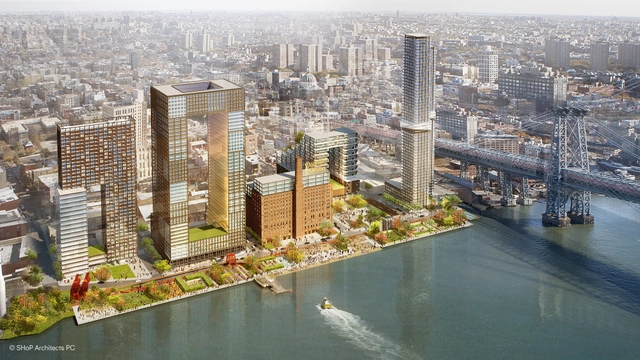
Domino Sugar Factory Master Plan Development / SHoP Architects
Fast Company has announced who they believe to be the most innovative practices in architecture for 2014. Topping this list is New York’s SHoP Architects who has gone from “boutique to big commissions in only a few years.” See who made the list after the break and let us know who you believe is the world’s most innovative firms in the comment section below.