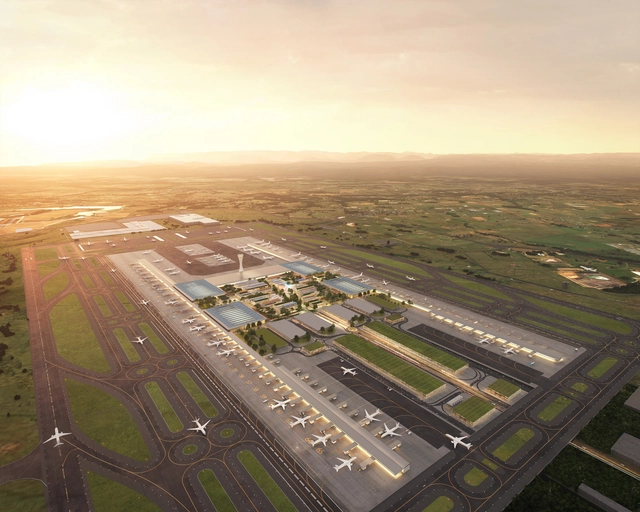
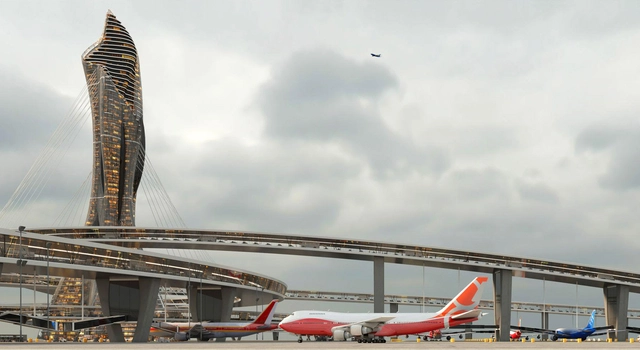
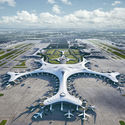
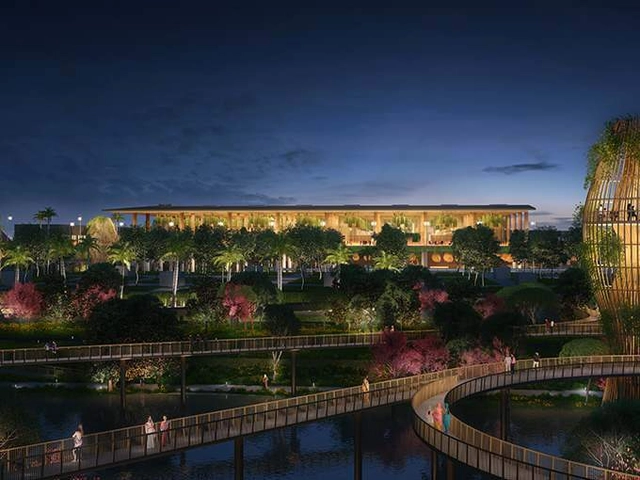
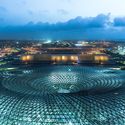
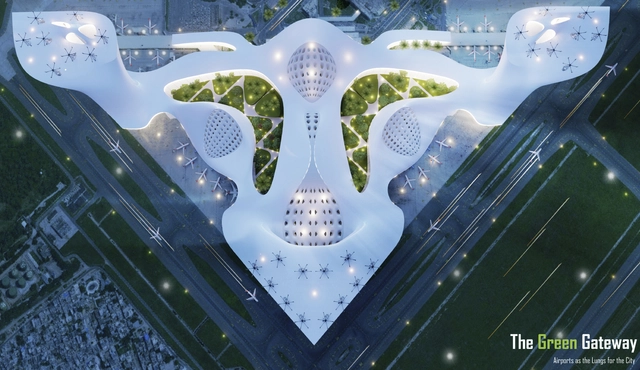
First Place: BANIYA, The Green Gateway, Southern California Institute of Architecture. Image Courtesy of Fentress Global Challenge
Fentress Global Challenge (FGC), an annual international student design competition, launched in 2011 by Fentress Architects, has released its results for the 2020 edition. Reimagining airport mobility in the year 2100 for one of the 20 busiest airports in the world, this year’s contest gathered over 100 submissions from students in over 15 countries. The winning project, “the Green Gateway” is a zero-emission, highly sustainable multimodal hub.
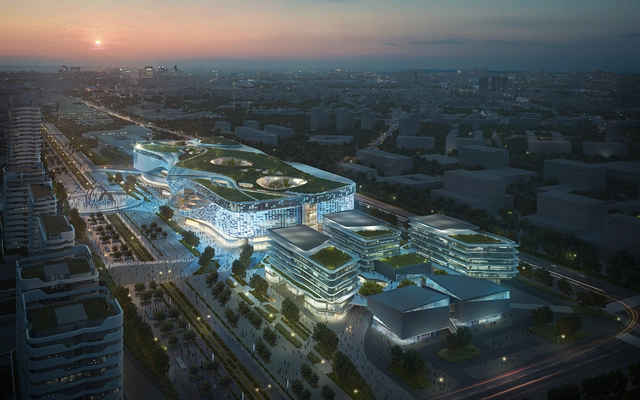
10 Design has revealed images of its winning scheme for China Fortune’s 243,768sqm contemporary mixed-use destination. Part of the redevelopment vision of an old military airport in Nanjing, China, the project puts in place three interconnecting buildings linked by a sunken street, incorporating office, retail, and cultural spaces.
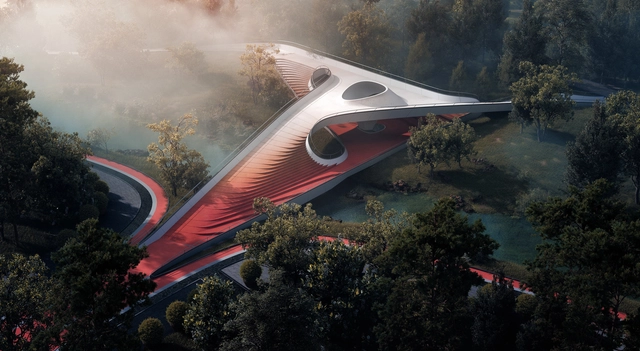
This week’s curated selection of Best Unbuilt Architecture encompasses conceptual proposals submitted by our readers. It features diverse functions and tackles different scales, from a spiraling bridge in China to a transportation hub dedicated primarily to space travel in Japan.
Comprising uncommon design approaches, this article introduces a humanitarian architectural response to the needs of the residents in an informal Egyptian settlement. In the master plan category, a Green city proposal highlights how we should develop our cities and neighborhoods in the future, and the first net-zero energy airport in Mexico reinterprets holistic design approaches. Moreover, the roundup presents different cultural interventions, from a museum in Botswana, an installation at the Burning Man festival by AI Studio, and an observatory in Vietnam.
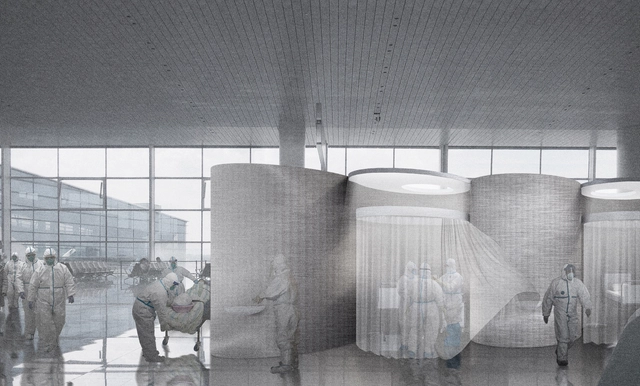
Opposite Office has proposed to transform the new Berlin airport, under construction since 2006, into a “Superhospital” for coronavirus patients. In an attempt to prepare the healthcare system and increase its capabilities, Opposite Office presented an adaptive reuse alternative, drawing contextual solutions to fight the pandemic.
The architecture thought regarding the buildings with infrastructure programs tend, generally, to ponder its reflection in issues related to the site, flow organization, revitalization, and well-articulated uses, as these projects usually are connected to a great number of users and multiple simultaneous purposes.
Foster + Partners have released their design for the new Red Sea Airport, expected to welcome one million visitors by 2030. Inspired by the forms of the desert, the green oasis and the sea, the terminal building aims to provide a new type of experience, diverging from the common hassles of airports.
Fentress Architects announced the winners of the 2019 Fentress Global Challenge, the international annual student competition. For this 7th edition, under the theme of envisioning the airport of the future in the year 2075, students from more than 50 countries participated in the contest, and more than 500 applications were registered.
The AERIAL FUTURES: Living Laboratories Symposium examines the confluence of urban elements within the airport landscape—transportation, commerce, public space and technological interfaces—and how Asian airports introduce alternatives for life in transit.
By 2035, it’s estimated that air travel in Asia will be greater than Europe and North America combined, with routes in Asia serving an extra 1.8 billion annual passengers. Increase in airport capacity challenges physical infrastructure as much as operations and passenger experience. A trillion dollars is earmarked for airport development in Asia alone in the next 10 years. Unprecedented growth requirements are difficult to meet and concrete alone is
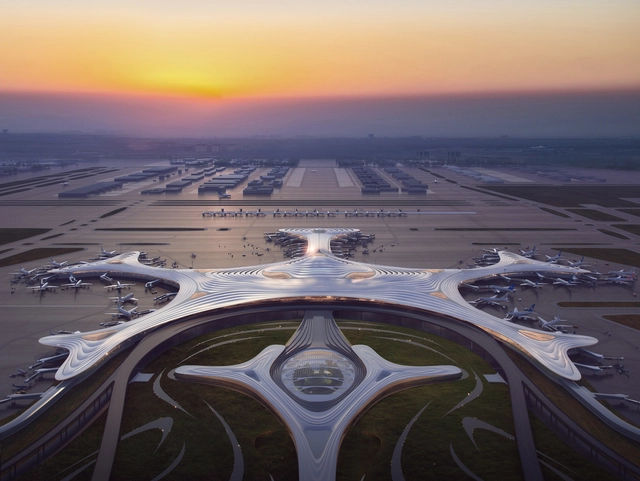
MAD Architects, led by Ma Yansong, has released details of their design for Terminal 3 at Harbin Taiping International Airport in Northern China. Referencing the gentle slopes of the surrounding landscape, and the region’s immense snow and ice, MAD’s scheme creates an architectural poetry that settles into its locale in the spirit of a snowflake falling to earth, while simultaneously expressing the surreal, interstellar space of future air travel.
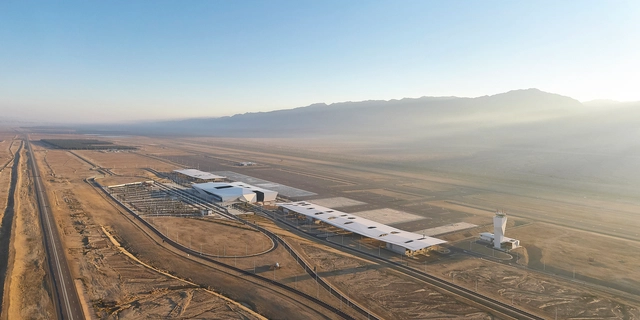
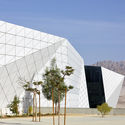
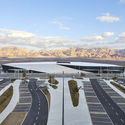
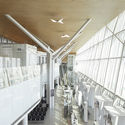
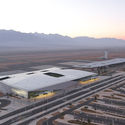
The Ilan and Asaf Ramon International Airport has opened in the Negev Desert of Israel. Designed by Amir Mann-Ami Shinar Architects and Moshe Zur Architects, the project was made to service the Red Sea resort city of Eilat and the surrounding region. The airport's design was influenced by the futuristic world of aviation and the project's natural desert surrounding. Commissioned by the Israel Airport Authority, the project is Israel's first civil airport built from scratch.
A public event at Harvard GSD examines the lower sky as a site of mobility
Increasing congestion and advances in autonomous technology are set to transform how we move around our cities. Many are now looking to the sky — the third dimension — as an expansive space for new kinds of mobility. Autonomous flying vehicles, such as cargo drones and flying taxis, have the capacity to disrupt how we move goods and passengers around urban space. Responding to these real-world changes, AERIAL FUTURES: The Third Dimension examines Urban Air Mobility (UAM), asking how scalable and on-demand UAM models could reduce road traffic, pollution, accidents and the strain on existing public transport networks. Within these opportunities are also challenges to overcome: noise, community acceptance, safety, cyber security and seamless integration with existing aircraft operations.
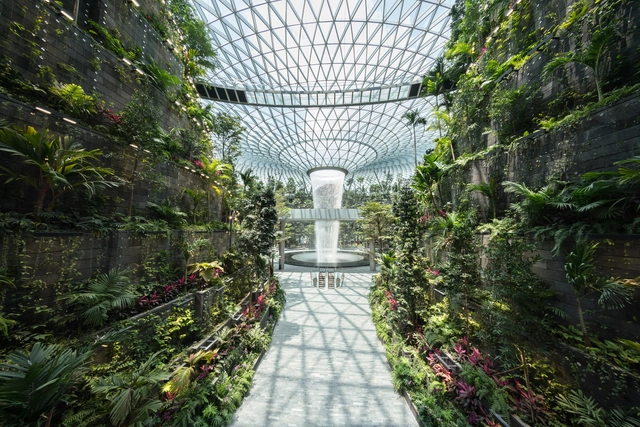
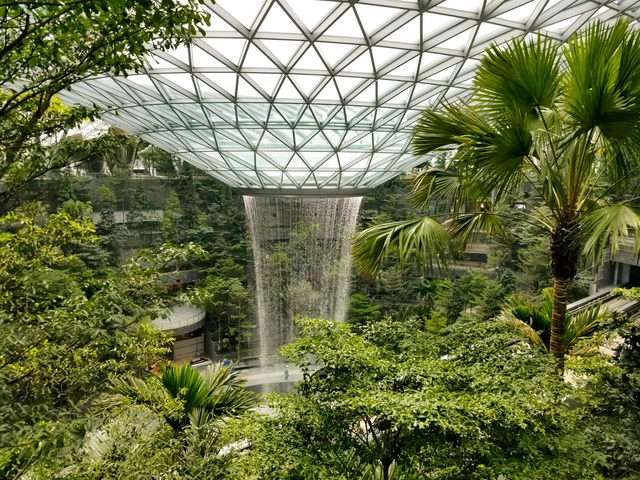
Jewel Changi Airport. Image Courtesy of Changi Airport Devt.
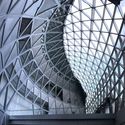
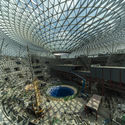
Safdie Architects has completed construction of the world's tallest indoor waterfall in Singapore's Jewel Changi Airport. Featuring a lush indoor forest and a green trail of airport amenities, the Jewel Changi Airport was designed to reinvent the concourse as a public attraction. The project was built with a torus-shaped glass dome the includes an oculus at its center. Dubbed the Rain Vortex, the oculus allows water to cascade into the airport.
Skidmore Owings and Merrill have unveiled their design for the Kempegowda International Airport Terminal 2 in Bengaluru, India. The new air travel hub for the region, the SOM terminal reimagines the airport as a landscaped, serene transportation experience, conceived by the airport commission as a “terminal within a garden.” The project’s first phase of construction is scheduled to be completed in March 2021, when it will serve 25 million annual passengers.
https://www.archdaily.com/914396/som-designs-garden-terminal-for-indias-kempegowda-international-airportNiall Patrick Walsh
Safdie Architects have published an update of their iconic Jewel Changi Airport, as construction continues in Singapore. Featuring the world’s tallest indoor waterfall, a lush indoor forest, and a green trail of airport amenities, the scheme is set to open on April 17th of this year.
Jewel Changi Airport seeks to reinvent the public concourse not just as an in-between space for travelers, but as a major public attraction. Public transit form the city passes through the city and the large garden and shopping space within the central dome establishes it as a node for public gathering. In the future, an event space on the north side of the park will host public events for up to 1000 people.
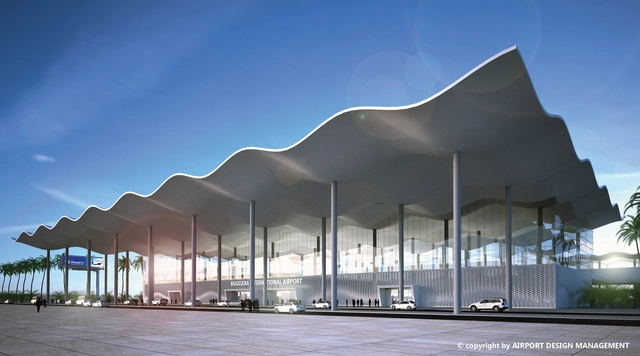
Rwanda’s largest publicly funded project, Bugesera International Airport is on track to be the first certified green building in the region. A few pieces of this net zero emission complex include: a 30,000 square metre passenger terminal, 22 check-in counters, ten gates, and six passenger boarding bridges. Funded by Public Private Partnership, the project is cost estimated at $414 million USD. The international hub was only one of several initiatives discussed by the AfricaGreen Growth Forum (AGGF) in Kigali at the end of last year.





2020_canaria__dentsu__noiz__Space_Port_Japan_Association.jpg?1597222708 "SPACEPORT CITY. Image Courtesy of Noiz Architects")