1. ArchDaily
  2. 2018 Venice Biennale

2018 Venice Biennale: The Latest Architecture and News

"Svizzera 240: House Tour": The Swiss Pavilion, Winner of the Golden Lion at the Venice Biennale 2018

As part of our 2018 Venice Architecture Biennale coverage, we present the completed Swiss Pavilion. To read the initial proposal, refer to our previously published post, "Swiss Pavilion at 2018 Venice Biennale Celebrates Peculiar Form of Architectural Representation."

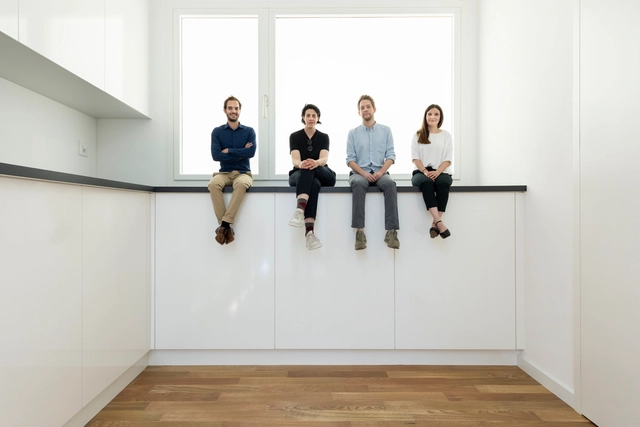
Honored by this year’s jury as the winner of the Golden Lion for best national participation, the Swiss Pavilion actively defies conventional representation while exploring a specific point of contact between architecture and society: the house tour.

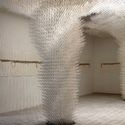
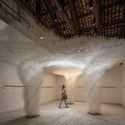
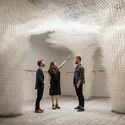
"Svizzera 240: House Tour": The Swiss Pavilion, Winner of the Golden Lion at the Venice Biennale 2018 - Image 1 of 4"Svizzera 240: House Tour": The Swiss Pavilion, Winner of the Golden Lion at the Venice Biennale 2018 - Image 2 of 4"Svizzera 240: House Tour": The Swiss Pavilion, Winner of the Golden Lion at the Venice Biennale 2018 - Image 3 of 4"Svizzera 240: House Tour": The Swiss Pavilion, Winner of the Golden Lion at the Venice Biennale 2018 - Image 4 of 4Svizzera 240: House Tour: The Swiss Pavilion, Winner of the Golden Lion at the Venice Biennale 2018 - More Images+ 18

Dimensions of Citizenship: The US Pavilion at the 2018 Venice Biennale

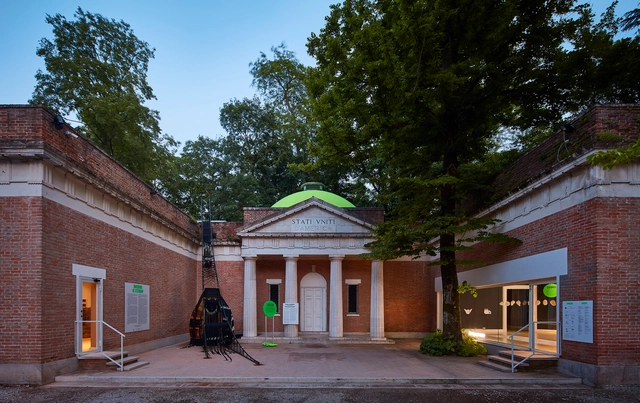
As part of our 2018 Venice Architecture Biennale coverage, we present the completed United States Pavilion. To read the initial proposal, refer to our previously published posts, “Curators and Theme Announced for US Pavilion at 2018 Venice Biennale” and "Studio Gang, Diller Scofidio + Renfro Among Exhibitors Selected for US Pavilion at 2018 Venice Biennale"

The pavilion representing the United States at this year’s biennale brings together the work of seven different transdisciplinary teams who each prepared an installation addressing the concept of citizenship at a different scale. Entitled Dimensions of Citizenship, the exhibition is intended to challenge the definition and conception of citizenship, examining issues and citing examples on the scale of the citizen, civitas, region, nation, globe, network and cosmos. The pavilion was commissioned on behalf of the US Department of State’s Bureau of Educational and Cultural Affairs by the School of the Art Institute of Chicago and the University of Chicago.

Dimensions of Citizenship: The US Pavilion at the 2018 Venice Biennale - Image 1 of 4Dimensions of Citizenship: The US Pavilion at the 2018 Venice Biennale - Image 2 of 4Dimensions of Citizenship: The US Pavilion at the 2018 Venice Biennale - Image 3 of 4Dimensions of Citizenship: The US Pavilion at the 2018 Venice Biennale - Image 4 of 4Dimensions of Citizenship: The US Pavilion at the 2018 Venice Biennale - More Images+ 23

11 Must-See Exhibitions at the 2018 Venice Biennale

Subscriber Access | 

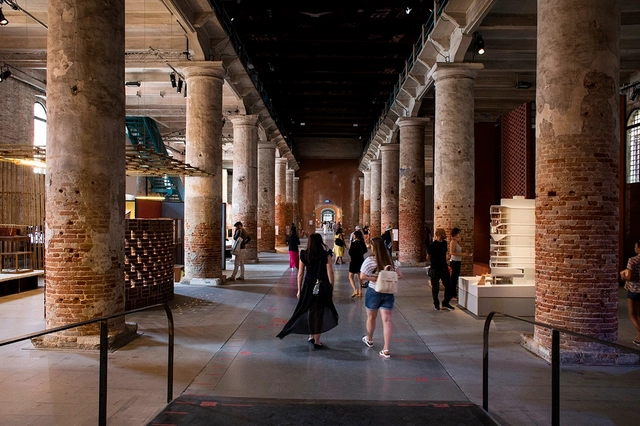
As always, this year’s edition of the Venice Architecture Biennale is brimming with exhibitions and installations—the result of thousands upon thousands of hours of research and work. When arriving at the Arsenale or Giardini, the overwhelming amount of "things to see" are neatly tucked into the national pavilions, or, in the case of the Arsenale, hidden on the sides of the sweeping corridor. In the likely event that you have limited time to enjoy all that FREESPACE has to offer, ArchDaily's editors have selected our favorite works displayed at the 16th International Architecture Exhibition.

Here, presented in no particular order, are some of our top suggestions from across the Biennale sites.

Cloud Pergola: The Croatian Pavilion at the 2018 Venice Biennale

As part of our 2018 Venice Architecture Biennale coverage, we present the completed Croatian Pavilion. Below, the curatorial team describes the exhibition in their own words.

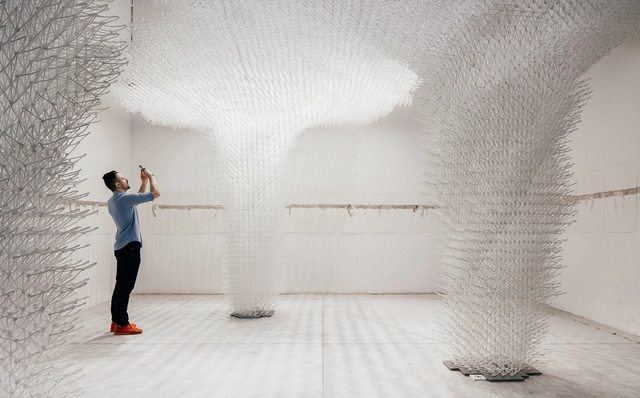
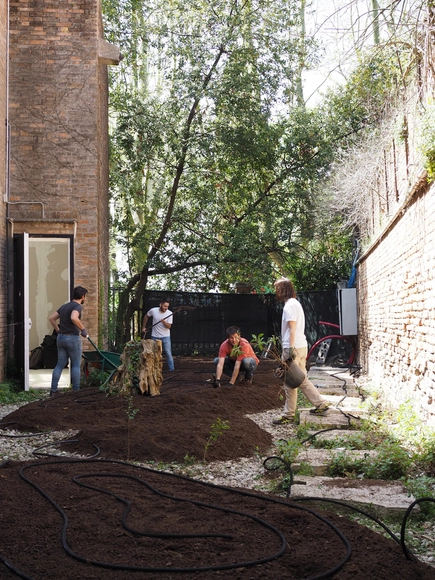
Cloud Pergola / The Architecture of Hospitality at the Croatian Pavilion is a collaborative site-specific environment conceived by the pavilion curator, Bruno Juričić. as Cloud Pergola is an installation crossing the boundaries of architecture, art, engineering, robotic fabrication, and computational models. The exhibition is structured through an interplay of three interventions: Cloud Drawing by Alisa Andrašek in collaboration with Bruno Juričić, To Still the Eye by Vlatka Horvat, and
Ephemeral Garden by Maja Kuzmanović.

Cloud Pergola: The Croatian Pavilion at the 2018 Venice Biennale - Image 1 of 4Cloud Pergola: The Croatian Pavilion at the 2018 Venice Biennale - Image 2 of 4Cloud Pergola: The Croatian Pavilion at the 2018 Venice Biennale - Image 3 of 4Cloud Pergola: The Croatian Pavilion at the 2018 Venice Biennale - Image 4 of 4Cloud Pergola: The Croatian Pavilion at the 2018 Venice Biennale - More Images+ 14

Horizontal Vertigo: Argentinian Pavilion at the Venice Biennale 2018

Subscriber Access | 

As part of our 2018 Venice Architecture Biennale coverage, we present the completed Argentinian Pavilion. Below, the curatorial team describes the exhibition in their own words. 

Horizontal Vertigo
, Argentinian Pavilion at the Venice Biennale 2018, delves into the notions of humanity and democratic spirit as proposed by Freespace, by establishing a cross-cutting dialog between geography, place, and architecture.

The exhibition, curated by the architects Javier Mendiondo, Pablo Anzilutti, Francisco Garrido and Federico Cairoli, is an invitation to rethink our territory as a collective construction and discover architecture in its capacity to convey unexpected generosity in every project.

Atxu Amann's Spanish Pavilion at the 2018 Venice Biennale Looks to Give Space to Young Architects Who Haven't Built Yet

Subscriber Access | 

During the inauguration of the Spanish Pavilion for the 2018 Venice Biennale, we spoke with Spanish architect Atxu Amann, curator of the space, to better understand the ideas and motivations that shape the exhibition called "Becoming." One of the most interesting concepts –and with the aim of avoiding unnecessary waste– is that 2018 budget was mostly applied to remodel the pavilion building itself; then Amann's team "tattooed" its walls with more than 140 projects made by students and young architects.

(Yvonne Farrell and Shelley McNamara) underscore the concept of generosity, which I think is important because we have to give space and time to those who are not yet building or constructing. We have been very lucky. When I was 30 years old I was already building. Here we have young people between the ages of 35-40 who have never built anything.

On one hand, this has made it so that they don’t have visibility, but on the other hand, it has made it so that during this time different architectural themes emerge –other ways of being an architect. (...) So this is the spirit of generosity: this is a Spanish space and we give it to you (the students) so that you show what you are doing.

SOM Scale + Form at the 2018 Venice Biennale

Today, a new exhibition opened in Venice featuring the work of the global architecture and engineering practice Skidmore, Owings & Merrill (SOM). Presented at the European Cultural Centre, "Time Space Existence" is a collateral exhibition of the 2018 Venice Biennale of Architecture. The show includes work from leading architects, photographers, sculptors, and universities from around the world.

2018 Venice Biennale Winners: Eduardo Souto de Moura, Switzerland, Great Britain, architecten de vylder vinck taillieu, Rahul Mehrotra, Andra Matin

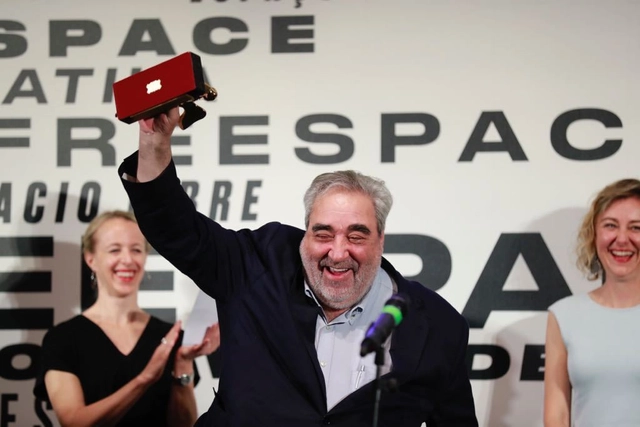
The curators of the 2018 Venice Biennale Yvonne Farrell and Shelley McNamara of Grafton Architects have announced the winning contributions to the 16th International Architecture Exhibition. Selected with the help of jury members Frank Barkow, Sofia Von Ellrichshausen, Kate Goodwin, Patricia Patkau, and Pier Paolo Tamburelli, the winners of the Golden Lion for Best National Participation went to Switzerland. Meanwhile, in the Freespace exhibition curated by Farrell and McNamara at Venice's Arsenale, Eduardo Souto de Moura will take home the Golden Lion for Best Participant in the International Exhibition.

Becoming: Spanish Pavilion at the Venice Biennale 2018

Subscriber Access | 

As part of our 2018 Venice Architecture Biennale coverage, we present the completed Spanish Pavilion. Below, the curatorial team describes the exhibition in their own words.

Becoming
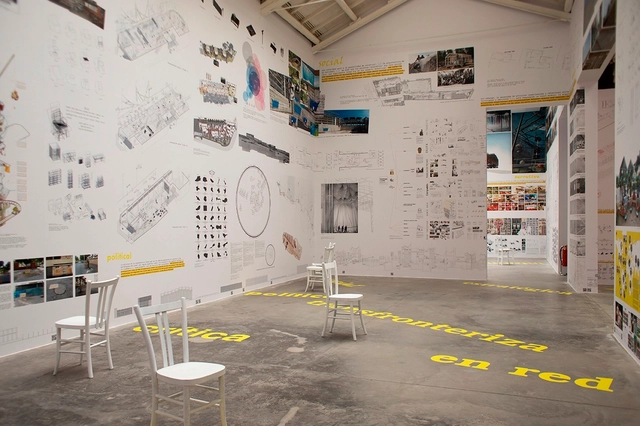
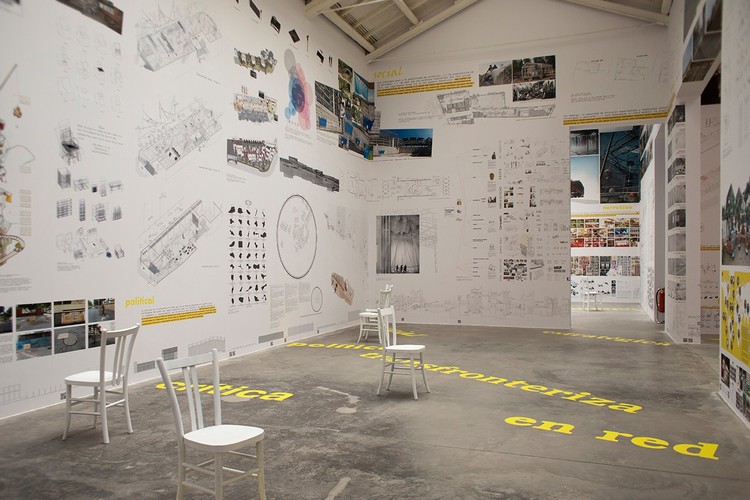
, the Spanish Pavilion at the Venice Biennale 2018, seeks to respond to the general theme of the event through the proposals and research being developed in the different learning environments within the country, placing special emphasis on the architect's new multidisciplinary profile.

The exhibition, curated by the architect Atxu Amann, has occupied most of its budget in restoring the building in which it is located, "tattooing" its interior walls to load them with 143 proposals that are unified through 52 relevant concepts to our discipline today.

Becoming: Spanish Pavilion at the Venice Biennale 2018 - Image 1 of 4Becoming: Spanish Pavilion at the Venice Biennale 2018 - Image 2 of 4Becoming: Spanish Pavilion at the Venice Biennale 2018 - Image 3 of 4Becoming: Spanish Pavilion at the Venice Biennale 2018 - Image 4 of 4Becoming: Spanish Pavilion at the Venice Biennale 2018 - More Images+ 12

Chinese Pavilion Opens With Robot-Printed 'Cloud Village' at 2018 Venice Biennale

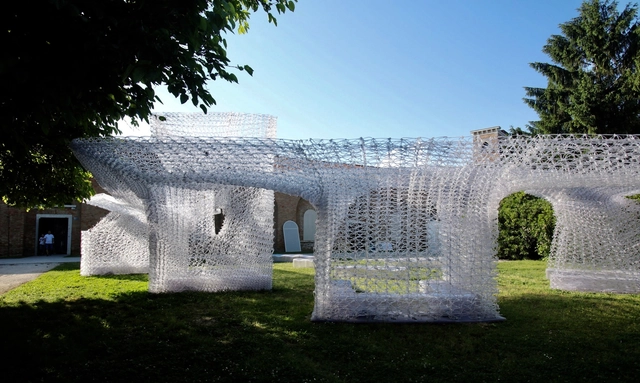
The Chinese Pavilion at the 2018 Venice Architecture Biennale, themed "Building a Future Countryside", is endeavored to explore new technology and ideas to make better of China's rural areas. A digitally-fabricated outdoor pavilion "Cloud Village" has been set up in addition to the national exhibition at the Venetian Arsenale. The Cloud Village has a twisting form which creates a sequence of open and semi-enclosed spaces under its roof. It seeks to convey an abstraction of the everyday life in Chinese countryside where boundaries of private and public realms are not always defined.

The Cloud Village is structurally made possible by the robotic printing technology developed by Philip F. Yuan and his team. Read below for a detailed account of the project from the architects.

Chinese Pavilion Opens With Robot-Printed 'Cloud Village' at 2018 Venice Biennale - Image 1 of 4Chinese Pavilion Opens With Robot-Printed 'Cloud Village' at 2018 Venice Biennale - Image 2 of 4Chinese Pavilion Opens With Robot-Printed 'Cloud Village' at 2018 Venice Biennale - Image 3 of 4Chinese Pavilion Opens With Robot-Printed 'Cloud Village' at 2018 Venice Biennale - Image 4 of 4Chinese Pavilion Opens With Robot-Printed 'Cloud Village' at 2018 Venice Biennale - More Images+ 16

Spanish Pavilion at the 2018 Venice Biennale to Reflect Architectural Learning Environments

While 2016's Golden Lion-winning project 'The Unfinished' surveyed architecture after the construction crisis, this year's Spanish pavilion will explore architecture's future through the eyes of researchers.

The 'becoming,' an exhibition curated by Spanish architect Atxu Amann, opens its doors to the works and productions of architecture students developed between 2012 and 2017. According to the curators, "becoming makes an allusion to a vector of the future, with a common educational background in the 'EscuelaS,' which extends to other learning experiences in space and time, in dialogue with other disciplines."

Carla Juaçaba Presents Her Chapel Design for the Vatican at the 2018 Venice Biennale

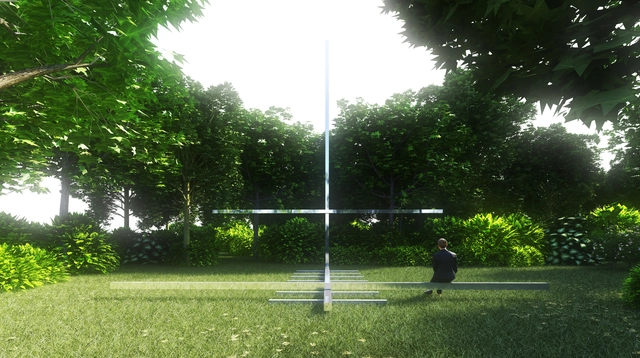
Selected along with nine other architects by the Vatican, Carla Juaçaba has shared images of her proposed chapel design as part of the Venice Architecture Biennial, which marks the city-state's first time participating in the largest architectural event in the world.

The proposed chapel design seeks a harmonious integration between the water and trees that surround Venice, with the nearby vegetation outlining the interior space of the chapel. The space between the treetops - which offers a view of the sky - functions as the ceiling of the chapel.

Curators Yvonne Farrell and Shelley McNamara Provide Insight Into the Theme of the 2018 Venice Biennale

As La Biennale prepares to open to the public this Saturday May 26, PLANE—SITE spoke to curators Yvonne Farrell and Shelley McNamara about this edition’s theme, Freespace. They move beyond architecture as an object, instead imagining Freespace as an invitation to think about architecture as a space of opportunities. Literally and metaphorically, Freespace presents environments of generosity, accessibility and freedom and celebrates the rich civic experiences that they create.

"Architette": Bringing Value to Women Architects in Their Professional Field

There is no female pronoun for architect in Italian, so a new project, Architette, was born aiming to professionally promote the female title in Italian. The project's objective consists of monitoring all-male juries and conferences, mentoring young generations on the ground to advocate for a more heterogeneous and fair professional landscape, where women can be an inspirational reference in architecture. 

Estonian Pavilion at 2018 Venice Biennale to Demonstrate How Built Architecture Is Inherently Political

As part of our 2018 Venice Architecture Biennale coverage we present the proposal for the Estonian Pavilion. Below, the participants describe their contribution in their own words.

Estonian Pavilion curators, Laura Linsi, Roland Reemaa and Tadeáš Říha, explore the spectrum between the explicit representation of the monument and the implicit politics of everyday architectures: from the triumphal column to the pavement beneath it, through all that is in between. The title itself – Weak Monument – is an oxymoron, a rhetorical device that offers fresh perspectives on how to recognize politics in any built form.

Australian Pavilion at 2018 Venice Biennale to Explore Architecture's Relation to Endangered Plants

As part of our 2018 Venice Architecture Biennale coverage we present the proposal for the Australian Pavilion. Below, the participants describe their contribution in their own words.

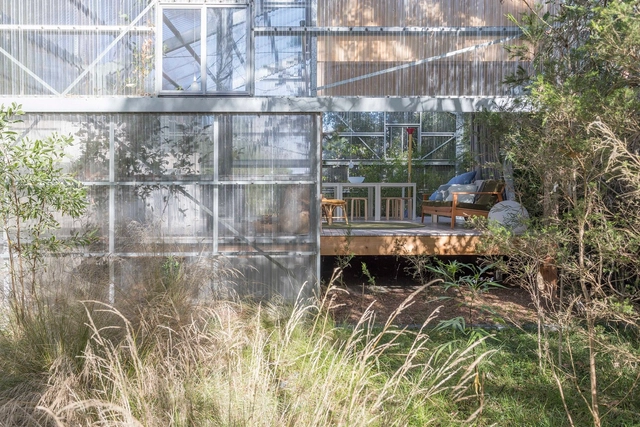
The Royal Australian Institute of Architects (RAIA) will present Repair at the Australian Pavilion during the 16th International Architecture Exhibition – La Biennale di Venezia. Creative Directors Mauro Baracco and Louise Wright of Baracco+Wright Architects, in collaboration with artist Linda Tegg, have curated a multi-sensory living installation for the Pavilion, designed to disrupt the viewing conditions through which architecture is usually understood.

Israeli Pavilion at 2018 Venice Biennale Explores the History of Negotiations Over Holy Lands

Israeli Pavilion at 2018 Venice Biennale Explores the History of Negotiations Over Holy Lands - Image 2 of 4
© David Polonski

As part of our 2018 Venice Architecture Biennale coverage, we present the proposal for the Israeli Pavilion. Below, the participants describe their contribution in their own words.

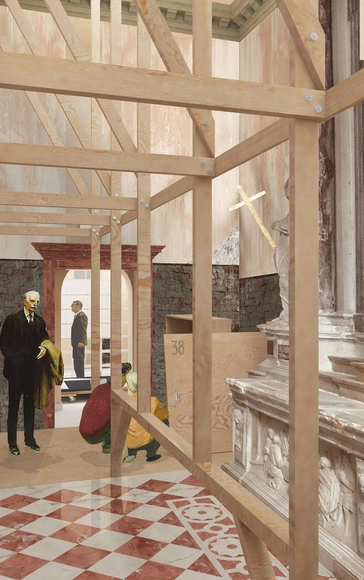
In Statu Quo: Structures of Negotiation is the theme of the Israeli Pavilion at the 16th International Architecture Exhibition, La Biennale di Venezia. Curated by Ifat Finkelman, Deborah Pinto Fdeda, Oren Sagiv and Tania Coen-Uzzielli it traces the complex mechanism of the 'Status Quo' within shared holy places in Israel-Palestine, which functions as a controversial and fragile system of coexistence.

Israeli Pavilion at 2018 Venice Biennale Explores the History of Negotiations Over Holy Lands - Image 1 of 4Israeli Pavilion at 2018 Venice Biennale Explores the History of Negotiations Over Holy Lands - Image 2 of 4Israeli Pavilion at 2018 Venice Biennale Explores the History of Negotiations Over Holy Lands - Image 3 of 4Israeli Pavilion at 2018 Venice Biennale Explores the History of Negotiations Over Holy Lands - Image 4 of 4Israeli Pavilion at 2018 Venice Biennale Explores the History of Negotiations Over Holy Lands - More Images+ 2

Chilean Pavilion at 2018 Venice Biennale to Recreate Physical Model of National Stadium to Illustrate the Politics of Housing

As part of our 2018 Venice Architecture Biennale coverage we present the proposal for the Chilean Pavilion. Below, the participants describe their contribution in their own words.

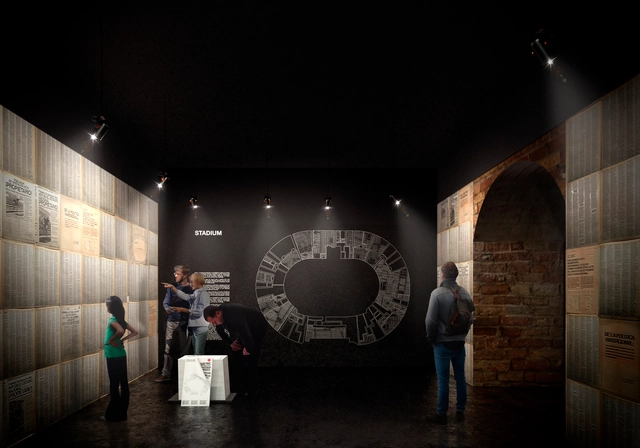
At the centre of Sala dell’Isoloto stands a large-scale model of a building made of rammed earth. On closer examination, the sixty pieces that comprise the building’s oval shape appear less to be made of earth as carved in it. Layers of soil with slight variations in colour and texture recall that it is land what is at stake at the Chilean Pavilion. The layering of the pavilion’s pieces is the footprint of an artisanal process of production by which a fragile, discrete material—soil, bare earth—is transformed into a stable, monolithic object. Simultaneously heavy and fragile, these objects are in turn symbolic fragments of another transmutation: one by which slum dwellers were transformed into property owners in an event at Chile’s National Stadium, and one by which a city that grew unplanned becomes visible and fixed in a plan, that of a building able to narrate its own history.

Chilean Pavilion at 2018 Venice Biennale to Recreate Physical Model of National Stadium to Illustrate the Politics of Housing - Image 1 of 4Chilean Pavilion at 2018 Venice Biennale to Recreate Physical Model of National Stadium to Illustrate the Politics of Housing - Image 2 of 4Chilean Pavilion at 2018 Venice Biennale to Recreate Physical Model of National Stadium to Illustrate the Politics of Housing - Image 3 of 4Chilean Pavilion at 2018 Venice Biennale to Recreate Physical Model of National Stadium to Illustrate the Politics of Housing - Image 4 of 4Chilean Pavilion at 2018 Venice Biennale to Recreate Physical Model of National Stadium to Illustrate the Politics of Housing - More Images+ 2