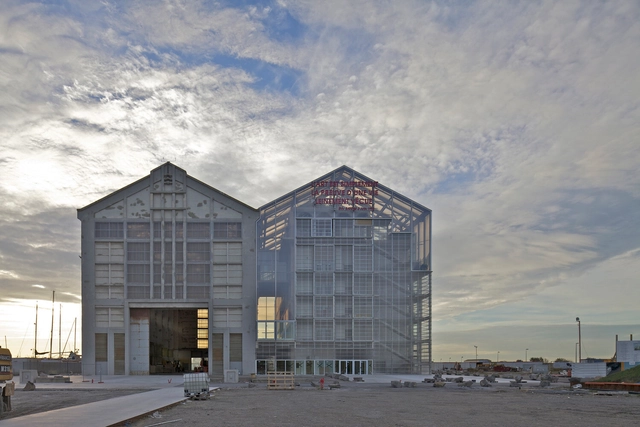
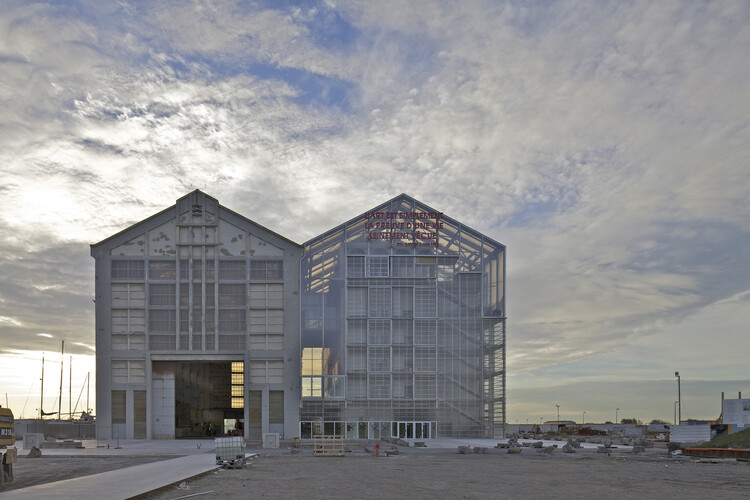
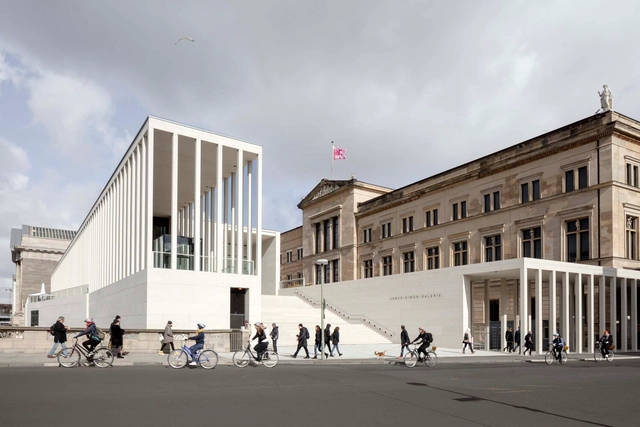
In a world facing ecological exhaustion and spatial saturation, the act of building has come to represent both creation and consumption. For decades, architectural progress was measured by the new: new materials, new technologies, new monuments of ambition. Yet today, the discipline is increasingly shaped by another form of intelligence, one that values what already exists. Architects are learning that doing less can mean designing more, and this shift marks the emergence of what might be called an architecture of restraint: a practice defined by care, maintenance, and the deliberate choice not to build.
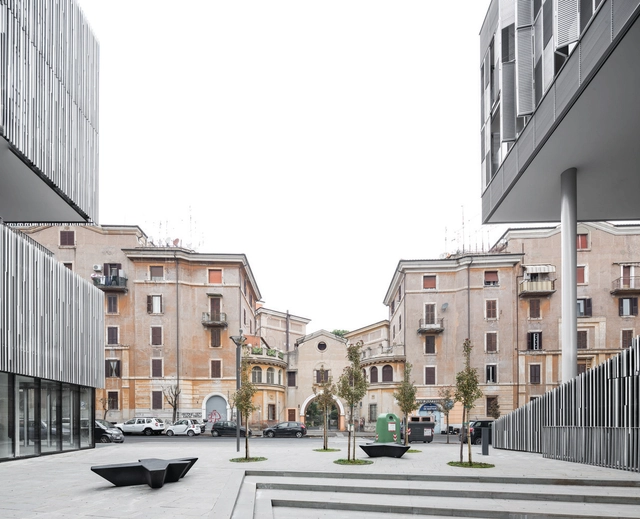
The principle recognizes that the most sustainable building is often the one that already stands, and that transformation can occur through preservation, repair, or even absence. Choosing not to build becomes a political and creative act, a response to the material limits of the planet and to the ethical limits of endless growth. That Architecture moves beyond the production of new forms to embrace continuity, extending the life of structures, materials, and memories that already inhabit the world.
In the realm of media architecture and its role in supporting struggles for social justice, the recent Media Architecture Biennale 2023 (MAB23) in Toronto, Canada, shed light on a captivating aspect: The rapid and vast propagation of solidarity lighting in response to Russia's invasion of Ukraine in 2022. The synchronized illuminations, infused with activism and global art projects, became a powerful emblem of worldwide support for Ukraine during its time of crisis. Two emphatic female political leaders in Europe initiated the lighting solidarity message. Surprisingly, the blue and yellow Ukrainian flag illumination on iconic buildings worldwide defined an image of solidarity even faster in the press than large crowds of people in anti-war protests the weekend after the war began.
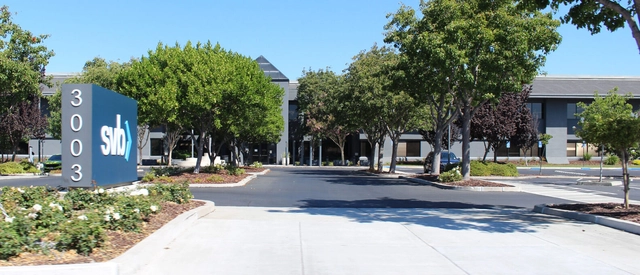
One of the principles of comedy is that you “punch up.” If you have to make fun of someone or something, make sure it’s more prominent than you, and deserving. You can’t get much higher than Santa Clara, California, and you can’t get much more deserving. Santa Clara is, arguably, the city at the heart of Silicon Valley, a globally famous urban region that is so ill-defined as to deny its own existence. Those ranch houses and corporate headquarters represent a distinctly 21st-century brand of power. And a distinctly 20th-century brand of urbanism.
How did we end up building an environment where the private car is often treated better than many of our fellow human beings? In the U.S., the center of car culture, parking is expected to be convenient, available, and free, writes Henry Grabar in his engaging and entertaining new book, Paved Paradise: How Parking Explains the World (Penguin Press). Parking consumes vast amounts of land; in Los Angeles County, for example, it totals about 200 square miles. In New York City alone, there are 3 million curb parking spaces (not counting parking garages), which account for 6% of the city’s area—the equivalent of 13 Central Parks! Grabar asks: What better use could we make of this space? A 2021 study revealed that if New York reclaimed just a quarter of the street space allotted to cars, the following could be created: 500 miles of bus lanes; 40 miles of busways; 38 million square feet of community space; 1,000 miles of open streets; 3 million square feet of new pedestrian space; and 5.4 million additional square feet for restaurants, businesses, and cultural institutions.
https://www.archdaily.com/1002504/why-does-america-provide-more-space-for-storing-cars-than-housing-peopleMichael J. Crosbie
“We shape our buildings; thereafter they shape us.” Despite Winston Churchill’s words, architects are shaped by our culture, and our work reacts to it. Because our culture evolves, the practice of architecture evolves. What is “New” in architectural practice has had accelerating change, exploding in the 21st century because new technologies have changed everything on a level of the Industrial Revolution, 200 years ago.
Despite its dazzling collection of masterpieces, London’s National Gallery has been cursed with a series of ill-advised architectural schemes over its two-century existence. Only once have its leaders made a truly inspired and visionary choice: in the mid-1980s, the gallery held a competition, won by Venturi, Rauch and Scott Brown (VRSB) of Philadelphia, to build a special collections building.
The addition was constructed from 1988 to 1991, using funds donated by the Sainsbury family as a gift to the nation and was immediately hailed as one of the finest buildings of its type erected in the 20th century. It has remained popular with Londoners and has served well as an expansion of William Wilkins’s undistinguished classical building ever since. Experts on the work of Robert Venturi, John Rauch, and Denise Scott Brown consider it one of their masterpieces. Apparently, the National Gallery has a different opinion.
https://www.archdaily.com/985449/in-london-a-venturi-scott-brown-masterpiece-is-threatenedMark Alan Hewitt
Beinecke Rare Book Library, Yale University, Gordon Bunshaft, 1963.. Image via Barry Winiker / Getty Images
Some years end up being cultural pivot points. 2021 was one such year, with COVID-19 as the first existential threat to our culture since World War II. Architecture will change as a result, and may evolve in public perception to value motivations as a criteria for understanding it, versus valuing outcomes as the validation of any particular aesthetic.
Looking through interior images of houses, we often see grand bedrooms with an influx of natural lighting. We see inviting open-space living rooms, lush terraces, and kitchens with high-end equipment and refined finishes. But what we don't see is that behind these sleek walls are small neglected bedrooms without proper ventilation, natural lighting, or space to move around, dedicated to those who cater to the entire household.
The disparate spatial configuration and "colonial" approach to the living conditions of servants and foreign laborers have existed long before the rise of congested cities and micro-apartments. Household owners, or at least a good sum of them, have always felt that domestic workers needed and deserved less space to reside in, not just in terms of spatial area, but in terms of necessary living conditions for a better, more comfortable life.
Earlier this month, the city of Miami released a draft version of its comprehensive plan to combat the effects of climate change. The so-called Stormwater Master Plan (SWMP) will be implemented to alleviate the threat of flooding throughout the city, improve the quality of water in Biscayne Bay, and fortify its coastline against stronger and more frequent storm surges over the next 40 years, at an overall cost estimate of $3.8 billion.
This article is part of "Eastern Bloc Architecture: 50 Buildings that Defined an Era", a collaborative series by The Calvert Journal and ArchDaily highlighting iconic architecture that had shaped the Eastern world. Every week both publications will be releasing a listing rounding up five Eastern Bloc projects of certain typology. Read on for your weekly dose: Cinemas.
This article is part of "Eastern Bloc Architecture: 50 Buildings that Defined an Era", a collaborative series by The Calvert Journal and ArchDaily highlighting iconic architecture that had shaped the Eastern world. Every week both publications will be releasing a listing rounding up five Eastern Bloc projects of certain typology. Read on for your weekly dose: Trailblazing Churches and Controversial City Buildings.
https://www.archdaily.com/945948/eastern-bloc-architecture-trailblazing-churches-and-controversial-city-buildingsLucía de la Torre
My decision to study architecture was a naive one, made after having taken several vocational tests I found on Google. When I found out it was one of the toughest courses in Brazilian public universities, I thought about giving up. But I was already hooked by the history of architecture and its social role.
However, nothing is perfect. Architecture and Urban Planning is one of the most elite courses in the most renowned Brazilian universities, something that is reflected outside of the classroom as well. The architects went on to serve the rich, casting aside the needs of the cities and the poor.
Looking back on architectural history, you could be forgiven for thinking that women were an invention of the 1950s, alongside spandex and power steering - but this couldn’t be further from the truth. Big names like Le Corbusier, Mies, Wright, and Kahn often had equally inspired female peers, but the rigid structure of society meant that their contributions tended to be overlooked.
"When I am asked what I believe in, I say that I believe in architecture. Architecture is the mother of the arts. I like to believe that architecture connects the present with the past and the tangible with the intangible."
Richard Meier, the Pritzker Prize and AIA Gold Medal-winning architect, is well known for his abstracted, often white, buildings and unrelenting personal design philosophy. Citing Bernini and Borromini as influences as well as Le Corbusier and Louis Kahn, Meier received his Bachelor in Architecture from Cornell University in 1957 and took jobs with Skidmore Owings & Merrill and Marcel Breuer soon after his graduation. He began his own private practice in New York in 1963 and rocketed to architectural fame in the early 1970s, after being named as one of the "New York Five."
Although the sun is almost 150 million kilometers away, this star has had the most impact on our planet. But while some are busy chasing the sun for sun-kissed skin, architects are all about creating sun-kissed spaces.
By definition, “passive solar energy is the collection and distribution of energy obtained by the sun using natural means”. The simple concept and process of implementing passive solar energy systems have provided buildings with heat, lighting, mechanical power, and electricity in the most environmentally-conscious way possible.
In this article, we will provide you with a complete guide of implementing passive solar systems in your designs.