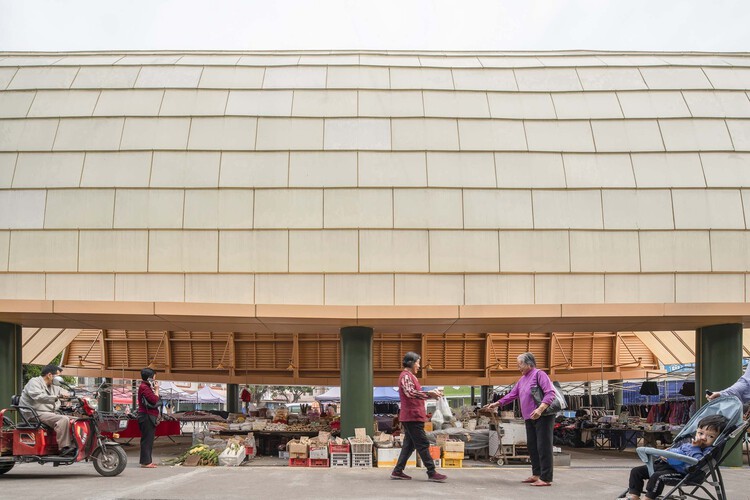
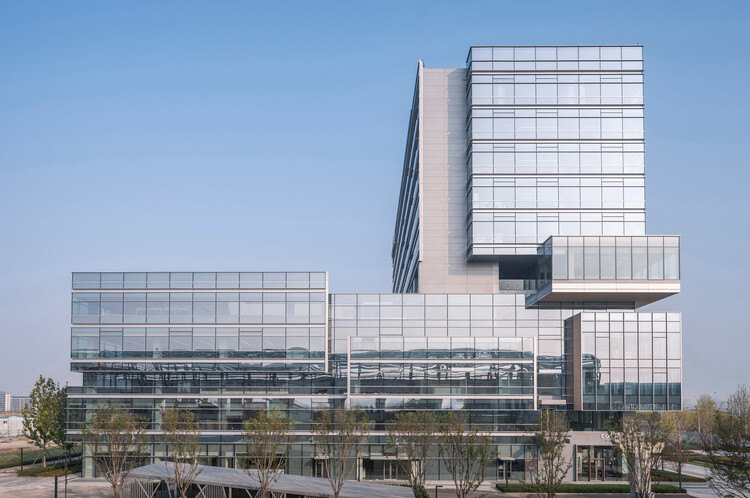
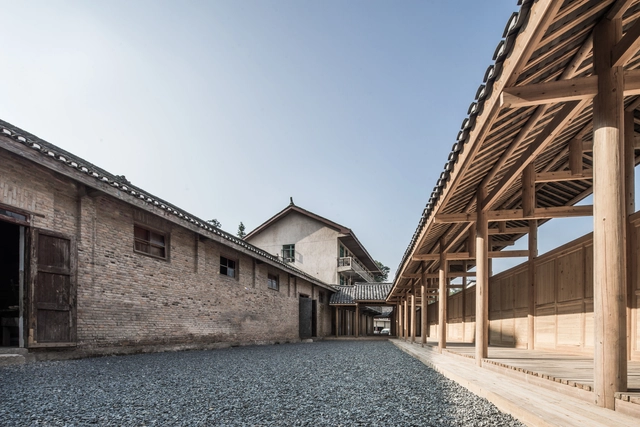
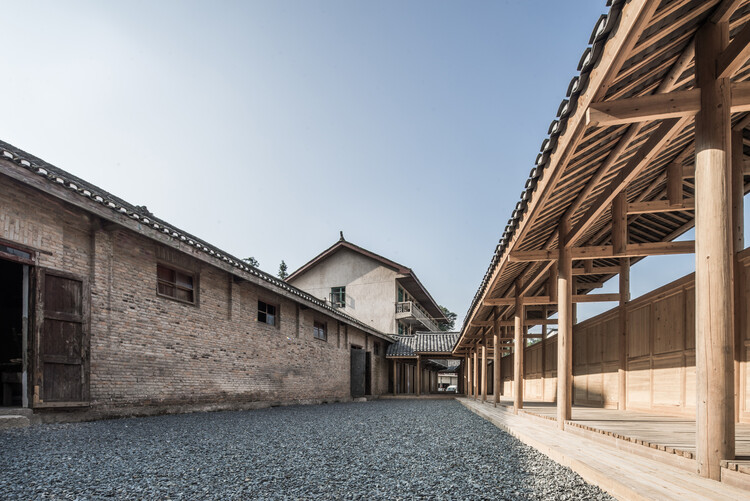
In much of China, concrete remains the dominant construction material. Despite growing concerns over its environmental impact, concrete continues to align with the priorities of many developers and clients—it is fast, cost-effective, and highly durable. As a result, most building types in China still rely heavily on concrete. This reliance is further reinforced by China's position as the world's largest producer of Portland cement. A deeply entrenched supply chain, rooted in raw material manufacturing and economic infrastructure, ensures that concrete remains the default choice in the construction industry.
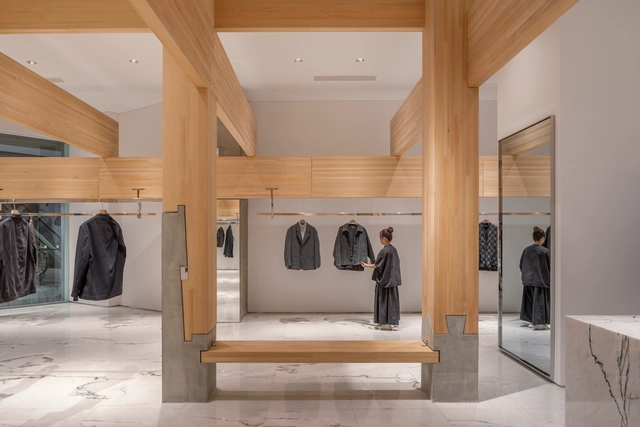
Yet historically, Chinese architecture was built upon a rich tradition of timber construction. The Forbidden City is a prime example: not only is it emblematic of China's architectural heritage, but it also remains one of the largest and best-preserved collections of ancient wooden structures in the world. This legacy prompts an important question: does timber construction have a meaningful future in China's contemporary building industry?
Zhu Pei is a Chinese architect born in 1962 in Beijing. He studied at Tsinghua University and UC Berkeley, and founded Studio Zhu Pei in 2005. The studio's experimental work and research focus on contemporary architecture, art, and cultural projects. With an artistic and exploratory approach, it investigates the relationship between the roots that anchor architecture in specific natural and cultural contexts and the innovation that drives architecture as a form of artistic revolution. In his interview with Louisiana Channel, Zhu Pei describes architecture as an artistic discipline that, like poetry, relies on openness, imagination, and the creation of new experiences. He argues that great architecture goes beyond functional problem-solving by generating a sense of wonder through its ability to "invent" and "create some new thing, new experience," positioning architectural practice as cultural and sensory exploration rather than purely technical production.
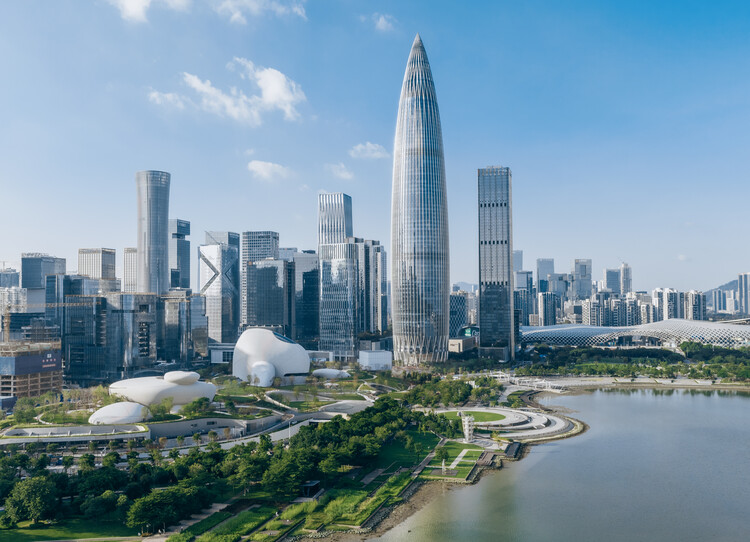
Shenzhen is China's first Special Economic Zone(SEZ), serving as a window for China's Reform and Opening-up and an emerging immigrant city. It has evolved into an influential, modern, and international metropolis, creating the world-renowned "Shenzhen Speed" and earning the reputation of the "City of Design." Architectural design stands as the most intuitive expression of Shenzhen's spirit of integration and innovation. Over the past decade (2015-2025), the development of urban architecture in Shenzhen has closely integrated with its open and inclusive urban character, ecological advantages of being nestled between mountains and the sea, and the local spirit of blending traditional culture with innovative technology, showcasing Shenzhen's unique charm and robust vitality across multiple dimensions.
Transcending their role as mere infrastructure, bridges have long served as powerful architectural statements. This expressive potential is now being explored with renewed vigor across South-East Asia, where a growing number of architects are re-evaluating traditional materials. By championing wood and bamboo, these designers are creating distinctive structures that integrate local craftsmanship with contemporary needs, resulting in landmarks that are both functional and deeply rooted in their landscape.
Fireplaces have profoundly shaped architectural design, influencing how spaces are organized, experienced, and perceived. More than merely functional elements, they represent symbols of power, community, comfort, and culture, tracing humanity's evolving relationship with the built environment. From the primitive hearths that characterized early human settlements to the sophisticated ecological designs of contemporary architecture, fireplaces have reflected broader cultural, social, and technological changes, serving as enduring focal points in the spatial narrative of architecture. Scholars have frequently explored the intimate relationship between architecture and fire. Luis Fernández-Galiano, in his seminal work "Fire and Memory: On Architecture and Energy" argues that architecture fundamentally mediates the relationship between humanity and energy. By understanding how these structures have shaped spaces, symbolized cultural values, and driven technological innovation, we gain deeper insight into architecture's complex interplay between form, function, and meaning.