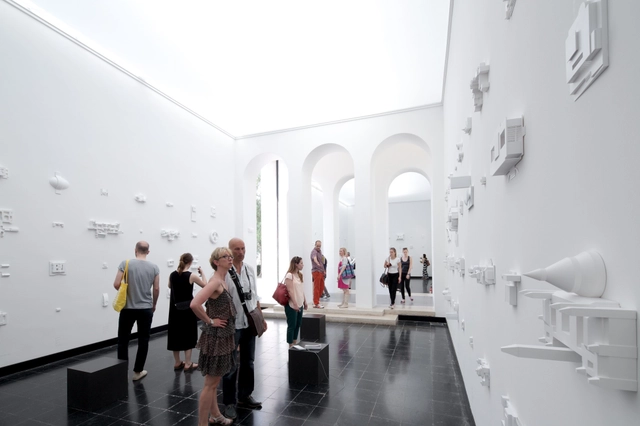
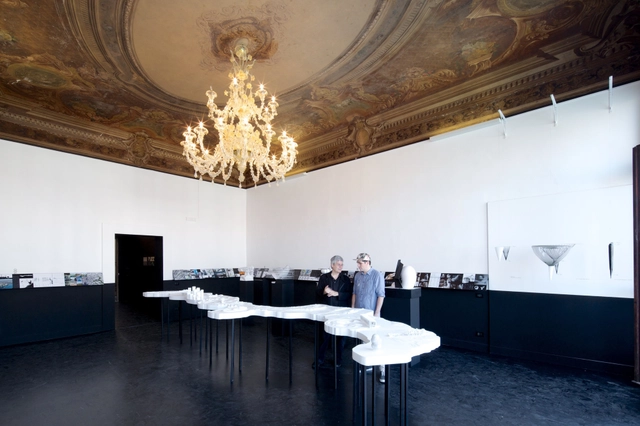
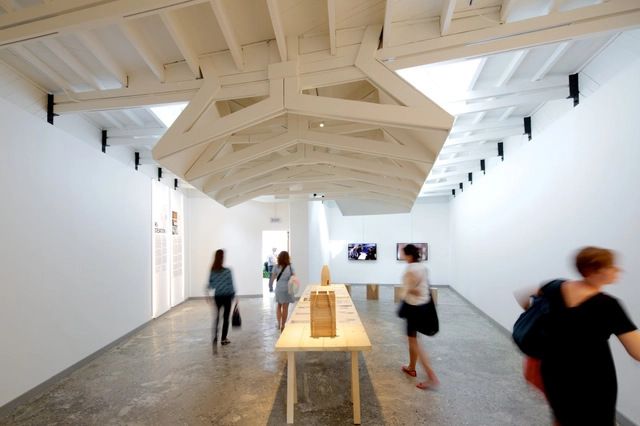
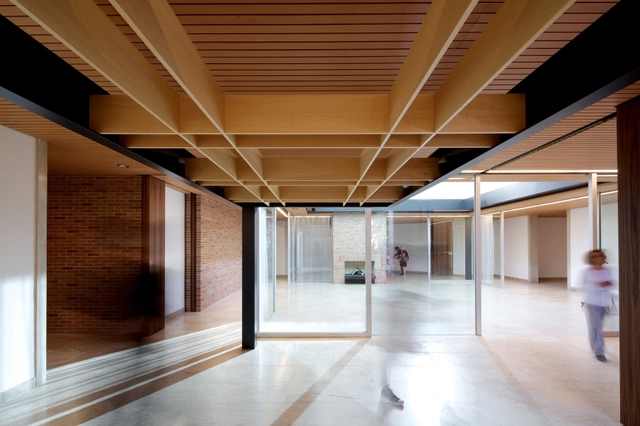
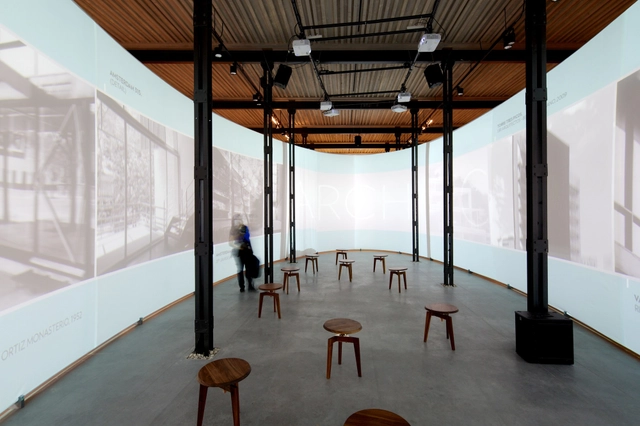
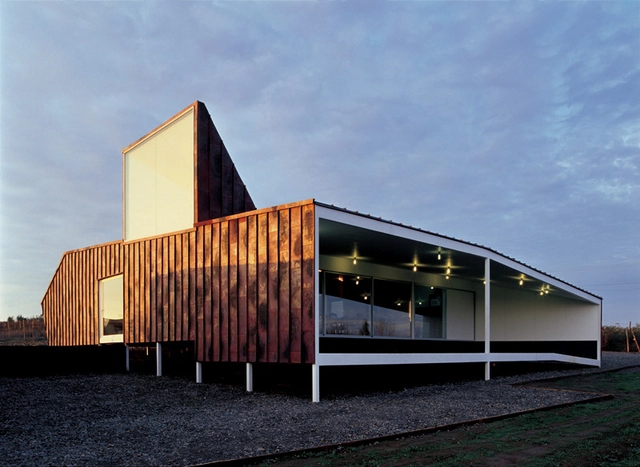
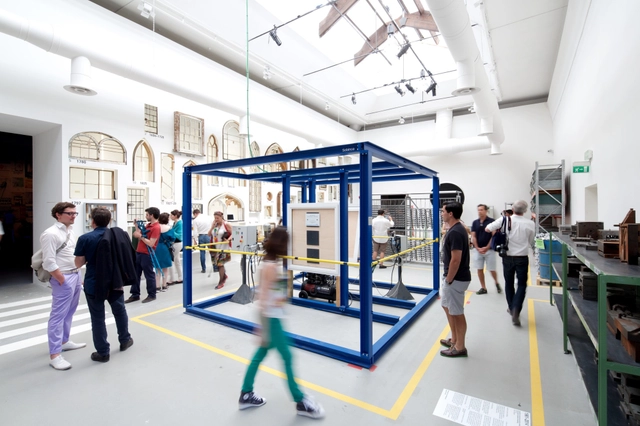
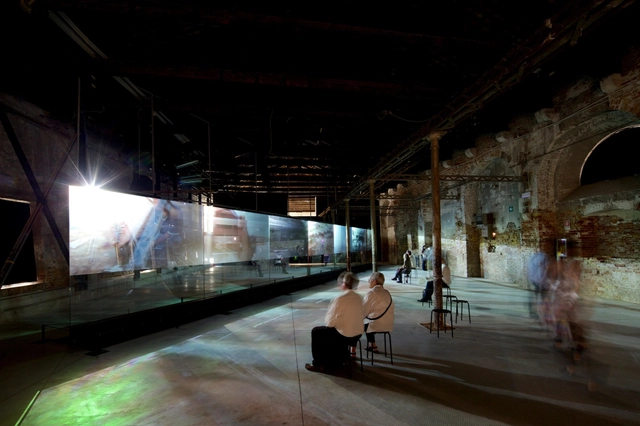
The Irish pavilion's response to the theme of the 2014 Venice Biennale captures the tumultuous history of the Ireland's past hundred years through ten infrastructural projects which highlight the country's progress. Ireland's relationship to the theme of "Absorbing Modernity" was colored by their independence from the United Kingdom in the early 1920s, with modernism and infrastructure seen as the way to leave this past behind. The pavilion examines the outcomes of this approach, with Ireland treated as "a launch-pad and testing ground" for everything from concrete infrastructure to data centers. Read the curators' take on their pavilion after the break.
We will be publishing Nikos Salingaros’ book, Unified Architectural Theory, in a series of installments, making it digitally, freely available for students and architects around the world. The following chapter, written by Salingaros and Kenneth G. Masden II, delves deeper into the limitations of current architectural philosophies, including “Critical Regionalism,” and justifies the creation of Intelligence-Based Design. If you missed them, make sure to read the previous installments here.
As the architects of tomorrow, today’s students must come to understand the role and responsibility of their profession as something intrinsically tied to human existence and the lived experience. A new suggested educational system provides a direct means to design adaptive environments, in response to growing needs of the marketplace (client demand). Nevertheless, most architectural institutions continue to propagate a curricular model that has sustained an image-based method and its peculiar ideology for decades. We can trace this support to early twentieth-century anti-traditional movements. Reform is impossible without addressing the system’s long-forgotten ideological roots.
https://www.archdaily.com/530832/unified-architectural-theory-chapter-7Nikos A. Salingaros & Kenneth G. Masden II
The 20th Century was a time of significant political unrest, seeing two World Wars and the 70-year rise and fall of a major superpower, the Soviet Union, among countless other conflicts. In some ways, "modernity" could be characterized by the rapid creation and crystallization of huge numbers of nation states since the outbreak of World War One a hundred years ago.
Reacting to the theme of "Absorbing Modernity" set for the national pavilions at this year's Venice Biennale, the curators of the Austrian pavilion chose to investigate the area where this political unrest most overlaps with architecture: the Parliament Buildings of countries around the world.
Read the curator's take on the pavilion after the break
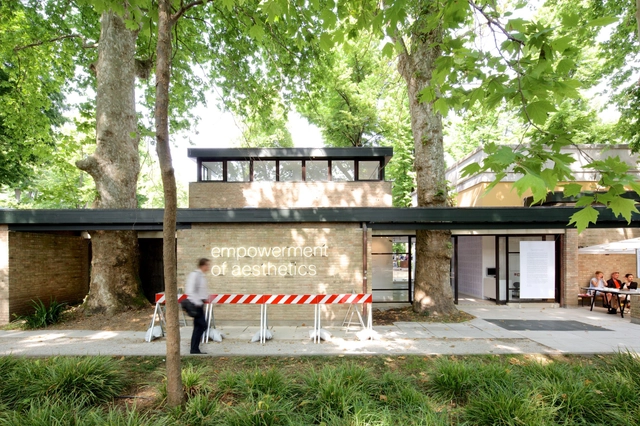
Denmark's exhibition for the 2014 Venice Biennale focuses on the country's history as a pioneer in the development of a welfare state, and the role that architecture, in connection with art, literature and science had in creating an aesthetic manifestation of this 'better life for all'. By exploring the output of a range of fields in connection to a wider social movement, Empowerment of Aesthetics comes to a fuller understanding of how modernity affected architecture in Denmark.
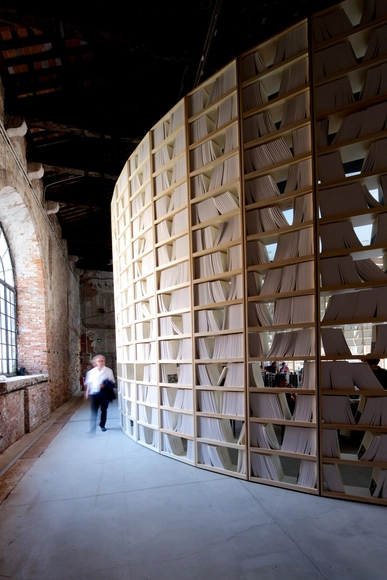
In Bahrain's pavilion for the 2014 Venice Biennale, the country uses its position on the eastern edge of the pan-Arabic region to investigate modernity's impact on the Arab world: first as a colonial imposition, then as a local attempt to reconcile global and Arabic culture, then finally as an acceptance of neoliberal ideals.
The exhibition collects 100 projects from across the Arabic states, with the intention of consolidating and preserving knowledge of this critical period. The installation itself, a giant bookcase, is the manifestation of this research, and will later be made available at the Arab Center for Architecture.
The much anticipatedTime Space Existence collateral event at Palazzo Bembo and Palazzo Mora for the 2014 Venice Architecture Biennale brought together a diverse group of 100 architects from six continents in an "extraordinary combination." Summoned by the Dutch non-profit Global Arts Affairs Foundation, the exhibitions the architects were asked to produce documents current developments and thoughts in architecture, highlighting fundamental questions by discussing the philosophical concepts of Time, Space and Existence. Featuring well established architects next to lesser known practices, they all share a "dedication to architecture in the broadest sense of their profession."
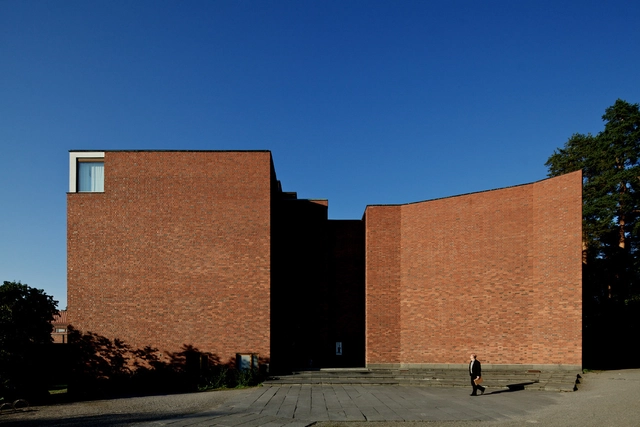
Re-Creation is a two-part installation based on a concept by Anssi Lassila. One part of the installation was constructed by a Finnish master carpenter and his team, and the other by a Chinese team. Together the two parts of the installation strike up a subtle and complex dialogue between the architects and local builders.
Presented by the pavilion designed by Alvar Aalto in 1956, the installation "takes a stand on our relationship with the modern legacy and its tradition of international dialogue, and represents a quintessential product of topical international dialogue while at the same time offering its own unique interpretation of the dynamic between tradition and modernity." See images of the pavilion and enjoy a statement from the curators after the break.
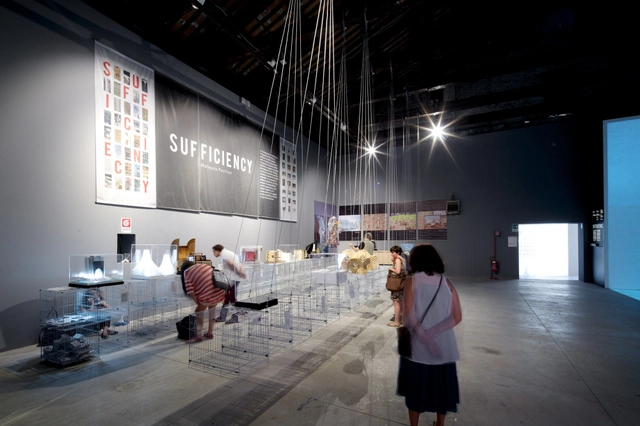
The Malaysia Pavilion at the 2014 Venice Biennale focuses on the idea of sufficiency, and its role in creating sustainable and modest architecture.
In a statement, one of the Pavilion curators, Lim Teng Ngiom, writes that “while sufficiency suggests a modest but adequate scale of living, it can be reduced to only the necessity required for survival extended on a personal or collective autonomy. On the precept of sustainability it can be measured by one’s carbon footprint, or in construction it can suggest minimum building footprint or optimum structure.”
To represent the idea of sufficiency, the curators chose to display works on collapsible pet cages, which have "just enough space for existence." Several of the pet cages are clamped together to form a suspended beam, creating a "fundamental component of architecture." Additional works are displayed on pet cages that are sitting on the floor.
Enjoy photos from the Pavilion and a statement from the curators after the break…
Germany's contribution to the 2014 Venice Architecture Biennale scrutinizes the architecture of representation, its crisis, and potential cessation. Aside from the universal ambition of modernism to break with the past, Germany has undergone a number of decisive political and societal breaks during the last hundred years. Through the question of how the nation "(re)builds and represents itself through architecture, we are able to discuss the friction between national identity and architecture expression—however, architecture is not only a mirror to ideology, but a constituting reality and societal context."
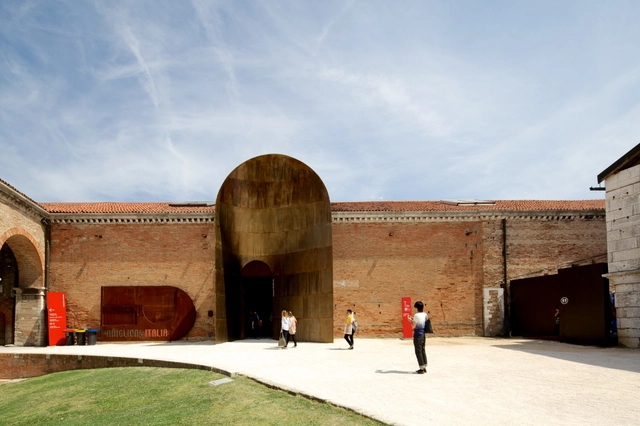
The Italian Pavilion at the 2014 Venice Biennale looks at the country’s architecture through the lens of “grafting,” or the transferring of new ideas onto preexisting realities and structures.
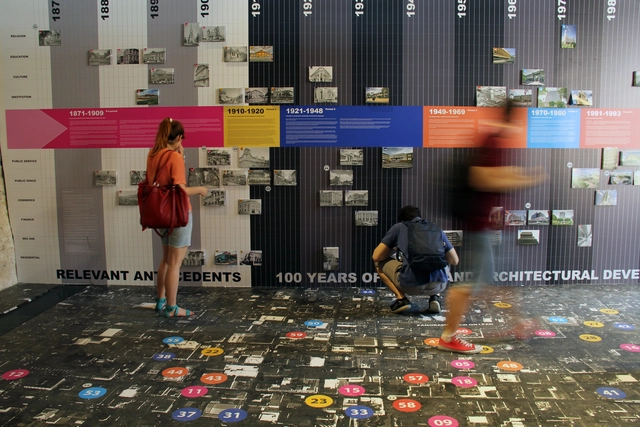
Architect and Pavilion curator Cino Zucchi associates grafting with “the great capacity to interpret and incorporate preceding states through continuous metamorphoses.” He opens and closes the Italian Pavilion with two physical grafts: a large rusted steel arch and a bench sculpture. The first room of the exhibit begins with a study of modernization in Milan, followed by series of collages of contemporary projects in Italy. A video of Italian urban environments concludes the exhibit.
See images of the Pavilion and read a description from the curator after the break.
Curated and commissioned by German Architect / Urbanist Oliver Schütte and Dutch Anthropologist / Economist Marije van Lidth de Jeude, Costa Rica's first pavilion at the Venice Biennale focuses on a competition-winning project for the new Costa Rican Legislative Assembly, a project which illustrates the "vicious circle of social segregation and spatial fragmentation in the Greater Metropolitan Area of Costa Rica (GAM)."
Read the curators' description and take a virtual tour of the Costa Rica Pavilion after the break.
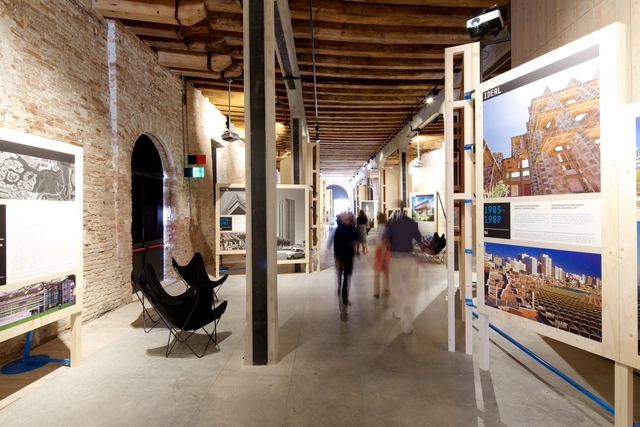
The Argentine pavilion at the 2014 Venice Biennale analyzes modernity in terms of the IDEAL and the REAL by looking at how the country has used “ideal” modern ideas to construct the reality of its cities.
The curators, Emilio Rivoira and Juan Fontana, structured the exhibit around eight periods, selecting cinema clips to represent the ideal and the real.
Enjoy photos from the pavilion and read the description from the curators after the break.
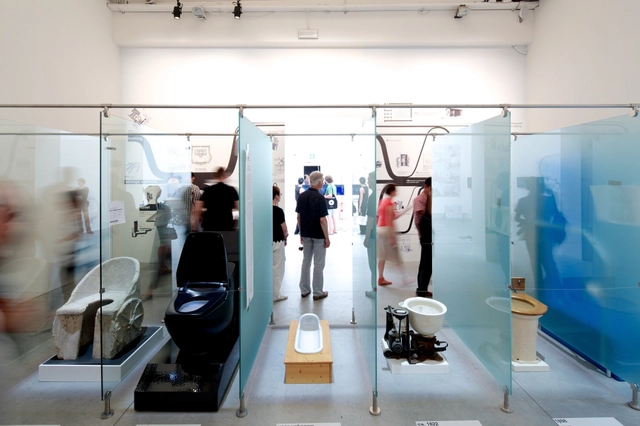
“Elements of Architecture,” the Rem Koolhaas-curated exhibition at the 2014 Venice Biennale, delved into several remarkable structural as well as technical components of architecture, including floors, walls, doors, stairs and toilets. But why was light missing?
My manifesto for the inclusion of light as a fundamental element of architecture — after the break.
Mexico’s pavilion at the 2014 Venice Biennale is centered on Octavio Paz’s reflections on the contraposition between tradition and modernity. Echoing the request from Rem Koolhaas that the national pavilions focus on the theme Absorbing Modernity 1914-2014, Paz’s writings establish that “…modernity, for the last one hundred years has been our style. It is the universal style. Wanting to be modern seems like madness, we are condemned to be modern.”
Architects Julio Gaeta and Luby Springall use this reflection as the starting point for their curatorial project, designing the pavilion to show two story paths: one traditional and one modern. This concept is executed through the selection of works emblematic of Mexican modernity juxtaposed with works, events and interviews that influence architecture.
Check out photos from the pavilion along with the official text from the curators after the break.
ArchDaily has been asking architects "What is Architecture?" for over 6 years. It's a question that few interviewees answer without hesitation or bristling. But after asking over 200 architects, we've noticed a pattern: even though many people start very similarly, the answers soon diverge in a way that demonstrates the promise of the profession. And no matter how architecture is defined, the strong majority of architects hold an underlying belief in its ability to influence.
When the ArchDaily team visited the Venice Biennale and entered the Central Pavilion of the Giardini, home to the Elements exhibition, we saw it as a dynamic, immersive, exhaustive response to the question "What is Architecture?" Visitors to the Biennale are introduced to architecture through its elements--the pieces, parts and fundamentals that comprise built structures around the globe.
When Koolhaas chose to focus on Elements, he produced a text (in both book and exhibition format) that gives us the tools to understand what architecture is and how is it has evolved (or stagnated). Even though he didn't invite people to show projects in the traditional sense, the AD editors saw a hopeful undertone to Elements -- it is a resource that can be revisited over and over again, one that will arm the current and future designers of our built world with the knowledge they'll need to address the issues they have yet to even confront.
After the break, see images of the exhibition and read Koolhaas' curatorial statement.
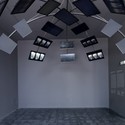
At its debut at the Venice Architecture Biennale 2014, Indonesia offers a peek into the country’s past 100 years of architectural history in its pavilion: “Craftsmanship: Material Consciousness.” Moving images projected onto glass panels tell Indonesia’s story through the development of six materials, traced over time: wood, stone, brick, steel, concrete and bamboo. See images of the pavilion and enjoy a statement from the curators after the break.
“We were sensitive to the way in which society was becoming more consumption-oriented and gave serious thought to how we ought to respond to that change without simply accommodating ourselves to it.” -Toyo Ito “I was entering a dead world, which would never see the light of the day. I wanted to treat that dead world as if it were alive, or to put it another way, to try to create a different reality.” - Terunobu Fujimori
Under the title of Fundamentals, Koolhaas’ Biennale asked national pavilions to focus on their respective countries’ relationships with modernity, the movement that has, for better or worse, shaped the contemporary city. In the case of Japan, modernity was expressed in a unique way, as architecture was instrumental to the rapid industrialization and growth that the country experienced after World War II. This growth resulted in the first architectural avant-garde outside of the Western world. By the 70s, as this movement reached its peak, local architects, historians, artists and urbanists began to look at modernism in a critical way, questioning its impact.
In “The Real World,” the Japan exhibit at the Biennale, curator Norihito Nakatani unearths how this critical movement expressed itself through Osamu Ishiyama, Toyo Ito, Terunobu Fujimori, and other Japanese masters whose works strove to connect to the human of “the real world” rather than contribute to the failed utopias of modernism. Interviews with this group of architects bring to light the desire that they had to positively impact society, and how they attempted to materialize that desire in their early works. The objects found inside the pavilion articulate the storytelling behind the process, leaving their interpretation open to visitors.
“You’ve got to try to make an impact on the times you live in, and you’ve got to do it through your work, not through words.” - Osamu Ushiyama “Actual objects continue to possess tremendous energy - much more so than photographs or models.” - Tsutomu Ichiki
More about the "In the Real World" after the break: