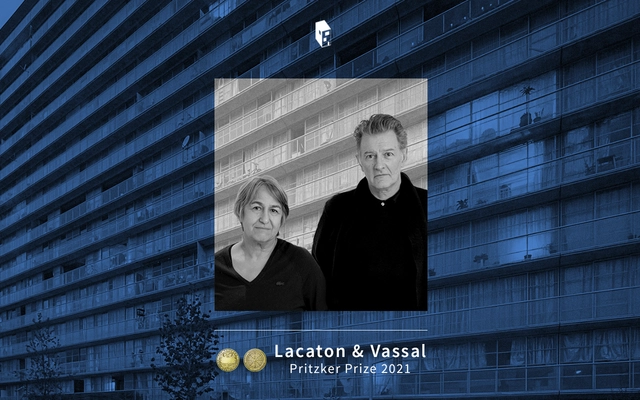
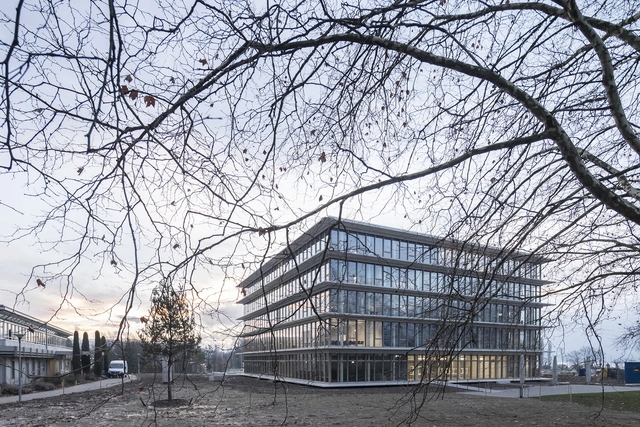
The 2021 Pritzker Architecture Prize, architecture’s highest honor, has been granted to Anne Lacaton and Jean-Philippe Vassal, founders of Lacaton & Vassal, the French duo renowned for their multiple sustainable housing projects and for the Palais de Tokyo, a contemporary art gallery in Paris. In their three decades of work, Lacaton & Vassal always prioritized the “enrichment of human life”, benefiting the individual and supporting the evolution of the city.
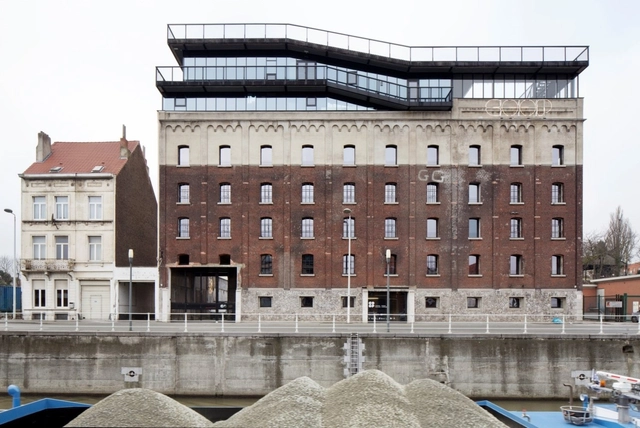
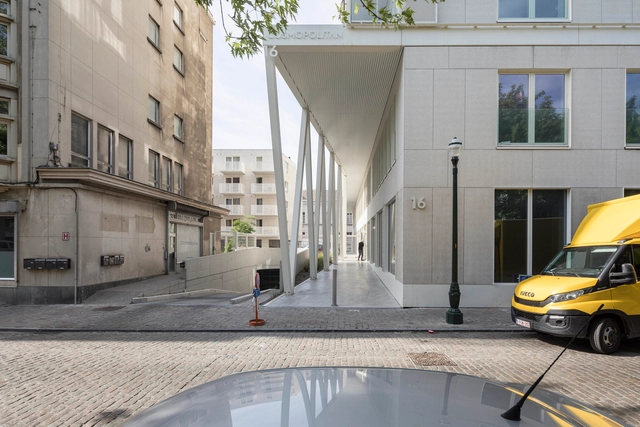
Anne Lacaton and Jean-Philippe Vassal founded their architectural studio Lacaton & Vassal in 1987, years after studying and working together at the École Nationale Supérieure d’Architecture et de Paysage de Bordeaux. The practice established in Paris has been awarded this year’s prestigious 2021 Pritzker Prize. Their built work leaves strong evidence of what they believe is relevant: sustainability, wellbeing, social responsibility, and the readaptation and the respect of the existing built environment.
https://www.archdaily.com/958569/lacaton-and-vassal-get-to-know-2021-pritzker-winners-built-workPaula Pintos & Clara Ott
Almost 6 months ago, on August 4th, 2020, the city of Beirut was shaken by one of the biggest non-nuclear blasts in history. Leaving the northern side of the capital in ruins, the explosion damaged around 40,000 buildings. New contemporary structures completed recently by local international architects are now facing reconstruction dilemmas, raising existential questions such as: How should reconstruction efforts of “new” damaged buildings look like? Should architects rebuild them as they were before the blast, erasing what has happened or should they leave scars and portray new realities?
In order to explore ideas and highlight different perspectives, ArchDaily had the chance to sit with three architects whose buildings were impacted by the blast. Bernard Khoury, Paul Kaloustian, and Lina Ghotmeh talked about their projects and their vision of the reconstruction of Beirut with ArchDaily's Managing Editor, Christele Harrouk, alongside Architectural Photographer Laurian Ghinitoiu, who documented in a featured photo series the extent of the destruction.
The board of the Indian Institute of Management in Ahmedabad (IIMA) has announced that the dormitories, built by Louis Kahn and part of the overall campus design, will be demolished and replaced. In fact, the administration plans to “bring down at least 14 of 18 dorms which were built between 1968 and 1978" for showing "problems of leakages from the roof, dampness in walls, leakages in toilet walls, slabs, etc.”, according to the Indian Express.
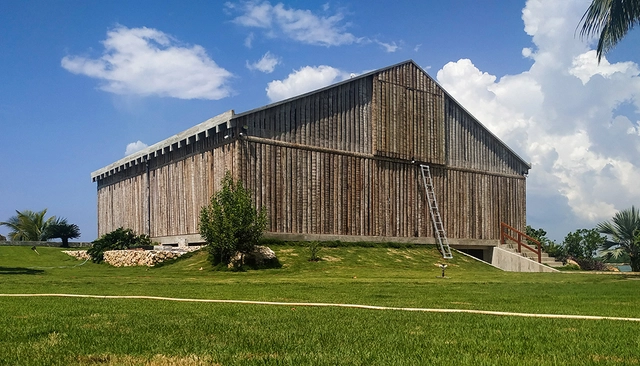
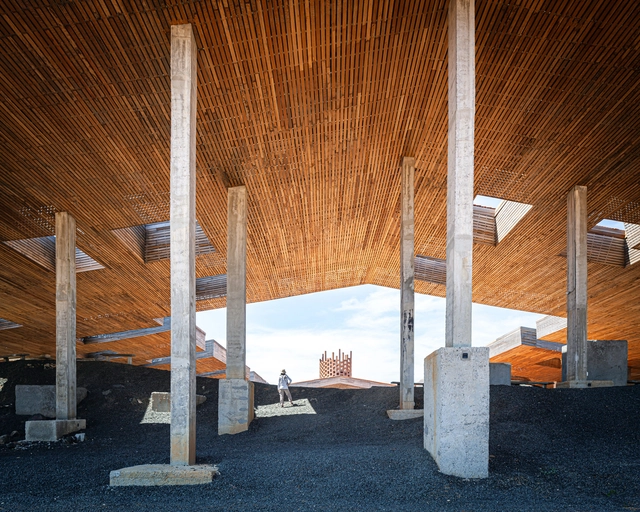
"What Are We Talking About When We Talk about Contemporary Cuban Architecture?" is the title of the article written by Fernando Martirena in Rialta Magazine that delves into the reality of architecture within Cuban society. Essentially, it receives so little attention that it might as well not exist. This prompted the birth of the Cuban Architecture Studios Group (Grupo de Estudios Cubanos de Arquitectura), of which Martirena is a member, a collective that aims to give modern Cuban architecture a platform and a voice.
ArchDaily sat down with Martirena to talk about the group and the state of architecture today in his native Cuba.
Going beyond human scale is not a novelty. For centuries, builders, engineers, and architects have been creating monumental edifices to mark spirituality or political power. Larger than life palaces, governmental buildings, or temples have always attracted people’s admiration and reverence, nourishing the still not fully comprehensible obsession with large scale builds.
Nowadays, some of the largest and most impressive structures relate less to religious or governmental functions and seem to be turning towards more cultural programs. Most importantly though, today’s grandiose works are generally and openly imitative of Nature.
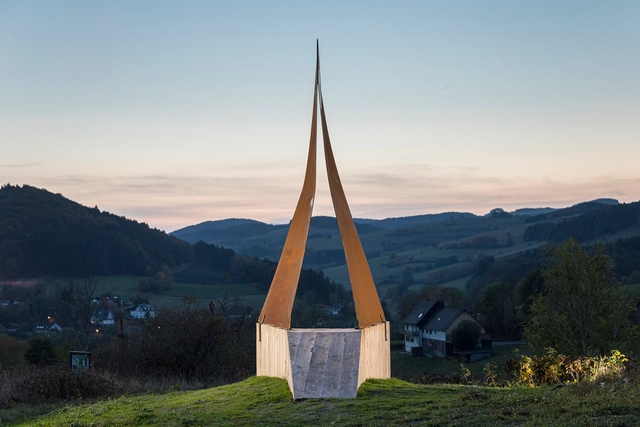
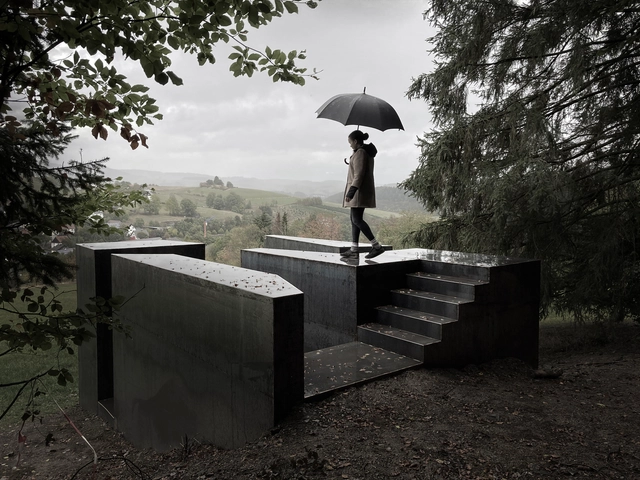
Halloween is a holiday that centers on space and ritual. Most likely originating from Celtic harvest festivals, Halloween is tied to processions like trick-or-treating, as well as history and spatial stories. The holiday celebrates imagined settings, characters, and events. In similar celebrations like Mexico's Día de Muertos, people gather in unlikely places; cemeteries and graveyards become the backdrops to picnics and celebrations. There, families offer flowers and food to deceased relatives as they celebrate history and the lives of loved ones.
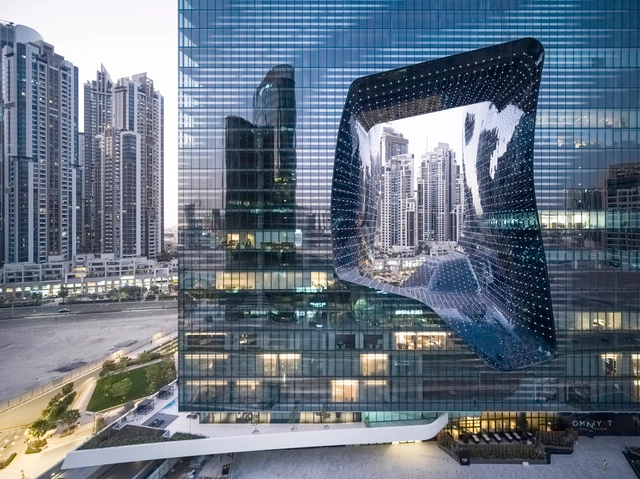
The recently opened Opus building by Zaha Hadid Architects brings an interplay of solid and void, fluidity and orthogonality to the Dubai cityscape. New images by award-winning photographer Laurian Ghinitoiu capture the project’s sculptural silhouette, the studio’s distinct architectural signature.
Sustainable design is more than water, energy and carbon. For architecture, it is deeply rooted in an understanding of life cycles and systemic cultural change. Over the last thirty years, the word "sustainability" began to lose its weight as it transformed into a loosely defined buzzword. But the ideas behind the umbrella term have grown and expanded, and in turn, iconic new buildings are being designed to rethink what the future holds.
In this short video by Louisiana Channel, Junya Ishigami talks about Tokyo and what he sees as the defining traits of the vibrant and diverse metropole. Discussing what he likes about the city, the renowned Japanese architect underlines Tokyo’s polycentrism and explains how being made up of different small town allows the city to preserve its very local characteristics.


_7259.jpg?1615813633&format=webp&width=230&height=230&crop=true)


.jpg?1615841061&format=webp&width=640&height=580)


.jpg?1615841061)




.jpg?1611093603&format=webp&width=640&height=580)
.jpg?1611093772&format=webp&width=230&height=230&crop=true)
.jpg?1611093604&format=webp&width=230&height=230&crop=true)
.jpg?1611093961&format=webp&width=230&height=230&crop=true)
.jpg?1611093888&format=webp&width=230&height=230&crop=true)
.jpg?1611093603)


.jpg?1609838112&format=webp&width=640&height=580)




.jpg?1609149520&format=webp&width=640&height=580)

.jpg?1609149607 "Courtesy of Wikimedia Commons")
.jpg?1609149611 "© Laurian Ghinitoiu")
.jpg?1609149614 "© Laurian Ghinitoiu")
.jpg?1609149520)




.jpg?1601987008&format=webp&width=230&height=230&crop=true)








_2605.jpg?1587110718&format=webp&width=640&height=580)