Moscow welcomed its first new park in 50 years with the opening Zaryadye Park in mid-September. Designed by architects Diller Scofidio + Renfro, Citymakers and Hargreaves Associates, this new public space has been a big draw for Muscovites, with over a million people visiting in the first weeks since its inauguration.
The park has become one of the most important contemporary spaces in Moscow, exhibiting high-quality infrastructure and landscapes, as well as extraordinary views to the Kremlin and the Red Square.
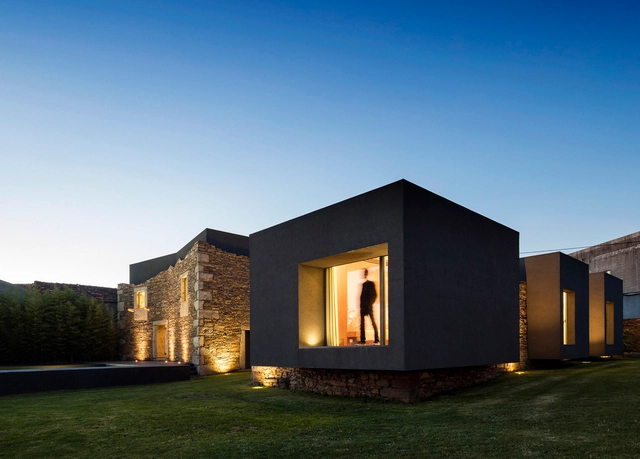
With Halloween just around the corner, this week we have prepared a special edition of Photos of the Week featuring nighttime images. Undoubtedly, this effect is among the most spectacular and difficult to achieve in architecture photography. Working in the absence of light is not a simple task for photographers, but by playing with the artificial lights in buildings (and, usually, some dramatic HDR effects) it is possible to achieve adequate exposure for incredible results. Below is a selection of 15 images from prominent photographers such as Ketsiree Wongwan, Laurian Ghinitoiu and Philippe Ruault.
If the Great Pyramid were to be built today, it would cost between 1.1 and 1.3 billion US dollars, according to a cost estimate by the Turner Construction Company—not surprising, considering how that is roughly the same amount of money that it took to build the Trump Taj Mahal or the Petronas Twin Towers. Complicated structural requirements, delayed work timelines, complex building programs, the need for good earthquake or typhoon proofing, the use of advanced mechanical and electronic systems, and costly materials and finishes can all add up to the eventual cost. But sometimes—and especially in cases in which governments or powerful clients set out to beat existing records such as the “tallest building in the world”—money is spent for no real reason except for an unabashed display of wealth, power or strength.
Emporis, the renowned global provider for building data, has compiled a list of the top 200 money-guzzlers from recent years, and not surprisingly, a lot of high-rises have made the list. Read on to see the top 20.
https://www.archdaily.com/881766/the-worlds-most-expensive-buildingsZoya Gul Hasan
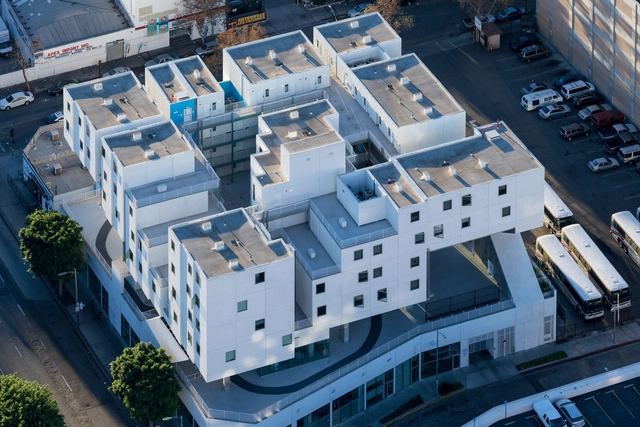
Zumtobel Group has announced the 2017 winners of its Zumtobel Group Awards for architecture, which rewards the year's innovations which best promote "sustainability and humanity in the built environment." Leading the awards is Los Angeles-based firm Michael Maltzan Architecture whose Star Apartments project, which provides 102 homes for previously homeless individuals in LA, was awarded the prize in Zumtobel Group's Buildings category. Also winning prizes were UNStudio, Atelier TeamMinus, and Arturo Vittori. Read on for more details and the full list of winners and honorable mentions.
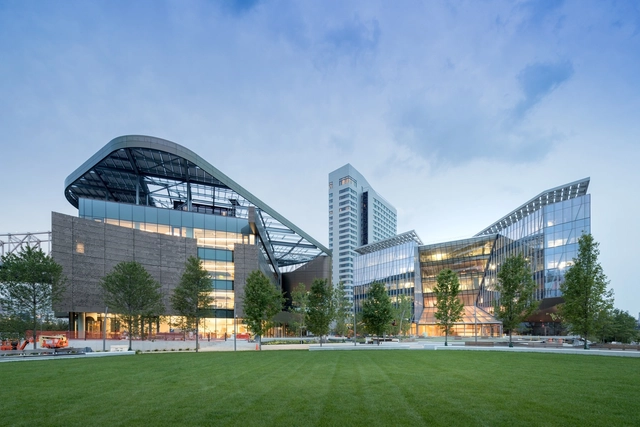
The innovative Cornell Tech campus has officially opened on New York City’s Roosevelt Island. Master planned by SOM and featuring buildings and landscapes by Morphosis, Weiss/Manfredi, Handel Architects, and James Corner Field Operations, the campus represents a new vision of a campus for the digital age. Two years after breaking ground in 2015, the campus now houses some of the most environmentally-friendly and energy-efficient buildings in the world.
Architecture’s most prestigious award, the Pritzker Architecture Prize, has announced the appointment of two new jurors to their distinguished jury: architect Wang Shu and Brazilian ambassador and architectural critic André Aranha Corrêa do Lago.
The 8-strong group will be tasked with selecting the upcoming 2018 laureate, who will become the 40th winner in the prize’s history.
“As we approach the 40th anniversary of the Pritzker Prize, the addition of André Corrêa do Lago and Wang Shu continues to embody the international range reflected by both present and past Laureates and Jury,” commented Tom Pritzker, Chairman of Hyatt Foundation. “The contributions of both individuals to the field of architecture, from different vantage points, makes them ideal members of the jury.”
This August 19th is World Photo Day, which celebrates photography on the anniversary of the day on which France bought the patent for the daguerreotype, one of the earliest photographic processes, and released it to the world for free in 1839. At ArchDaily, we understand the importance of photography in architecture—not only as a tool for recording designs, but also as a discipline that many of us enjoy. To celebrate the occasion, we decided to reveal the most popular images ever published on ArchDaily, as selected by you, our readers. Using data gathered from My ArchDaily, we have ranked the 100 most-saved images from our database; read on to see them.
The Design Museum in London has announced the shortlist projects in the running for the 2017 edition of their prestigious Beazley Design of the Year award. Now in its tenth year, the award was established to “celebrate design that promotes or delivers change, enables access, extends design practice or captures the spirit of the year.”
This year, a total of 62 projects have been nominated across six categories: Architecture, Digital, Fashion, Graphics, Product and Transport – including 13 projects from the Architecture category. A winner from each category and the overall winner will be announced on January 25, 2018. Previous winners of the architecture category include: IKEA’s Better Shelter last year (also the overall winner), Alejandro Aravena's UC Innovation Center in 2015, and Zaha Hadid Architects’ Heydar Aliyev Center (overall winner in 2014).
For the third year in a row, in June we asked our student readers to submit the design-build projects which they have recently worked on. And, for the third year in a row, the response we received was excellent. With hundreds of submissions to ArchDaily, ArchDaily Brasil and allfourArchDailyen Español sites, in 2017 our readers gave us more projects to choose from than ever before; we’ve narrowed this selection down to bring you the 34 best student design-build projects around the world from the past year.
Now in its 20th year, Berlin-based firm TOPOTEK 1 has been an enterprising player in the field of landscape architecture and public design, with a portfolio of projects that emphasize the social and formal roles that landscape assumes within built work. Largely responsible for the firm’s success this far is the man at the helm, Martin Rein-Cano, who has served as one of the founding partners since 1996.
https://www.archdaily.com/873883/martin-rein-cano-explains-the-importance-of-dynamism-in-landscape-architectureOsman Bari
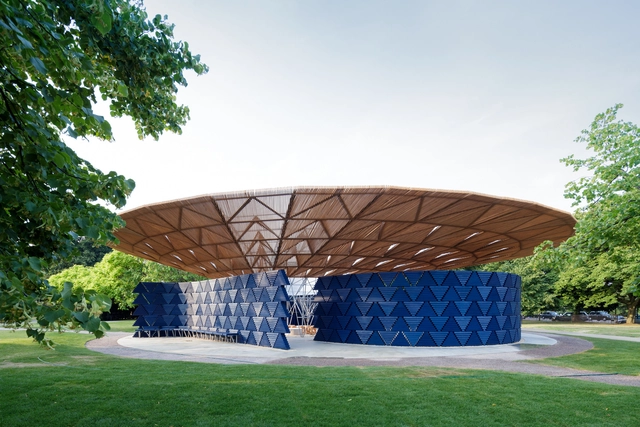
The 2017 Serpentine Pavilion, designed by Diébédo Francis Kéré (Kéré Architecture), was unveiled today in London. Conceived as a micro cosmos—"a community structure within Kensington Gardens"—the pavilion has been designed to consciously fuse cultural references from Kéré's home town of Gando in Burkino Faso, with "experimental construction techniques." The architect hopes that the pavilion, as a social condenser, "will become a beacon of light, a symbol of storytelling and togetherness."
https://www.archdaily.com/874091/diebedo-francis-kere-serpentine-pavilion-opens-london-will-come-alive-when-it-rainsAD Editorial Team
At this morning’s press event, The Museum of Modern Art in New York (MoMA) unveiled the completed renovations to the east end of its museum campus, while also revealing for the first time the full design of their multi-year expansion project designed by Diller Scofidio + Renfro in collaboration with Gensler.
With the completion of the east wing renovation, which began in February 2016, the museum has created two spacious third-floor galleries by reconfiguring 15,000 square feet of space, allowing for better flexibility in installing the collection and temporary exhibitions.
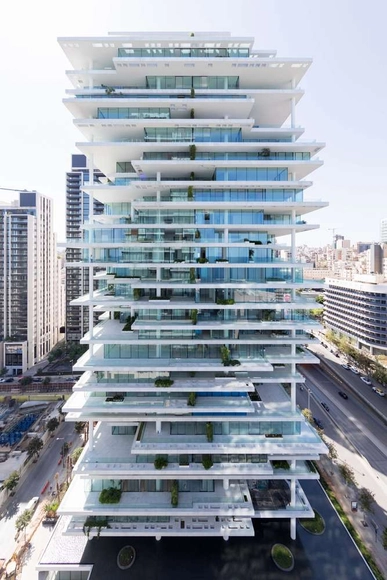
27 years after the Lebanese Civil War (1975 – 1990), Beirut finds itself a city of conflicting personalities. A summer night stroll through the recently completed Zaitunay Bay Marina flaunts the capital’s ongoing facelift. What GQ calls “the chosen destination for young rich cool kids across the globe” is now peppered with glitzy glass-clad high rises, world-class nightclubs, droves of foreign tourists, and high-profile architecture. A Steven Holl-designed yacht club is just minutes away from Herzog & de Meuron’s Beirut Terraces, a luxury condominium skyscraper overlooking a seaside promenade that the resort refers to as an “urban beach.” However, this inner-city development has also had extreme consequences on the city's periphery, as shown clearly in this photoset by Manuel Alvarez Diestro.
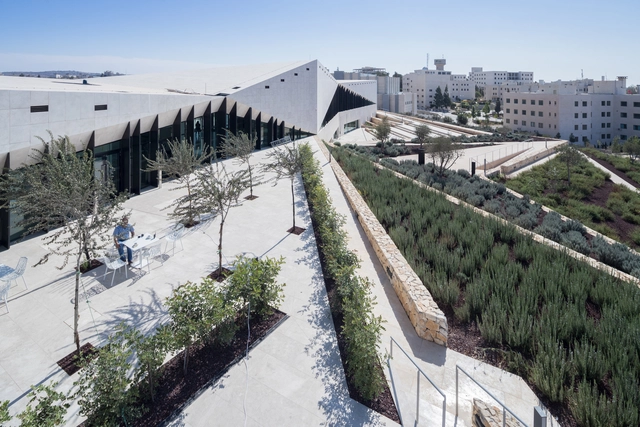
The Royal Architectural Institute of Canada (RAIC) has announced the four projects shortlisted for the 2017 Moriyama RAIC International Prize. The prize was established in 2014 by Canadian architect Raymond Moriyama along with RAIC and the RAIC Foundation to recognise buildings that are judged to be " transformative within its societal context and reflect Moriyama's conviction that great architecture transforms society by promoting social justice and humanistic values of respect and inclusiveness."
"These projects celebrate human life and shape activity," commented RAIC President Ewa Bieniecka, FIRAC. "They embody innovation, contribute to how we experience space, and explore how spaces allow opportunities for freedom. The four shortlisted projects demonstrate how architecture is generous and gives back to the community. These works have a strong sense of place and connect to their surrounding landscape."
Awarded every two years, the winning project will receive a CAD $100,000 prize and a handcrafted sculpture by Canadian designer Wei Yew. The prize is open to all architects, irrespective of nationality and location. The inaugural prize was won by Chinese architect Li Xiaodong for his design of the Liyuan Library in Jiaojiehe, China.
The World Architecture Festival (WAF) has announced four internationally recognized names as members of the Super Jury that will judge the awards program at the 2017 Festival in Berlin this November. After the selection of winners from across 31 categories on the first two days of the event, category winners will present to the Super Jury, who will decided the winners of the World Landscape, Future Project and Completed Building of the Year Awards.









.gif?1499957974)





.jpg?1497967188&format=webp&width=230&height=230&crop=true)


.jpg?1496153834&format=webp&width=640&height=580)


.jpg?1496153929&format=webp&width=230&height=230&crop=true)
.jpg?1496153834)
.jpg?1495744233 "Melbourne School of Design, University of Melbourne, Melbourne, Australia / John Wardle Architects and NADAAA. Image © Peter Bennetts")