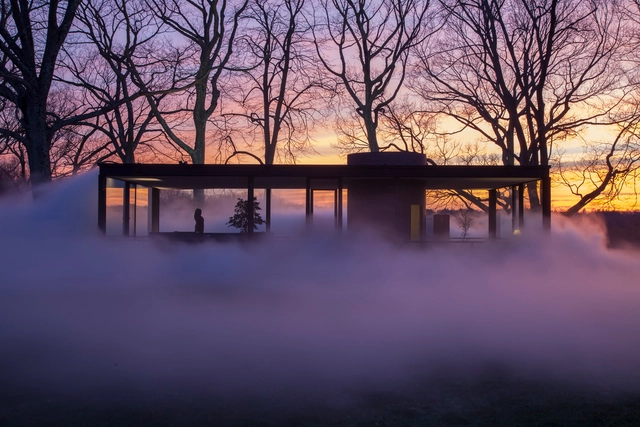
Taking photographs in fog can be an experience as chaotic as it is enchanting. Although working with this phenomenon can be risky, since fog dramatically modifies the available light and the atmosphere of a scene, if you know how to take advantage of it, the result can lead to perfect photographs. Below is a selection of 10 images from prominent photographers such as Kevin Scott, Richard Barnes, and Koichi Torimura.
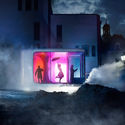
In their video series for the November 2017 World Architecture Festival, PLANE—SITE delves into contemporary concert hall design. The five films highlight major themes in today’s musical architecture through an interactive, multimedia panel. Using Harpa Concert Hall in Reykjavik, Wroclaw’s National Forum of Music, and the Philharmonie de Paris as examples, the videos show how contemporary concert halls are more technological and multi-functional than ever before, demonstrating how architecture redefines the modern-day musical performance experience.
The series acted as a starting point for a conversation between the WAF audience and panelists, moderated by PLANE—SITE’s Andres Ramirez. Panelists included Michel Cova of dUCKS scéno, Tateo Nakajima of Arup, and Jacob Kurek of Henning Larsen.
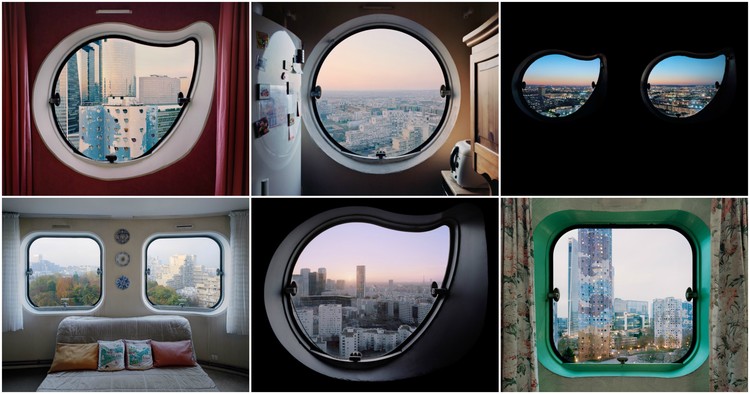
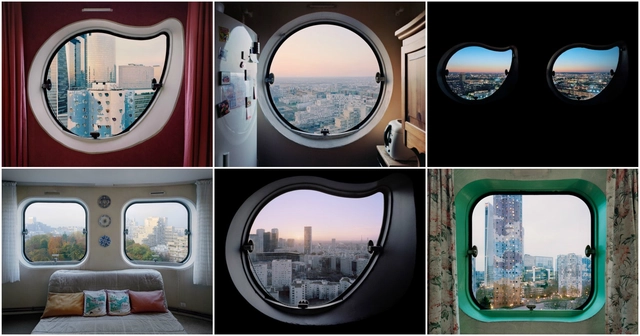
French photographer Laurent Kronental’s latest photo series, “Les Yeux des Tours” views of Paris, are framed by the quirky windows of the Tours Aillaud, and by the subtle differences in which the spaces around them are inhabited. Kronental considers the towers as some of the most spectacular of the Grands Ensembles built in the post-war economic boom in France. For him, photographing these buildings was a form of nostalgia, a way of satisfying a deep sense of childhood wonder and curiosity that fostered in him as a young boy perceiving them from the nearby business and shopping center "La Défense," questioning the lives of the people who live there.
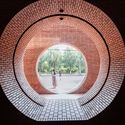
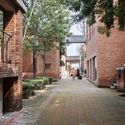
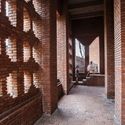
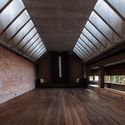
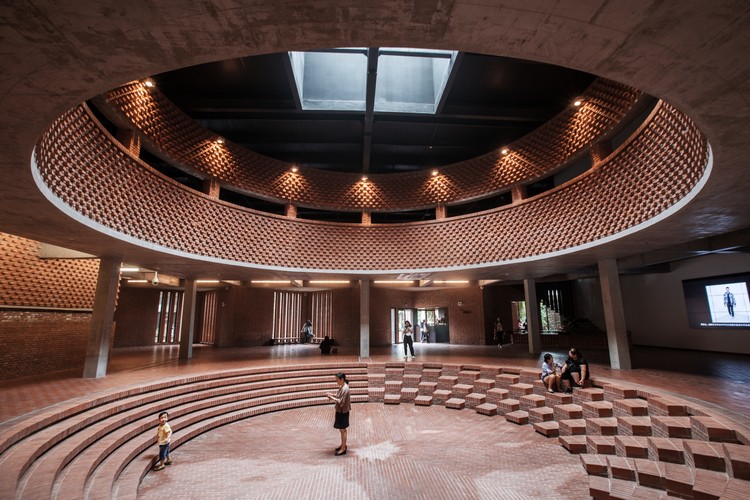
Founded by collectors Yan Shijie and Cao Mei, the Red Brick Art Museum opened in May 2014 in the Chaoyang District to showcase Chinese and world art, since then, it has become a haven for photographers. In this photo series, He Lian focuses his lens on the museum and captures the sculptural beauty of the punctured brick walls.
Architect Dong Yugen has created a structure that is a piece of art in itself; the perforations, skylights and narrow windows manipulate light into the spaces, casting dramatic shadows and offering short glimpses outside. The grey tones implemented in the entrance to greet visitors softens the transition between the inside and outside, whilst guiding you through the building into the main hall featuring a sunken circle that can also be used as an auditorium.
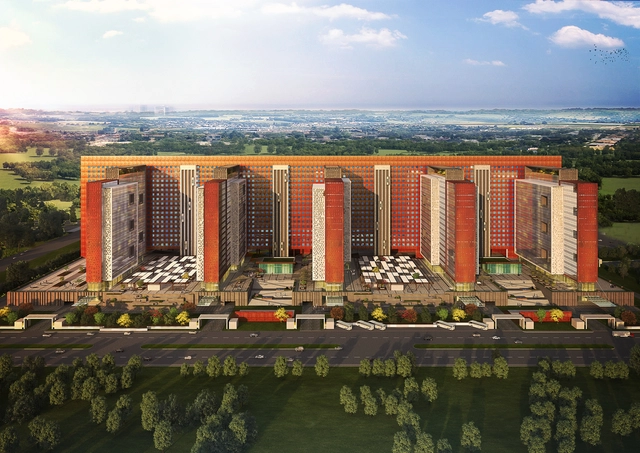
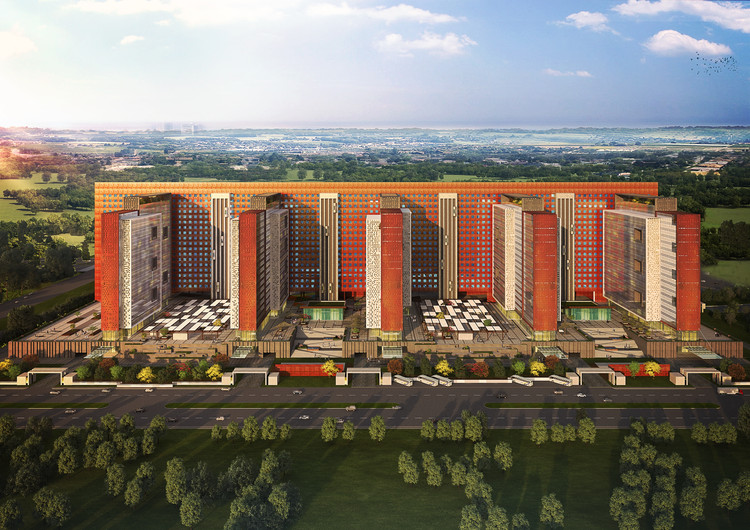
Could you ever imagine working in a small city? A new massive office building by Morphogenesis is being built to accommodate over 45,000 people for the Surat Diamond Bourse office in Surat, Gujarat, India. At 6.5 million square feet, and housing over 4,000 offices, it will be the second largest office building in the world, placing only behind the Pentagon in Washington D.C. Although its physical footprint may be large, the office building was designed in a manner to minimize its ecological footprint. Passive design strategies such as day-lit workspaces, natural ventilation, and indoor/outdoor spaces not only make the Surat Diamond office an efficient climate-responsive design, but also a key player for achieving aesthetic and comfortable working spaces.
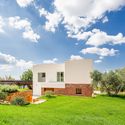
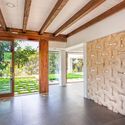
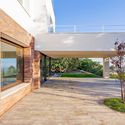
The Kharayeb Archaeological Museum (KAM) was designed by Shiogumo in the agricultural lands of the coastal village Kharayeb, in the south of Lebanon. The site-specific museum was commissioned to preserve and enhance the historical, cultural, and public significance by the directors of the archeological mission and site, Dr. Ida Oggiano (Istituto di Studi sul Mediterraneo Antico of CNR, Italy) and Dr. Wissam Khalil (Lebanese University).
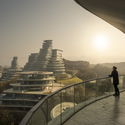
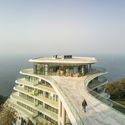
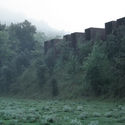
From Portuguesearchitectural photographerFernando Guerra comes imagery of MAD's Huangshan Mountain Village in China. This residential design, comprising ten housing blocks that mimic the mountain range they are embedded in, is just one piece of the Taiping Lake tourism master plan; architecture and nature blend together to create modern apartments with differing panoramic views.
At the end of September, we invited our Spanish-speaking readers to send us their social housing proposals completed at a university level. Social housing is still a challenge for much of Latin America and although every year hundreds of architecture students work on projects that reflect their concerns in the social housing field, its visibility is very low and its materialization is null. At a time when the Global South has pursued its own responses to its own problems, the university response on social housing should be taken into account by the State, both of whom are interested in the common good.
Out of 116 proposals received from Spain and 11 Latin American countries, this selection of 20 ideas represents the different challenges and state of the problems in social housing. While some approach Colombia's post-conflict scenario for rural inhabitants, some propose answers to the insertion of social housing in already densified areas, to which the beneficiaries tend to be relegated by the value of land and housing. Other ideas point to the reconversion of infrastructure, modulation, the integration of indigenous peoples and natural disasters.
We believe that the selection not only highlights the efforts of students and academics to address contingent problems but will also open up the discussion about social housing, often relegated only as a one-dimensional problem when in reality, poverty is multidimensional.
https://www.archdaily.com/883952/the-best-university-proposals-for-social-housing-in-latin-america-and-spain-in-2017ArchDaily Team


MichaelMoser.jpg?1511769139)
MichaelMoser.jpg?1511769820 "© Michael Moser")
MichaelMoser.jpg?1511769463 "© Michael Moser")
Airteam.jpg?1511769175 "© Airteam")
MichaelMoser.jpg?1511769429 "© Michael Moser")
MichaelMoser.jpg?1511769139)
.jpg?1511735650 "SAVE. Image © Laurent Kronental")
.jpg?1511735614 "SAVE. Image © Laurent Kronental")
.jpg?1511735644 "© Laurent Kronental")
.jpg?1511735634 "© Laurent Kronental")