

-
Architects: BIAD-ZXD ARCHITECTS
- Area: 19900 m²
- Year: 2016
-
Manufacturers: Koolcore, Seed, Taiwan Glass





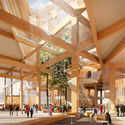
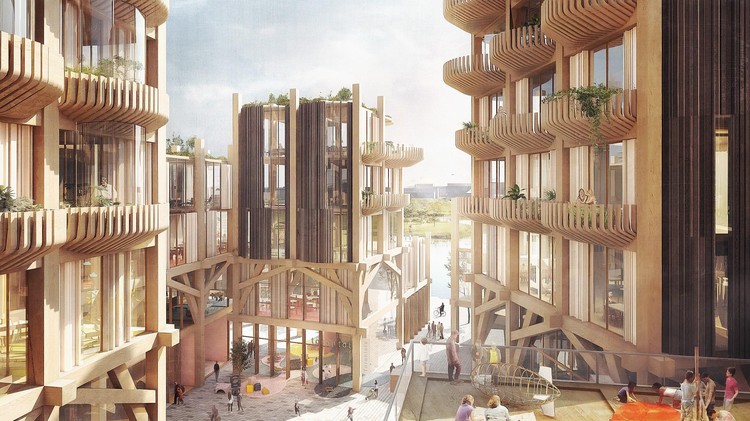
Sidewalk Labs has released new renderings from Snøhetta and Heatherwick Studio of the Quayside neighborhood development in Toronto. After announcing plans to create a model smart city, Sidewalk Labs has been working to pioneer a new approach to future urban developments. Plans for Quayside were first revealed last summer, designed to be interconnected smart neighborhood for the city. The latest renderings were released with further documents outlining how the company plans to pay for the ground-up development.

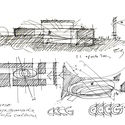
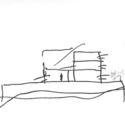
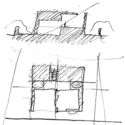
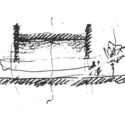
Some time ago, I embarked on an internet research journey for a project centered on representation in architecture. My quest led me to peruse the websites of various architecture firms. While many of them passed quickly without leaving a lasting impression, a few captured my full attention. I delved into and appreciated the unique sensibilities of their authors, particularly their penchant for drawings and freehand sketches, which I had not previously encountered.
Within the vast landscape of these mental explorations, I stumbled upon Alberto Campo Baeza's drawing library—a discovery I enjoyed so much that I felt compelled to share it.


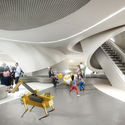
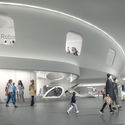
Turkish practice Melike Altınışık Architects (MAA) has won an international competition for the design of a Robot Science Museum in Seoul, South Korea. Hosted by the Seoul Metropolitan Government, the competition called for a “world first” museum to support public education in robotics, and increase public interest in robots.
The principles of robotics, science, technology, and innovation have shaped all aspects of the scheme’s design, from form and structure to material and operation. The main character of the museum is to “create its own universe for robots and their visitors,” manifesting as a non-directional, fluid, spherical structure.
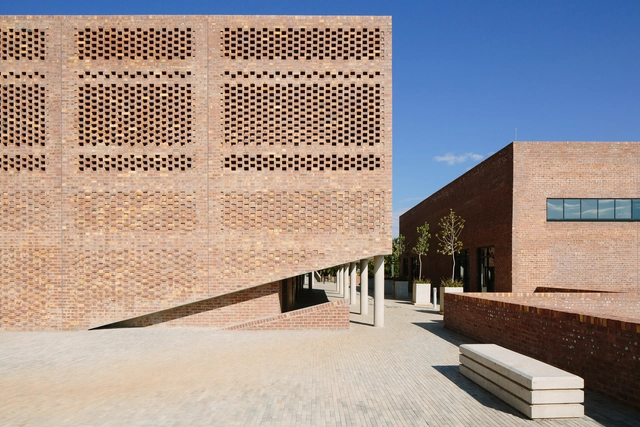
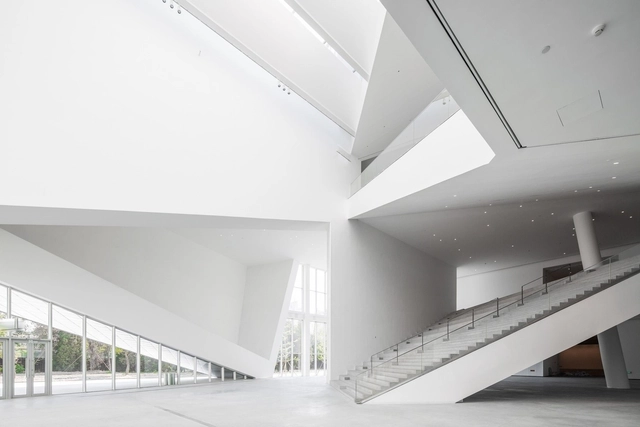
Since the early 2000s, China consistently has been surprising the world as the playground for international superstar architects’ most daring creations. It still does so, but the element of surprise is gone, and with increased concern for building more pragmatically, resourcefully, and overall responsibly, we are much more critical of these spectacular buildings. The script has been flipped: it is the architecture that is produced locally, with humility and social relevance, that attracts attention these days. Nowhere is this process more evident than in China, where the projects led by homegrown talent are by far the most relevant and meaningful architecture that is being built in the country today.


Most of the materials that we use in the construction of our projects have shapes and dimensions that seek to facilitate their storage, transfer, and installation, being constituted in its majority by orthogonal modulations. These straight angles don't always fit with the irregularity of our designs, nor do they coincide exactly when encountering more organic materials or other specific elements such as ducts, pillars, or furniture.
This simple tool allows you to copy, duplicate, and measure complex contours so that the materials adapt perfectly to other elements. Its mobile 'teeth' must be pressed against the profile to obtain a mold of its shape, generating templates that will allow cutting and adjusting the original material with precision. Thus, the tool could even be useful for replicating or repairing unique details in restorations or refurbishments.

Nestled in a valley north of Beijing, a building will soon be completed that may appear to have always been there, or to have emerged from and grown out of the surrounding stony landscape. OPEN Architecture’s Chapel of Sound in Chengde, China was recently recognized in the 66th annual Progressive Architecture (P/A) Awards, chosen as one of ten projects to receive the commendation. The P/A Awards focus on innovative, ongoing work that promotes new ways of thinking about architecture. The Chapel of Sound was noted for its creation of a new, progressive type of environment and its reimagining of an established typology.

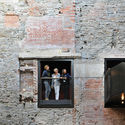
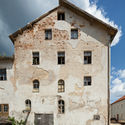
If walls could speak, they would have the most stories to tell - stories of antiquity, war, scandal, and reconciliation. Approaches to preservation are as varied as the architects behind them, but many take on the challenge with flair and restraint in equal measure. It is common to see preservation that combines ancient structure with contemporary features, creating beautiful combinations of old and new.
Take a look at some architectures from our projects database that highlight the beauty in the imperfections of ruins and great combinations of used and new materials.
This collection is one of many interesting content groupings made by our registered users. Remember you can save and manage what inspires you on My ArchDaily. Create your account here.