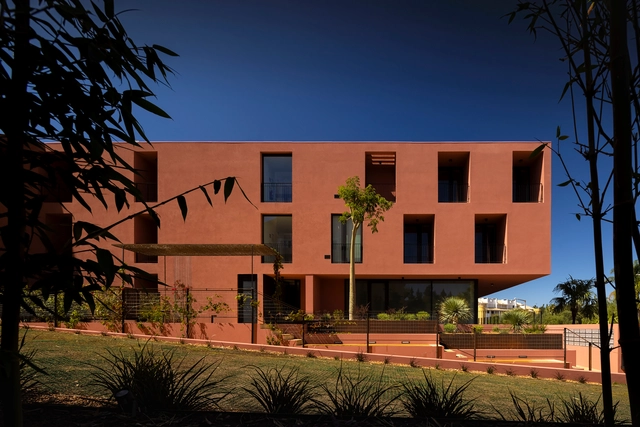
Early last week, the European Commission and the Fundació Mies van der Rohe announced the 40 shortlisted projects of the EU Mies Award, a prize that commends excellence in architecture, highlighting its contribution to sustainable development. In this context, and two years after the European Parliament voted to support the Green Deal, we review the steps taken by the EU in 2021 towards achieving its sustainability goals and shaping a resilient built environment.
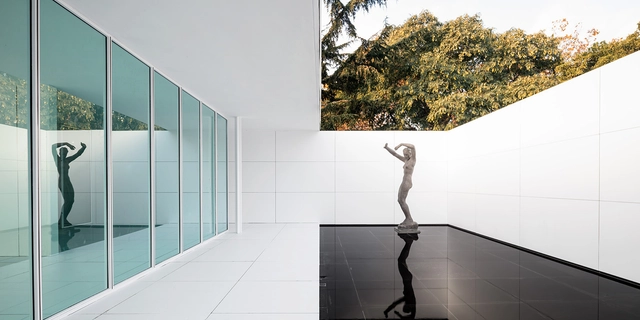
In 1929, Ludwig Mies van der Rohe and Lilly Reich design the German National Pavilion for the 1929 Barcelona International Exhibition. The official reception for the exhibition was held there, presided over by King Alfonso XIII and the German authorities. From then on, the story is well known to everyone. A symbolic work of the Modern Movement, the Pavilion has been extensively studied and interpreted, and has inspired the work of several generations of architects.
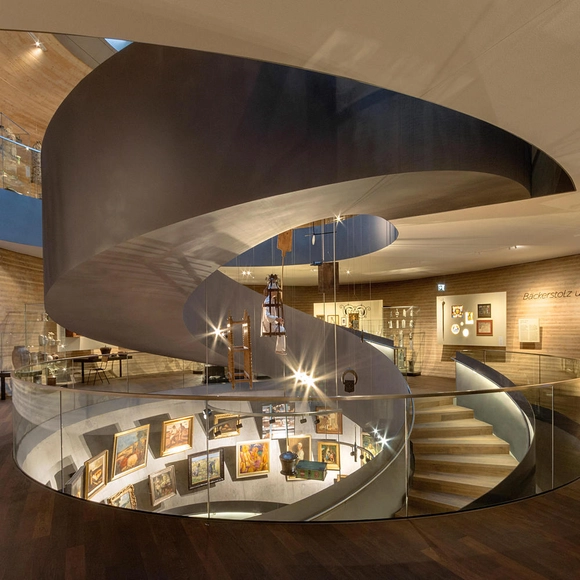
Staircases can seem like an unalterable part of a building’s DNA. Whether part of a new build or a refurbishment, it can be difficult to imagine changing the angle, direction, or even the placement of the stairs, so choosing the right type can be key. Here are ten different ways to unlock that dream interior.
Over the last century, cars have been the dominant element when designing cities and towns. Driving lanes, lane expansions, parking garages, and surface lots have been utilized as we continue our heavy reliance on cars, leaving urban planners to devise creative ways to make city streets safe for pedestrians and cyclists alike. But many cities, especially a handful in Europe, have become blueprints for forward-thinking ideologies on how to design new spaces to become car-free and rethink streets to make them pedestrian-friendly. Are we experiencing the slow death of cars in urban cores around the world in favor of those who prefer to walk or ride bikes? And if so, how can it be done on a larger scale?
Architect Cino Zucchi (b. 1955) grew up and practices in Milan, Italy. He was trained at MIT in Cambridge and the Politecnico di Milano, but claims to be largely self-taught, although influenced by such of his countrymen as Aldo Rossi and Manfredo Tafuri. He is internationally known for diverse projects across Europe. Many are both abstracted and contextual residential complexes in Italy, particularly in Milan, Bologna, Parma, Ravenna, and, most notably, in Venice. Zucchi’s D residential building in Giudecca, attracted international attention and praise when it was completed in 2003. I met Cino Zucchi last year during the Venice Architecture Biennale; that meeting led to an extensive interview that we recently engaged in over Zoom between New York and the architect’s sunlight and books-filled Milan studio.
It’s a truth universally acknowledged that BIM is booming. It’s the future, and the AEC industry’s definitive move into complete digitization. In fact, in just four years from now, by 2026, the BIM market is projected to be valued at a jaw-dropping 10.7 billion USD. It’s no surprise then that young architecture professionals are looking to BIM for both financially and intellectually rewarding career paths.