1. ArchDaily
  2. News

News

Carlo Ratti's Writing Robot Transforms Your Wall into an Artistic Canvas

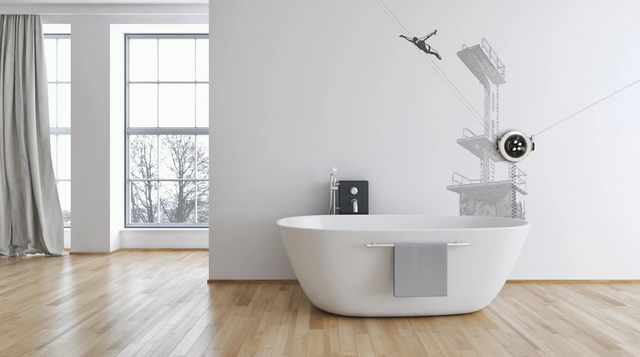
Carlo Ratti Associati (CRA) has unveiled Scribit, a “writing robot” which draws images and text on any wall surface, turning office, living, and bathroom walls into a blank canvas for artistic expression. Using in-built engines, Scribit can draw, cancel, and re-draw new content an infinite number of times, allowing users to print different images, messages, or feeds every day.

Scribit is always connected to the internet, allowing users to download, upload or source any online content. Operating in real time, Scribit immediately reproduces any data sent to it by the user, be it a restaurant posting the day’s menu, a financial firm posting stock market updates in its lobby, or an art enthusiast projecting their own content on the living room wall.

 Carlo Ratti's Writing Robot Transforms Your Wall into an Artistic Canvas - Imagen 1 de 4 Carlo Ratti's Writing Robot Transforms Your Wall into an Artistic Canvas - Imagen 2 de 4 Carlo Ratti's Writing Robot Transforms Your Wall into an Artistic Canvas - Imagen 3 de 4 Carlo Ratti's Writing Robot Transforms Your Wall into an Artistic Canvas - Imagen 4 de 4 Carlo Ratti's Writing Robot Transforms Your Wall into an Artistic Canvas - More Images+ 3

Translucent, Breathable Facades: 8 Tips for Incorporating Metal Meshes into Your Building

Subscriber Access | 

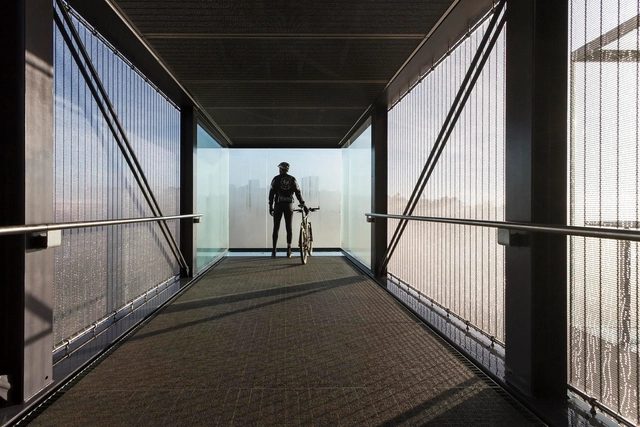
In buildings where openness, brightness, and outward views are highly valued by the users of our projects, glass predominates as an exterior cladding in cities all around the world. This forces us to look for options that can manage the excess of solar radiation and maintain thermal comfort in all seasons, without obstructing the views or darkening the interior spaces.

Prefabricated metal meshes provide certain qualities and flexibility that can work well in conjunction with glass; here we present 8 tips to work with this material and take advantage of its potential.

Jaime Lerner is named the second most influential urbanist of all time

Jaime Lerner, an architect and urbanist best known for projects in Curitiba, was named by the American urban planning magazine Planetizen as the second most influential urbanist of all time, behind only Jane Jacobs. The full list features 100 names and spans a wide chronological range, from 498 BC to the present.

Barcode Architects Brings New Triangular Residential Tower to Rotterdam's Skyline

Barcode Architects Brings New Triangular Residential Tower to Rotterdam's Skyline - Image 1 of 4
Courtesy of Barcode Architects

Rotterdam-based Barcode Architects have designed a new 110-meter-tall triangular shaped residential tower to become an icon in the city’s skyline. The tower, which has been named CasaNova, features a large plinth and a building base which tapers down four stories to meet the ground with a sharp angular form.

What It’s Like to Be an Architect Who Doesn’t Design Buildings

There's an old, weary tune that people sing to caution against being an architect: the long years of academic training, the studio work that takes away from sleep, and the small job market in which too many people are vying for the same positions. When you finally get going, the work is trying as well. Many spend months or even years working on the computer and doing models before seeing any of the designs become concrete. If you're talking about the grind, architects know this well enough from their training, and this time of ceaseless endeavor in the workplace only adds to that despair.

Which is why more and more architects are branching out. Better hours, more interesting opportunities, and a chance to do more than just build models. Furthermore, the skills you learn as an architect, such as being sensitive to space, and being able to grasp the cultural and societal demands of a place, can be put to use in rather interesting ways. Here, 3 editors at ArchDaily talk about being an architect, why they stopped designing buildings, and what they do in their work now. 

Study in Valencia, Barcelona, Porto, and Milan and travel the world with the Master's in Architecture, Design, and Innovation

Based at the Universidad Europea de Valencia, MArch. Architecture, Design and Innovation offers postgraduate training in Architecture and Design through three educational programs.

Can good architecture emerge from the real estate business? A 'high-rise houses' project in Santiago, Chile

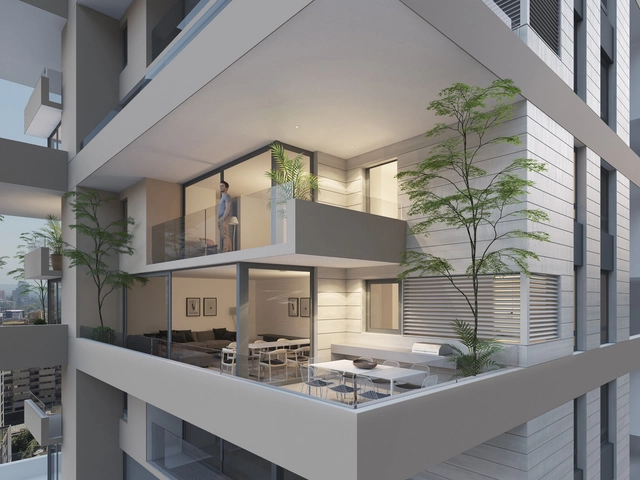
Is there room in the real estate business to create good architecture and contribute to our cities? Convinced of the potential of the real estate sector, Chilean architects Eduardo Berlin and Nicolás Lipthay founded MoDe Studio, an innovation and design workshop that seeks to maximize urban opportunities to build quality architectural projects without compromising—and even improving—their financial performance.

Based on these principles, they developed the 'Casa Vitacura' project, a building designed as a 'vertical neighborhood' with DFL2-standard units that aim to offer the same benefits as a house: spaciousness, privacy, a patio, and independence.

Can good architecture emerge from the real estate business? A 'high-rise houses' project in Santiago, Chile - Imagem 1 de 4Can good architecture emerge from the real estate business? A 'high-rise houses' project in Santiago, Chile - Imagem 2 de 4Can good architecture emerge from the real estate business? A 'high-rise houses' project in Santiago, Chile - Imagem 3 de 4Can good architecture emerge from the real estate business? A 'high-rise houses' project in Santiago, Chile - Imagem 4 de 4Can good architecture emerge from the real estate business? A 'high-rise houses' project in Santiago, Chile - More Images+ 33

Henning Larsen Brings Canals and Rooftop Farming to Brussels in Competition-Winning Masterplan

Henning Larsen Brings Canals and Rooftop Farming to Brussels in Competition-Winning Masterplan - Sustainability
Courtesy of Henning Larsen

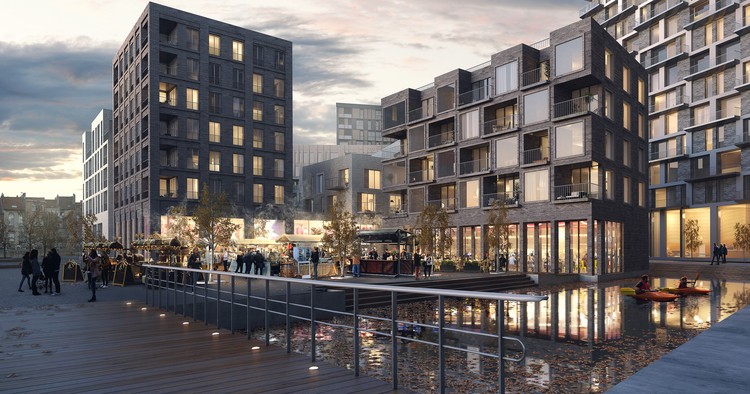
Danish firm Henning Larsen has released images of their competition-winning Key West urban development, seeking to revitalize a socio-economically challenged area of the Belgian capital Brussels. Developed in collaboration with A2RC Architects, the masterplan aims to balance urban and recreational life along the Brussels Canal Zone through a combination of housing, schools, urban farming, and a market hall.

Like many European cities, Brussels is moving towards a post-industrial economy, giving new opportunities to old industrial areas such as the Canal Zone. The Henning Larsen redevelopment seeks to remodel the area as an urban center, tying the urban areas west of the canal to central Brussels.

Henning Larsen Brings Canals and Rooftop Farming to Brussels in Competition-Winning Masterplan - SustainabilityHenning Larsen Brings Canals and Rooftop Farming to Brussels in Competition-Winning Masterplan - SustainabilityHenning Larsen Brings Canals and Rooftop Farming to Brussels in Competition-Winning Masterplan - SustainabilityHenning Larsen Brings Canals and Rooftop Farming to Brussels in Competition-Winning Masterplan - SustainabilityHenning Larsen Brings Canals and Rooftop Farming to Brussels in Competition-Winning Masterplan - More Images+ 1

The Importance of Architecture Awards: The Tomie Ohtake Institute AkzoNobel Prize

Subscriber Access | 

Launched in 2013, the initiative to establish an Architecture Prize presented a wealth of challenges for the Instituto Tomie Ohtake and its partner AkzoNobel. Its primary objective was to map contemporary Brazilian architecture, focusing specifically on the work of emerging professionals. This ambitious and unprecedented goal set it apart from traditional architectural competitions, not only by encompassing a broader spectrum of categories but also by championing a niche distinct from the output of already established, award-winning firms.

Beauty or Tragedy? Aerial Imagery of Spain’s Abandoned Housing Estates Wins DJI Drone Photography Award

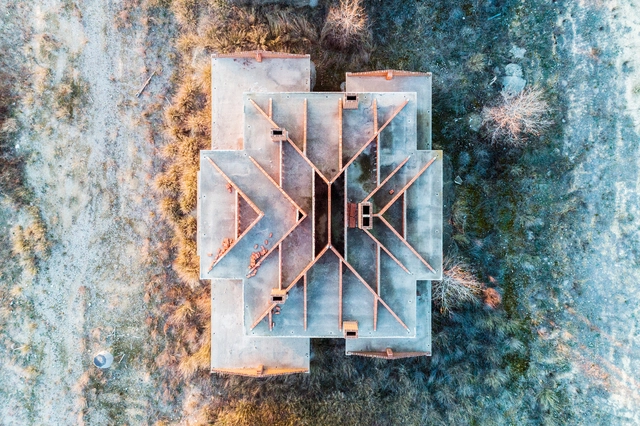
The winners of the DJI Drone Photography Award have been announced, a competition calling for ideas to make creative use of drone photography, and to explore subject matters impossible to experience on foot. This year, the two winning projects consisted of a new perspective on Spain’s 3.4 million abandoned houses, and the documentation of salt production across Europe.

Beauty or Tragedy? Aerial Imagery of Spain’s Abandoned Housing Estates Wins DJI Drone Photography Award - Image 1 of 4Beauty or Tragedy? Aerial Imagery of Spain’s Abandoned Housing Estates Wins DJI Drone Photography Award - Image 2 of 4Beauty or Tragedy? Aerial Imagery of Spain’s Abandoned Housing Estates Wins DJI Drone Photography Award - Image 3 of 4Beauty or Tragedy? Aerial Imagery of Spain’s Abandoned Housing Estates Wins DJI Drone Photography Award - Image 4 of 4Beauty or Tragedy? Aerial Imagery of Spain’s Abandoned Housing Estates Wins DJI Drone Photography Award - More Images+ 7

Beatríz García Moreno: 'Women are not only dwellers of spaces, but we are the dwelling'

Subscriber Access | 

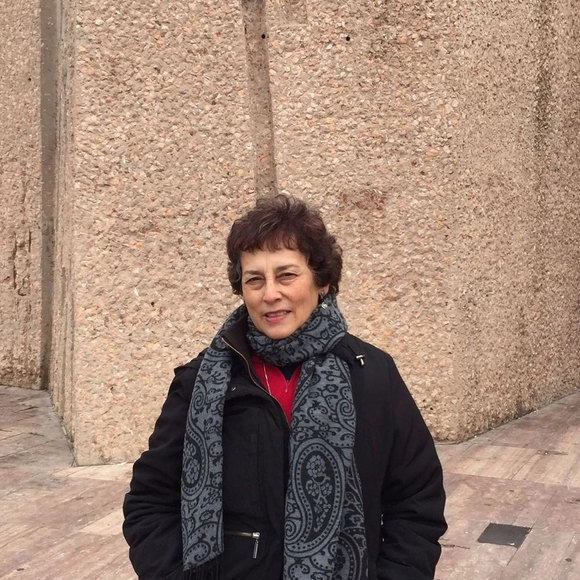
For this edition of International Women's Day, we have joined forces with the Colombian print publication de-Arq (Universidad de los Andes) to explore the work of five contemporary Colombian women architects, who represent different complementary approaches within our discipline: design, research, teaching, and experimentation.

Today we speak with Beatríz García Moreno, a Colombian architect, professor in doctoral and master's programs at local universities, and a member of the World Association of Psychoanalysis. "Women contribute not only to the traditional areas of architecture for which they are fully trained, but also to the ancestral themes that have shaped their dwelling in the world," comments García Moreno.

Key Landscaping Elements: shrubs, grasses, groundcovers, and paving

Subscriber Access | 

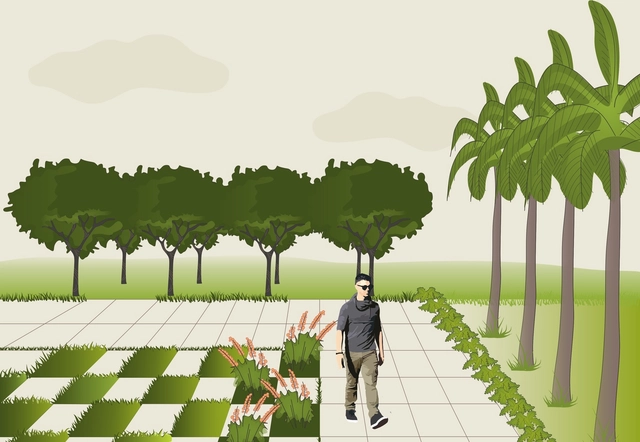
Just as architectural elements—floors, walls, and ceilings—shape and define built space, plant elements are also capable of shaping open spaces across large, medium, and small scales, from parks to residential gardens, acting as spatial structure. According to Benedito Abbud, "Landscape design is the only artistic expression that engages all five human senses. While architecture, painting, sculpture, and other visual arts rely heavily on sight alone, landscape design also engages smell, hearing, taste, and touch, providing a rich sensory experience by combining the most diverse and comprehensive perceptual experiences. The more a garden can stimulate all the senses, the better it fulfills its role."

To offer practical insights for landscape design projects, we have published a series of articles on the topic. In the first post, we discussed planes, clearings, and tree layouts, while the second covered trees, shrubs, grass, and groundcovers in open spaces. In this article, we will focus on shrubs, grasses, groundcovers, and paving.

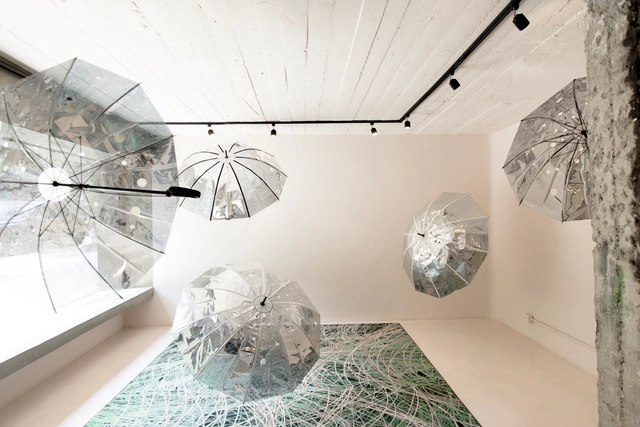
Vitrina opens the exhibition 'Rifletutti' by Inside Outside / Petra Blaisse

Located in the heart of this neighborhood, at Marsella #59, Vitrina arose from the desire to create a design-focused exhibition space that goes beyond commercial interests. Inspired by early 20th-century department store window displays, this exhibition fosters a dialogue between designers, pedestrians, and the neighborhood regarding recent trends in the design scene and how each designer expresses their vision.

Vitrina features a 1.60m x 3.60m street-facing window and a 35-square-meter area enclosed by a 2.30m-high curtain, aiming to serve as a transitional space between the street and the interior, design and the user, and the pedestrian and the city. Every six weeks, the work of two designers or collectives will be presented, fostering a dialogue or a conceptual confrontation. 

How Architectural Drawing—In All Its Forms—Can Help Us See the World Anew

Subscriber Access | 

What do architectural drawings do? Convey visual information about the design of buildings. This much is certain. They do much else besides. They can be idiomatic and ideological, they can express the personality of those who make them and by whatever means—charcoal, pencil, pen, or computer program. They can inspire, provoke and radicalize. They might be realistic or the stuff of fantasy. Or, of course, they can instruct those charged with building a three-dimensional representation of what they see on paper or, in recent years, on computer screens. Intelligence visible, they can also be art.

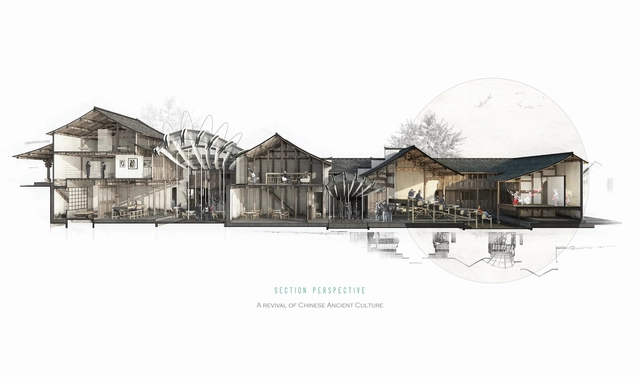
So, judging an open competition of architectural drawings from around the world, like The Architectural Drawing Prize, can only ever be an exercise in open-ended judgment even when these have been sorted into three technical categories: Hand-drawn, Digital, and Hybrid. How do we begin to compare Chris Raven’s intriguing digital analysis of Publicly Accessible Spaces in St Paul’s Cathedral with Xinyuan Cao’s almost fond cross-section through the Renovation of Denggao Village, two commended entries in the Digital Drawings category?

How Architectural Drawing—In All Its Forms—Can Help Us See the World Anew - Image 1 of 4How Architectural Drawing—In All Its Forms—Can Help Us See the World Anew - Image 2 of 4How Architectural Drawing—In All Its Forms—Can Help Us See the World Anew - Image 3 of 4How Architectural Drawing—In All Its Forms—Can Help Us See the World Anew - Image 4 of 4How Architectural Drawing—In All Its Forms—Can Help Us See the World Anew - More Images+ 4

Social housing project in downtown Porto Alegre is selected in an open call for technical assistance

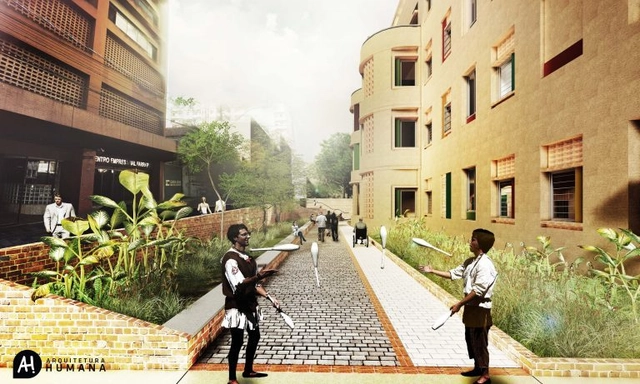
A federal building abandoned for decades may soon be rehabilitated to provide quality housing for socially vulnerable families in downtown Porto Alegre. This is the proposal of a project selected in the funding call for Technical Assistance for Social Interest Housing (ATHIS) programs by the Council of Architecture and Urbanism (CAU/RS). Made possible by the Architects' Union of the State of Rio Grande do Sul, the project aims to turn the building in the Floresta neighborhood into a decent home for approximately 40 low-income families.

Brasil Arquitetura Reveals How Building Recovery is About Meeting the Real Demands of Society

Subscriber Access | 

The Brasil Arquitetura office, formed in 1979, is an architect’s association led by Francisco Fanucci and Marcelo Ferraz, having executed emblematic projects such as the Yellow Quarter in Berlin, Germany, the Rodin Museum in Salvador, Bahia and the Praça das Artes in São Paulo, among many others. Both were very close to Lina Bo Bardi at important moments in her professional life, including the construction of Sesc Pompéia. In several projects, they faced the challenge of rehabilitating old buildings, such as the Museu do Pão, Praça das Artes, Rodin Museum and Sesc Pompéia itself. We spoke with the office to know more about this type of intervention.

São Paulo's Anonymous Architecture Captured by Alberto Simon

Subscriber Access | 

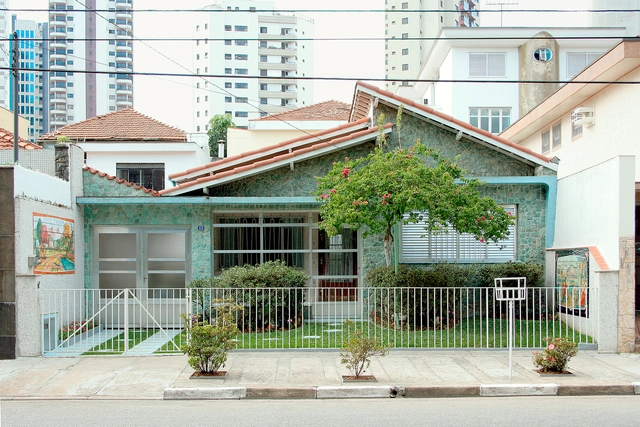
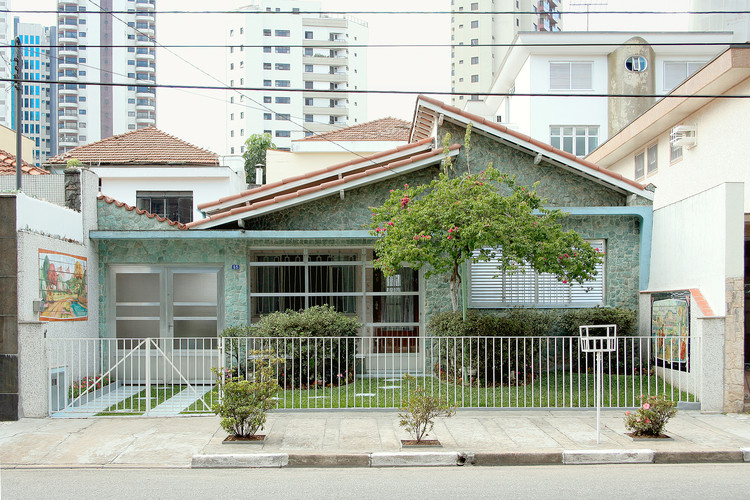
São Paulo's Anonymous Architecture Captured by Alberto Simon - Photography & ArchitectureSão Paulo's Anonymous Architecture Captured by Alberto Simon - Photography & ArchitectureSão Paulo's Anonymous Architecture Captured by Alberto Simon - Photography & ArchitectureSão Paulo's Anonymous Architecture Captured by Alberto Simon - Photography & ArchitectureSão Paulo's Anonymous Architecture Captured by Alberto Simon - More Images+ 26

Far from the noteworthy neighborhoods that often have buildings design by renowned architects, São Paulo's houses capture the modest scale that permeates the identity of its citizens. Alberto Simon, an artist based in the city of São Paulo, photographed the remarkable details of these unassuming housing in his project titled "tamanho_M," which roughly translates to Size M.

Find out more about the project in the artist's own words and see the impressive photos below.

These Are The 20 Most Livable Cities in the World in 2018

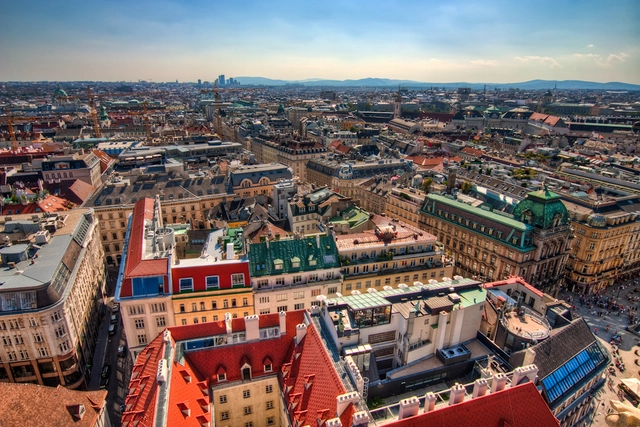
For the ninth consecutive year, Vienna has placed first in Mercer rankings on cities with the best quality of life in the world. Despite the current economic volatility in the European continent, the Austrian capital joins eight other European cities in the top ten.

This is the 20th edition of the Mercer Rankings. The consultancy, which specializes in advising multinational companies in the transfer of employees, evaluated more than 450 cities around the world. Their rankings take into account 39 factors divided into 10 categories, including political and economic environment, socio-cultural status, sanitation, educational and leisure opportunities, housing markets and natural disasters.

At the regional level, Vancouver (5th), Singapore (25th), Montevideo (77th) and Port Louis (83rd) are the highest ranking cities in North America, Asia, Latin America and Africa respectively. According to Mercer, the twenty cities with the best quality of life in the world are:

These Are The 20 Most Livable Cities in the World in 2018 - Image 1 of 4These Are The 20 Most Livable Cities in the World in 2018 - Image 2 of 4These Are The 20 Most Livable Cities in the World in 2018 - Image 3 of 4These Are The 20 Most Livable Cities in the World in 2018 - Image 4 of 4These Are The 20 Most Livable Cities in the World in 2018 - More Images+ 15

Dizzying, Abstract and Meticulous Worlds Created by Artist Benjamin Sack

Subscriber Access | 
Dizzying, Abstract and Meticulous Worlds Created by Artist Benjamin Sack - Image 5 of 4
I Am That I Hand. Image © Benjamin Sack

Perhaps as a form of "abstract urbanism," artist Benjamin Sack uses pen and paper to build cities and worlds that come to life as he draws. Towers and low-rise buildings merge together to form familiar yet unimaginably intricate cityscapes with complex spatial arrangements, and, in some cases, in human form. This brand of "abstract urbanism" introduces a provocative perspective on urban context and its relation to those who inhabit it.

BAAG: 'a search for discomfort and exploring the new is what drives us'

Subscriber Access | 

We spoke with Griselda Balian and Gastón Noriega, members of the Argentine architecture studio BAAG —Buenos Aires Arquitectura Grupal— a team that, through its understanding of the value of collective work, aims to make an exploratory contribution to the discipline.

David Gouverneur invites us to take charge of the design of new informal settlements

By 2050, an estimated 89% of Latin America's population will live in urban areas. This "need" to live in urban centers has brought about a growing inequality, manifested in a lack of access to basic services and homeownership.

In this context, Venezuelan-American David Gouverneur, a professor in the Department of Landscape Architecture and Regional Planning at the University of Pennsylvania in Philadelphia, uses his book Diseño de nuevos asentamientos informales (Design of New Informal Settlements) to call for greater awareness of the need to address and study informality in our cities, recognizing it as an unavoidable reality.

ODA Unveils Images of Bamboo-Inspired "Dragon Gate" for New York's Chinatown

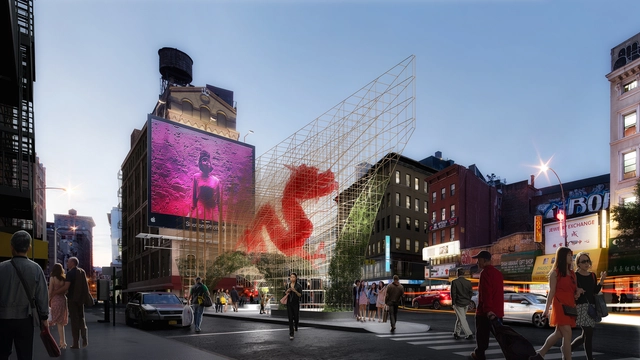
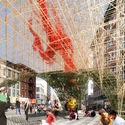
ODA New York has released images of its proposed “Dragon Gate” pavilion for New York’s Chinatown, seeking to act as a symbolic gateway to the famous Manhattan neighborhood. Using modern materials and forms to invoke symbols of traditional Chinese culture, the scheme seeks to capture Chinatown’s remarkable duality: a community of tradition resistant to change, yet one regarded as a uniquely contemporary phenomenon showcasing New York’s inclusive diversity.

Situated on a triangular traffic island at the intersection of Canal, Baxter, and Walker Streets, ODA’s scheme seeks to activate a currently-underused pedestrian space. The Dragon Gate consists of a triangular form adhering to a three-dimensional, gridded structure formed from interwoven, tubular, bronze steel inspired by bamboo scaffolding. As the structure densifies, selected pieces will be painted red to create the illusion of a dragon in mid-flight.

ODA Unveils Images of Bamboo-Inspired "Dragon Gate" for New York's Chinatown - Image 1 of 4ODA Unveils Images of Bamboo-Inspired "Dragon Gate" for New York's Chinatown - Image 2 of 4ODA Unveils Images of Bamboo-Inspired "Dragon Gate" for New York's Chinatown - Image 3 of 4ODA Unveils Images of Bamboo-Inspired "Dragon Gate" for New York's Chinatown - Image 4 of 4ODA Unveils Images of Bamboo-Inspired Dragon Gate for New York's Chinatown - More Images

7,500 Barrels To Feature in Christo's First UK Outdoor Public Sculpture

Artist Christo has released images of his proposed temporary sculpture for Hyde Park, London, to become his first major outdoor public sculpture in the United Kingdom. Titled “The Mastaba (Project for London, Hyde Park, Serpentine Lake)," the sculpture will consist of 7,506 horizontally-stacked barrels floating on the Serpentine Lake throughout the summer of 2018.

“The Mastaba” will coincide with an exhibition of Christo and Jeanne-Claude’s work at the Serpentine Galleries, featuring sculptures, drawings, collages and photographs spanning more than 60 years. Supported by Bloomberg Philanthropies, the exhibition will be the artists’ first in a UK public institution since 1979 and will showcase their long-running exploits with barrel forms, chosen initially for their sculptural effect and low cost.

7,500 Barrels To Feature in Christo's First UK Outdoor Public Sculpture - Sustainability7,500 Barrels To Feature in Christo's First UK Outdoor Public Sculpture - Sustainability7,500 Barrels To Feature in Christo's First UK Outdoor Public Sculpture - Sustainability7,500 Barrels To Feature in Christo's First UK Outdoor Public Sculpture - Sustainability7,500 Barrels To Feature in Christo's First UK Outdoor Public Sculpture - More Images+ 2

Urbanism in permanent beta

Subscriber Access | 

We are witnessing a historic moment, standing at the dawn of an inevitable epochal shift. The economic, social, energy, and ecological crises in which we are immersed are some of its most evident symptoms. However, we must confront this bleak context from an optimistic perspective, viewing it as an opportunity to subvert the old paradigms that have led us to this dramatic situation.

But how do we prepare to face the urban challenges of a future that begins today? We certainly cannot do so by relying on outdated frameworks and tools; as Einstein famously said, “We need new ways of thinking to solve the problems created by old ways of thinking.”

Oops! We don't have this page.

But you can browse the last one: 417

You've started following your first account!

Did you know?

You'll now receive updates based on what you follow! Personalize your stream and start following your favorite authors, offices and users.