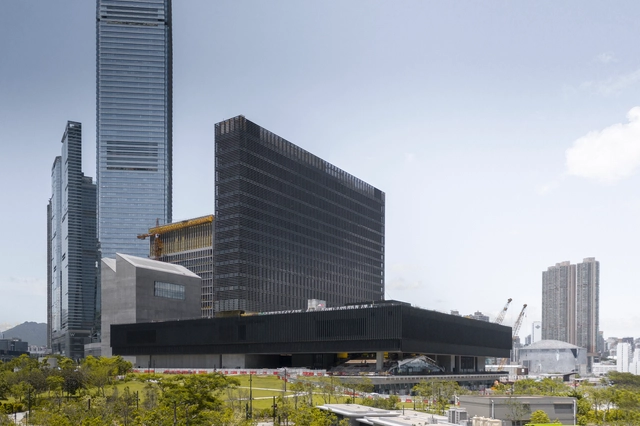
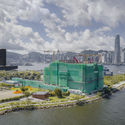
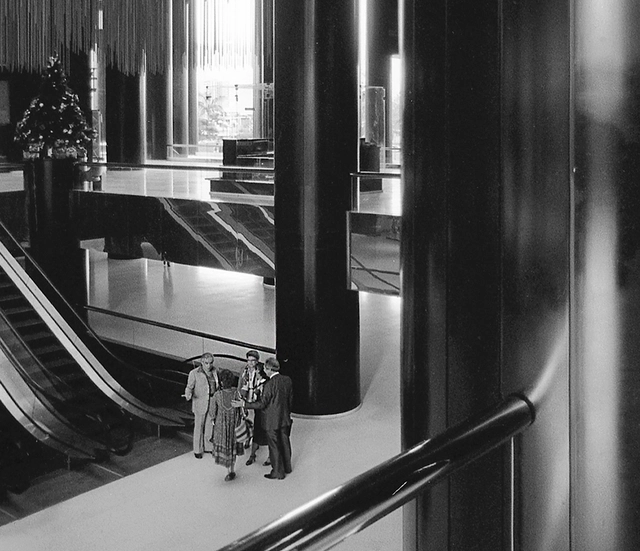
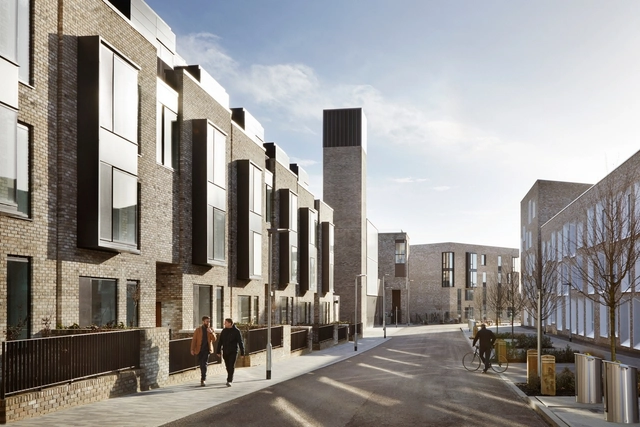
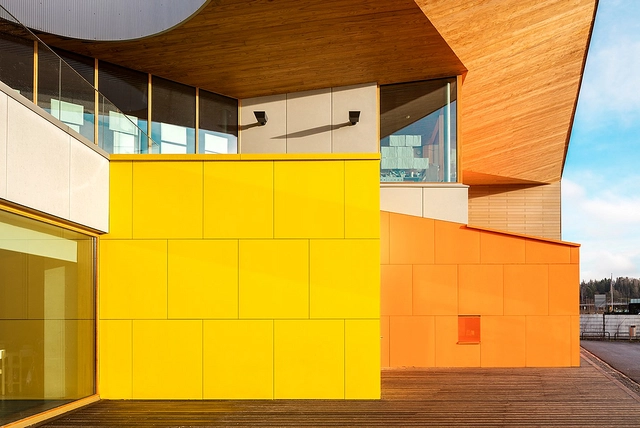
Photographer Kris Provoost has captured new images of Herzog & de Meuron's M+ Museum in Hong Kong. Focusing on 20th and 21st century art, design, architecture and moving image, M+ will be the centerpiece of the West Kowloon Cultural District, and a key venue in creating interdisciplinary exchange between the visual arts and the performing arts in Asia.
Smart homes, the Internet of Things, and contactless technology have become an indelible part of the architecture and interior design industries, with automated lighting, smart HVAC units, and speakers like Alexa or Google Home becoming a principal part of the modern upper middle class home. As new devices and competing systems are continually released, we list some of the most popular home technologies developed by Lutron, alongside tips for how to integrate and choose among them.
https://www.archdaily.com/941241/how-to-design-a-smart-and-contactless-homeLilly Cao
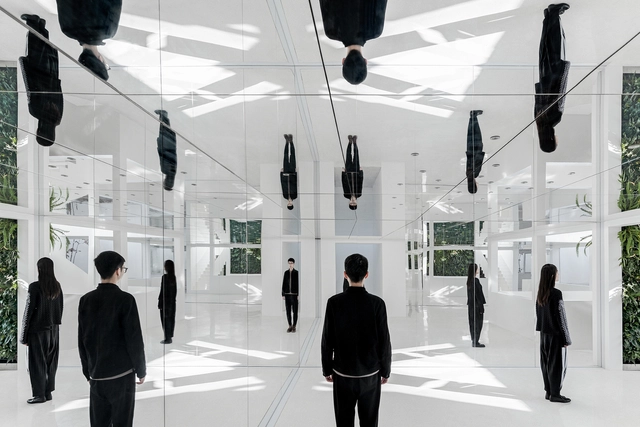
Humans have used mirrors since as early as 600 BCE, employing highly polished obsidian as a basic reflective surface. Over time, people began to use small pieces of gold, silver, and aluminum in a similar manner, both for their reflective properties and for decoration. By the 1st century CE, people had started using glass to make mirrors, but it was only during the European Renaissance that Venetian manufacturers began making mirrors by applying metallic backings to glass sheets, remaining the most common general method of mirror manufacturing today. Since then, mirrors have continued to play both a decorative and functional role in architecture, serving a clean, modern aesthetic despite its ancient origins. Below, we investigate how mirrors are made, provide a brief history of mirrors in architecture, and offer several tips for architects looking to use mirrors in their designs.
https://www.archdaily.com/942109/mirrors-in-architecture-possibilities-of-reflected-spaceLilly Cao
In the rage, furor, and sorrow that followed the murder of George Floyd, one voice in the architecture community managed to put the nation’s centuries-overdue reckoning with race into the larger context of the built environment. Earlier this month, CityLab published architect Bryan C. Lee Jr.’s essay “America’s Cities Were Designed to Oppress,” an impassioned polemic on design and race that also had the great virtue of offering up specific solutions.
Lee is the founder and design principal of Colloqate, a New Orleans–based design and public advocacy firm that was named an Emerging Voice in 2019 by the Architectural League of New York. Colloqate led the Paper Monuments project in 2017, a public art and public history campaign that was launched in conjunction with the successful fight to remove the Confederate statues in New Orleans. In addition to its advocacy work, the firm is currently working on architectural projects in Portland, Toronto, and New Orleans. Last week I talked with Lee about his essay, the charged moment that we’re in, and where the nation goes from here.
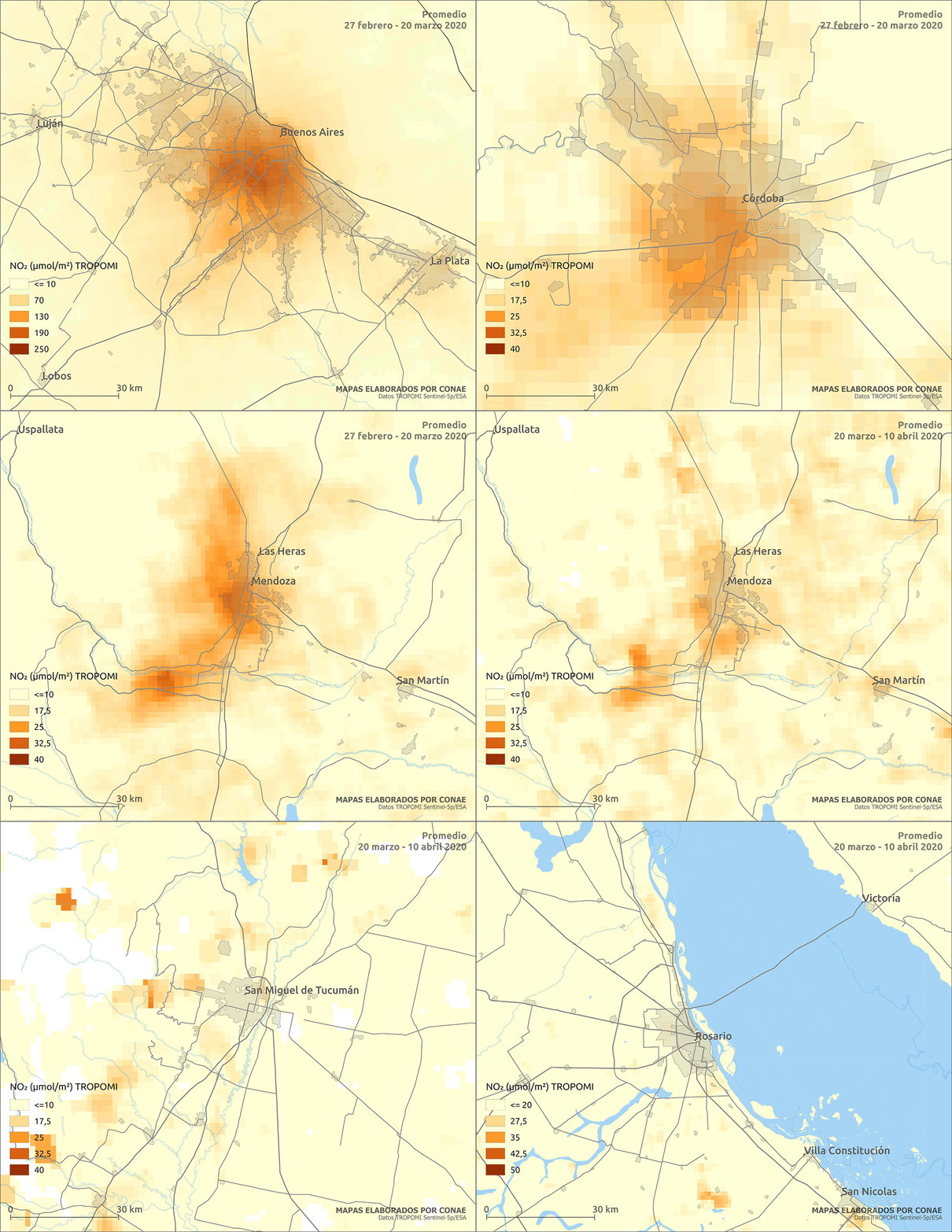
The levels of air pollution reached by major urban centers around the world in recent years reveal the troubled relationship we have maintained—and continue to maintain—with our environment. The gravity of the issue lies in the fact that this not only affects the overall balance of the planet, but according to the World Health Organization, the current state of the atmosphere also causes, through the simple act of breathing, the death of around seven million people each year. Shortly after governments in various countries announced measures to prevent the spread of the coronavirus—lockdowns and isolation—numerous studies began to show an unexpected and promising trend: air pollution levels in many cities began to drop significantly within days of the measures being announced due to reduced traffic and a decline in industrial emissions.
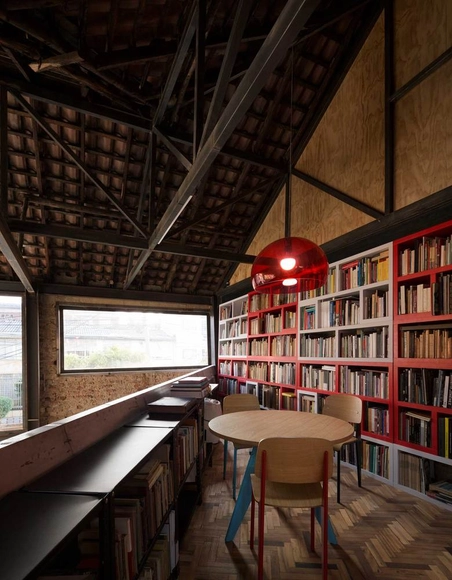
Bookshelves are one of the elements present in almost every interior space, whether in homes, retail, offices, or even pavilions. Yemail Arquitectura, a Bogotá-based firm, shares its exploration of this element, which plays a key role in the spatial configurations of its multi-use projects.
The development of digital interfaces, combined with the daily bombardment of advertising images, increases the demand for clarity—a clarity we tend to take for granted. This is what Baudrillard called the "world of hypervisibility." Art, however, can offer a slowing down of perception, pointing us to deeper dimensions of experience where speed becomes delay.
Guilherme Wisnik talks with Michael Wesely, a German art photographer best known for his photos of cities, buildings, and landscapes taken with a special ultra-long exposure technique. From 1986 to 1988, Michael Wesely attended the Bayerische Staatslehranstalt für Photographie in Munich before studying at the Munich Academy of Fine Arts.
Architecture is a discipline deeply connected to the perception and construction of space, and could be introduced in early childhood education. With this in mind, the architects at Studio dLux proposed the Bird House project, a workshop for elementary school children designed to introduce the design and construction processes of a birdhouse.
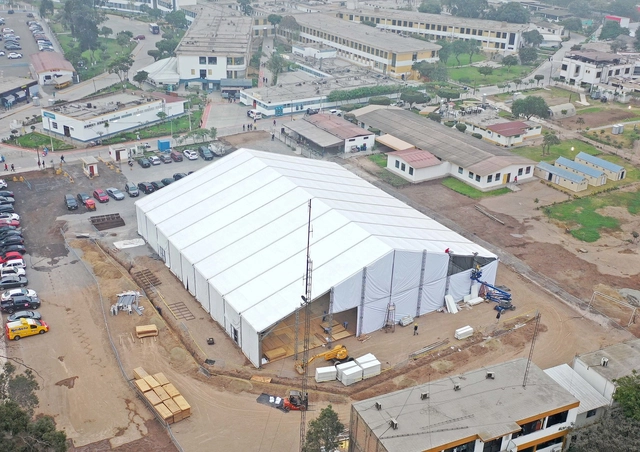
In recent months, Legado Lima 2019 has become one of the key organizations collaborating in the fight against the coronavirus pandemic in Peru. Thanks to hosting the Pan American and Parapan American Games in 2019, the country was able to apply lessons learned in infrastructure, equipment, protocols, and operations to combat COVID-19, repurposing and transforming modern infrastructure—originally built to host the continent's largest multi-sport event—to confront the pandemic.
Techniques in visualization have evolved significantly over the years, providing increasingly accurate depictions that give architects a realistic view of their work before the foundation is even laid. For architects and the people they work with, the goal of a visualization is to illustrate the qualities and characteristics of a three-dimensional space that has yet to be built or is in the process of being constructed, by using hand or computer drawn images, videos, and even virtual reality platforms. All of these tools serve as a way of bringing an idea to life, whether for clients or judges in an architectural competition.
During the peak of Postmodernism, and the uprising of notions such as urban renewal and public participation, Aedes Architecture Forum, the first private architecture gallery in the world, opened in 1980 in Berlin. Founded by Journalist Kristin Feireiss and Helga Retzer, both neither architects nor regularly engaged with architecture at that time, Aedes aspired to encourage an international dialogue around the subjects of urban environment, space, and society.
Shortly after its inception, the center became an integral part of the contemporary international architectural scene, carrying out debates, seeking fresh ideas, showcasing the avant-garde, and highlighting young talents. Providing architects with a compelling space to present their architectural and urban ideas, Aedes hosted exhibitions for Zaha Hadid, Venturi Scott Brown, Cedric Price, John Hejduk, OMA (Office for Metropolitan Architecture), Peter and Alison Smithson, and Bernard Tschumi to name a few.
The American Institute of Architects (AIA) has just released strategies, illustrations, and 3D design models in order to help reduce the risk of COVID-19 in schools. In an effort to assist education officials with reopening schools during the pandemic, the design guidelines are part of the AIA’s initiative “Reopening America: Strategies for Safer Buildings”.
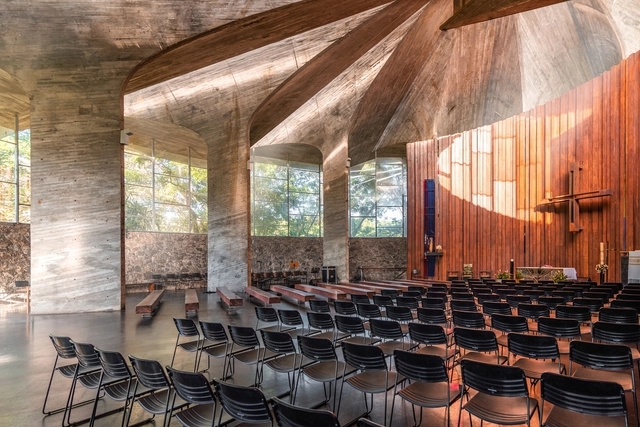
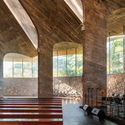
Architectural photographer Guilherme Pucci shared with us a series of images of the Ascension of the Lord Church at the Bahia Administrative Center, designed by João Filgueiras Lima, known as Lelé. Completed in 1975, this classic of Brazilian architecture reveals Lelé's design sensitivity, visible in how the building integrates with the site's topography, the quality of the materials used—concrete, glass, wood, and stone—and the tension created by light and shadow within the church.
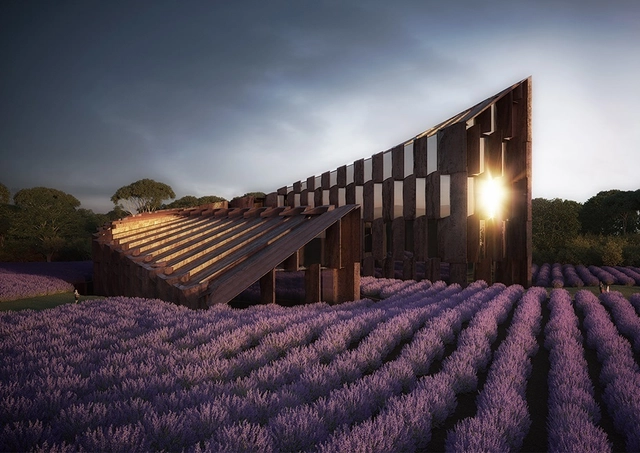
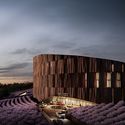
Hachem Architects have designed a new $65 million hotel within a lavender farm in Australia's Yarra Valley. Design as a boutique retreat, the project will also include a facility for infusing lavender into gin. Dubbed Voco, its horseshoe layout is focused towards the Valley’s views and wraps itself around a private courtyard. The design was made to capture the imagination of a new generation of travelers.
Videos
Project: Quatuor, Brussels, Belgium designed by Jaspers-Eyers Architects and developed by Befimmo. Image Courtesy of DeMicoli & Associates
The exchange of ideas and concepts is a major part of any large modern building project. Architects, investors, general contractors and sub-contractors all use different tools to form both mental and modeled images of what the end result will look like. When some parties rely on renders or fly-throughs and others use 2D drawings, it can lead to communication difficulties. Reynaers discovered that by bringing together collaborators from different disciplines in its Avalon, the fog of misunderstandings evaporates and difficult decisions can be made on the spot.
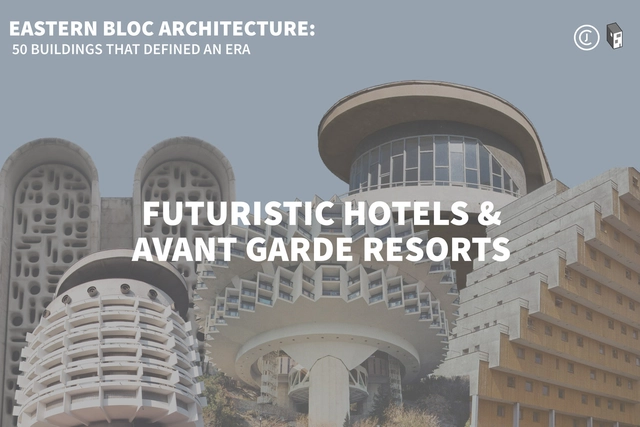
This article is part of "Eastern Bloc Architecture: 50 Buildings that Defined an Era", a collaborative series by The Calvert Journal and ArchDaily highlighting iconic architecture that had shaped the Eastern world. Every week both publications will be releasing a listing rounding up five Eastern Bloc projects of certain typology. Read on for your weekly dose: Futuristic Hotels and Avant-Garde Resorts.
https://www.archdaily.com/942248/eastern-bloc-architecture-futuristic-hotels-and-avant-garde-resortsLucía de la Torre
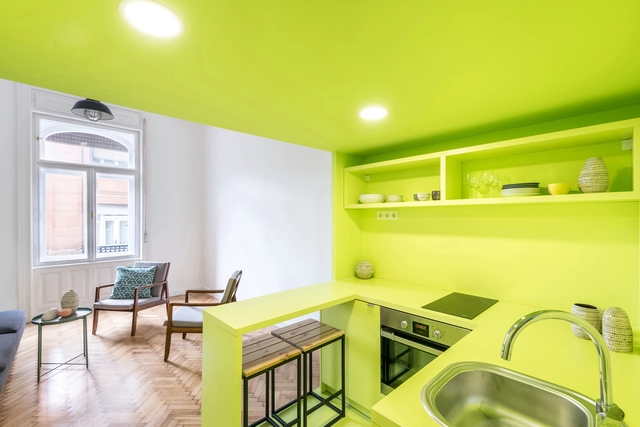
A monochrome environment is a space in which most architectural elements are of a single color. Although it is common for architects to design black or white monochromatic spaces due to its neutrality, it is possible to use almost any color to design a space, taking advantage of their infinite tones, undertones, and shades.
"Volumen virtual suspendido" de Jesús Rafael Soto, Centro Benaven, Chuao, Caracas, 1984. Image Cortesía de ArchivoFotografíaUrbana | Fotografía de Ramón Paolini del fotolibro "Caracas. A doble página"
Through a visual survey, architect and photographer Ramón Paolini explores the evolution of Caracas (Venezuela). The photographs capture the capital's transformation throughout the past forty years, giving viewers an in depth look at one of Latin America's most tumultuous regions, its urban development, and the socio-political aspects behind it. Most importantly, Paolini illustrates his personal vision for this urban space that builds, destroys, and rebuilds with an astounding tenacity.
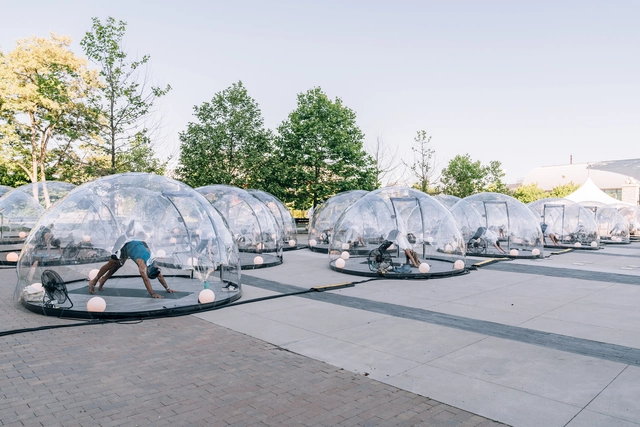
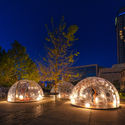
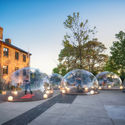
A new pop-up intervention installs 50 private, clear, frameless, geodesic domes in the open spaces of Toronto, Canada. Created by Lmnts Outdoor Studio, the project aims to bring Yoga and fitness workouts safely, to an outdoor setting, while respecting social distancing measures.
Pisa, Italy. Photo by Starbuck Powersurge. CC BY-NC-ND 2.0 License
The Eiffel Tower, designed and built for the 1889 Paris Exposition Universelle, celebrated new industrial methods and materials, alongside the innovation of high-rise construction. Although only one platform was completed in time for the exposition, the tower already offered visitors an aerial view of the city. This was particularly compelling at a time when the recent Reforms of Paris (1853–1975) by Baron Haussmann, with his rational, innovative, and controversial urban plan, were being celebrated.
The PHVision Masterplan for Heidelberg in Germany has been approved by the City Council. Located on the site of the Patrick-Henry-Village (PHV) in Heidelberg, the 100-hectare development, designed by KCAP can now move forward, transforming the former military area into a new quarter, establishing the knowledge city of the future.
The Royal Institute of British Architects (RIBA) has published guidance to help practices navigate recovery from the COVID-19 crisis. The Recovery Roadmap is divided into three phases: Response, Recovery and Resilience. Each phase considers a series of actions that practices can take to respond to challenges across different areas of their business throughout this crisis and beyond.
Panelized facade systems are a popular exterior design element across multiple project types in today’s architecture. Different material and color options create unique and completely customized exteriors versatile enough to fit almost any design style. Ensuring the vision comes to life exactly as imagined, however, can be tedious with Revit’s or ARCHICAD’s innate capabilities alone. The time-consuming manual process of specifying the design, pattern, colors, and fabrication methods of a panelized facade can be simplified and made more intuitive with Steni’s BIM elements.
New Generations is a European platform that analyses the most innovative emerging practices at the European level, providing a new space for the exchange of knowledge and confrontation, theory, and production. Since 2013, New Generations has involved more than 300 practices in a diverse program of cultural activities, such as festivals, exhibitions, open calls, video-interviews, workshops, and experimental formats.
New Generations has launched a fresh new media platform, offering a unique space where emerging architects can meet, exchange ideas, get inspired, and collaborate. Recent projects, job opportunities, insights, news, and profiles will be published every day. The section ‘profiles’ provides a space to those who would like to join the network of emerging practices, and present themselves to the wide community of studios involved in the cultural agenda developed by New Generations.
ArchDaily and New Generations join forces! Every two weeks ArchDaily publishes a selection of studio profiles chosen from the platform of New Generations.