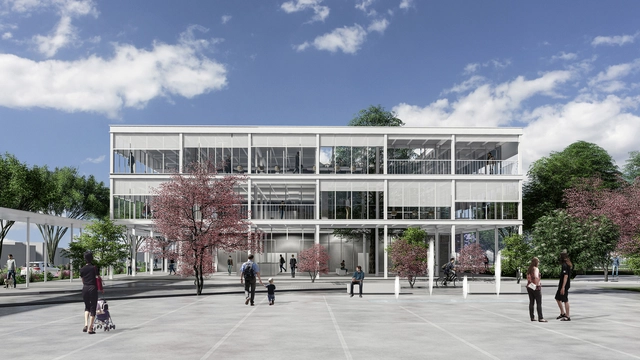
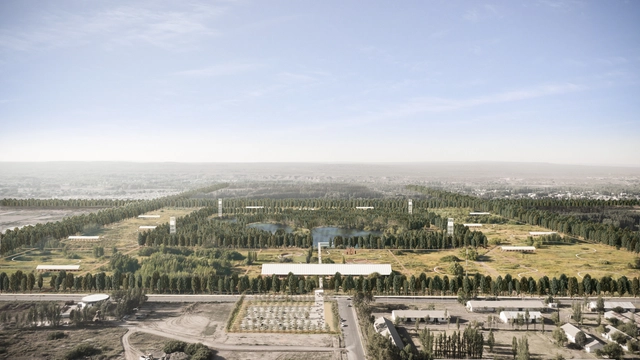
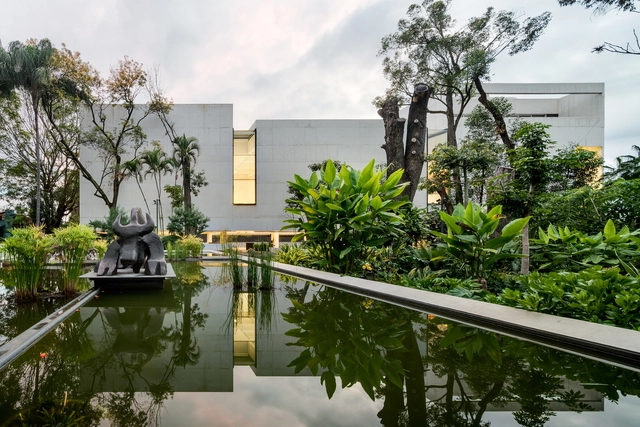
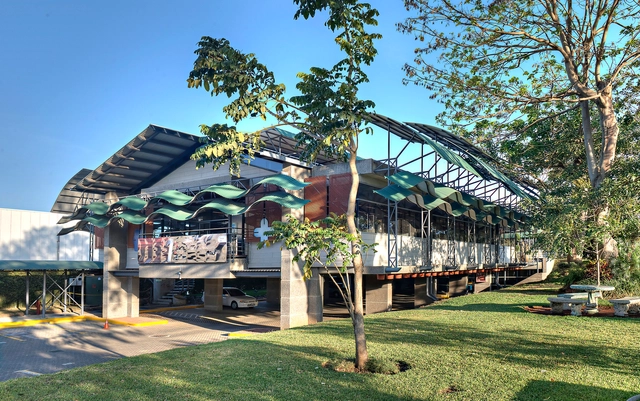
Organized by the College of Architects of the Province of Córdoba (CAPC) and sponsored by the Argentine Federation of Architects' Associations (FADEA), the Provincial Ideas Competition was held for Freyre Central Park, located on the former grounds of the Argentine Central Railway in the town of Freyre, Córdoba, Argentina.
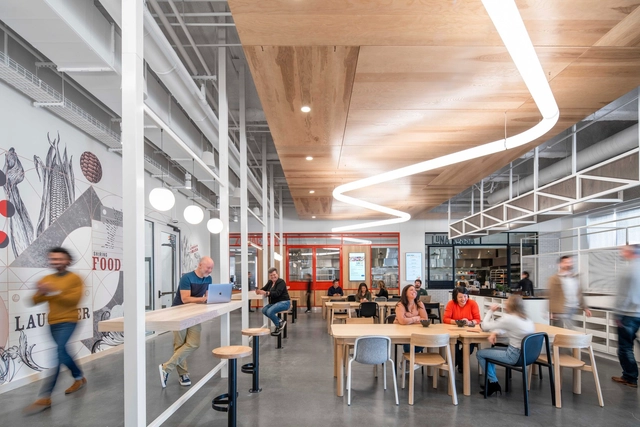
As part of a research project by the Gensler Research Institute, the first Gensler Mexico Workplace Survey was conducted in late 2022. The study aimed to highlight the fundamental role the office plays in facilitating face-to-face meetings with colleagues and clients. The findings presented below reveal key shortcomings in current office workspaces. Furthermore, they foster a better understanding of the characteristics that make workplaces efficient, functional, and engaging, offering insights to rethink user experience design. Ultimately, this presents a clear opportunity to enhance both individual and collaborative work.
Primer Premio. Image Cortesía de FARO Arquitectura
The Government of the Province of Neuquén, along with Region 1 of the Neuquén Association of Architects (CAN) and the Argentine Federation of Architects' Organizations (FADEA), launched a national competition for ideas and preliminary designs for the Neuquén Memory and Identity Park. The park will be developed on a four-lot federal plot belonging to the Argentine National Army in this region of Argentine Patagonia.
Photo by American Public Power Association on Unsplash
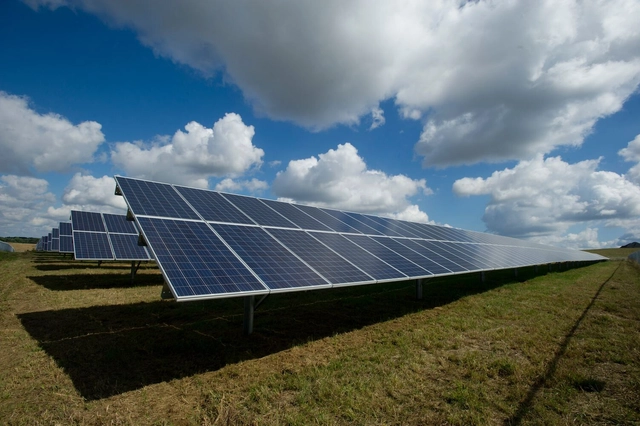
According to the Ministry of Development, Industry, Commerce, and Services (MDIC), President Luiz Inácio Lula da Silva signed Decree No. 11,456, which updates and expands the Support Program for the Technological Development of the Semiconductor Industry (PADIS). The program now includes the photovoltaic sector, focused on solar energy production.
https://www.archdaily.com/1136026/government-eliminates-federal-taxes-on-solar-panels-until-2026ArchDaily Team
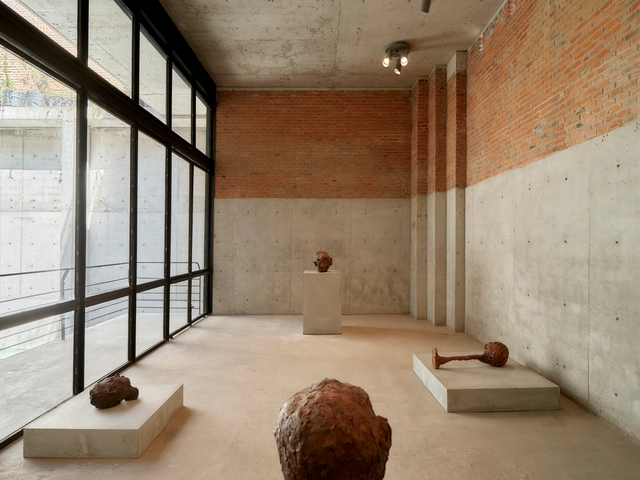
The artistic practice of Bosco Sodi has opened a new space in Mexico City that houses Sodi's new studio while serving as an extension of the Fundación Casa Wabi. This venue, named Sabino 336, was first unveiled during Art Week 2023, coinciding with Sodi's exhibition "Alabanzas" at the Galería Hilario Galguera. Curated by Dakin Hart, the exhibition showcased works from the artist's personal collection.
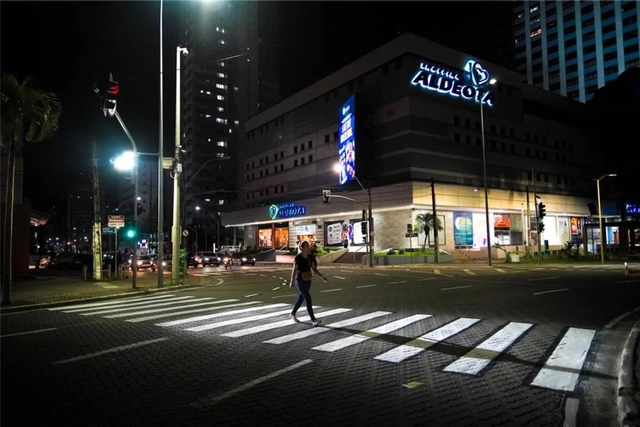
It is the first city in Latin America to implement the system. Photo: Daniel Calvet | Fortaleza City Hall
Fortaleza, the capital of Ceará, has just implemented an intelligent lighting model for crosswalks. Installed at the Praça Portugal roundabout, in the middle of the intersection of two of the city's major roads, the system could help reduce traffic accidents.
Powered by artificial intelligence, the system is capable of detecting human presence based on movement. When the dynamic lighting is activated, light beams track pedestrians from the start to the end of the crosswalk. The light improves driver visibility, especially at this specific location, where vehicles navigate a curve.
Marking its first hybrid (online and in-person) edition, the 3rd International Facade Forum 2023 will take place on April 26. Broadcasting from Mexico City, the event will feature 15 lectures by international speakers under the academic direction of Marshall Academia de Fachadas (Bill Marshall and Karina Tarrisse) and organized by the Sarzabal agency (Hernán Barbero Sarzabal and Maui Cittadini), alongside Daniela Ruiz de Chávez, who is managing the organization in Mexico.
Image: National Archives and Records Administration
In 1906, a major earthquake struck San Francisco, California. The initial shock damaged buildings throughout the region. Yet the worst was still to come, as fires broke out in collapsed buildings, in some cases sparked by ruptured gas lines.
Over the next four days, a conflagration swept through more than half of the city, consuming over 4.7 square miles of the downtown area, destroying 28,188 buildings, killing more than 3,000 people according to the official count, and leaving between 227,000 and 300,000 people homeless (out of a total population of 410,000).
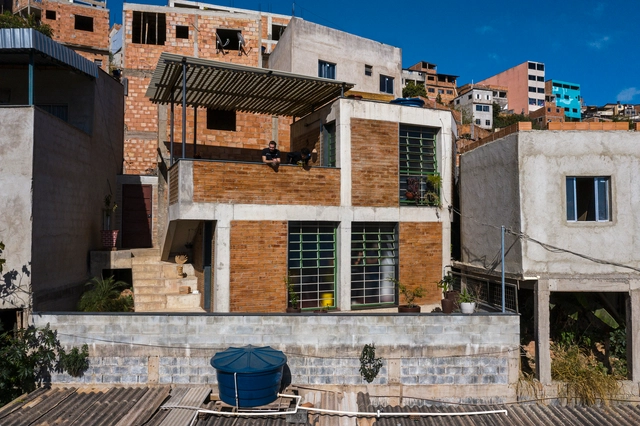
Reflecting on contemporary housing is perhaps one of the most compelling and relevant undertakings of our time. In a rapidly changing world—where technology advances at a breakneck pace, populations grow, and resources become increasingly scarce—it is vital to reconsider how we live and how we can do so better.
Last week, we announced the 15 finalists for the 2023 Building of the Year, an award celebrating the best of Portuguese-speaking architecture by inviting our readers to select their favorite projects built in Portuguese-speaking countries. The day has come to reveal the winners of the 2023 ODA.
Transportation connects us. It is how we get to school and work, visit our families, and access grocery stores and healthcare services. It is also how we ship and receive goods and services. As economies and populations grow, so does the need for efficient, accessible, and sustainable transportation options.
https://www.archdaily.com/1136401/5-changes-to-transform-transportation-and-meet-climate-goalsWRI Brasil
Moving from a country with four distinct seasons to a tropical climate in 1973 was a transformative life experience; in the practice of architecture, it required adapting to a completely new reality. Engaging with the customs and habits of the life that welcomed us, alongside the vernacular architecture we encountered, signaled that our design methodology had to change in order to integrate this new world, with its unique climate and way of living.
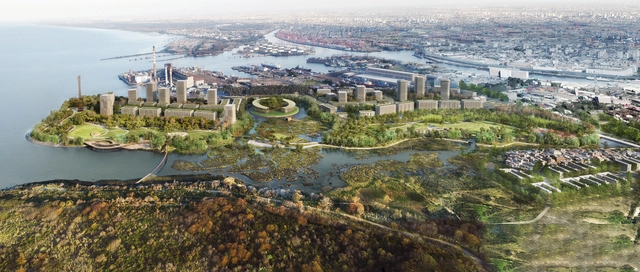
Primer Premio. Image Cortesía de PALO arq + WEST 8 junto a la asesoría de Lucia Bocchimuzzi y Manuela Garcia Faure
The National Ideas Competition for "Buenos Aires and the River – Costa Urbana Public Park" was organized by the Government of the City of Buenos Aires (GCBA) in collaboration with the Central Society of Architects (SCA) and sponsored by the Argentine Federation of Architecture Entities (FADEA). Given its non-binding nature, its primary goal is to reconnect the city of Buenos Aires with the river through an accessible waterfront designed to expand and link public green spaces, while fostering a sustainable relationship with the riparian environment.
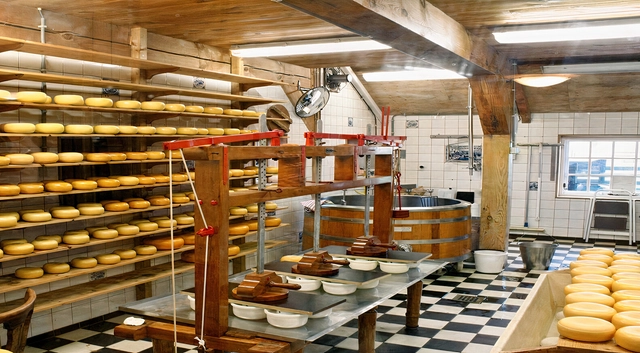
On Wednesday (29), the National Institute of Historic and Artistic Heritage (Iphan) formally presented the nomination of the Artisan Minas Cheese-Making Practices to the Representative List of the Convention for the Safeguarding of the Intangible Cultural Heritage of Humanity, through the Permanent Delegation of Brazil to UNESCO (Brasunesco). The list comprises intangible cultural assets that are considered representative of global cultural diversity and require protection and appreciation.
https://www.archdaily.com/1135897/minas-cheese-could-join-the-intangible-cultural-heritage-of-humanity-listArchDaily Team
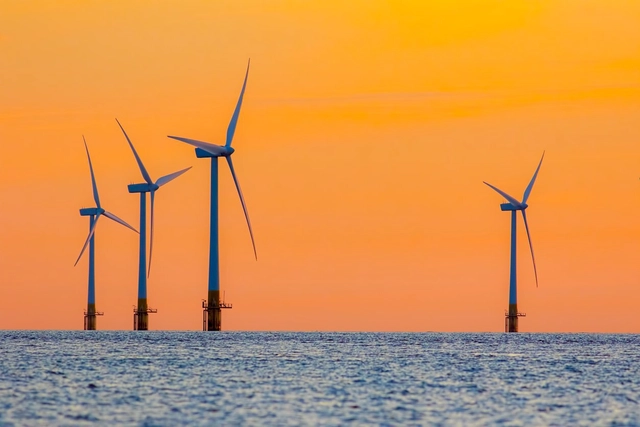
As of February this year, Brazil has 890 wind farms installed across 12 states. These facilities represent 25.04 gigawatts (GW) of installed capacity in commercial operation, benefiting 108.7 million people.
Of this total, 85% are located in the Northeast region. According to the Brazilian Wind Energy Association (Abeeólica), by 2028 Brazil will have 44.78 GW of installed capacity of this energy source, whose share in the national energy mix currently stands at 13.2%. Today, wind power already accounts for 20% of the energy generation needed by the country.
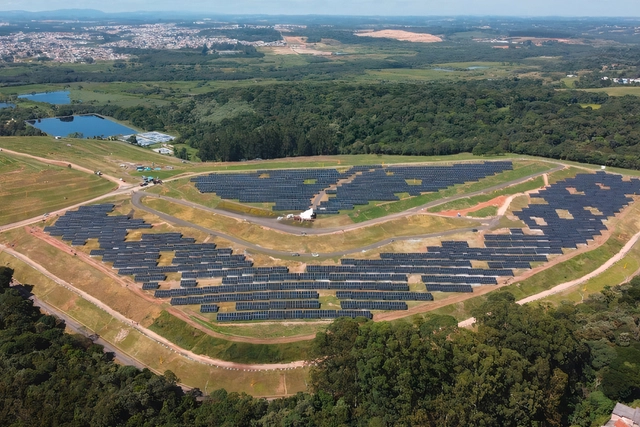
A solar power plant built on top of the Caximba landfill, which was decommissioned in 2010, is the new symbol of Curitiba. Nicknamed the “solar pyramid” due to its shape, the plant has an installed capacity of 4.55 megawatts (MW) and was inaugurated last Wednesday (29) during the city's 330th anniversary celebrations.
The project is part of “Curitiba Mais Energia,” one of the city's initiatives to combat and mitigate climate change by producing renewable energy. The municipality will reduce the emission of 2,000 tons of CO2 into the atmosphere, helping meet the city's greenhouse gas reduction targets.
It is well known that Barragán was not interested in theorizing about his own work. He preferred to leave the interpretation of his architectural practice to others. However, among the few texts he did write to articulate his professional philosophy, there is one of particular interest.
Videos
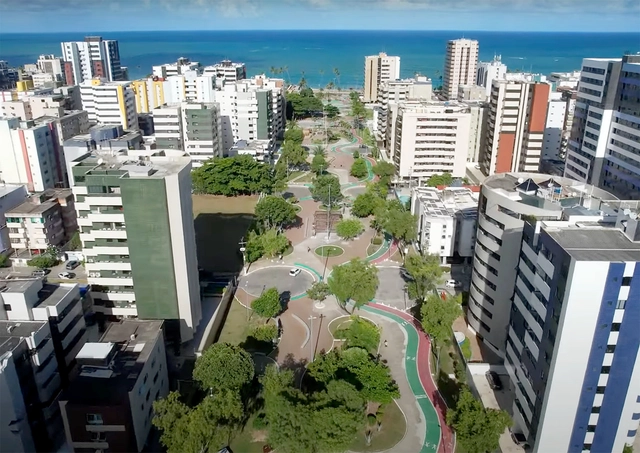
Panoramic view of Corredor Vera Arruda. Image via Tribuna Hoje
This is not the first article to address this, nor will it be the last. Numerous studies and pieces have pointed out the inconsistency of promoting car-centric urban policies as mobility solutions. I myself wrote in 2021 about the need to stop building overpasses and claiming they will solve mobility issues. Recently, however, Maceió’s Municipal Transport and Traffic Department (SMTT), a local government agency, launched a public consultation to gather feedback on opening streets within the city's largest linear park, the Vera Arruda Corridor. The proposal aims to improve "mobility" and "traffic flow" in an area that "suffers" from rush-hour congestion.
https://www.archdaily.com/1136452/maceio-can-opening-streets-in-a-park-improve-trafficRuan Victor Amaral
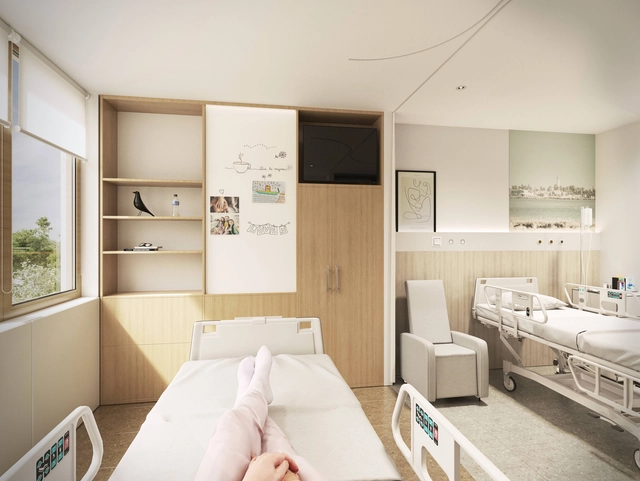
Under the name "Comfort Room: The Empathic Room," PMMT Arquitectura presents a new double inpatient room model designed to improve the patient experience by putting people at the center of the design process. Already implemented at the Nou Hospital Evangèlic in Barcelona, the firm has made the plans available to architects and other professionals. These can be downloaded for free from their website, allowing this new layout to be implemented in projects while fostering interdisciplinary collective intelligence.
Today, it is essential to integrate strategies that help limit the emissions generated by buildings over their lifespan into design and functionality concepts to mitigate climate change. Consequently, reducing embodied carbon in construction has become an urgent priority, and industry professionals are increasingly taking this into account to build with a smaller carbon footprint, alongside the principles of circularity, sustainable development, and energy efficiency.
Beyond Club. Courtesy of aflalo/gasperini arquitetos
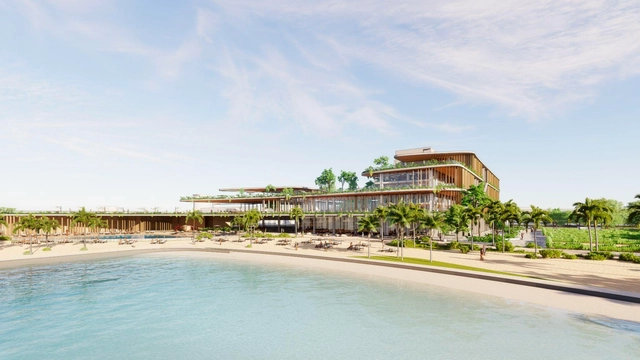
Surfers in São Paulo will no longer need to travel to catch a wave. Scheduled to open in 2025, Beyond The Club is a sports and wellness complex featuring an artificial wave beach. Designed by the firm aflalo/gasperini arquitetos, the club will feature, in addition to the wave pool and sandy beach, a sports complex with beach tennis and tennis courts, a gym, a spa, an indoor skate park, and three restaurants.
The club will occupy the site of the former Hotel Transamérica, located near Marginal Pinheiros in the city's south zone, which was designed by the firm's first generation in the 1980s.
https://www.archdaily.com/1135969/sao-paulo-to-get-an-artificial-beach-designed-by-aflalo-gasperini-arquitetosArchDaily Team
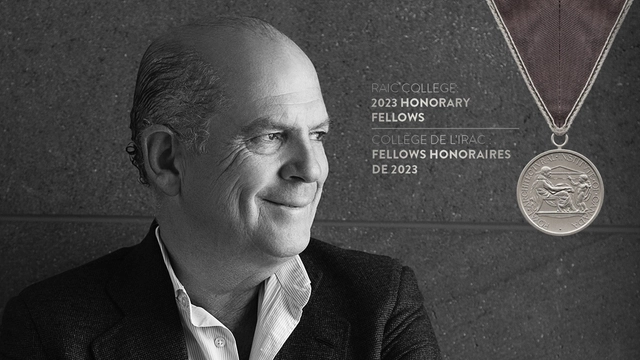
Through a press release, Mexican firm Sordo Madaleno Arquitectos has announced that architect Javier Sordo Madaleno Bringas has been named an Honorary Fellow of the Royal Architectural Institute of Canada (RAIC). He is one of four selected professionals, alongside David Hughes, Tokunbo Ómisorè, and Sumayya Vally, who have significantly influenced the practice of architecture worldwide, exemplifying the tremendous impact that architects have not only on the built environment but also on public life and the world around them.
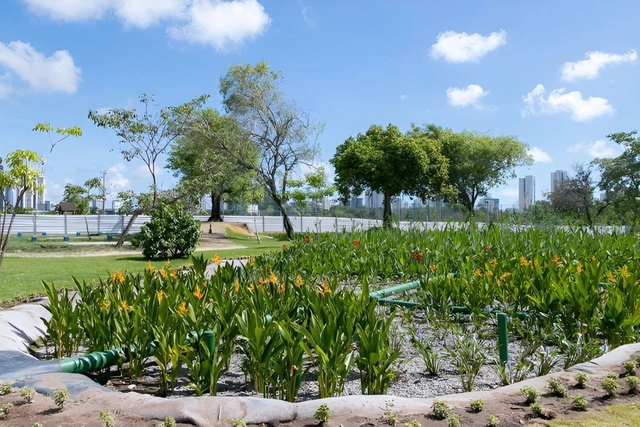
The system uses native aquatic plants to filter pollutants. Photo: Giselle Cahú | ARIES/CITinova
A nature-based solution to clean up a tributary of the Capibaribe River will be implemented in Recife, Pernambuco. Known as filtering gardens, the system consists of a group of native aquatic plants that will filter the mouth of the Cavouco Stream. Considered a sustainable and low-maintenance technology, the filtering gardens will be installed along the section where the stream flows through Caiara Park in the western zone of the capital, where about 10% of the polluted water flow will be treated.
https://www.archdaily.com/1135887/recife-to-build-a-7000-m2-filtering-garden-to-clean-up-a-streamArchDaily Team
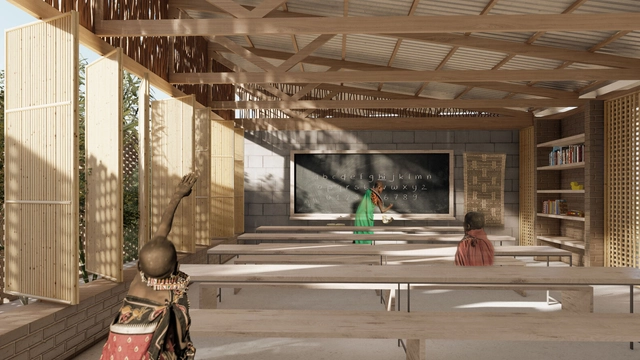
Primary School in Hiddi, by Eduardo Baptista Lopes, Gabriela Pretzel, and Lucas Heidenreich
Architectural competitions have long been used to select the best designs in a viable, fair, and democratic manner, regardless of their purpose. In Brazil, the Institute of Architects of Brazil (IAB) stands out, having represented the country's architects for over a century and strongly advocating for the popularization and formalization of competitions as the primary method for commissioning public works—whether for architecture, urban planning, or landscape design. These competitions ensure that public authorities contract the best project, rather than simply the cheapest, which is common in price-based competitive bidding.
https://www.archdaily.com/1136254/learning-architecture-through-competition-an-academic-experience-in-design-competitionsEduardo Baptista Lopes