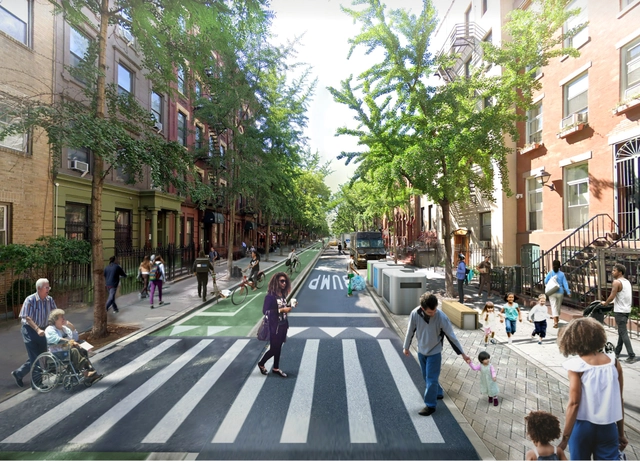
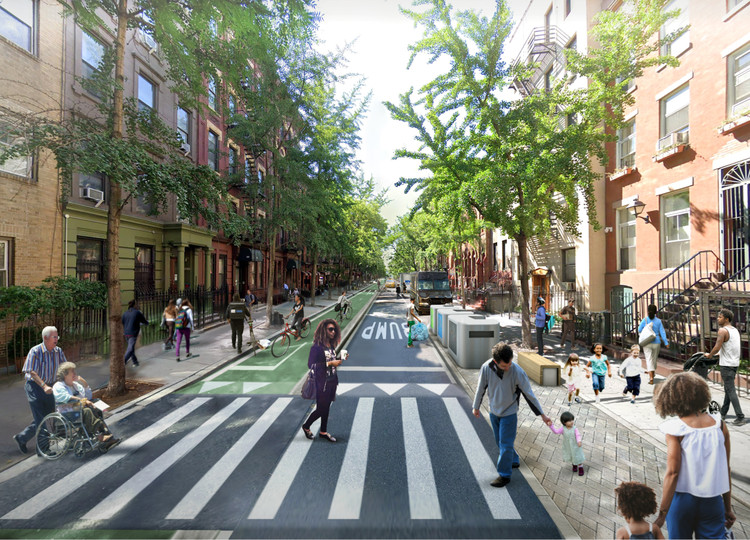
PAU or Practice for Architecture and Urbanism revealed images for a proposal that imagines New York City without cars. The visionary N.Y.C. (“Not Your Car”) project unlocks the potential of the city’s streets, reopens the public space to people and bans private vehicles.
Courtesy of Third Nature | Structured Environment | Henrik Innovation
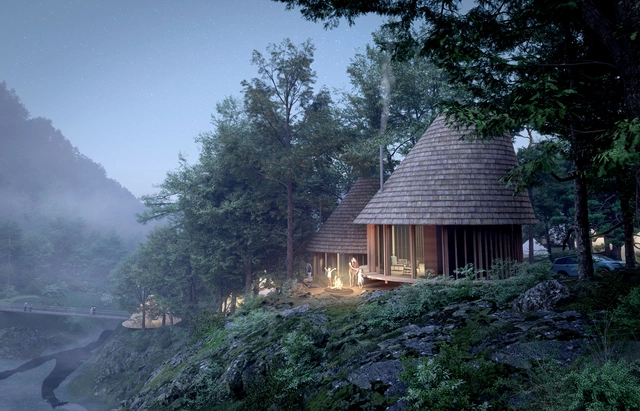
Danish architects Third Nature have designed a new proposal for a regenerative tourism site in Japan. Called Nordisk Hygge Circles - Ugakei, the project was completed with Japanese engineers Structured Environment and sustainability experts Henrik Innovation. The new adventure park consists of cabins and glamping tents, a camping area along the estuary, and a learning area to encourage activities in nature.
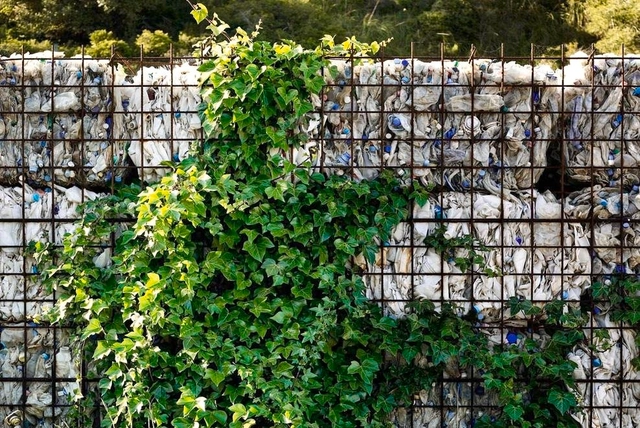
Recycling and upcycling of materials and structures have become more and more popular in architecture as alternatives to the production of components in construction, typically associated with increased energy consumption and high levels of pollutants released into the atmosphere. The main difference between these two methods is that, while the former uses a certain amount of energy to process the material before it is reused, the latter does not require this process, but rather reuses it just as it was discarded.
The following text was drafted in response to the first prompt in The Architect's Newspaper's “Post-Pandemic Potentials” series. A previous response, by Mario Carpo, argued that all the changes ushered in by the pandemic are likely to be reversed. Read more about the series here.
As the last of our mid-term reviews were completed in early March, the looming red dots of the COVID-19 tracker were still well east of New Haven—indeed, an ocean away. The design studios on the upper levels of Rudolph Hall were strewn with the typical detritus of the charrette, as our students departed for spring break and a well-earned two-week respite. Within a few days, however, Yale closed our campus out of an abundance of (what is now clearly justified) caution and we had abandoned the building altogether, told our students they would not return to those studios for the rest of term, and were scrambling to heave the entire curriculum into an online mode. Instead of resetting our spaces for the last push of the term, we turned to creating digital collaboration infrastructure, teaching everyone how to use Zoom, and chasing our students around the globe to verify their time zone, home equipment, and connectivity.
We've recently passed the halfway point of 2020, and to date, we've published hundreds of residential projects featuring distinct ways of living on ArchDaily. In a year marked by the worst health crisis that humanity has experienced in the last century, the Covid-19 pandemic, the house has gained new meanings and values, reiterating that no matter how diverse its program, a home's purpose is to shelter its inhabitants.
What happens when the sensor-imbued city acquires the ability to see – almost as if it had eyes? During the 2019 Shenzhen Biennale of Urbanism\Architecture (UABB), titled "Urban Interactions," Archdaily is working with the curators of the "Eyes of the City" section at the Biennial to stimulate a discussion on how new technologies – and Artificial Intelligence in particular – might impact architecture and urban life. Here you can find all the information about the “Eyes of the City” section, curated by Carlo Ratti, Politecnico di Torino, and SCUT - including exhibits, events, and project's blueprints.
For some years now, a key issue in European debate has catalysed the attention of economists, sociologists, technologists, policymakers and trade unionists: Industry 4.0. Established in Germany in 2012 and initially discussed in an almost exclusively technological key, the issue has overwhelmed the political agenda of the main European economies, stimulating industrial policies and state support, but also provoking heated debates on the future of work and on the new relationship between factory and society.
As the foundation of any architectural design, sketches and drawings have long been known for their ability to allow the architect to interact with his/her design efficiently and express concepts intuitively. While the importance of hand drawing is understood broadly in architectural schools, what happens to those who is incapable of hand drawing? Numerous students have found it extremely difficult to cope with the intensity of hand drawing exercise during their first year in architectural training. Among these students, some would choose to quit architecture simply because they cannot draw well, some would decide to focus more on learning the techniques of computer-generalized design drawings.
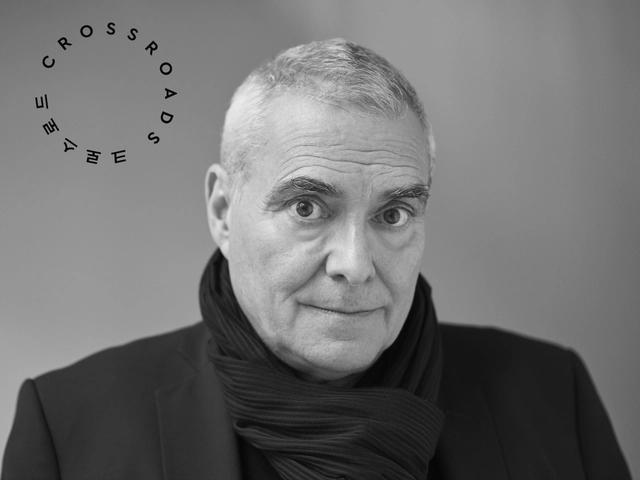
Courtesy of Seoul Biennale of Architecture and Urbanism 2021
Exploring the evolution of the world’s cities and metropolises, the third edition of the Seoul Biennale of Architecture and Urbanism (SBAU 2021) entitled "CROSSROADS Building the Resilient City" will be led by French architect and urban planner Dominique Perrault.
ArchDaily had the chance to speak to Perrault to find out what will be different in this particular biennale.
The Midnight Charette is an explicit podcast about design, architecture, and the everyday. Hosted by architectural designers David Lee and Marina Bourderonnet, it features a variety of creative professionals in unscripted conversations that allow for thoughtful takes and personal discussions. A wide array of subjects are covered with honesty and humor: some episodes provide useful tips for designers, while others are project reviews, interviews, or explorations of everyday life and design. The Midnight Charette is also available on iTunes, Spotify, and YouTube.
This week David and Marina are joined by Anne Fougeron, award-winning architect and founder of Fougeron Architecture, to discuss her work, city densities, creating good urban spaces with architecture, women, and equality in architecture, design processes, partnering with other offices and more! This episode is part of a series produced with the support of the SF Urban Program, Architecture Department, Cal Poly. Enjoy!
https://www.archdaily.com/943414/anne-fougeron-on-creating-good-urban-spaces-and-being-a-woman-architectThe Second Studio Podcast
Design practice MVRDV has unveiled a new plan to transform their seminal Dutch Pavilion from the 2000 World Expo in Hannover. The project will convert the former Expo Pavilion into a co-working office building, as well as two structures for student housing and parking. The team aims to reinterpret the original project’s concept for the two new buildings and celebrate the iconic structure.
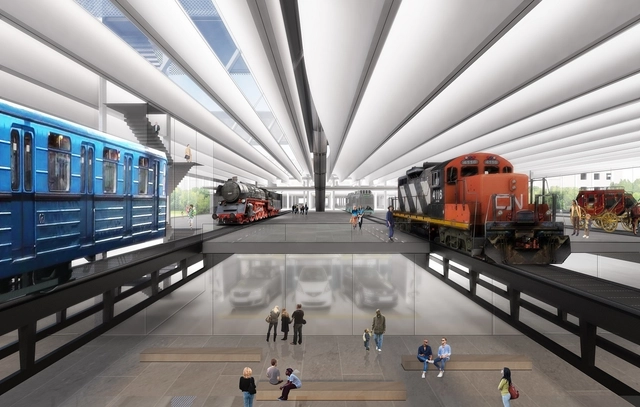
Museo de transporte húngaro. Image Cortesía de Diller Scofidio + Renfro
According to Howard Gardner, human intelligence can be classified into 8 different categories. One of these is spatial intelligence, which describes the ability to mentally create and imagine three-dimensional spaces. Architecture is one of many disciplines that benefits from this ability and in this article we will explore just how visual representation in architecture has evolved throughout history--from displaying the most brilliant of ideas to capturing the wildest of dreams.
The concept of Design for Disassembly (DfD for short) gained increasing traction in recent years, as it addresses the growing concern around the high consumption of resources and low recycling rate within the construction industry. The following article details on the method and features guidelines for a design process that facilitates the dismantlement of future buildings, with the scope of providing a better understanding of this principle within the broader framework of the current practice and circular economy.
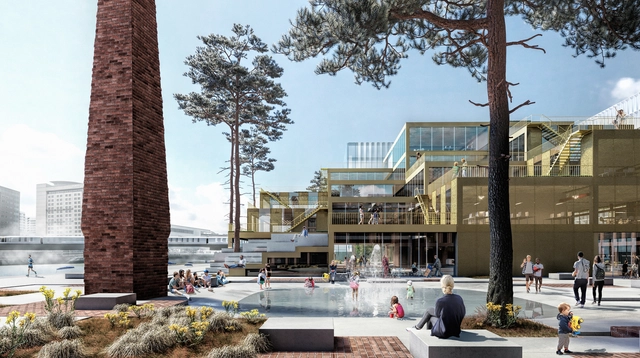
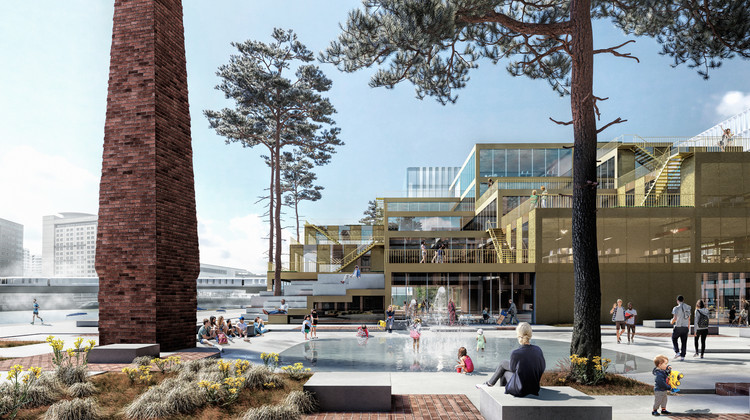
The Henning Larsen-designed Belfast Waterside development was officially granted planning approval by the Belfast City Council, after a year in the planning approval process. Located on the site of the former Sirocco Works, the project is set to “transform the 2.6-hectare area on the east bank of the River Lagan that has been disused for nearly two decades”.
New details have been released on the 5th Istanbul Design Biennial. Curated by Mariana Pestana with Sumitra Upham and Billie Muraben, the Biennial aims to open on October 15, 2020. A new structure will bring together different formats of display under the theme Empathy Revisited, and the designs will include interventions in a range of exhibition venues, outdoor spaces and digital platforms.
Videos
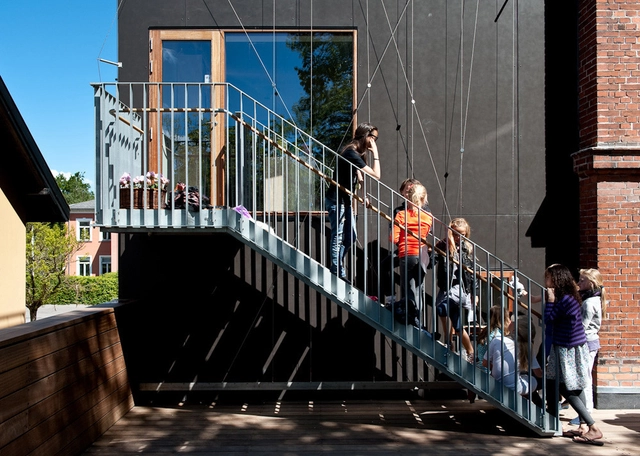
Bernadotte School Extension / Vandkunsten Architects. Image Courtesy of Adam Mørk
Louisiana Channel has recently published a second piece of their interview with Jens Thomas Arnfred and Søren Nielsen co-founders of the award-winning Danish practice Vandkunsten Architects. In this short video, the two architects talk about nurturing the sense of community through design and reflect on the studio's preoccupation with fostering social encounters within their projects.
Seoul is considered one of the most densely-populated and over-priced cities in the world, reaching a staggering $ 80,000 per square meter. The extreme conditions of the city have forced local architects to operate, design, and build framing the city's urban issues, traditions, and history. This approach by architects has created the theoretical basis of “The Condition of Seoul Architecture”, a publication by multidisciplinary practice TCA Think Tank which sees the point of view of 18 innovative South Korean architects. In this interview, Pier Alessio Rizzardi, founder of the practice, talked to Hwang Doo-jin of Doojin Hwang Architects, and discussed traditional Korean Architecture, universal space, and his traditional approach for an alternative contemporary architecture.
Image from Estonian Centre for Architecture. Image Courtesy of Tallinn Architecture Biennale
The Estonian Centre for Architecture has announced its shortlist of candidates for the sixth international Tallinn Architecture Biennale TAB 2022. The aim of the Curatorial Competition is to find an innovative and responsive theme related to the context of Estonia and relevant to the contemporary world of architecture. The 6th edition was postponed due to the uncertain times that international cultural events are facing because of the coronavirus outbreak.
Shaping the future begins with education. For VMDO Principal Rob Winstead, learning spaces go hand in hand with sustainability. As a nationally-recognized expert in education, Winstead is an advocate for blending thoughtful design with high performance goals. In an exclusive interview with ArchDaily, Winstead talks about his personal background and experiences, as well as his role in shaping how VMDO approaches sustainability, education and social justice.
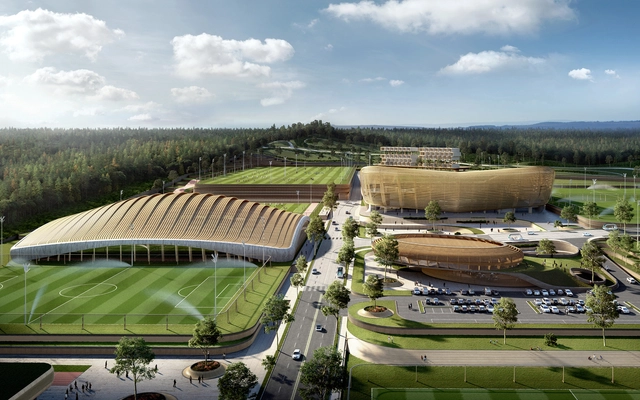
UNStudio in collaboration with Johan Cruijff ArenA designed a winning plan for the Korean National Football Centre in Seoul. Focusing on health, wellness, science, technology, education, and promoting a healthy lifestyle, the project was selected as the winning design in an international closed competition that took place in March this year.
The University of California San Francisco (UCSF) has selected Herzog & de Meuron and HDR to design the new hospital of UCSF Helen Diller Medical Center at Parnassus Heights. Part of the university’s academic medical center, the hospital providing a home to both inpatient and outpatient services will include a research enterprise and graduate schools in the health sciences.
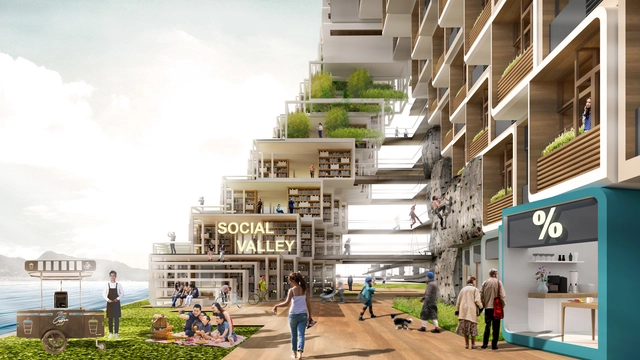
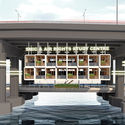
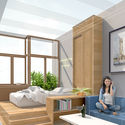
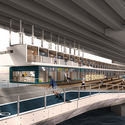
The Hong Kong Institute of Architects has announced the winning design of the HKIA Young Architect Award. The competition theme centered on affordable housing and asked local architects aged 35 or below to propose innovative and unique design proposals for local housing. Arnold Yok Fai Wong's winning design reimagines the adaptability, livability and build-ability of affordable housing through modular construction in urban air space.
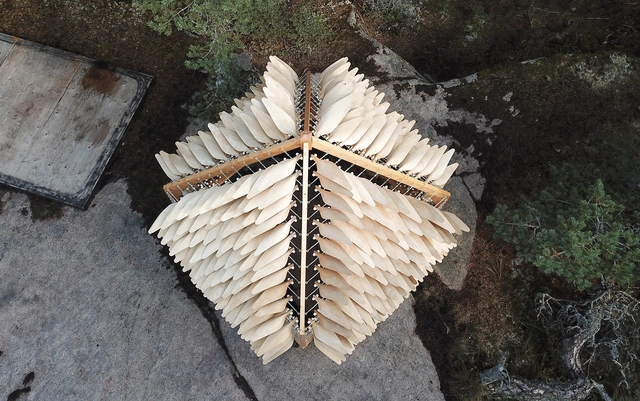
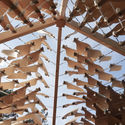
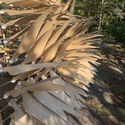
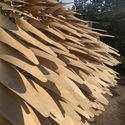
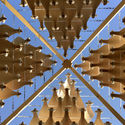
Designed by NEON, the Shiver House is a radical reinvention of the common Finnish Hut (mökki). The project is a kinetic "animal-like" structure which moves and adapts in response to surrounding natural forces. Shiver House is an exploration into the idea that architecture can be used as a means to create a closer emotional link between its inhabitants and the natural world it sits within. In addition, the project explores the idea that architecture can be made to seem "alive" with the intention that this will engender a deeper and longer-lasting emotional relationship between people and the structures they inhabit.
Conceptually, the piece thus suggests that architecture, rather than static and function-led, can be a poetic, living, and dynamic element that changes the way we relate to the landscape that surrounds us.
https://www.archdaily.com/942956/functional-shelter-and-experiential-device-600-kinetic-shingles-shape-neons-shiver-houseLilly Cao
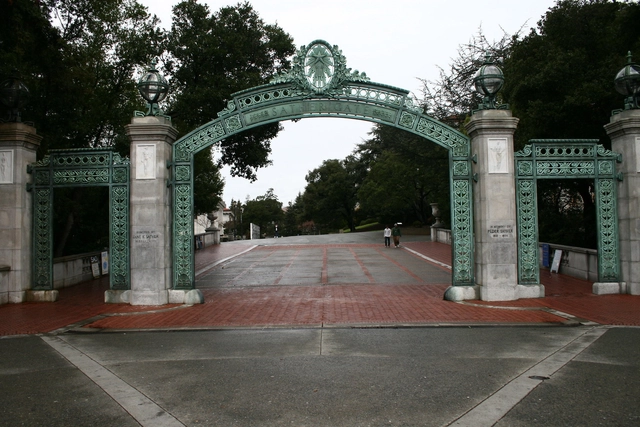
In March 2020, the Covid-19 pandemic shifted our university—the University of California, Berkeley—totally online, along with the whole of education from childcare up across the country and most of the planet. In the wake of this forced and unprecedented experiment, debates about what it means remain ongoing. Will the episodic dream of a placeless university, or at minimum a hybrid place/placeless one, come true? Millennia of experience argue for giving higher education a local, physical anchor. And most universities and colleges have this anchor as their starting place, even as they consider what their ongoing experience with virtual teaching, research, and administration means.
https://www.archdaily.com/943322/letter-from-berkeley-campus-planning-in-an-increasingly-virtual-worldEmily B. Marthinsen, John J. Parman, Richard Bender
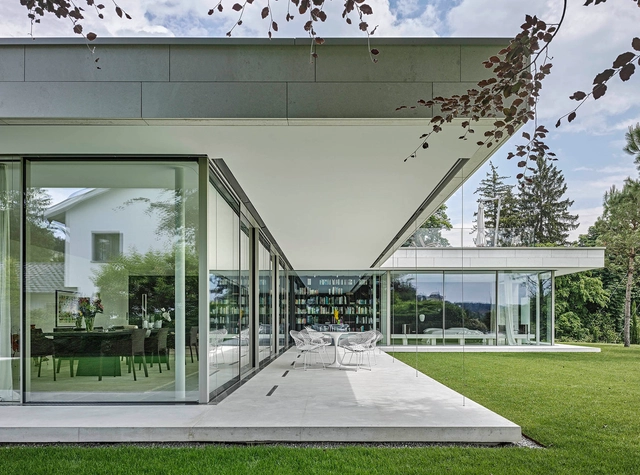
Large glass surfaces can become a striking design feature of modern architecture. It is of decisive importance that the constructive elements of large windows and sliding glass doors remain practically invisible
The Swiss family company SWISSFINELINE specialises in the manufacture of large glass surfaces for windows, doors and railings that allow a view of everything but the structural elements.
https://www.archdaily.com/943047/i-can-see-clearly-now-swissfinelineAD Editorial Team









.jpg?1594127477 "Pavilion built with recycled material transforms public space in South Africa. Image: © Ella Petousis")





.jpg?1594399069&format=webp&width=640&height=580)