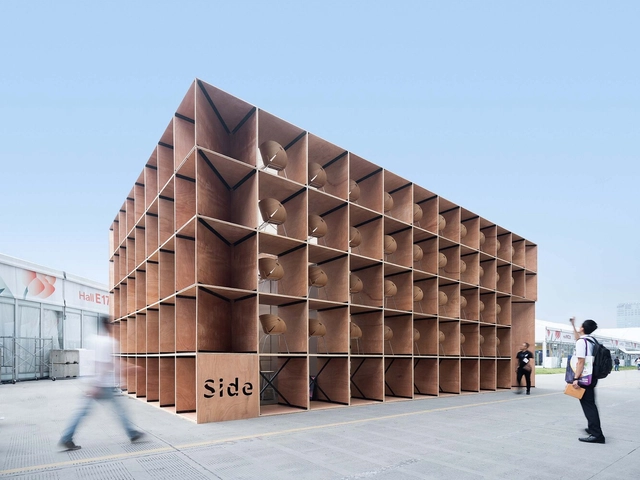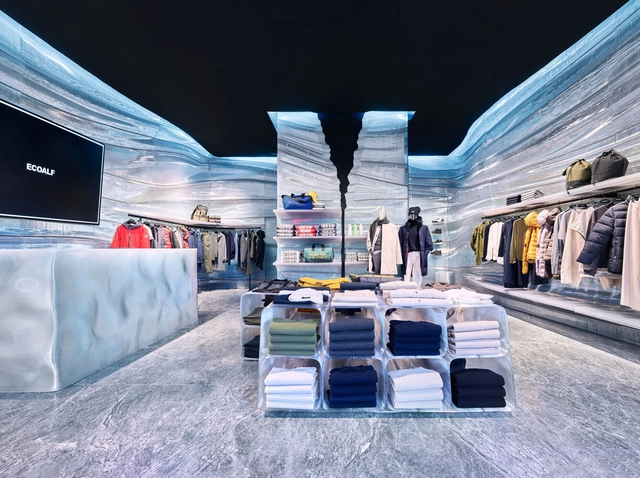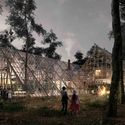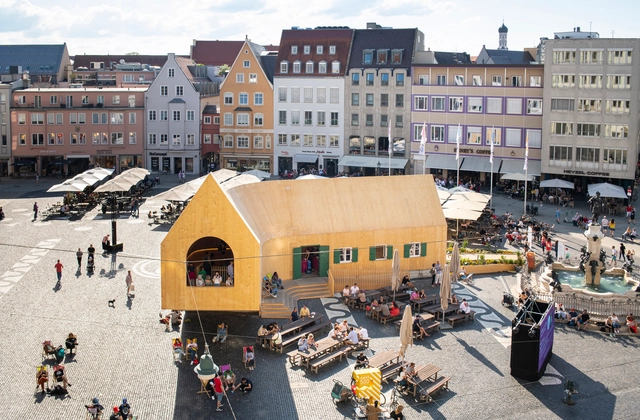
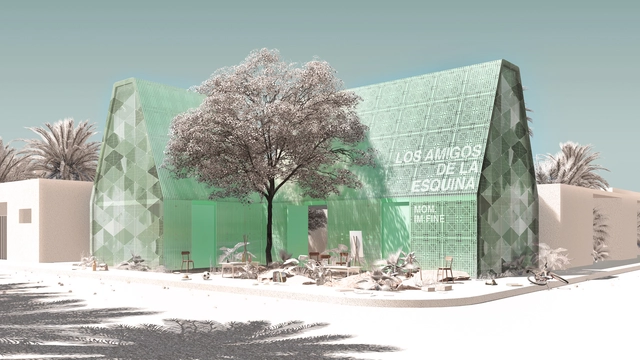
How do pavilions emerge in architecture? What role do they play in urban spaces? Beyond the multiple interpretations that exist around the world, the pavilion, as an architectural principle and typology, tends toward extroversion, often associated with a centrifugal nature and visual openness toward the horizon, which is linked to its origins as a tent offering shelter from the elements. Pavilions are usually identified as isolated and independent structures that can promote lateral openings in the urban space, panoramic or introspective views, technological reflections, and material experiments that are recognizable from the outside or once inside.
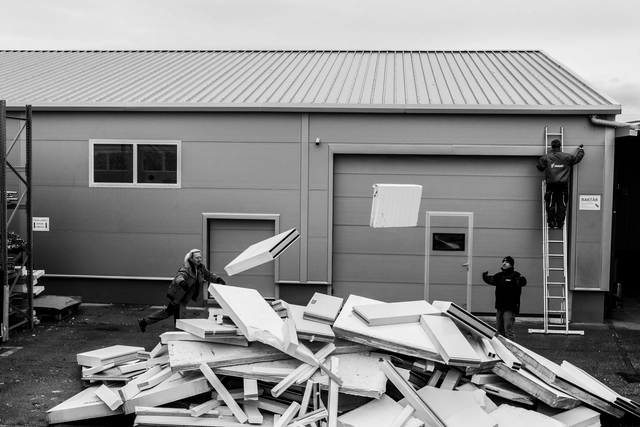
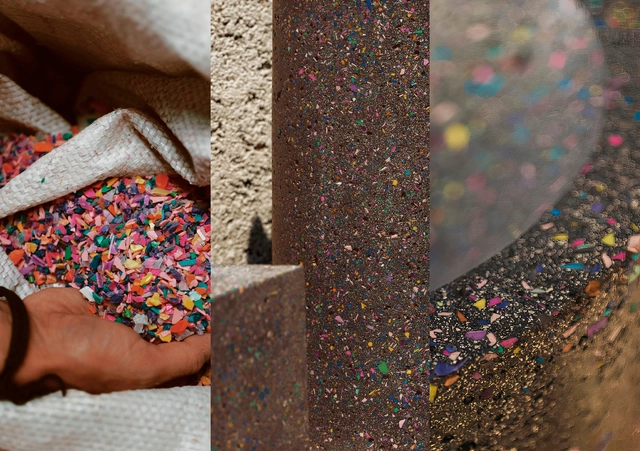
Polyurethane (PU) started as a solution to a 1930s shortage, but today it's a key material in industries from insulation to cushioning. Invented in 1937 by Otto Bayer and his team in Germany, PU was originally designed as a cheap, versatile alternative to rubber. It quickly became popular in coatings and adhesives for its strong bonding and protective properties. PU is made by reacting polyols and isocyanates, which generates heat and, in the presence of expansion agents such as water or gases, creates bubbles that cause the material to expand, resulting in a foam with adjustable density and structure. Its flexibility allowed PU to revolutionize industries with products like insulation and padding. However, its durability and non-biodegradability have raised environmental concerns. To address this, companies like Purman are leading the charge in recycling PU waste, helping to reduce its environmental impact while promoting more sustainable alternatives.
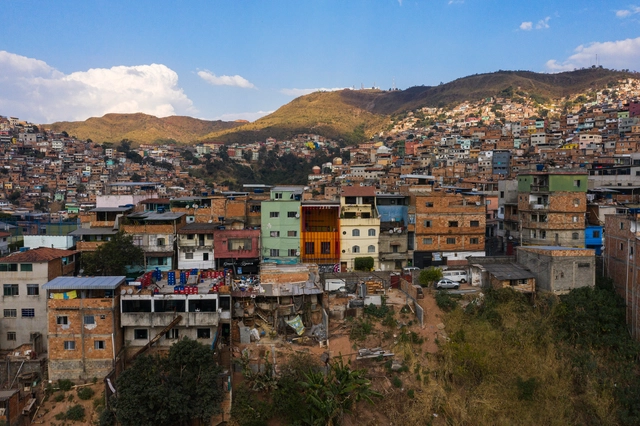
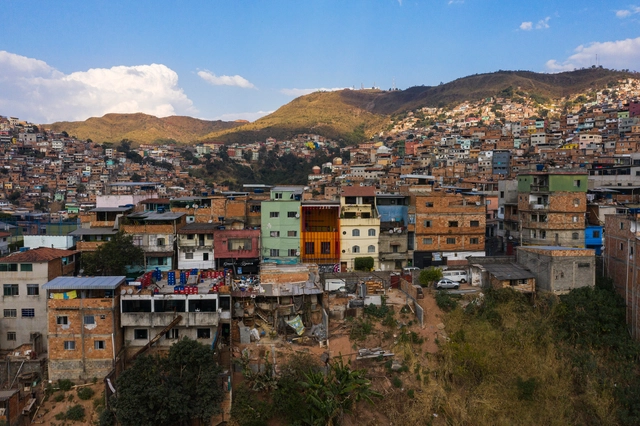
In Belo Horizonte’s Aglomerado da Serra, Brazil’s third-largest favela complex with 50,000 residents, the Lá da Favelinha Cultural Center stands out as a vibrant hub of art and education. Founded in 2015 by the multifaceted artist Kdu do Anjos, the striking red building that stands out in the outskirts has gained recognition in both national and international architectural circles, earning several prestigious awards Yet, the recent renovation by Coletivo LEVANTE—honored as one of the Best New Architectural Practices of 2024—represents far more than vivid colors and bold design. It symbolizes the creativity and potential of the community itself. As a space for support and inspiration, Lá da Favelinha reflects a collective, democratic vision that merges the community’s dreams with the dedication of its founders.
Centered on the development of architectural projects in favelas and peripheries, the work of Coletivo LEVANTE showcases a deep sensitivity to the unique characteristics and nuances of these environments. According to the group, "the recognition of what already exists and is attributed with values lived and earned by the favela residents — landscapes, constructions, identities, and relationships" is what they seek as the raw material for their projects. This approach is evident in projects such as Centro Cultural Lá da Favelinha and House in Pomar do Cafezal, winner of the 2023 Building of the Year Award by ArchDaily.
For decades, our society and the development of our built environment have been strongly associated with intensive extractive processes. While these methods were fundamental to the growth of urban areas, they also laid the groundwork for significant challenges that contemporary generations face today. Nowadays, construction debris accumulates on the peripheries of our cities, and plastic waste floats in the oceans.
In this context, and similarly to the idea expressed by Alvar Aalto, who stated that "modern architecture does not imply the use of new materials, but rather employing existing materials more humanely," it is crucial to reconsider how we manage our resources and waste. This shift in direction provides us with new opportunities to address the challenges that the ongoing climate crisis has brought. In response, various actions are now being taken, using materials such as food waste, recycled wood, and plastic debris, among others, exploring innovations in a context where raw materials are becoming increasingly scarce.
https://www.archdaily.com/1013787/casting-furniture-with-upcycled-plastics-and-urban-debris-los-colados-projectEnrique Tovar
Temporary pavilions and installations, such as those used in events, exhibitions, or festivals, present themselves as a great challenge when addressing the circular economy in architecture due to their ephemeral condition. It seems contradictory to address resource management and try to extract the maximum value from the materials and minimize waste and pollution while designing a structure that is meant to be used for a limited period of time. However, there are several strategies to rethink the way we are designing these structures in order to promote circularity.
“Our planet is choking in plastic,” states the United Nations. While the man-made material has many valuable uses, our addiction to single-use plastic products has led to severe economic, health and environmental issues. Roughly one million plastic bottles are purchased every minute, and five trillion plastic bags are used every year worldwide –used just once, then thrown away. Plastics and microplastics have found their way into every corner of our natural environment, from the peaks of the highest mountains to the depths of the deepest oceans. So much so, that they have become part of the Earth’s fossil record and created an entirely new marine microbial habitat known as the “plastisphere.”
Agriculture and the food industry seem to have little in common with architecture, but it is precisely the overlap of these three areas that interests Ghanaian-Filipino scientist and architect Mae-ling Lokko, founder of Willow Technologies based in Accra, Ghana. Working with recycling agricultural waste and biopolymer materials, Lokko searches for ways to transform the so-called agrowaste into building materials.
Archstorming, an architectural platform that organizes international competitions, has released the results for the TulumPlasticSchool contest. In fact, participants were challenged to design a school made of recycled plastic, tackling the current issue of pollution in Mexico.
Anna Saint Pierre's Granito project is harvesting the ingredients for new architectural building blocks from demolished structures.
Rapid urban change comes and goes without many even noticing it. Entire slices of a city’s history disappear overnight: What was once a wall of hewn stone is now fritted glass and buffed metal. The building site is always, first, a demolition site.
This is the thread that runs through Granito, a project by the young French designer and doctoral researcher Anna Saint Pierre. Developed in response to a late-20th-century Paris office block due for a major retrofit, one involving disassembly, it hinges on a method of material preservation Saint Pierre calls “in situ recycling.” Her proposal posits that harvesting the individual granite panels of the building’s somber gray facade could form the basis of a circular economy. “No longer in fashion,” this glum stone—all 182 tons of it—would be dislodged, pulverized, and sorted on-site, then incorporated into terrazzo flooring in the building update.
The need to substantially reduce our impact on the planet must be translated into a significant change to our lifestyle and habits. One of these is to consume responsibly and consider that waste does not exist, but that all material can be transformed into something useful again following a circular ecological system.
In his book Upcycling Wood, Reutilización creativa de la madera, the architect and artist Bruno Sève writes and edits a non-exhaustive guide of the uses and possibilities of recovered wood, as a framework for responsible reuse; from small scale, such as furniture or artists' canvases, to medium scale, with its use in interiors and facades. This book seeks to raise awareness among professionals and citizens in general through analysis of the life cycle, examples of uses and finishing processes, leading to an ecological and responsible framework. The book is illustrated by numerous design and architecture teams who follow the guidelines of ecological design with reclaimed wood.
Contemporary designers are recycling waste materials into useable and well-crafted objects, and it’s easy to get the impression that this burgeoning realm of fabrication is destined only for the craft fair. A quick survey of Blaine Brownell’s new guide Transmaterial Next: A Catalog of Materials That Redefine Our Future turns up a half-dozen Etsy-ready art and furniture curios. There’s jewelry made from coffee grounds, bowls made from plastic bags, and a chair made from artichoke thistle fibers (the “Artichair”).
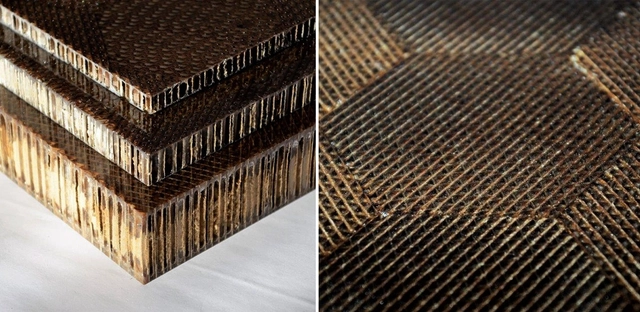
But these items don’t demonstrate the necessary capacity for heavy lifting and mass-market applicability for an age of climate change and dwindling resources. To grasp the kind of architectural upcycling that can divert trash from landfills and carbon from the atmosphere on a mass scale, it pays to step out of the design gallery and into the laboratory, where architects are inventing a new breed of modular building materials.
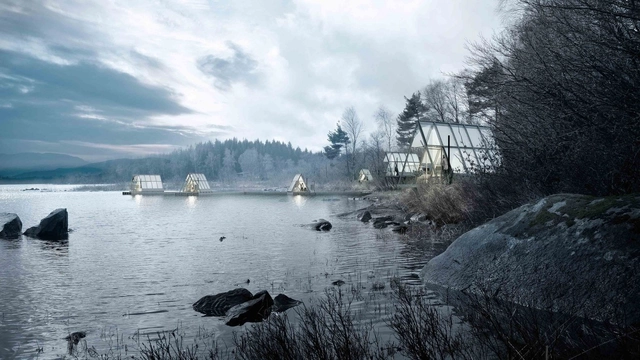
Lendager Group have released drawings and renderings of Stedsans in the Woods, a farming development currently in progress in the deep Swedish wilderness. A collaboration with restaurant owners Mette Helbæk and Flemming Hansen, the project will feature a permaculture farm, restaurant, and lodging. A focus on sustainability and living off the landscape drives both the architecture and the Stedsans brand, who stress the idea of ‘giving more than we take.’ Located in Bohult, Sweden, the development offers visitors an escape from the city with opportunities for fresh dining and connecting with nature.