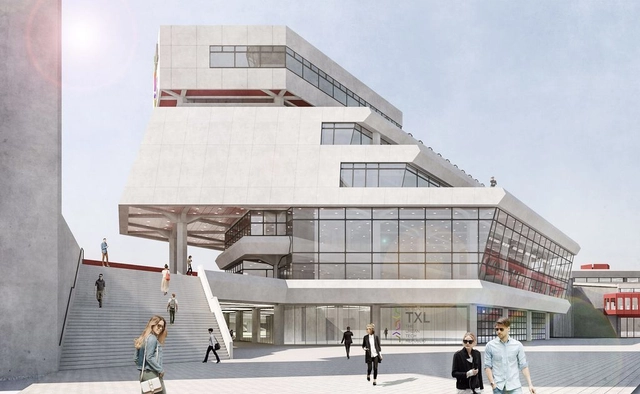
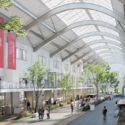
The team of von Gerkan, Marg and Partners Architects (gmp) has created a new vision for the Berlin-Tegel Airport in Germany. As of May 2021, the site will be developed into a research and industrial park for urban technologies. Dubbed the Berlin TXL–Urban Tech Republic, the project will transform existing buildings to house new functions, and include the addition of a new start-up and innovation center in the central terminal building.
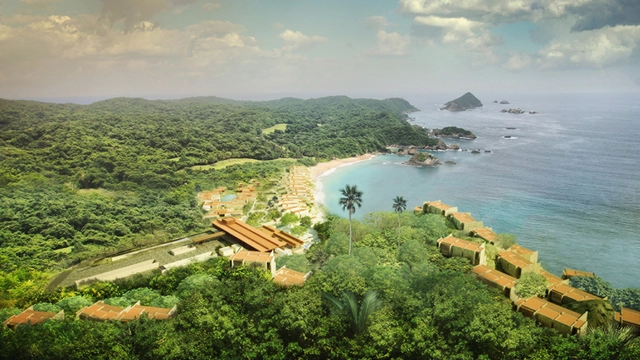
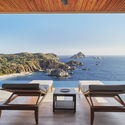
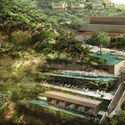
In 2021, as part of a collaboration between Mexican firms LEGORRETA and Taller Mauricio Rocha + Gabriela Carrillo, ground will be broken for the new Four Seasons Resort Tamarindo in Mexico. The new facility will sit on 800 hectares of Pacific Ocean coastline in the state of Jalisco, between La Manzanilla and Barra de Navidad. The area, called "Costa Alegre" or "Joyful Coast," is renowned for its private beaches, landscape, and geography.
https://www.archdaily.com/951584/legorreta-and-taller-mauricio-rocha-plus-gabriela-carrillo-team-up-to-design-new-four-seasons-resort-in-mexicoArchDaily Team
Under the theme of “good neighbors”, the IE School of Architecture and Design celebrated World Architecture Day, highlighting the importance of our commitment and collective responsibility for the future of human beings, societies, and built environments.
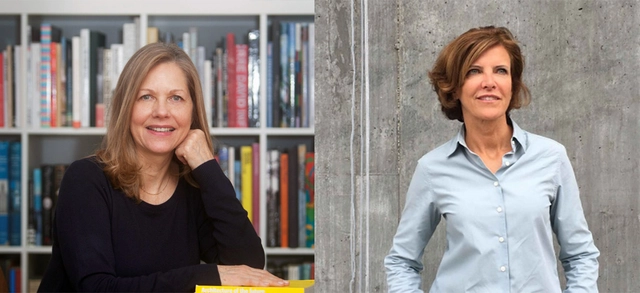
To celebrate the projects that have impacted our daily lives positively, the university showcased these buildings on their social media platforms and asked renowned architects and program directors on the importance of maintaining a sense of community and what makes buildings our good neighbors. The school hosted its dean Martha Thorne and award-winning international architect Jeanne Gang during a live interview on Instagram to discuss the evolution of the field of architecture after this year’s new set of living conditions.
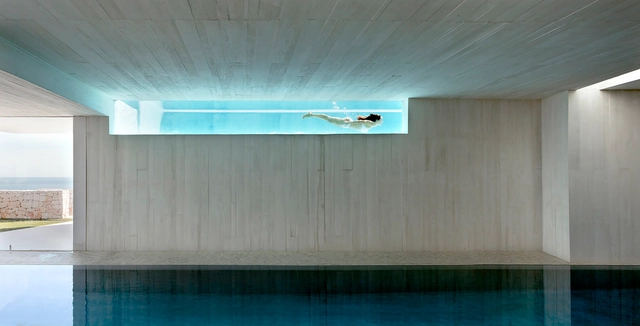
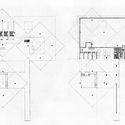
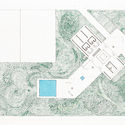
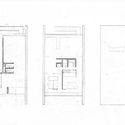
What's better than a house with a pool? A house with a pool that's part of the structure of the house. These projects show different ways to incorporate pools and how to resolve issues of weight, moisture and leaks. See the houses below, featuring photos by photographers like Mariela Apollonio, Kent Soh y Marcello Mariana.
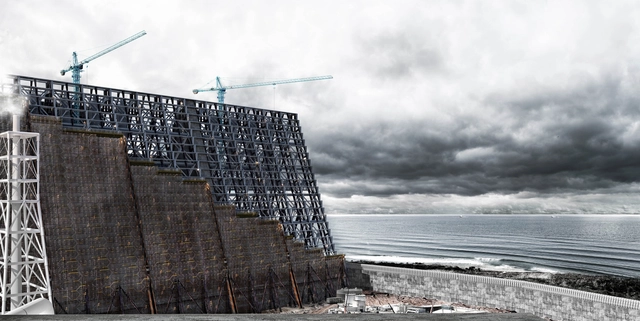
Digital Category - entombment of fear exterior_kyra swee yew yong. Image Courtesy of The Architecture Drawing Prize 2020
The Architecture Drawing Prize 2020 announced the shortlisted entries in the Digital, Hand-drawn and Hybrid categories. This year’s contest gathered more admissions than the previous edition, with 165 entries from 30 countries, 35 of which are from students and under-30 architects. In addition, the 2020 competition introduced the ‘Lockdown Prize’, focused on the global pandemic, awarded to a drawing related to the architectural changes brought by the coronavirus.
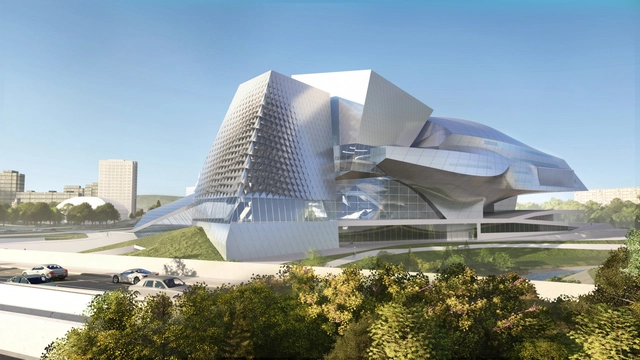
Architecture and design practice Coop Himmelb(l)au has shared the new vision for the Kemerovo Museum and Theatre Complex in Russia. Located east of the city center between Sovetskiy Prospekt and Pritomskiy Prospekt, the proposed project is part of the Iskitimka river landscape. The complex is made to create a new cultural hub and future architectural landmark within the cityscape.
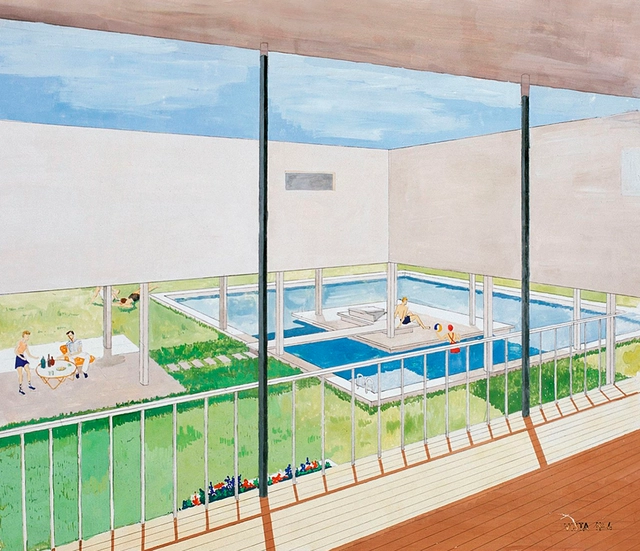
When we study Amancio Williams' work, it almost always centers on his emblematic Bridge House, built for his father in Mar del Plata between 1943 and 1946, or his technical role in Le Corbusier's Casa Curutchet. Of course, to study Williams is to confront several questions: Did he not design any other residential projects? What modernist ideas and concepts can we glimpse into his work? How did his work impact the development of Argentine architecture?
Not a month goes by without Danish architects and Danish design in the news, as design seems to be one of the primary exports from the tiny Scandinavian country. To be fair, the attention isn't a bad thing. Denmark has a rich heritage of furniture designers and architects who have transformed spatial thinking around the world. Some thoughts were so “BIG,” that they envisioned inhabiting the moon or making plans for a Masterplanet.
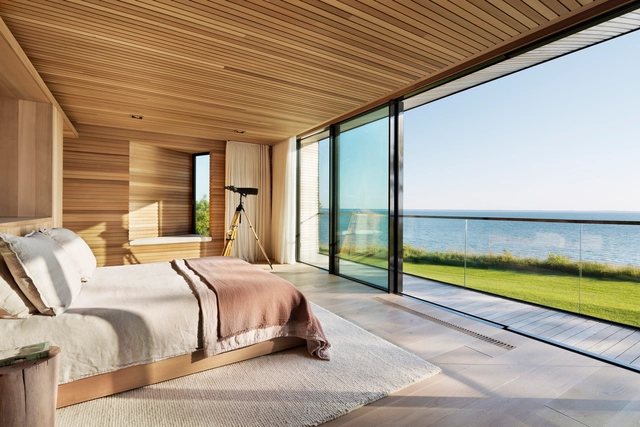
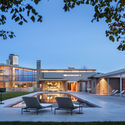
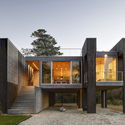
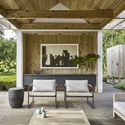
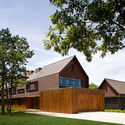
The Hamptons are defined by a storied past. As wealthy New Yorkers were drawn to this part of Long Island’s South Fork for the last century and a half, they increasingly built a series of exclusive and luxurious homes. Today, new residences along the coastline are some of the most expensive properties in the United States. As summer homes and vacation getaways, many of these residences are designed as private retreats surrounded by nature.
This August, as hundreds of wildfires darkened the sky above my home in Corte Madera, California, thousands of miles away in Florida, my family braced for wind and flooding as two hurricanes barreled towards the Gulf of Mexico. We all hunkered down, anxiously, as climate change-fueled disasters wreaked havoc. For weeks, the air quality in California was too hazardous for us to open our windows or go outside. In Pensacola, the Gulf storm surge was several feet deep around my family’s home and the powerful winds downed mature oak trees in their yard.
The new Global Master in Real Estate Development program is designed for professionals with backgrounds in various fields, from finance or economics to architecture, and from engineering to law. The aim of this degree is for students to explore the relationship between real estate development, investment and city infrastructure from a wholly global perspective. The program is based on the principles of sustainability, digital innovation and real estate technology transformation.
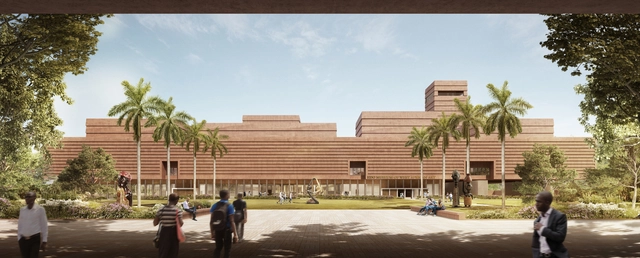
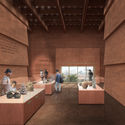
Adjaye Associates unveiled its design for the Edo Museum of West African Art (EMOWAA). Investigating the archaeology of the Kingdom of Benin, including buried remains below the site, the EMOWAA Archaeology Project is set to start in 2021, involving the Legacy Restoration Trust (LRT) and the British Museum with the local communities, the Benin Royal Court, the Government of Edo State, and the National Commission for Museums and Monuments (NCMM).
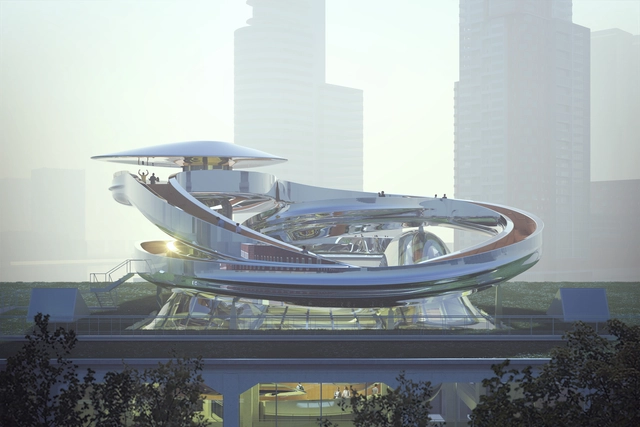
MAD Architects has broken ground on the firm's first cultural project in Europe, the FENIX Museum of Migration in Rotterdam. Commissioned by the Droom en Daad Foundation, the project builds on the history of the Fenix warehouse, once the largest warehouse in the world. MAD’s renovation of the warehouse aims to connect the history of Rotterdam with the city's present culture.
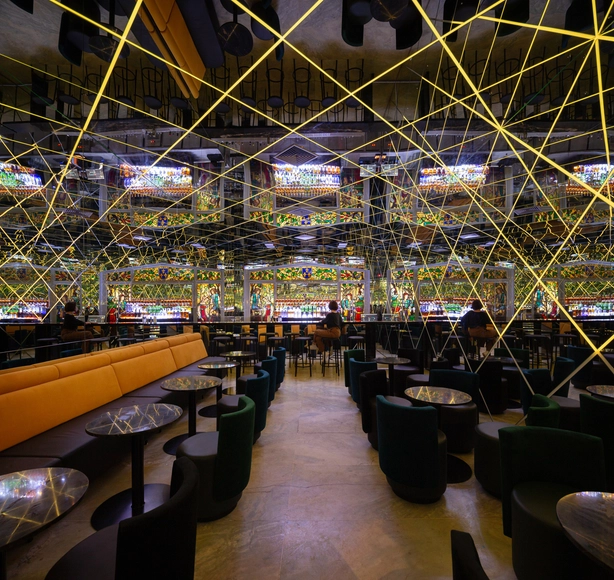
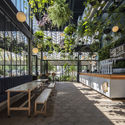
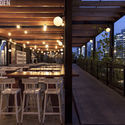
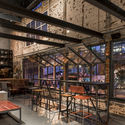
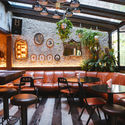
São Paulo has a vibrant nightlife, either by nature or due to the lack of other attractions, offering as many possibilities as its population of more than 12 million people. Therefore, bars have become the favorite spots for residents from all over the city, living in the east, west, north, and south.
We have selected a few projects of bars already published in ArchDaily that represent a sample of this bohemian architecture that so many inhabitants of São Paulo are used to – an architecture that is all about remodeling, socializing, gathering, and bonding in intimate spaces.
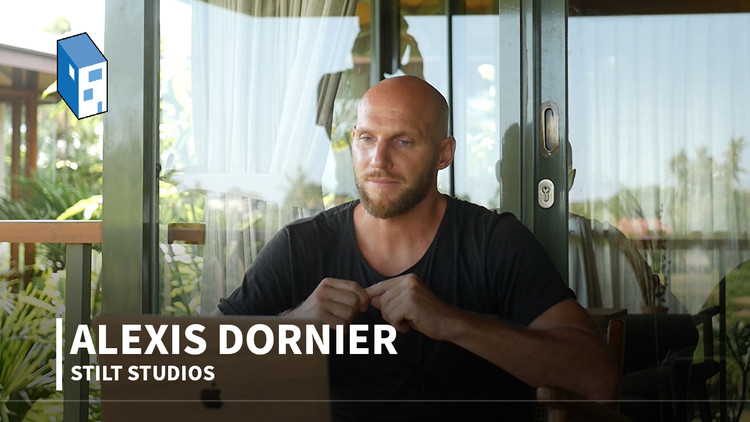
“It all started with the question: What if I’m going to build my own house?" It was this consideration that prompted Alexis Dornier to note that when he's providing architectural design service he's mostly catering, filtering and catalyzing input from other people that have budgets, preferences and tastes and it’s up to him to channel or organize that and let it "stream through" him. Using his craft to put it in order. "But what if you did not have that other hand [designer's help]? What would you do?”
Archdaily’s Hana Abdel, projects curator, sat down with Alexis Dornier to discuss his latest venture as co-founder of Stilt Studios, a company “focused on making Architectural design accessible to a greater audience of people. People who wouldn’t be able to afford an architect or don’t want to go through the trouble of working with an architect. So, what if we could create a product, or an architecture that almost works as a product.”
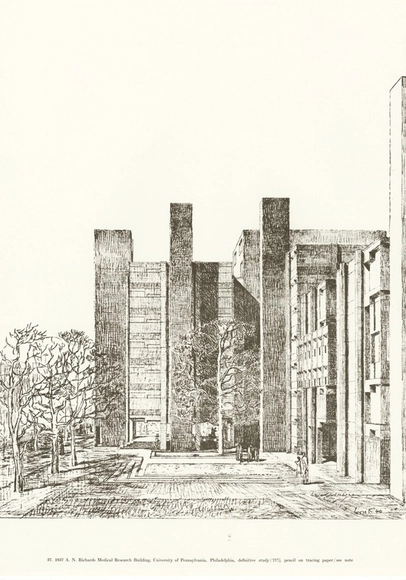
There are plenty of books about the buildings of late American architect Louis I. Kahn, including those he authored. But his drawings hold a special fascination for his peers and fans, which explains why the blog Designers and Books is launching a Kickstarter to fund the reissue of one 1962 compilation of his sketches, which has been out of print for decades.
Architectural visualizations have recently reached unthinkable levels, being a great source of inspiration and a fundamental part of the design process in architecture. This is why we are proud to announce the first edition of the ArchDaily Architecture Visualization Awards, where we will award the best of the year.
For us, visualizations have become a powerful tool that has helped us to think without limits about the design of our future cities, buildings, and structures. This is why we are proud to launch thanks to IPEVO, Cove.tool and Concepts the 1st edition of the Architectural Visualization Awards: to find the best talent from around the world and discover who is setting trends with their work and aesthetics, helping us to visualize the future of architecture.
With Sky-Frame, the focus is what inspiration and freedom their windows can help achieve, not on the windows themselves. Rather, the spatial qualities and view potential created by the windows is what you notice. The Swiss company is the leading international supplier of frameless sliding doors that work to blend interior and exterior for a unique living experience. Featured in thousands of projects worldwide, Sky-Frame products include curved and sloped sliding doors, as well as a pivot door, to fit each individual space.
Europe in the 1960s was an incubator for emerging provocative architecture radicals who defied traditional architecture dogma in favor of counterculture that transcended time and space. Coop Himmelb(l)au, a Vienna-based faction of this movement, questioned the clean lines, rigidity, and literal nature of modernist architects of the time. While the firm is known for their rebellious spirit and aggressive forms that are generated through state-of-the-art 3D software and technologies, it’s important to acknowledge the work that the firm did shortly after their inception in 1968, and how their early oeuvre still relentlessly breaks the status quo of modern-day practice and academic discourse.
As a mid-career design-professional, what avenues exist for investigating questions and problems that arise from being embedded in practice? What opportunity is there for exploring or articulating an idea for a type of project or organizational structure that could improve professional practice?
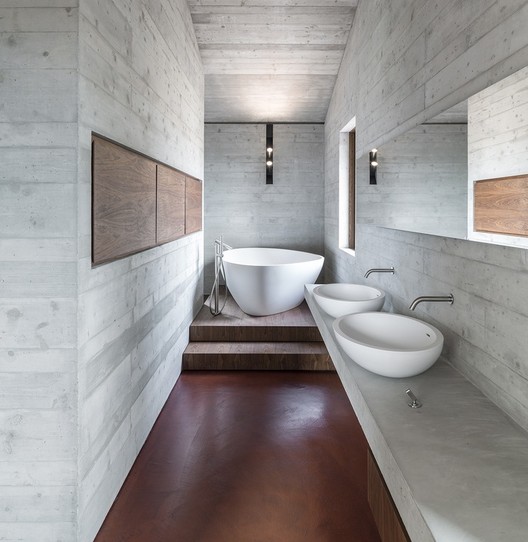
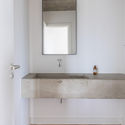
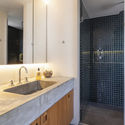
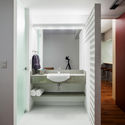
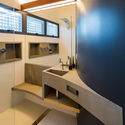
Concrete is one of the top building materials in the world and it is almost impossible not to associate it with architectural structures. However, the so-called brutalist style is becoming more and more popular in interior design, and concrete is replacing the traditional materials used in furniture and countertops, such as wood and stone.
Due to its polished finish and seamless surface, this waterproof and resistant material is very easy to clean, preventing mold from growing in expansion joints, and requiring little maintenance. A few months ago we published an article featuring a collection of projects for kitchen countertops and indoor/outdoor benches made of concrete. Now, we have gathered a series of interior design projects with bathrooms featuring concrete countertops, from small washrooms to roomy bathrooms. Check out below:
Architecture school is a place of experiment and a testing ground for innovative ideas. The academic work and student projects can bring to light the focus of an entire career, shape the backbone for an architectural theory, and crystalize values. How do their studies and formative years reflect on the later work of different architects? Taking a journey along decades, we explore the transition from architecture school to practice, the reverberance of academic explorations and early projects in the work of several architects and practices, highlighting the different pivotal steps that have shaped the beginning of their architectural journey.
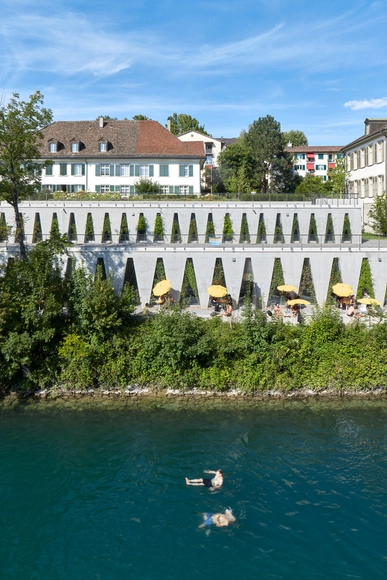
Federico Covre’s latest series of photographs showcases two of Barozzi Veiga's projects in Switzerland, the Tanzhaus Zürich Cultural Center, and the Cantonal Museum of Fine Arts. The Italian architectural photographer based in Italy and Sweden, who “seeks to achieve a balance between conceptual rigor and functionality” through his images, has captured both projects after a year of their completion.
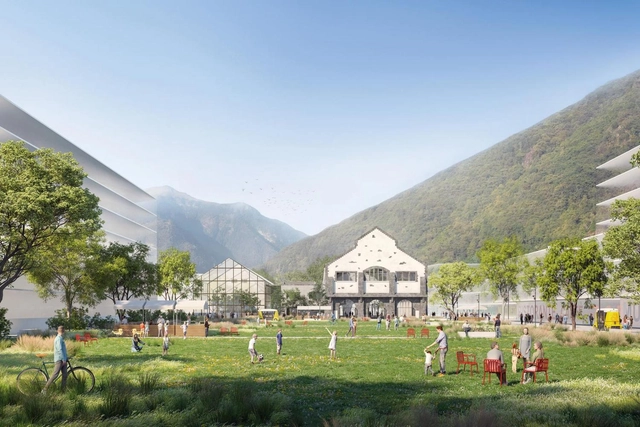
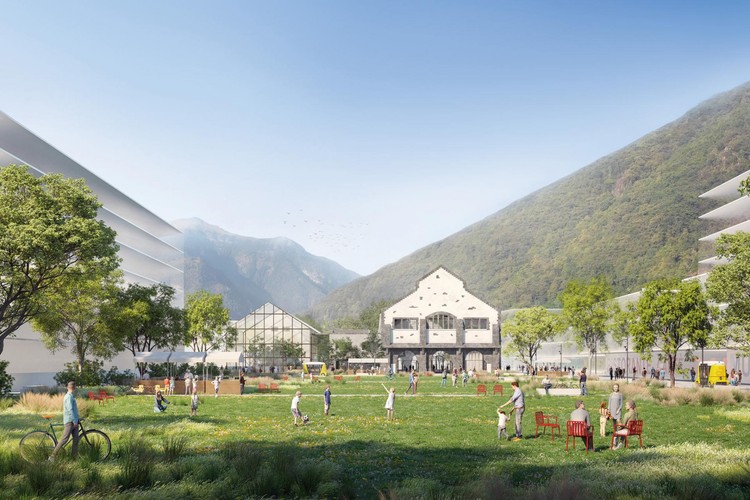
TAMassociati has designed a new “future proof” regeneration plan for the Officine industrial site in Bellinzona, Switzerland. Working with sa_partners and Franco Giorgetta Landscape Architect, the team created a proposal for the large-scale masterplan that explores gradual development in the Swiss alpine city.