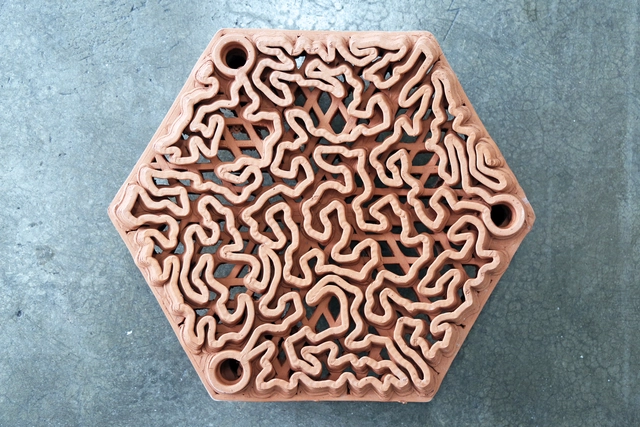
Corals are fundamental to marine life. Sometimes called tropical sea forests, they form some of the most diverse ecosystems on Earth. They serve as a refuge, breeding, and feeding area for dozens of species in the sea, and their absence can negatively affect local biodiversity to a tremendous degree. Yet just as humanity pollutes and destroys, it can also remedy and encourage the creation of more life. This is why shipwrecks of old vessels or the sinking of concrete structures for the creation of artificial reefs are frequently reported as providing immense potential. In Hong Kong, researchers have been developing 3D printed structures using organic materials that can lead to the creation of new opportunities under the sea.
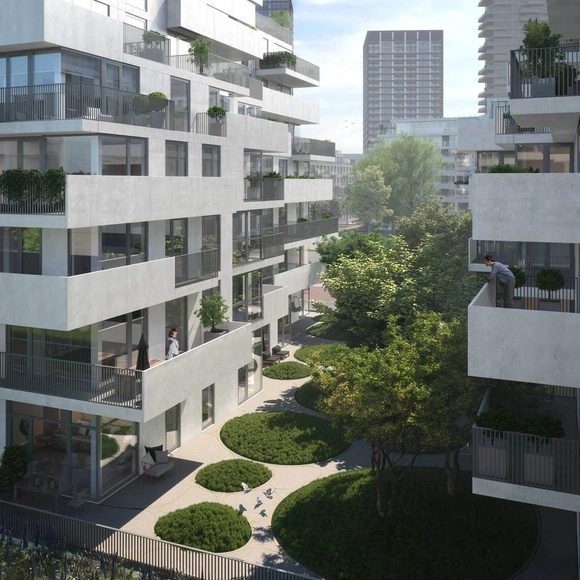
KAAN Architecten has been investigating methods to ensure that cities continue to flourish. Working closely and experimenting primarily with the city of Amsterdam, the firm’s projects have been focusing on developing a healthy design and finding alternative possibilities to high-density architecture.
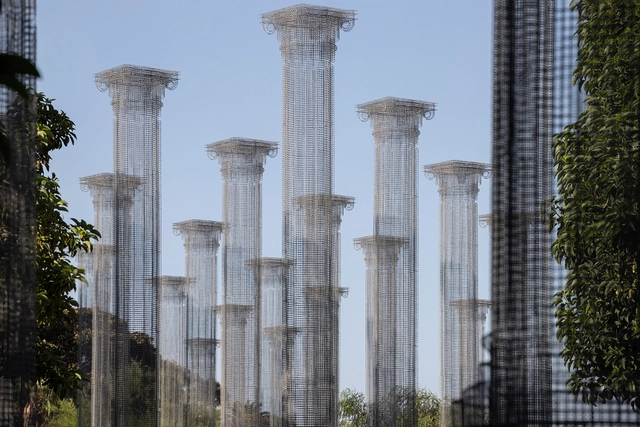
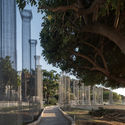
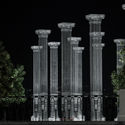
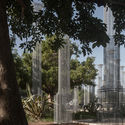
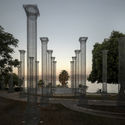
Edoardo Tresoldi has inaugurated a permanent installation on Reggio Calabria’s seafront, in Italy entitled Opera. Commissioned by the local Municipality and the Metropolitan City, the public art intervention “was created to celebrate the contemplative relationship between place and human beings through the language of classical architecture and the transparency of the Absent Matter”.
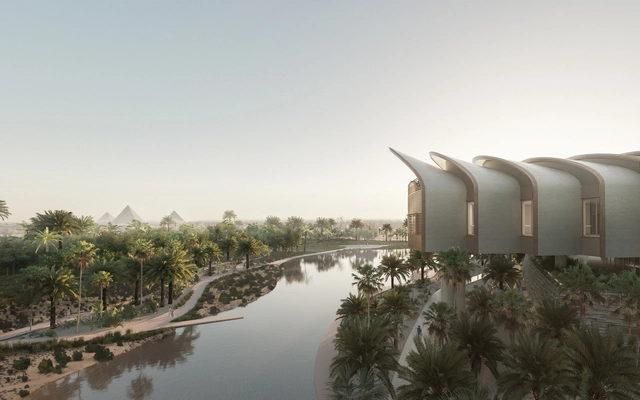
Magdi Yacoub Global Heart Centre Cairo. Image Courtesy of Foster + Partners
Foster + Partners has begun construction on the new Magdi Yacoub Global Heart Centre in Cairo, Egypt. With views of the Pyramids of Giza, the hospital site borders the Zewail City of Science and Technology as part of an integrated health and medical research zone. The design was made to respond to the needs of patients, their families and the staff that care for them while decreasing recovery times.
Model of the National Coach Museum / MMBB Arquitetos + Paulo Mendes da Rocha + Bak Gordon Arquitectos. Courtesy of the architects
Brazilian architect Paulo Mendes da Rocha donated his entire collection to Casa da Arquitectura - Portuguese Centre for Architecture based in Matosinhos, which is dedicated to preserving and sharing architectural documents. Considered to be the world's most renowned living Brazilian architect, he signed the contract with the institution last year in December, one month after being invited to donate the material.
The arrival of the entire Paulo Mendes da Rocha collection follows the donation of the National Coach Museum project in 2015, and of a set of seven projects for the Brazilian Architecture Collection in 2018. The material which now arrives at Casa da Arquitectura will be received by more than 30 employees dedicated to inventorying and organizing the thousands of items produced during his long professional life from the 1950s to the present day.
https://www.archdaily.com/947531/paulo-mendes-da-rocha-donates-his-complete-collection-to-casa-da-arquitectura-in-portugalEquipe ArchDaily Brasil
The Midnight Charette is an explicit podcast about design, architecture, and the everyday. Hosted by architectural designers David Lee and Marina Bourderonnet, it features a variety of creative professionals in unscripted conversations that allow for thoughtful takes and personal discussions. A wide array of subjects are covered with honesty and humor: some episodes provide useful tips for designers, while others are project reviews, interviews, or explorations of everyday life and design. The Midnight Charette is also available on iTunes, Spotify, and YouTube.
This week David and Marina are joined by Jeff Durkin, an architectural designer turned filmmaker, to discuss his transition to filmmaking, working in Hollywood, storytelling, making design films for architects, the importance of marketing, his filmmaking process, and more. Enjoy!
https://www.archdaily.com/947528/jeff-durkin-on-his-transition-from-architecture-design-to-filmmakingThe Second Studio Podcast
The polished concrete technique is not only suitable for many different environments, but also harmonizes well with various building materials, and has been the material of choice for many Brazilian architects in housing designs in recent years.
The mixture of sand, cement, and water is prepared on-site and the result is a cost-effective and long-lasting alternative when properly and regularly maintained. This finish has become so popular that you can find porcelain tiles and coatings with a similar texture.
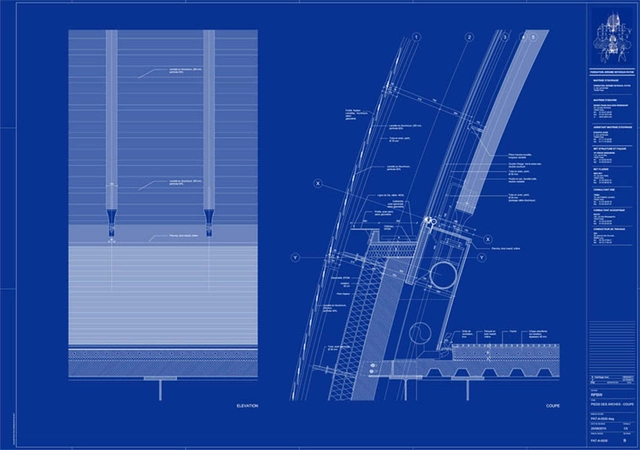
Detalle de la fachada de la Pathé Foundation. Image Cortesía de Renzo Piano Building Workshop
The facade is the calling card of an architecture project, an often iconic and recognizable element that becomes part of the collective imaginary.
We frequently see them featured in photographs and art—such as Andreas Gursky's work, or as part of movie sets. It is almost impossible to forget the pink symmetrical façade of 'The Budapest Hotel' by director Wes Anderson, or even, in music videos or album covers, like the legendary 'Physical Grafitti' by Led Zeppelin.
Courtesy of Valentino Gareri Architectural Atelier
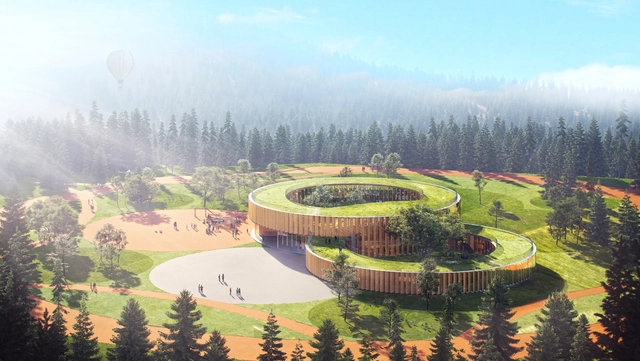
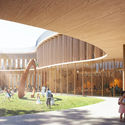
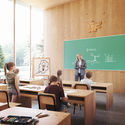
Valentino Gareri has proposed a sustainable and modular educational building for the new post COVID-19 era. Entitled Tree-House School, the project reinforces the relationship with nature, with connected outdoor and indoor spaces.
The Chicago Athenaeum: Museum of Architecture and Design and The European Centre for Architecture Art Design and Urban Studies have announced the 2020 International Architecture Awards. The global architecture award for the world’s best new buildings and urban planning celebrated 125 plus projects for its 2020 edition from over 38 nations.
Courtesy of Architectural Visualization Studio Soba
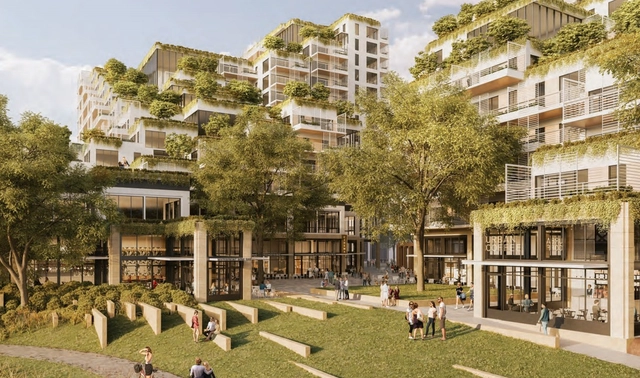
A new mixed-use waterfront development is set to start construction in 2021 after receiving approval by the City of Melbourne’s Future Melbourne Committee. Designed by Foster and Partners, Fender Katsalidis and Oculus, the project is backed by WMW Developments, a venture between Perri Projects and Qanstruct. Located along the Maribyrnong River, the design is made with a series of buildings that span retail, residential, commercial and community uses.
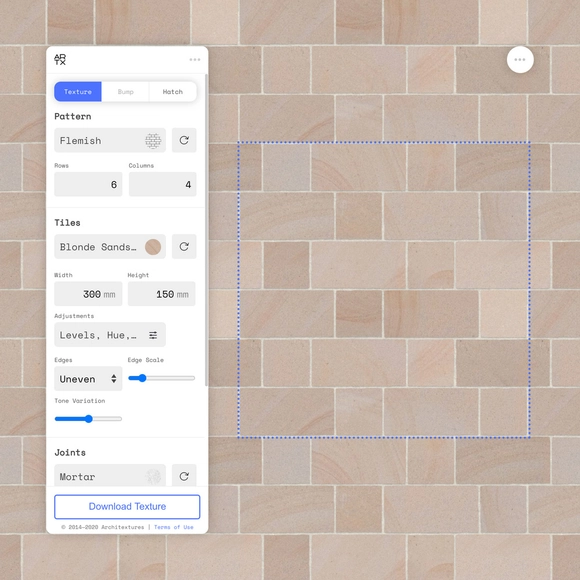
All too often, architects and designers spend hours searching for textures and materials to represent their visions. This struggle takes many forms: from scrolling through Google, Pinterest, and databases in search of the perfect texture, to manually creating one over the course of several hours, or even days. In either case, the result is frequently painful, and rarely perfect. A database organized, reliable, free and easy to use is not always a simple thing to find.
Architextures began in 2014 as a library of high-quality image files, with textures submitted by users or created by the platform itself. Over time, the platform’s creator Ryan Canning noticed that, in his professional work as an architect, the array of static image files available online did not meet the specific textures he was looking for in his design projects. Frustrated with the endless process of searching, editing and overlaying textures in Photoshop, Ryan reinvented Architextures in 2019 as an interactive tool where designers like himself could create specified, high-quality textures in seconds. And importantly, being free to use for personal and educational use, with professional accounts available for a small fee to support the tool’s development.
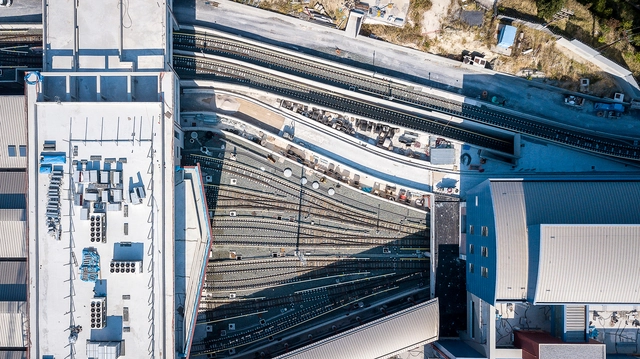
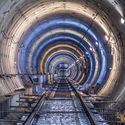
With the recent completion of several new stations and tunnels, the Athens underground metro expansion and the development of the ThessalonikiMetro system are on a set course to completion in Greece. The construction of a direct connection between the Athens airport and the Piraeus harbour, as well as the development of Thessaloniki’s first metro line, are underway, and images by photographer Pygmalion Karatzas show the new underground infrastructure coming together in the two Greek cities.
The pandemic has force-fed change into almost every aspect of our lives. What does that mean for architecture? I have been in my office 135 out of the 140 days since Connecticut Governor Ned Lamont declared “construction” (and all its constituent trades, including “design”) essential. For two months I was alone, then one employee for a day or two a month, then others, eventually all, but most still working from home. The office continued to function.
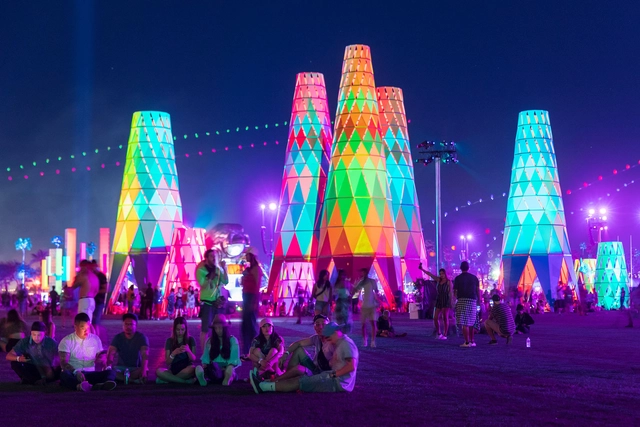
Pop-up architecture makes the most of tiny spaces and intimate experiences. As temporary structures, pop-ups are nothing new, dating back at least to Roman times as temporary stages for festivals called ludi. Pushing the boundaries of architecture, they feature a light-touch for maximum impact, each built to make a statement. Today, they are often designed around the full life-cycle of a project to minimize environmental impact.
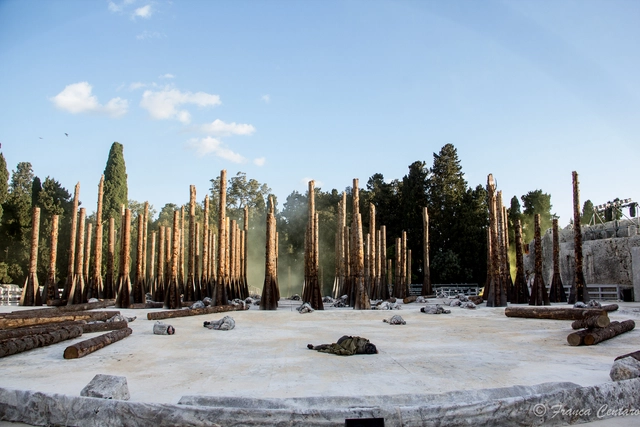
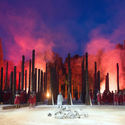
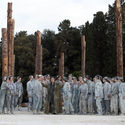
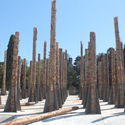
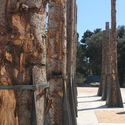
Stefano Boeri has released a short movie, directed by Stefano Santamato and produced by Paolo Soravia, highlighting the journey of 400 fir logs, from being downed by the storm Vaia to being part of the scenography of the Greek Theater in Syracuse. The film, dedicated to the second life of fir trees has won the Venice Architecture Short Film Festival 2020.
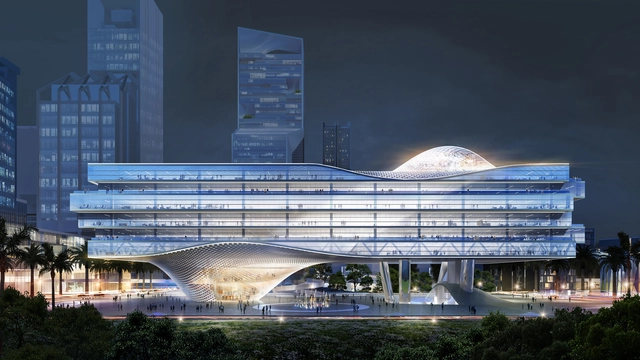
Büro Ole Scheeren unveiled images of the Shenzhen Wave, a transformational headquarters for ZTE, and new symbol of China’s next digital revolution. Envisioned as the future of workspace, the project “reimagines the urban cityscape as an interactive and integrated spatial ecosystem hovering above ground level”.
The American Institute of Architects (AIA) is recognizing seven new residential designs with 2020 Housing Awards. The projects are awarded across single family, production, multifamily and specialized housing. Presented by the AIA Housing and Community Development Knowledge Community, the awards emphasize the importance of good housing as a "necessity of life, a sanctuary for the human spirit, and a valuable national resource."
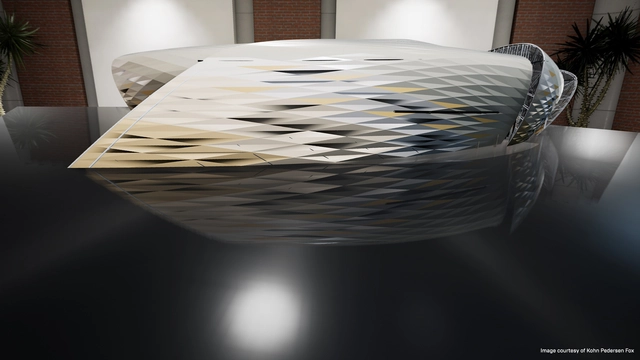
International architectural practice Kohn Pedersen Fox (KPF) is constantly striving to improve efficiencies and enable greater creative exploration through the application of the latest technologies. With nine offices worldwide and projects based anywhere from Europe to the US and China, the company takes a global approach to its design process by fostering collaboration; it’s not uncommon for a single project to involve team members based in London, New York, and Singapore, for example, who come together virtually in what Cobus Bothma, Director of Applied Research, calls their “tenth office”.
At the 2014 Venice Biennale, celebrated architect and curator Rem Koolhaas chose an unusual curatorial theme. Rather than exploring the major issues that plague modern society or their manifestations in the profession of architecture, the event's theme, "Fundamentals," and its main exhibition, "Elements of Architecture," examined in detail the bare fundamentals of buildings, simple elements used by everyday architects for everyday designs. According to Koolhaas, “Architecture is a profession trained to put things together, not to dismantle them. Only by looking at the elements of architecture under a microscope can we recognize cultural preferences, technological advances, changes triggered by the intensification of global exchange, climatic adaptations, local norms and, somewhere in the mix, the architect's ideas that constitute the practice of architecture today.”
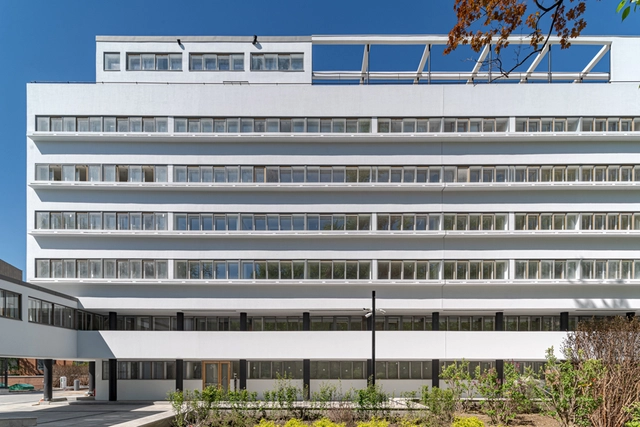
If you wandered down Novinsky Boulevard in central Moscow five years ago looking for the Narkomfin building, you’d have been greeted by a sorry sight. The Narkomfin, the poster child for Constructivist architecture designed by Moisey Ginzburg and Ignaty Milinis in 1928, had been slowly falling into a state of dereliction after being left unloved for 45 years. Paint peeling, concrete crumbling, and windows broken—not to mention the numerous, muddling alterations made to the block of flats, including a completely new ground floor.
Sit back and recharge your batteries: the comfortable HUB collection allows maximum relaxation in the shortest time
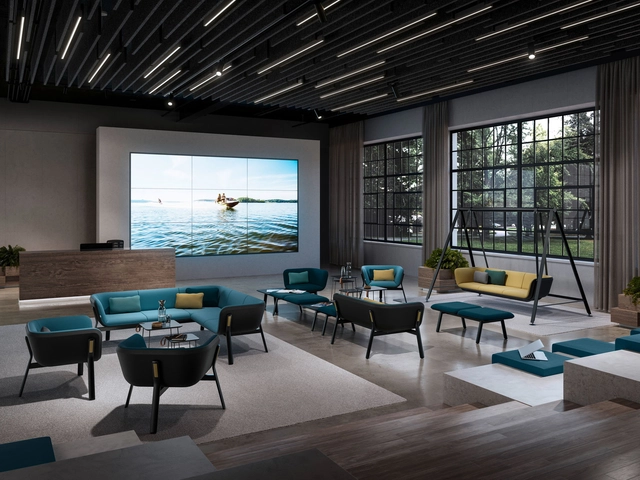
Within the scope of the innovative SPLACES concept, INTERSTUHL offers planners and architects the opportunity to collaborate directly with experts on the design of creative and future-oriented new work scenarios.
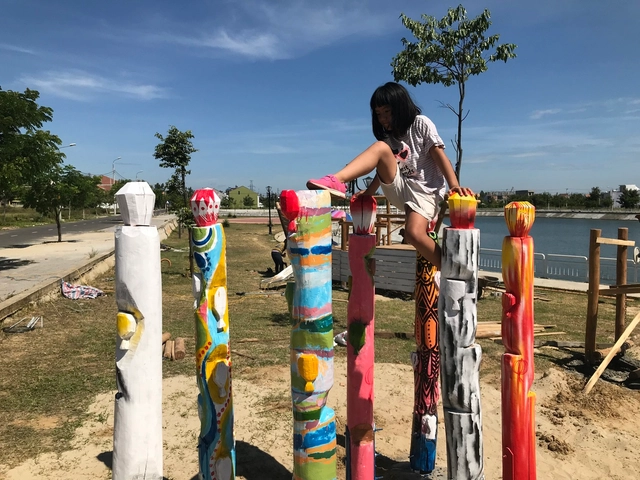
Trang Keo Park - Vietnam. Image Courtesy of UN-Habitat
The Un-Habitat or the United Nations agency for human settlements and sustainable urban development, whose primary focus is to deal with the challenges of rapid urbanization, has been developing innovative approaches in the urban design field, centered on the active participation of the community. ArchDaily has teamed up with UN-Habitat to bring you weekly news, article, and interviews that highlight this work, with content straight from the source, developed by our editors.
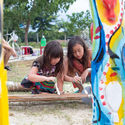
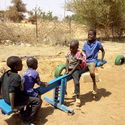
In this second collaboration with UN-Habitat, discover different examples on how to design with and for kids in marginalized areas. In fact, child-responsive planning leads to a vibrant and animated inclusive city. Focusing on spaces for children, this feature highlights cases in Bangladesh, Niger, and Vietnam. These public spaces implementation projects seek to promote environment-friendly livable cities, taking on participatory approaches and involving the youngsters from the beginning of the process. In the end, no one knows the needs of kids, more than the kids themselves.








.jpg?1599681232&format=webp&width=640&height=580)



Ai_Qing_Courtesy_of_KPF.jpg?1599818631 "Spring City 66 / Kohn Pedersen Fox. Image © Ai Qing")