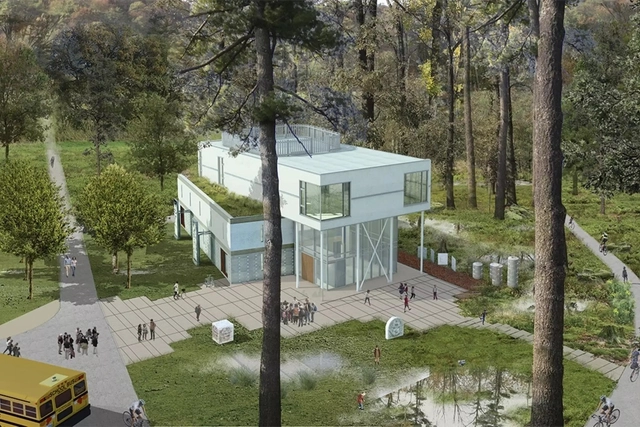
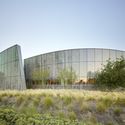
The Clark Centre for the Arts is undergoing a revitalization as part of the Guild Park and Gardens in Toronto. Designed by Taylor Hazell Architects, the new multipurpose facility will house art studios and be home to creative programs for residents and visitors. Clark Centre for the Arts (CCA) will offer a public gallery, five specialized art studios and two on-site cabins, providing over 6,000 square feet of new, dedicated studio, exhibition and event space.
Titled "Trouble in Paradise", the Polish pavilion at the 17th International Architecture Exhibition – La Biennale di Venezia, will explore the countryside and observe how rural areas are an important element of building sustainable human environments, given the crises the world is surrounded with today. Curated by PROLOG +1 along with an international group of architects and artists, the national pavilion will be on physical display at the Giardini di Venezia, and online from May 22nd to November 21st, 2021.
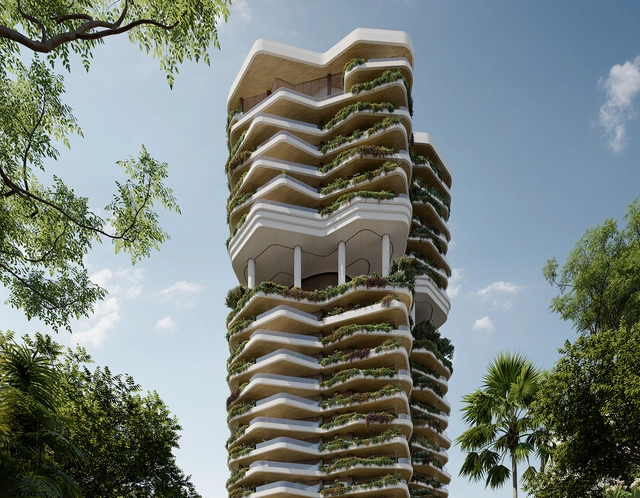
PLP revealed its design for a luxury residential tower in Singapore, featuring a lush vertical garden inspired by the city’s greenery. The biophilic design that blurs the line between indoor living areas and outdoor spaces strives to redefine metropolitan living by promoting health and wellbeing.
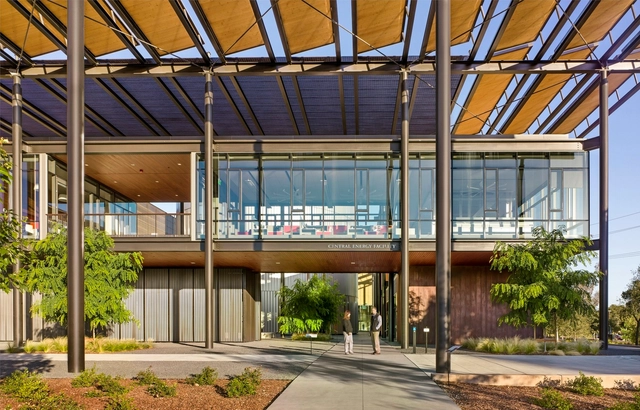
Solar design in contemporary architecture is rooted in the profession's sustainable turn. The relationship between architecture and energy is tied to both passive strategies and performance via more recent innovations in technology. As one way to begin addressing the global climate crisis and greenhouse gas emissions, solar design is reshaping cities and architecture around the world.
The ‘Trolley’, developed by next125, the premium brand of the kitchen manufacturer Schüller, invites us to bring more movement into our everyday lives. Image Courtesy of next125
Premium kitchen brand next125’s award-winning ‘Trolley’ brings multifunctional mobility beyond the kitchen and into other increasingly connected home spaces.
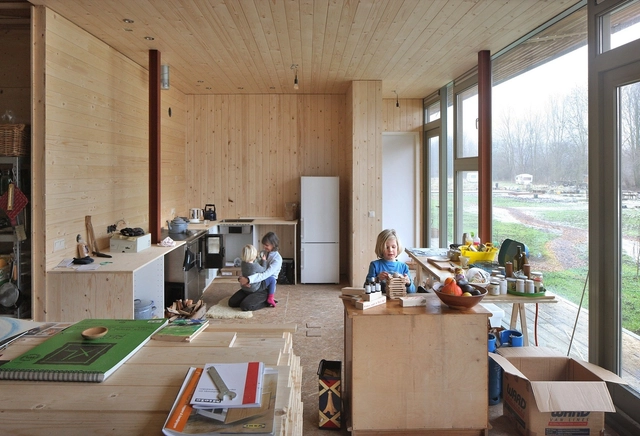
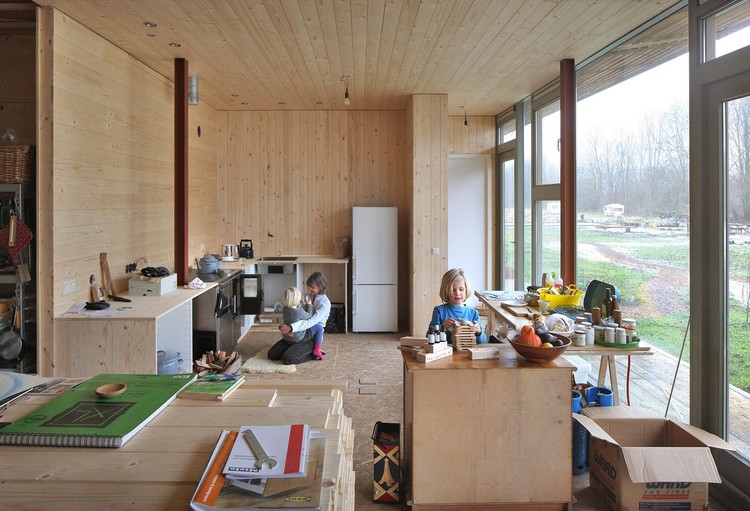
Many of us have already lived, are living, or will live in a shared student house - a good mix of cheap housing and intense socializing with friends and school mates. For a reasonable price, it is possible to have a single private room and share common spaces. In fact, not only university students are living this way nowadays. The concept of co-living is becoming more and more an attractive and effective solution.
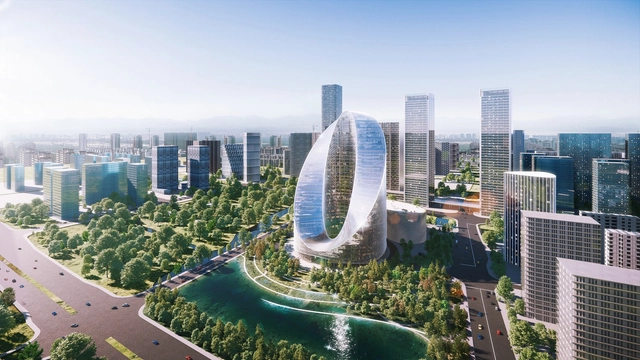
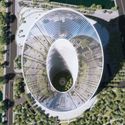
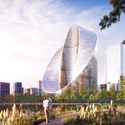
Nestled in the heart of Yuhang District, Bjarke Ingels Group’s design for the new OPPO R&D Headquarters, China’s largest smartphone company, combines aesthetics and innovative technology in a building that will be an environmental, economical, and socially sustainable hub for innovation.
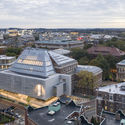
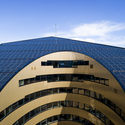
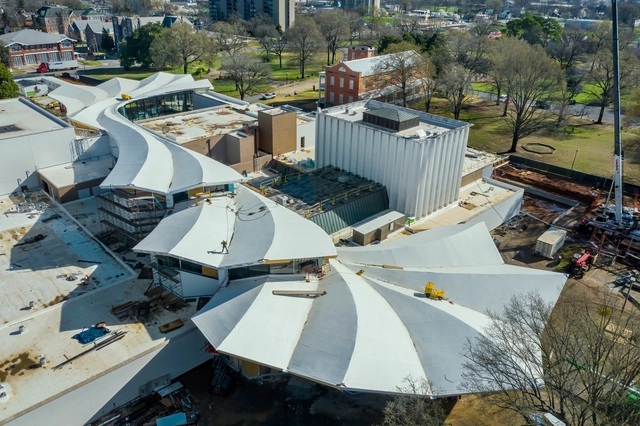
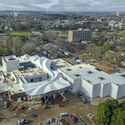
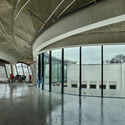
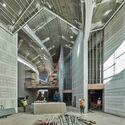
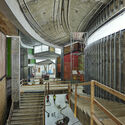
Designed by Studio Gang architects, together with landscape design firm SCAPE and Polk Stanley Wilcox Architects, ArkansasMuseum of Fine Arts (AMFA) reaches an important construction milestone with the recent completion of its signature new roof. Spanning the entire length of the project and connecting the various buildings, both renovated and new, the folded plate concrete roof establishes the museum’s new architectural identity as the leading cultural institution for the state of Arkansas.
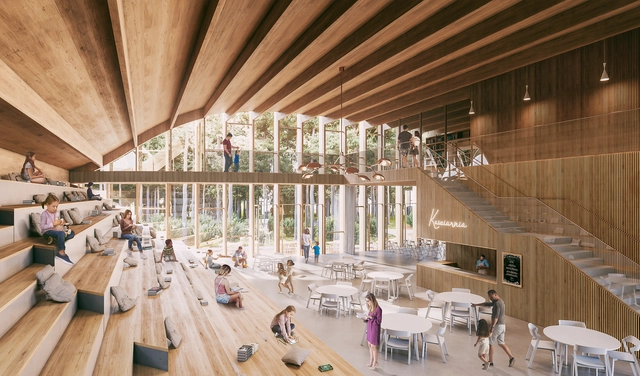
This week’s curated selection of the Best Unbuilt Architecture focuses on projects related to learning, research and culture submitted by the ArchDaily Community. From kindergartens to libraries and universities, the article explores how different spaces of knowledge around the world are designed to inspire their users.
Featuring an array of scales and architectural programs, the list of projects includes a circular library in South Korea, a bridge-like kindergarten in Poland, as well a university in Tel Aviv that creates a series of opportunities for unmediated interactions and unscripted learning. The following are architectural programs that cater to the dissemination of knowledge in all its forms and to all age and social groups.
Videos
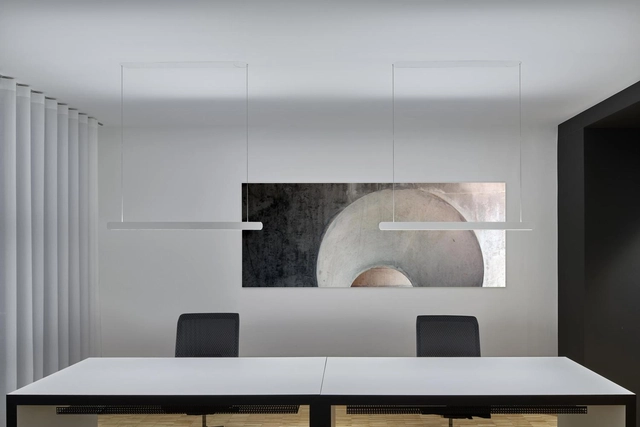
Thanks to a mounting plate for hollow ceilings, the Mito volo pure pendant luminaire’s canopy disappears almost invisibly into the ceiling. Image Courtesy of Occhio+
Occhio+ represents a broadening of the Occhio product portfolio into the larger contract sector, and, as such, is aimed explicitly at architects and planners.
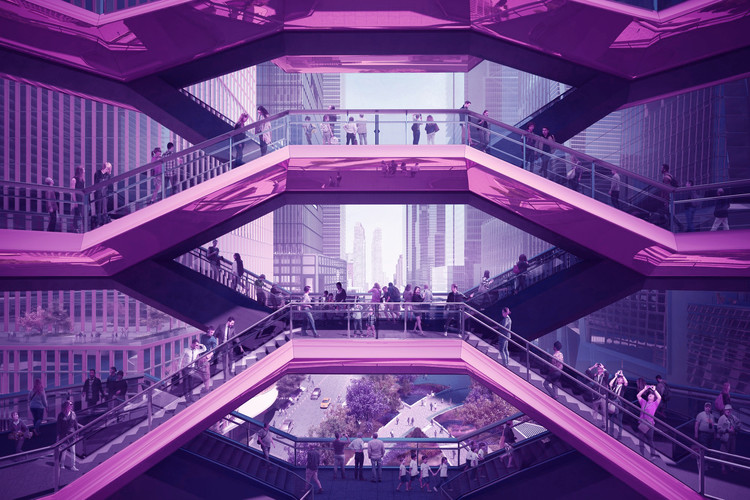
Collage by Matthew Maganga. Image Courtesy of Forbes Massie-Heatherwick Studio
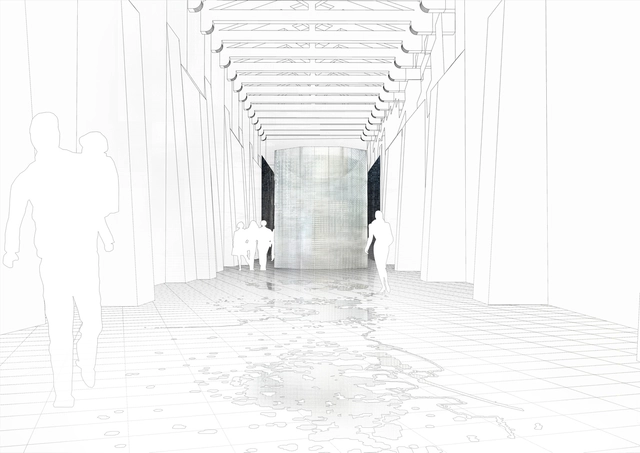
Fifty-one years ago, in 1970, a Japanese roboticist named Masahiro Mori came up with the concept of the “Uncanny Valley”. Around the same time, architectural renderings done using analog methods were still in vogue – collages and photomontages used to get ideas across to clients. A decade later, personal computers came along, and that saw the emergence of CAD and the wider adoption of digital rendering. Today’s architectural renderings are almost imperceptible from reality, with the increase in sophistication of rendering sofware. We struggle to tell the difference between what is a rendering and what is not – or rather we are able to tell a slight difference and it leaves us slightly uncomfortable, which brings us to Mori’s uncanny valley.
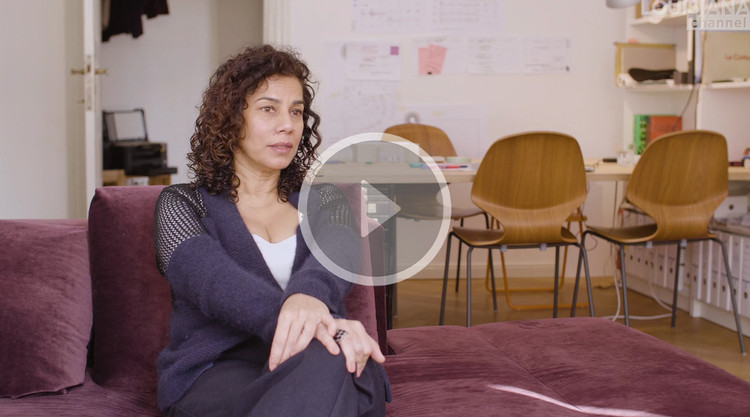
In Louisiana Channel's latest interview, Indian architect Anupama Kundoo shares her thoughts on the importance of balancing between traveling and being in solitude with oneself. "I think travel is important, but if you're not rooted yourself, you will go to a hundred places and not see anything", explained the architect, "traveling helps you step back from what you take for granted".
This episode of Architecture w/ Stewart explores the only five ways of organizing the plan of a building, at least they are the only ones according to Francis Ching as listed in the canonical text Form, Space, and Order. Each of the five: central, linear, radial, clustered, and grid, offer unique benefits and opportunities to architects, clients, or visitors. Some of the strategies are reserved for formal ceremonial buildings, while others are better for providing less rigid and more organic exploration by occupants. Some yield complete and autonomous forms while others can shrink or grow at ease. However, every single building is, in some way, a combination of these five basic strategies. Using paper cutout shapes, plastic human figures, and representative examples from history and recent constructions, Stewart demonstrates the value and possibilities of each organizational strategy.
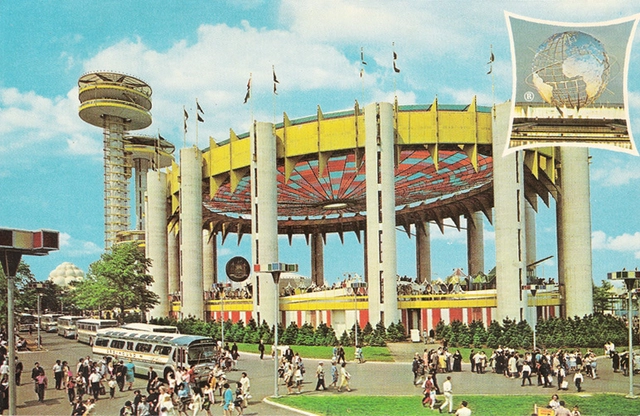
1964 World's Fair held in New York City. Image Courtesy of Abandoned NYC
World’s Fairs seem to be a memory of the distant past. These mega-scale events once brought us culinary staples, technological advancements, and introduced some of the most notable examples of architecture and landmarks that impact how we think about design and construction even in the present day. Throughout the numerous fairs and expos that were held, architectural discourse itself significantly advanced and the pomp and circumstance that surrounded these muscular flexes of international innovation reimagined what life would be like in the decades to come.
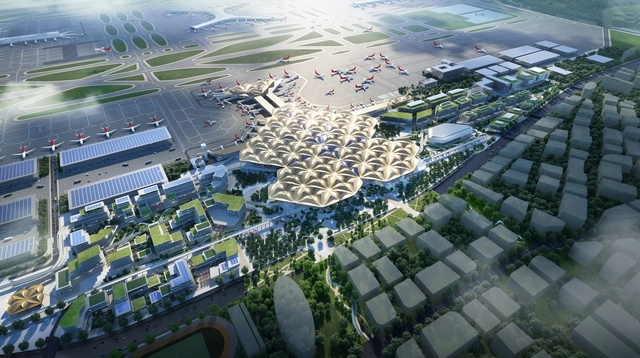
A multidisciplinary design team led by global architecture firm Grimshaw was selected as the winner of an international competition to design the Shenzhen Airport East Integrated Transport Hub. The winning design, which was inspired by the Mangrove tree, will provide travelers effortless transfers between high speed rail and other public transportation means in a new green and interactive way.
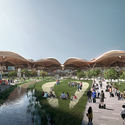
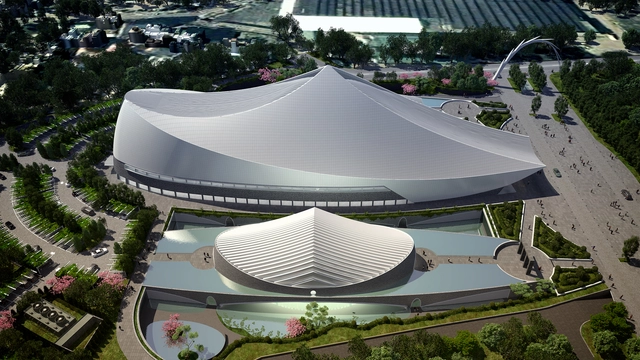
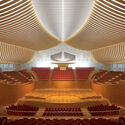
Calatrava's design for the Yuan Ze Arts and Conference Hall, now more than a decade in the making, finally broke ground this week. When ready, the project will serve as a venue for exhibitions and cultural events and will feature a Performing Arts Building, an Orchestra Hall and a Theatre, among other amenities.
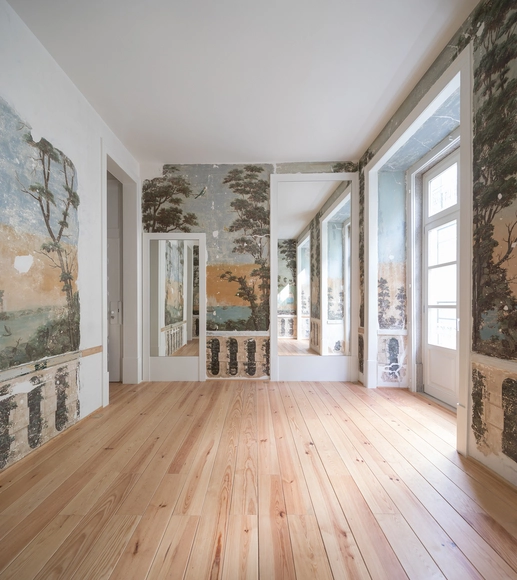
José Adrião. Douradores Apartments Lisbon | 2013–2020. Photo by Nuno Almendra, 2020
"The house is among the first concepts shared by society and architecture", states André Tavares and Pippo Ciorra, curators of the exhibition called At Home: Projects for Contemporary Housing, on display at Garagem Sul / Centro Cultural Belém, in Lisbon. The show, which is the unfolding of another one previously held at the MAXXI Museum in Rome, gathers pieces from the huge collection of the Italian institution and seeks intersections with contemporary Portuguese architectural production. Its main topic – the house, the home – has never been more discussed than right now.
Bringing together houses of different scales, built in diverse locations by various methods and techniques, and designed by Italian, Portuguese and international architects, the exhibition gathers, in groups of three, projects from which it is possible to weave relationships that go beyond geographies and materialities and foster reflections about the future of housing and what the home of tomorrow will look like.
We had the opportunity to talk with Tavares and Ciorra about the exhibition, its motivations and expectations with its opening in the physical venue of Garagem Sul. Read below.
Summer Palace Digital Restoration. Image Courtesy of Yuan Ming Yuan (2006 Documentary)
Heritage buildings are precious treasures passed down to us by our ancestors. They are also intangible cultural gifts for all mankind, a discovery of the past. Nevertheless, as time changes, ancient Chinese architecture, either destroyed by the forces of wars or nature, is gradually losing its original glory, making the protection and restoration of ancient buildings an urgent matter in this contemporary world.
I am on the edge. Not emotionally or psychologically—although this could be the case—but literally, physically, spatially, geographically. As I write this, I am sitting on the balcony of a hotel room in Miami Beach, overlooking the Atlantic Ocean. Behind me is the whole State of Florida and, indeed, the entire North American continent. In front of me: the boardwalk, a narrow beach, and then a lot of water—and not much else between here and Mauritania, a distance of more than 4,400 miles.
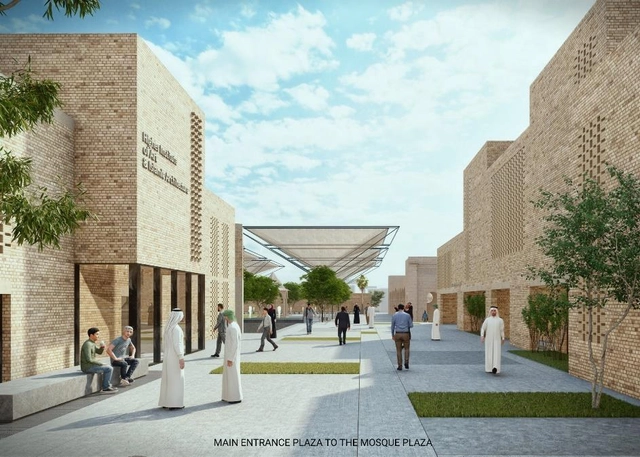
Last November, UNESCO, the Iraqi Ministry of Culture, and the Iraqi Sunni Endowment jointly announced an international design competition for the reconstruction and rehabilitation of the historical Al Nouri Complex in Mosul. One of the oldest cities in the world, Mosul ("the linking point" in Arabic) is beginning a recovery process following years of conflict, guided by an initiative aptly titled "Revive the Spirit of Mosul." The rehabilitation of the Al Nouri Complex, which dates originally to the twelfth century and has constituted a core facet of city life since, is a central part of this initiative, and is intended to signal the city's resilience, hope, social cohesion, and reconciliation in the aftermath of the conflicts. Six months after the competition was originally announced, winners have finally been chosen.
https://www.archdaily.com/959744/meet-the-winners-for-the-reconstruction-and-rehabilitation-of-mosuls-al-nouri-complexLilly Cao
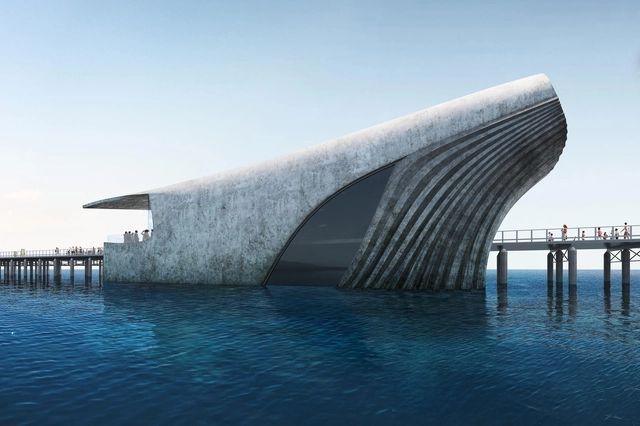
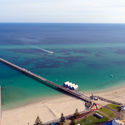
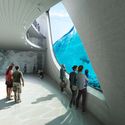
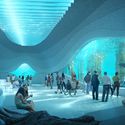
Baca Architects have set out to build the world's largest natural marine observatory in Australia. Taking the form a whale emerging from the water, the project will be built at the end of the Busselton Jetty. Baca was appointed by marine contractor Subcon as Lead Architects for the new project. Called the Australian Underwater Discovery Centre (AUDC), the design will include an underwater trail and dining experience.
Entitled “A Roof for Silence”, the Lebanese Pavilion at the 17th International Architecture Exhibition – La Biennale di Venezia, will investigate the question of living together, tackling the issue of coexistence through a questioning of the spaces of silence, and by putting into dialogue architecture, painting, music, poetry, video and photography. Curated by Hala Wardé, founder of HW architecture, in collaboration with Etel Adnan and Fouad Elkoury, the national pavilion will be on display at the Magazzino del Sale (Zattere), from May 22nd to November 21st, 2021.
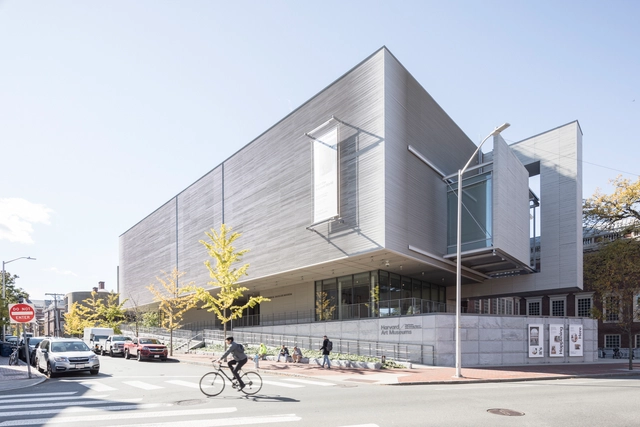
As the oldest institution of higher learning in the United States, Harvard has emerged as one of the world's most well-known universities. Organized into ten academic faculties and the Radcliffe Institute for Advanced Study, it is spread across 200 acres and centers on Harvard Yard in Cambridge. Developed along the Charles River adjacent to the Allston neighborhood of Boston, Harvard has the largest financial endowment of any academic institution. This has supported a number of different campus building projects across the university’s history.
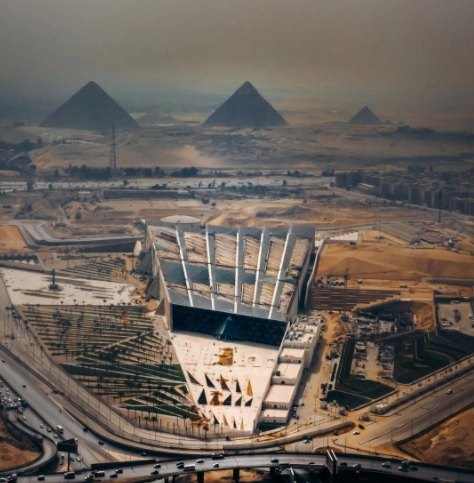
Designed by Irish architecture firm Heneghan Peng, the long-awaited Grand Egyptian Museum devoted entirely to Egyptology is set to open this summer, sitting on the edge of the Giza Plateau, 2 km away from the Pyramids. Considered as the largest museum in the world dedicated to one civilization, the cultural complex will accommodate about 100,000 ancient artifacts, and will include 24,000m² of permanent exhibition space, a children’s museum, conference facilities, educational areas, a conservation center, and extensive gardens inside and around the museum's plan.


.jpg?1618821691&format=webp&width=640&height=580)
.jpg?1618821707 "© Wiktoria Wojciechowska")
.jpg?1618821715 "© Patrycja Wojtas")
.jpg?1618821737 "© Patrycja Wojtas")
.jpg?1618821691 "© Michał Sierakowski")
.jpg?1618821691)















.jpg?1618071837 "Courtesy of BIG")
.jpg?1618071843 "Courtesy of Alexis Christodoulou")
.jpg?1618576449 "Wall House. Image © Javier Callejas")
.jpg?1618576436 "Wall House. Image © Javier Callejas")