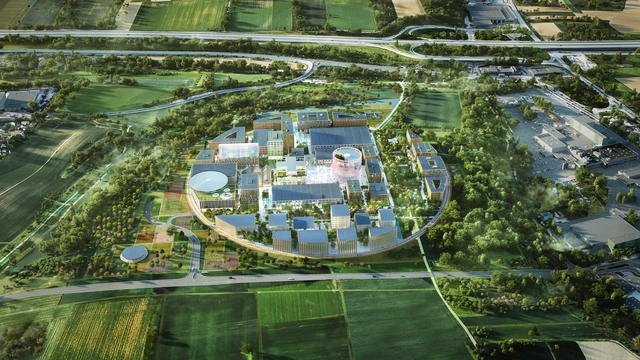
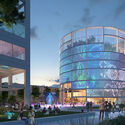
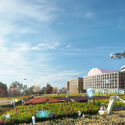
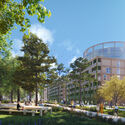
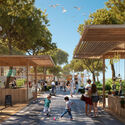
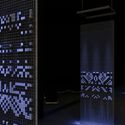
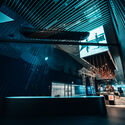
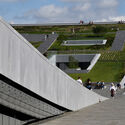
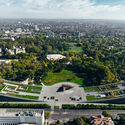
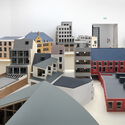
Innovation Park Artificial Intelligence Campus. Image Courtesy of MVRDV
MVRDV has won a competition to design the Innovation Park Artificial Intelligence (IPAI) Campus in Heilbronn,Germany. The campus will be transformed into a world-leading site for developing AI technologies. The design will include a variety of business campus laboratories, a startup innovation center, housing, a communication center, and many amenities, such as a restaurant and a kindergarten. Moreover, the scheme also embeds interactive touchpoints for curious visitors to see the development of these world-changing technologies firsthand and interact with the minds behind their creations.
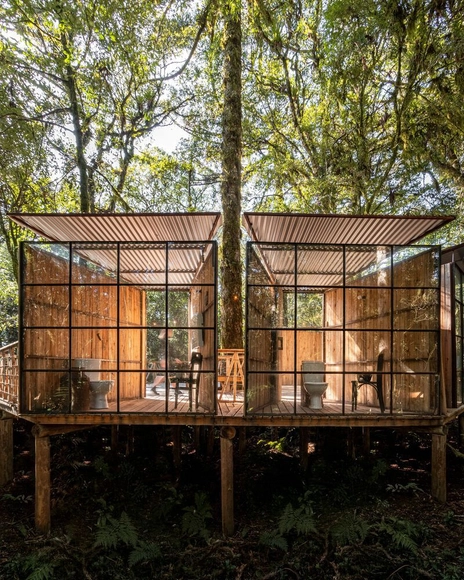
Within various - if not all - architectural programs, there is a function that is an essential and common requirement: the bathroom. A residence, office, commercial space, theater, museum, religious space, park, or school can only be designed with it. In some countries, public toilets are part of urban infrastructure like public transport or waste collection. A fundamental human right, although denied to a considerable portion of the global population, the toilet follows a historical evolution. Modernity brought with it the separation between public and private, and the room became increasingly reserved in Western society.
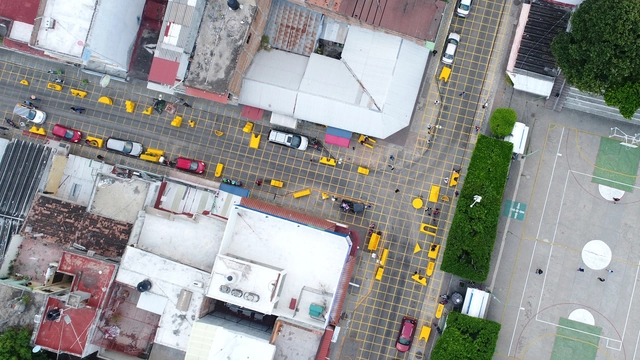
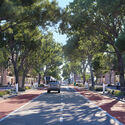
As part of a new initiative of the multidisciplinary laboratory based in Mexico, dérive LAB presents "Shared Streets", a project with a focus on urban design that seeks to spatially transform the street so that it is governed by human relations, rather than using traffic control devices; this suggests that the street is not only a space for transportation and mobility but one in which many other social, economic and cultural activities take place.
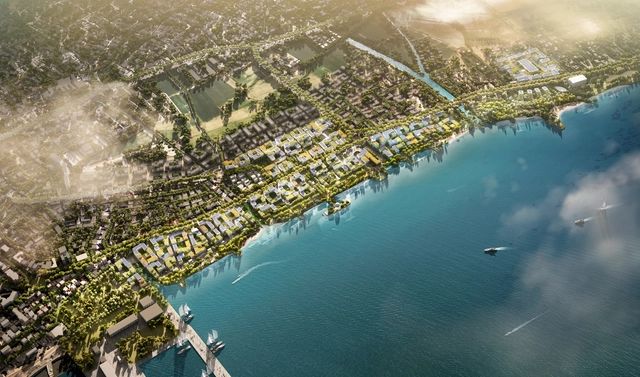
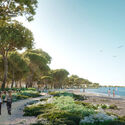
Foster + Partners, working in collaboration with Petrolina Group, has revealed the design of a new master plan to transform the seafront of Larnaca, Cyprus, into a sustainable and enjoyable area for the city residents, future generations, and new visitors. The resort town of Larnaca aims to redesign one of its main arteries, the Larnaca-Dhekelia Road, to become more pedestrian-friendly, along with its seafront. Foster’s proposal aims to enhance the land’s ecological value and to double the length of the waterfront accessible to the public.
Exposed pipes highlighted in architecture are not a novelty. Classics like Centre Pompidou and Sesc Pompeia already adopted infrastructure elements as objects that helped compose the building's aesthetics. Solutions inspired by the industrial architecture of the 50s, urging to remodel industrial sheds for other uses, made their facilities apparent to make the work more cost-effective and less complex. After a few decades, we find this idea at different scales.
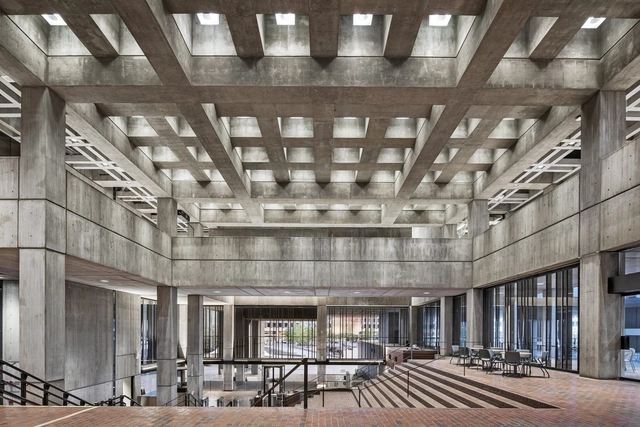
Boston City Hall. Image Courtesy of Reed Hilderbrand
It’s true that all trends are circular, and what was once seen as old and outdated becomes new and modern again- in fashion, music, art, and especially architecture. From the mid 20th century, brutalist architecture rose in popularity before reaching its peak in the mid-1970s, when it was disregarded for being too stylistic and non-conforming to the needs of clients who wanted their buildings to feel timeless. But the love for these concrete beasts is facing a resurgence, and a renewed appreciation for this architectural style is on the rise.
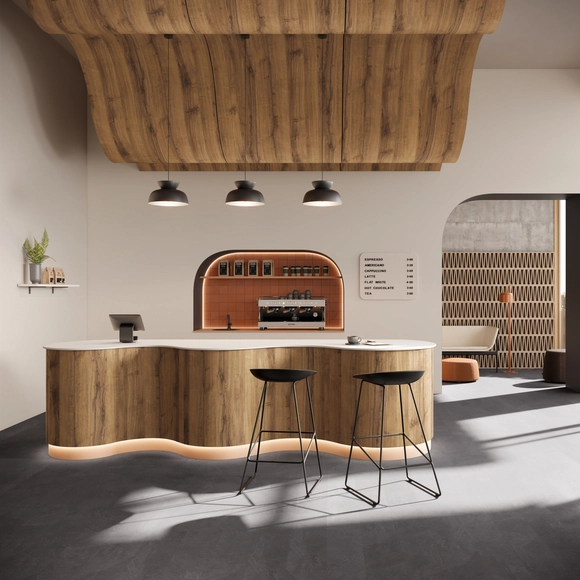
Laminates combine look, feel and function in a practical way. Image Courtesy of Egger
Playing with the balance between form and function, laminates enable architecture to perform a variety of tasks at the same time, being robust, flame-retardant, stain-resistant and antibacterial. With a wide range of applications in architecture, Egger has developed a range of products that can be applied to many of the spaces we inhabit daily, such as kitchens, bathrooms, offices, hotels and shops. Diving into the specifics of laminates and how they can be applied in architecture, we showcase how these materials are an ideal coating material with extra-wide format alternatives.
Prefabricated wooden houses date back to the 19th century, when so-called "kit houses" became popular in North America. Sold by companies like Sears, they offered affordable and convenient housing options, especially for people living in rural areas where labor was scarce and expensive. Customers could choose from a few designs and dimensions, and the kits usually included all the materials needed to build the house, including numbered and precut lumber, nails, shingles, and other necessary components. For some time, however, prefabricated houses were seen as constructions of lesser quality and prestige, and coupled with the lack of flexibility of these solutions, they went into decline.
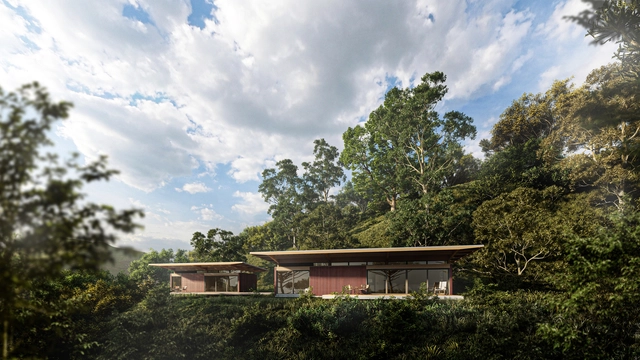
Nowadays, thanks to the technologies available in the market, modular and prefabricated constructions have emerged as clean, sustainable, and energy-efficient construction solutions. In addition, innovations in engineered wood have emphasized its many uses, with the added benefit of aesthetic and structural possibilities. It was in this context that the office UNA BV developed the Modular 5.5 project, whose goal was to create flexible modular constructions that could be assembled in different arrangements, allowing the construction of houses with a variety of dimensions and needs in different terrains. We spoke with Fernanda Barbara and Fábio Valentim about this project:
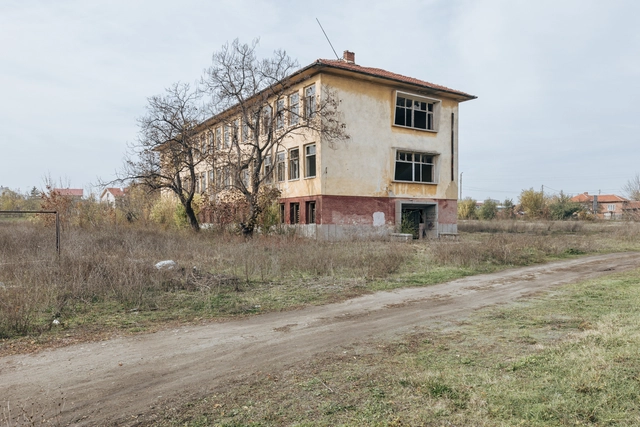
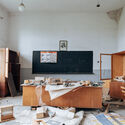
For the 18th International Architecture Exhibition of La Biennale di Venezia, the Bulgarian Pavilion will present the exhibition titled “Education is the movement from darkness to light.” Curators Boris Tikvarski, Bojidara Valkova, and Mariya Gyaurova, joined by Belgian photographer Alexander Dumarey, have chosen to focus the exhibition on the subject of depopulation, urban decline, and rural flight, expressed through the image of abandoned schools present in the country. The project was selected following a national competition organized by The Ministry of Culture, The Chamber of Architects in Bulgaria, and the Union of Architects.
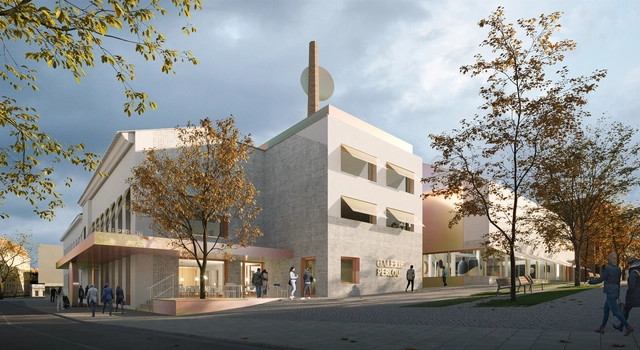
Pearl Gallery Renders. Image Courtesy of CHYBIK + KRISTOF
CHYBIK + KRISTOF architecture studio has been announced as the competition winners for a new cultural landmark that will transform and re-activate public space in Ústí nad Orlicí, Czech Republic. This former textile factory will be converted into a multifunctional cultural hub available to the public. The newly revitalized building will contribute to the existing cultural infrastructure, located near the main square of the city.
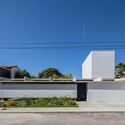
Not all projects seek a constant connection with the outside, at least not in their front façade. Despite not being a usual appearance, there are several reasons for creating an opaque façade: privacy, security, reduced energy consumption, and protection against inclement weather. More common in government, cultural or religious buildings, this solution is also found in some residential cases.
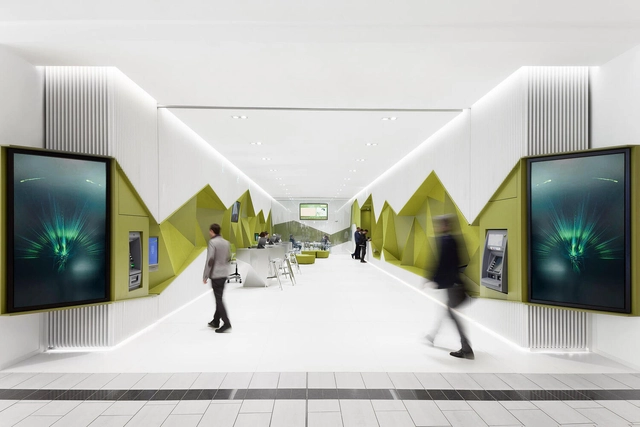
Popping down to a high-street bank branch to pay in a cheque, get out some cash or even open an account are to-do list tasks of the past. With almost all financial services now available online and digital transactions taking more of the market share (up from 28% to 41% from 2019 to 2022), more and more retail branches are shutting up shop.
The complicated worlds of both technology and finance, however, continue to fill many customers with confusion and dread, so perhaps the friendly face of a physical bank storefront with actual humans still has a place. These evolved retail banking interiors hark back to a longed-for time when we knew our local bank manager’s name, but work in conjunction with technology to offer hybrid financial services alongside more personal advice, in comfortable and comforting surroundings.
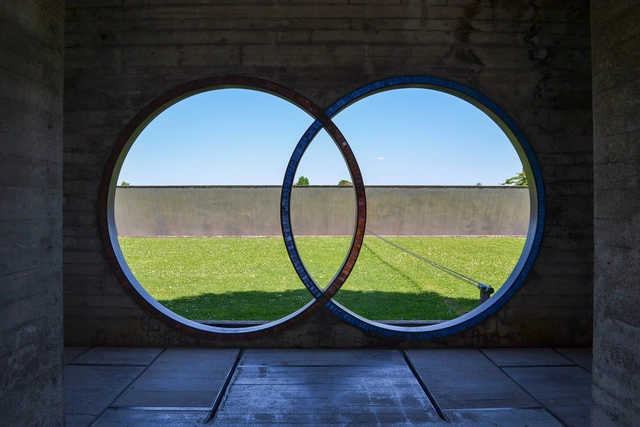
Natural light is one of the most critical elements in architecture. Although unbuilt and difficult to control, it plays a crucial part in defining how space is perceived in terms of scale, textures, materiality, and overall atmosphere. Natural light also impacts the emotions people feel in a space, whether lack of light makes us feel fear and anxiety or ample light makes us feel safe and ethereal. As much as light impacts architecture, architecture also impacts light. Through framing vistas, creating 3D massings that cast sculptural shadows, and carving voids from solids that create unique light projections, many architects have mastered design techniques that utilize light in a way that seamlessly integrates it within a building- and perhaps one of the best to do this was the Venetian architect, Carlo Scarpa.
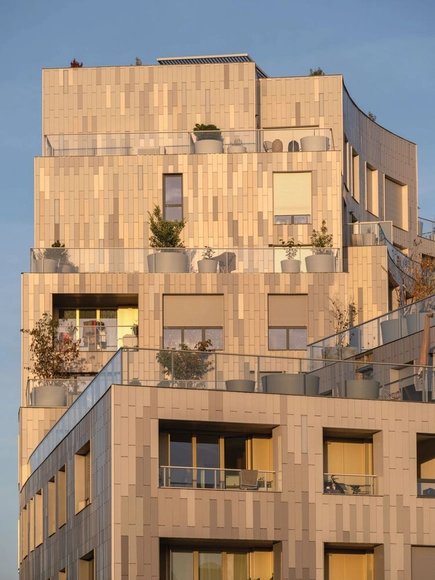
Ascension Paysagère, designed by Dutch office MVRDV, is a mixed-use development that combines residential, commercial, and community spaces in the French city of Rennes. It stands out from its surroundings through a series of stepped terraces inspired by geological formations such as gorges and mountain ranges, with terraces designed to provide a variety of living and communal spaces, as well as tree-lined gardens and public squares. To amplify the effects desired by the designers, the chosen ceramic tile resembles the rock colors of the region, and changes its appearance with every change in climate, reflecting the environment and the light.
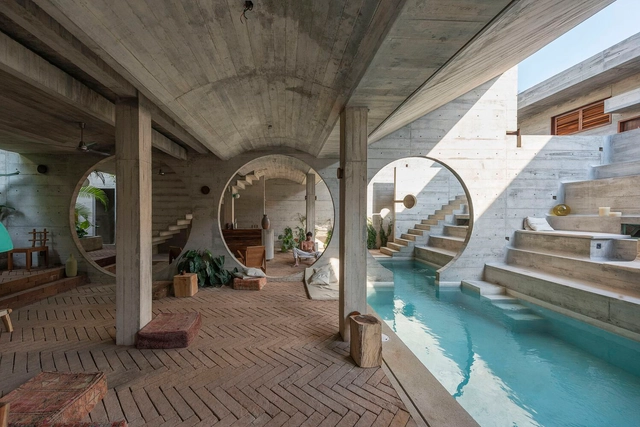
Although there is no exact record of the specific moment in which Puerto Escondido began to become a reference of contemporary Mexican architecture, various waves have been experienced. Perhaps the first one started in 2016 when the construction of Casa Wabi began, a Tadao Ando project where the Mexican office BAAQ´ collaborated as associates to develop the executive project and coordinate its construction. However, in 2019 another wave was experienced that was later reinforced by the beginning of the COVID-19 pandemic and remote work, which radically aroused interest in returning to the provinces and costs where there was less population and overcrowding.
Videos
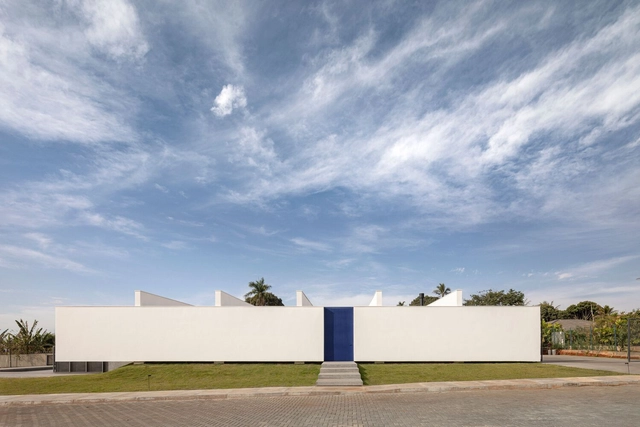
House in Restelo / Pedro Domingos Arquitectos. Image Courtesy of FritsJurgens
The third and final part of "Stories of Lisbon's Light" focuses on a robust and daringly contrasting family home between the seven rolling hills of ‘the city of light’, Lisbon. Discover how architect Pedro Domingos designed a home where daylight and the river Tagus play the leading roles. With the residence facing the south, radical architectural choices had to be made to allow the light to flow through the entire residence.
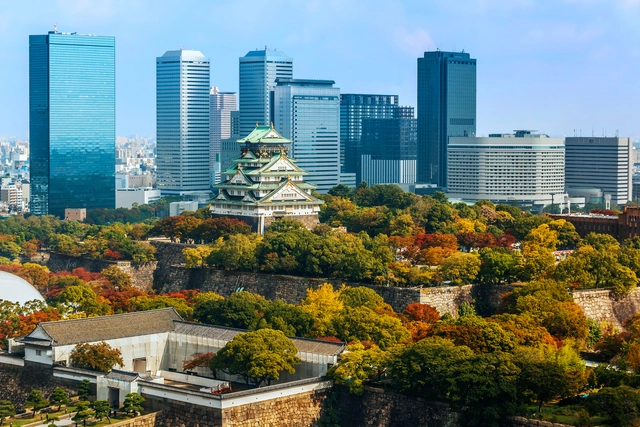
In 2018, the Bureau International des Expositions (BIE) announced that the Japanese city of Osaka won the bid to host the 2025 World Expo, an event expected to draw millions of visitors. The event will open on April 13, 2025, and close on October 13, 2025. This will be Japan’s second time hosting the event, as another World Expo was held in Osaka in 1970. The official theme for this edition is “Designing Future Society for Our Lives.” Architect Sou Fujimoto has been chosen as the Expo Site Design Producer of the event, becoming responsible for designing the master plan and directing the designers of the participating countries. As of March 24, 2023, 153 countries and regions and 8 international organizations have officially confirmed their participation in Expo 2025 Osaka, Kansai, Japan.
At this year’s Venice Architecture Biennale 2023, the Hungarian Pavilion focuses on a new museum building in Budapest, the Museum of Ethnography. The Museum was designed by Marcel Ferencz (Napur Architect) and completed in 2022 as one of Europe’s most notable cultural and urban development programs, the Liget Budapest Project. The exhibition in Venice, titled "Reziduum – The Frequency of Architecture" and curated by Mária Kondor-Szilágyi, will present the museum's collection through the digital medium. A short animated film titled Ethnozoom and an interactive computer program, the MotifCreator, will allow visitors to become familiar with Hungarian traditions and create their own motif compositions, thus contributing to worldwide community creation. The Hungarian Pavilion will showcase works by architect Marcel Ferencz, architect and composer Péter Mátrai, architect Judit Z. Halmágyi and light designer Ferenc Haász.
Videos
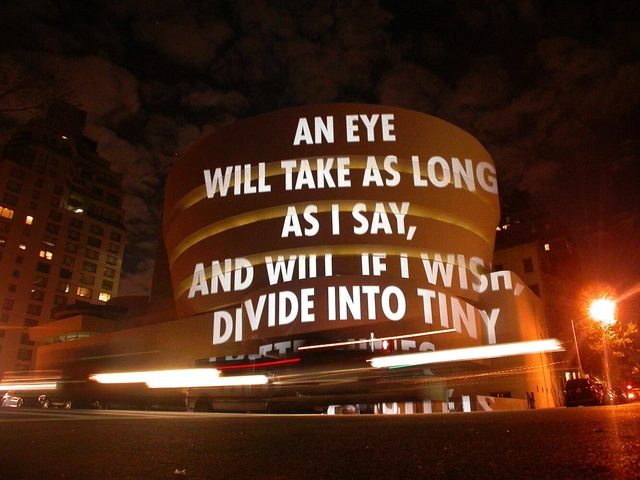
Jenny Holzer, installation at Guggenheim New York. Image: fluido & franz, CC BY-NC-SA 2.0 via Flickr
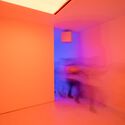
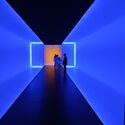
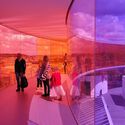
Light has been present in art for centuries. To think of the Baroque or Gothic without this element would be impossible. However, in the 20th century, artists began to explore light qualities and transformed them into a means of materializing art. Sculptures, immersive installations, and ways of shaping the environment through light, its colors and intensities brought new spatial perceptions by establishing a unique relationship with architecture.
Sunlight has proven to be an excellent formgiver, with which architecture can create dynamic environments. The lighting design pioneer William M.C. Lam (1924-2012) emphasized in his book “Sunlighting as Formgiver” that the consideration of daylight is about much more than energy efficiency. Architects have now found numerous ways of implementing sunlight and the questions arises whether a coherent daylight typology could be a valuable target during the design process. However, many daylight analyses focus mainly on energy consumption.
Siobhan Rockcastle and Marilyne Andersen, though, have developed a thrilling qualitative approach at EPFL in Lausanne. Their interest was driven by the spatial and temporal diversity of daylight, introducing a matrix with 10 shades of daylight.
Prime Seafood Palace / Omar Gandhi Architect. Image Courtesy of Omar Gandhi Architect
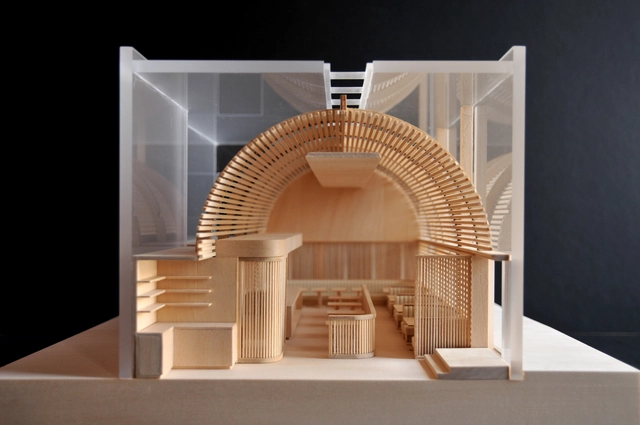
Ambitious and diverse, models are representative tools non-exclusive to architects. Peculiar fascination with miniatures – and what they tell us about our larger world- extends to all ages, cultures, and purposes. From scaled temples of clay from 200 B.C. found in Mexico, ceramic models carried during medieval Islamic journeys, Victorian doll houses, and LEGOS, models are more than baby buildings. Miniatures unveil the essentials, explain much larger concepts, contain intimate and historical data, and invite us to challenge our known selves and perspective.
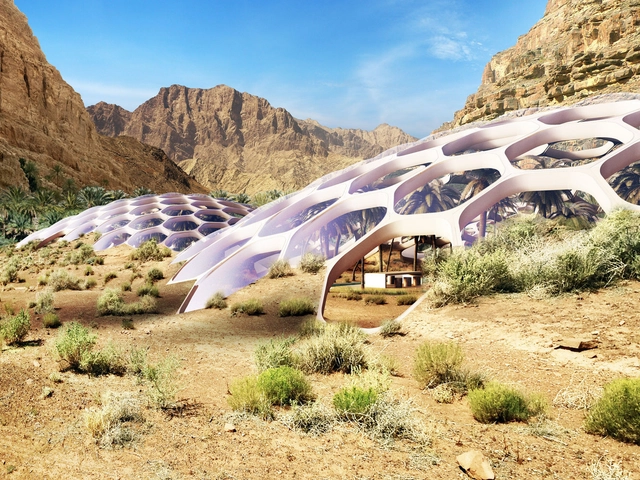
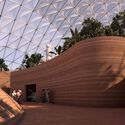
"Biodomes" in the mountains of the United Arab Emirates seek to promote ecotourism. Courtesy of Baharash Architecture
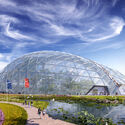
Buckminster Fuller's obsession with geodesic shapes placed them in architectural history. The spherical appearance and the complex structural framework gained different appropriations and scales over the years, one of the most iconic works being the Montreal Biosphere, the US pavilion for the 1967 World Expo, designed by him. These structures emerged from his interests in material efficiency, structural integrity and modularity. Back in the 60s, he understood these features as essential for a sustainable and easily replicable intervention
The Second Studio (formerly The Midnight Charette) is an explicit podcast about design, architecture, and the everyday. Hosted by Architects David Lee and Marina Bourderonnet, it features different creative professionals in unscripted conversations that allow for thoughtful takes and personal discussions.
A variety of subjects are covered with honesty and humor: some episodes are interviews, while others are tips for fellow designers, reviews of buildings and other projects, or casual explorations of everyday life and design. The Second Studio is also available on iTunes, Spotify, and YouTube.
This week David and Marina discuss 5 questions owner’s should ask their architect before hiring them: 1. The architect’s professional experience, not just their project experience 2. What physical parts of the project will be in the architect’s scope 3. A description of the overall project process and what the architect does during each phase 4. What deliverables the architect will provide throughout the project. E.g. The types of drawings, samples, and documentation 5. An explanation of the architect’s contract.
https://www.archdaily.com/997699/the-second-studio-podcast-5-questions-to-ask-architectsThe Second Studio Podcast