The Institute for Digital Archaeology (IDA), a joint-venture between Harvard University (US), the University of Oxford (UK) and Dubai’s Museum of the Future (UAE) have announced that they will replicate a structure of architectural significance that was destroyed earlier this year by IS, or 'Islamic State', at full scale in the centre of London and New York City. The arch—all that remains of the Temple of Bel at the Syrian UNESCO World Heritage site—was captured by militants in May and destroyed. By no means an isolated case, IS have looted and demolished a number of similar architectural and anthropologically important sites that "pre-date Islam in Iraq," condemning them as "symbols of idolatry."
UNESCO has inaugurated 47 new cities into its Creative Cities Network, with Detroit being selected as the first "City of Design" from the United States. The Creative Cities Network is a selection of cities across the world that promote the creation of creative and cultural industries, within the categories of crafts and folk art, design, film, gastronomy, literature, media arts, and music.
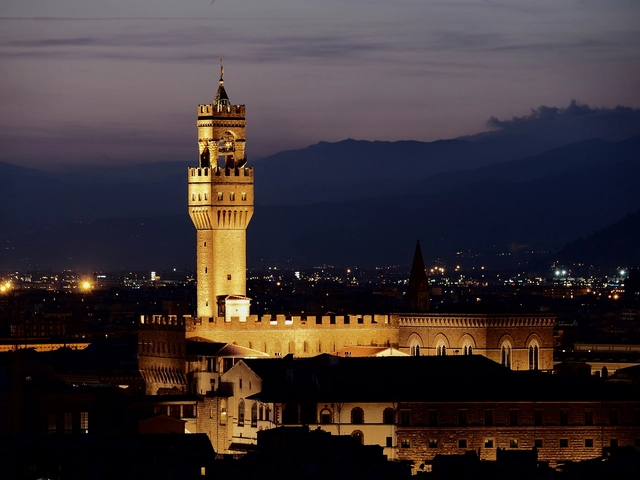
The Italian city of Florence is, according to an article for The Observer, seeking "a better class of tourist." Palazzos are being sold off and converted into hotels and spas, and the ubiquitous 'luxury apartment' development brands are creeping ever closer to some of the city's most treasured architectural monuments. In response, a recent report from UNESCO is urging the municipal government to consider the long-term effects of proposed infrastructural plans on the city, which was inscribed in 1982. "For many vocal and disgruntled Florentines," Stephanie Kirchgaessner writes, "the Palazzo Vecchio is looking less like a stately symbol of civic pride and more like an estate agency."
What are the characteristics of preservation-worthy architecture? In his book "Belyayevo Forever: A Soviet Microrayon on its Way to the UNESCO List," Kuba Snopek finds uniqueness in the seemingly generic Belyayevo microrayon, and argues that in spite of its pattern-book design it is worthy of protection. In this excerpt from the book's first chapter, Snopek examines Belyayevo's predecessor - the Ninth Quarter of Cheryomushki, which was constructed in the 1950s as an experiment that would transform Soviet housing policy - finding it to be a place which challenges our preconceived notions about architectural heritage.
A foreigner’s first contact with Moscow might begin with Google Earth. Its virtual tour through Russia’s capital starts with a view of its radial-concentric plan: loops of circular roads radiating from the Kremlin are cut through with the straight lines of prospects (avenues) and streets leading from the center towards the outskirts. This general scheme is familiar to any European architect: many other cities have circular boulevards, straight avenues and ring roads.
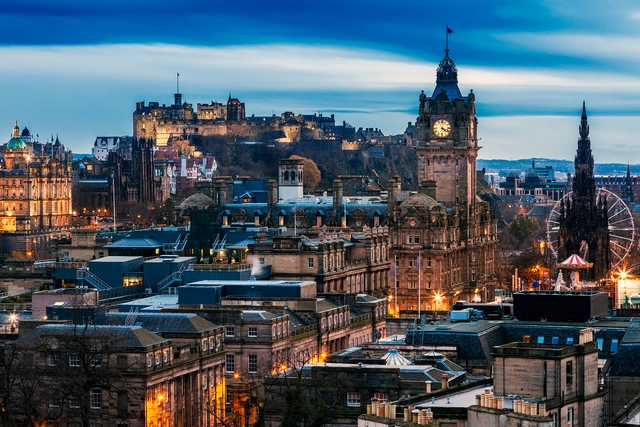
"A spectre," writes Kevin McKenna for The Guardian, "thought happily to have been exorcised from the heart of beautiful Edinburgh, is stalking the city’s old wynds and crevices once more." To put it more bluntly, the "formal recognition of [the Scottish capital] as one of the world’s most beautiful cities is under threat, amid a battle for the soul of its most historic quarter." As the UNESCO inspectorate moves in to determine whether the city's World Heritage Status should be renewed McKenna laments, through a series of case studies, the potentially bleak built future of one of Britain's most loved urban centres.
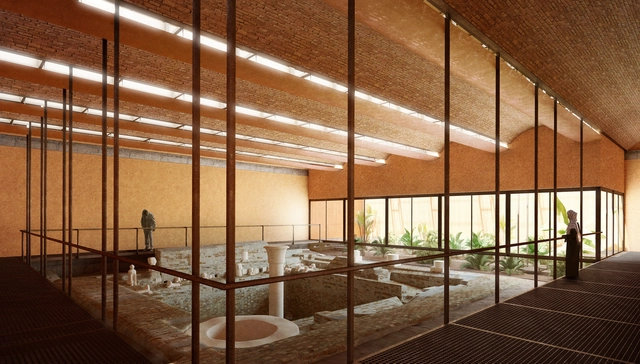
Rendered Interior View. Image Courtesy of Kéré Architecture
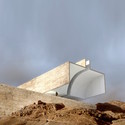
Kéré Architecture has placed first in a competition to design a protective shelter on the UNESCO-protected Meroe Royal Baths in Sudan, North Africa. Believed to have served nearby palaces from the great African Kingdom of Kush (now modern-day Sudan), the Meroe Royal Baths were listed as a UNESCO World Heritage Site in 2011 and is the focus of joint research by the German Archaeological Institute and the National Corporation for Antiques and Museums. Still marked by temples, palaces and over two hundred pyramids, the ruins of Meroe are a testimony to the exchanges of culture between the Mediterranean and Africa. Find out more about the proposal after the break.
The emphasis on light and lighting now is more than ever and this is evident from the global initiative by UNESCO to declare and celebrate 2015 as the International Year of Light. With this in mind, Nightscape 2050 is a unique exhibition dedicated to Lighting and is aimed to explore a completely new horizon of lighting design. This exhibition aims to explore the interactions between people, light, and cities in the year 2050. “Nightscape” does not just mean the evening view; to us “nightscape = humans and cities at night.”
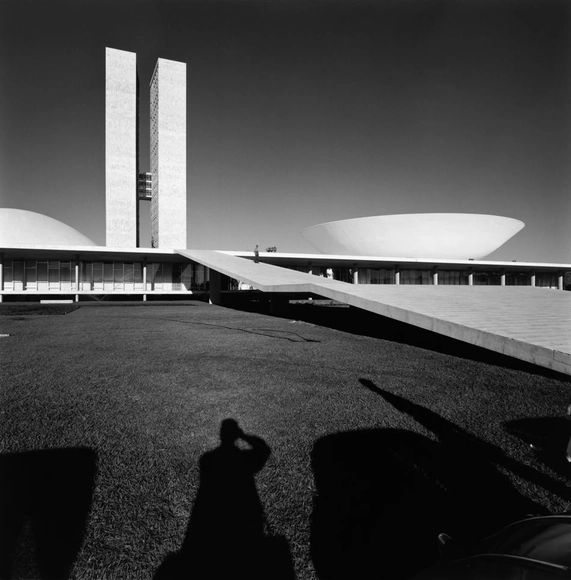
The United States Department of State (DOS) has released a request for information (RFI) in search of architects interested in designing a New Embassy Compound (NEC) in Brasília, the federal capital of Brazil. The (up to) $350 million, design-bid-build project will be located on a 4.86 hectares (12 acres) site near the seat of the Brazilian Government within the city's planned "Diplomatic Sector." All proposals must take in considering the site's conditions, the city planning context and the architectural significance of Brasilia as a 1956 urban planned city and now UNESCO World Heritage Site. More details after the break.
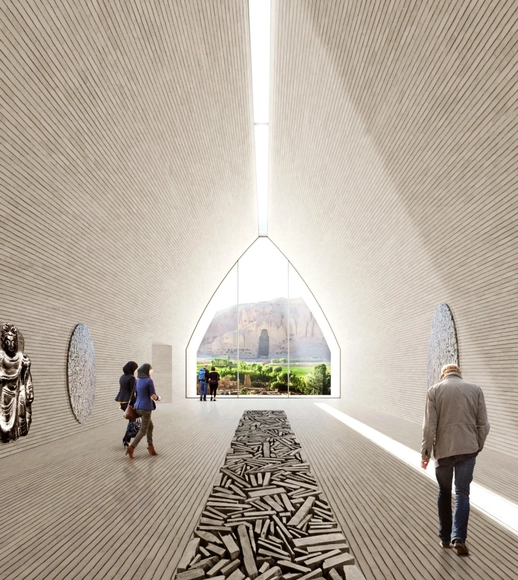
Winning Entry: Exhibition Space. Image Courtesy of UNESCO
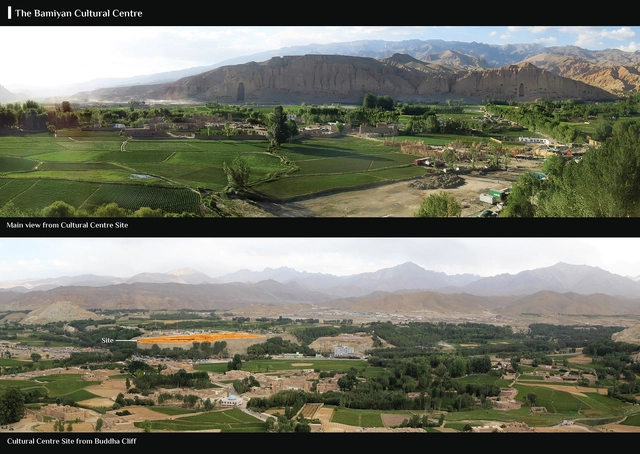
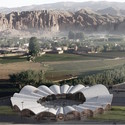
Last month the UNESCO office in Afghanistan, in collaboration with the Afghan Ministry of Information and Culture, announced the winning design for the Bamiyan Cultural Center. An Argentina-based team, led by Carlos Nahuel Recabarren alongside Manuel Alberto Martínez Catalán and Franco Morero, was selected from 1,070 design entries from teams in 117 different countries. Now, all of these submissions will be posted in an online gallery on the Bamiyan Culture Centre website for the next three months. “The competition achieved beyond expectation and contributed to portray a new and positive image of the culture sector in Afghanistan. This exhibition aims to showcase the extraordinary effort that the architectural community and each and every applicant put into this competition,” writes UNESCO.
With generous financial aid from the Republic of Korea, the culture center will be built on land adjacent to the Cultural Landscape and Archaeological Remains of Bamiyan World Heritage property. The center aims to promote art, history, music and community interaction. When evaluating the submissions the seven-member jury focused on “design principles emphasizing innovation, community needs, environmental consciousness, sustainability, and connection to the natural and cultural landscape of the Bamiyan Valley.”
Read on after the break for a round-up of images from some of the most interesting, unusual and unique proposals. You can search by ID number, Team Leader or Country to view the full project board with descriptions, renders and plans on the online gallery.
Videos
Winning Entry: Exhibition Space. Image Courtesy of UNESCO
UNESCO, in collaboration with the Afghan Ministry of Information and Culture, have announced the winning proposal for the Bamiyan Cultural Centre. An Argentina-based team, lead by Carlos Nahuel Recabarren alongside Manuel Alberto Martínez Catalán and Franco Morero, were selected from 1,070 design entries from 117 countries. Prepatory work on implementing their scheme, entitled Descriptive Memory: The Eternal Presence of Absence, "will start immediately" close to the boundaries of the Bamiyan World Heritage site.
See the winning entry and the four runners-up after the break.
A recent nomination by the United States seeks to elevate ten celebrated buildings characteristic of influential architect Frank Lloyd Wright's style to UNESCO World Heritage Sites. If the nomination is fulfilled, the collection of buildings will join the 1,007 designated sites currently on the UNESCO World Heritage List, including some of the most recognizable buildings in the world like the Taj Mahal and Sydney Opera House. These structures are recognized for their extraordinary cultural significance and "outstanding universal values." See the ten nominated buildings, after the break.
As Afghanistan begins its second decade of democratic governance after nearly 30 years of political instability, through the funding from the Republic of Korea, UNESCO has teamed up with the Afghan Ministry of Information and Culture, to build a Cultural Center close to the boundaries of the Bamiyan World Heritage property. With the realisation of the Bamiyan Cultural Centre, Afghans have the opportunity to recapture their heritage, to create a new impact on a historical site and to foster a positive relationship between their struggles and their hopes.
“This new architectural programme can challenge cultural barriers, reaffirm Afghanistan’s remarkable ancient history and enforce culture as a foundational component to Afghan national identity and peace-building,” states UNESCO.
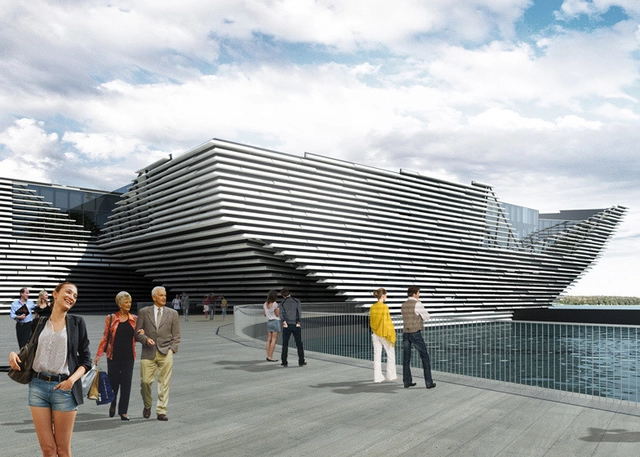
Dundee, Bilbao, Curitiba, Helsinki and Turin are often considered the cultural epicenters of their respected countries. Therefore it is no surprise that these five metropolises are the latest to achieve UNESCO’s City of Design status. Joining a list of 12 other cities, the newest City of Design selections are being recognized for the international influence on design. By awarding them “City of Design” status, UNESCO hopes to help further the development of creative industries and encourage cross-city cultural exchange in each selected metropolis.
Earlier this week, two articles on Domus engaged each other in a debate over the affect of UNESCO World Heritage status on the cities they supposedly protect. Is UNESCO turning the world’s cities into museums and hindering their future cultural development? Or could it be a positive force for protecting architecture and culture? Read on after the break to learn more about these clashing opinions.
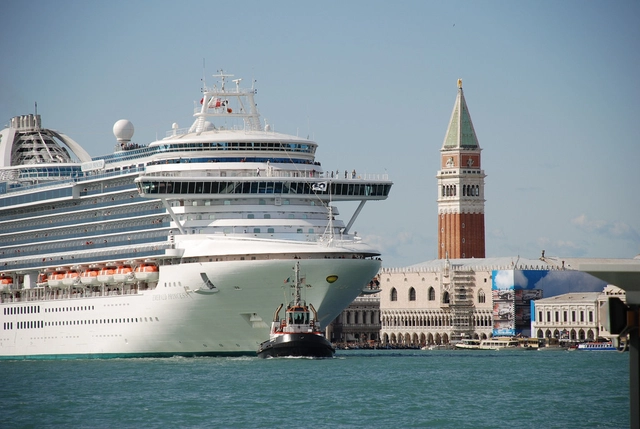
Over 50 Leading figures from architecture, art, film and fashion - Including Norman Foster, the director of London's National Gallery Nicholas Penny, the director of the Guggenheim Foundation Richard Armstrong, and Hollywood stars Cate Blanchett, Michael Douglas, Julie Christie, Michael Caine, Tilda Swinton and Rob Lowe - have signed a petition pleading Italian Prime Minister Matteo Renzi and the Italian Minister of Culture and Tourism, Dario Franceschini to keep large cruise ships out of Venice.
The petition, created by the UNESCO-backed Association of the International Private Committees for the Safeguarding of Venice, says is a reaction to both the aesthetic intrusion caused by the cruise liners, but also what it believes is a "probable risk of catastrophe" due to the possible effects that such large ships could have on the fragile Lagoon surrounding Venice.
More on the cruise ship controversy after the break
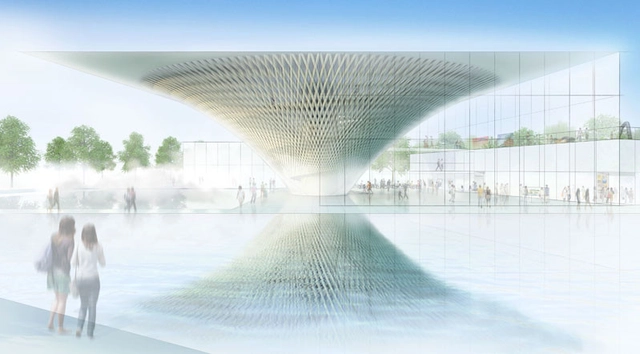
Shigeru Ban was pulled from a selection of 238 competitors as the “best person” to design the new Mount Fuji World Heritage Center in the Shizuoka Prefecture of Japan. The 4,300 square meter structure is expected to cost up to ¥2.4 billion and complete in the year 2016. We will keep you posted as more detail become available.
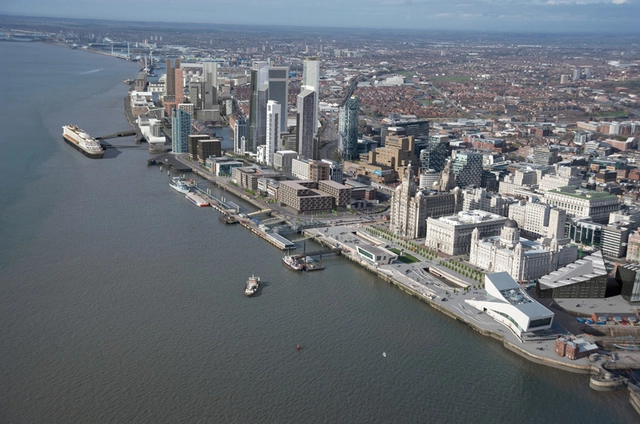
A controversial plan to redevelop a large area of Liverpool's waterfront has received an effective green light after the Communities Secretary of State, Eric Pickles, chose not to call in the scheme for a public inquiry. The £5.5 billion scheme is designed by Chapman Taylor and provides 9,000 homes, 300,000 square meters of office space and 50,000 square meters of hotel and other facilities. The scheme also includes the 55-story 'Shanghai Tower' and a cruise ferry terminal.
The plan has attracted criticism, in particular from English Heritage and UNESCO who worry that the size of the developments will negatively affect the Liverpool skyline, dominated for almost a century by the 'Three Graces' a trio of listed buildings that have come to define the view from the Mersey River. UNESCO has strongly opposed the development, placing Liverpool's world heritage site on it's 'endangered' list and threatening that if the scheme goes ahead, the area could lose its world heritage status.
Read more about the reaction to the scheme after the break...
From the archeological areas of Stonehenge to the Hiroshima Peace Memorial, Google’s World Wonders Project is dedicated to digitally preserving and virtually sharing the World’s Heritage Sites. Users can explore some of the world’s greatest places through panoramic images, 3D laser scanned models, videos and informative text. Although Google World Wonders is a new and ongoing project, they already have more than 130 sites in 18 countries featured. The project is also an educational resource, allowing students and scholars to use the materials to discover some of the most famous sites on earth. A selection of free educational packages are available to download for classroom use.
Google World Wonders is made possible through the partnership of Google, UNESCO, the World Monuments Fund and Cyark, with a shared mission to preserve world heritage sites for future generations.










.jpg?1422955436&format=webp&width=640&height=580)

.jpg?1422955447 "Price Tower. Image © Flickr User ercwttmn")
.jpg?1422955436 "Solomon R. Guggenheim Museum. Image © Flickr CC User Richard Anderson")
.jpg?1422955426 "Frederick C. Robie House. Image © Nat Hansen")
.jpg?1422955436)