1. ArchDaily
  2. Highlight

Highlight: The Latest Architecture and News

Who Should Win the 2026 Pritzker Prize?

Audio available

As the architecture community looks ahead to the announcement of the 2026 Pritzker Architecture Prize, anticipation is once again building around who will be named this year's laureate. While the official date has yet to be confirmed, the annual reveal traditionally takes place in early March, marking one of the most closely watched moments in the architectural calendar. Established in 1979 by the Hyatt Foundation, the Pritzker Architecture Prize is widely regarded as "the profession's highest honor." Each year, it recognizes a living architect, or architects, whose work demonstrates a consistent and significant contribution to humanity and the built environment. Over the decades, the award has reflected shifting priorities within the discipline, highlighting practices engaged with social equity, environmental responsibility, material experimentation, and cultural continuity.

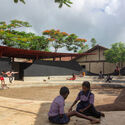
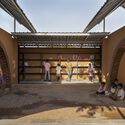
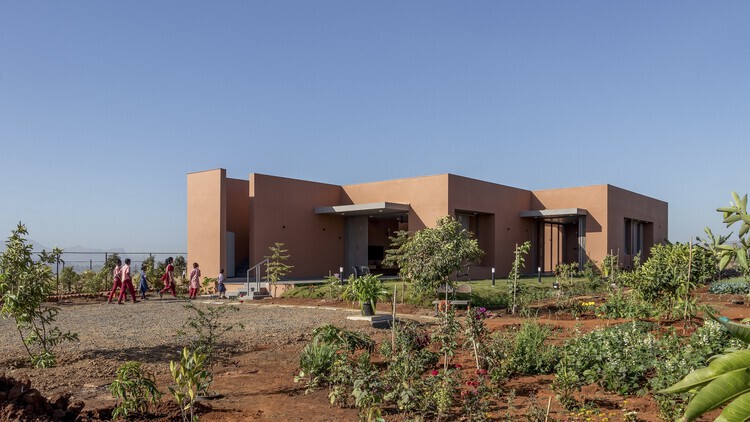
Framing Life Through Voids and Verandahs: The Architecture of pk_iNCEPTiON

Audio available

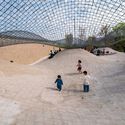
Founded as a practice working across architecture and community-focused projects, pk_iNCEPTiON is based in Maharashtra, India. The studio, one of the winners of the ArchDaily 2025 Next Practices Awards, works on rural schools, houses, libraries, and public buildings, with a focus on spatial organization and adaptability. Operating across varied social and climatic contexts, pk_iNCEPTiON approaches design through careful attention to movement, scale, and the relationship between built form and open space.

Framing Life Through Voids and Verandahs: The Architecture of pk_iNCEPTiON - Image 1 of 4Framing Life Through Voids and Verandahs: The Architecture of pk_iNCEPTiON - Image 2 of 4Framing Life Through Voids and Verandahs: The Architecture of pk_iNCEPTiON - Image 3 of 4Framing Life Through Voids and Verandahs: The Architecture of pk_iNCEPTiON - Image 4 of 4Framing Life Through Voids and Verandahs: The Architecture of pk_iNCEPTiON - More Images+ 17

Inside Contemporary Kazakhstani Architecture: Exploring the Work of NAAW

Audio available

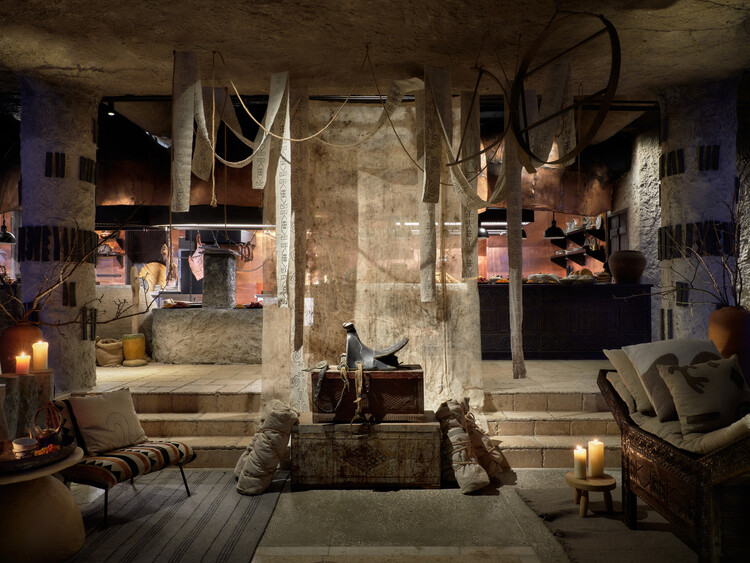
Selected as one of the winners of ArchDaily 2025 Next Practices Awards, NAAW represents a new generation of architectural studios reshaping contemporary practice in Central Asia. Founded in 2019 by Elvira Bakubayeva and Aisulu Uali, the studio operates at the intersection of research, interdisciplinary collaboration, and spatial experimentation, positioning architecture as a tool for reflection and an active agent in shaping contemporary Kazakhstani identity.

Inside Contemporary Kazakhstani Architecture: Exploring the Work of NAAW - Image 1 of 4Inside Contemporary Kazakhstani Architecture: Exploring the Work of NAAW - Image 2 of 4Inside Contemporary Kazakhstani Architecture: Exploring the Work of NAAW - Image 3 of 4Inside Contemporary Kazakhstani Architecture: Exploring the Work of NAAW - Image 4 of 4Inside Contemporary Kazakhstani Architecture: Exploring the Work of NAAW - More Images+ 15

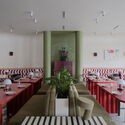
Designing With Living Systems: Discover the Works of Yong Ju Lee Architecture

Audio available

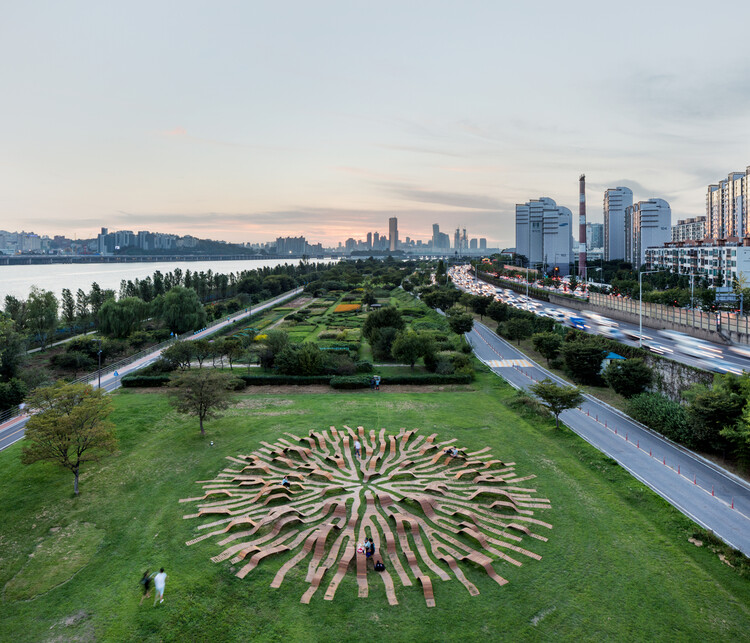
What does it mean to practice ecological responsibility beyond performance metrics or carbon calculations? How can fabrication become a design method rather than a final outcome? Founded in Seoul, Yong Ju Lee Architecture is a practice led by architect and researcher Yong Ju Lee. Across installations, research-driven proposals, and cultural projects, the studio positions architecture as an experimental discipline rooted in making: a process in which design emerges from material behavior, prototyping, and fabrication logic as much as from drawing or representation. Bridging professional practice and academia, his work consistently expands the architectural toolkit through computational design, experimental material research, and an evolving commitment to ecology as a responsibility and a design driver. In 2025, the studio was selected as a winner of the ArchDaily Next Practices Awards.

Designing With Living Systems: Discover the Works of Yong Ju Lee Architecture - Image 1 of 4Designing With Living Systems: Discover the Works of Yong Ju Lee Architecture - Image 2 of 4Designing With Living Systems: Discover the Works of Yong Ju Lee Architecture - Image 3 of 4Designing With Living Systems: Discover the Works of Yong Ju Lee Architecture - Image 4 of 4Designing With Living Systems: Discover the Works of Yong Ju Lee Architecture - More Images+ 21

Architecture as a Living Medium: Get to Know the Works of IGArchitects

Audio available

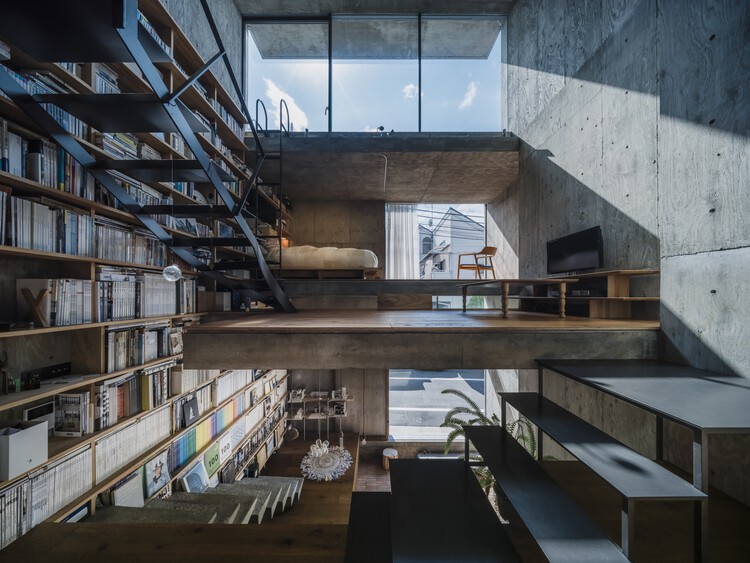
Founded in 2020 by Masato Igarashi, IGArchitects is an architectural practice based in Tokyo and Saitama, Japan. The studio, one of the winners of the ArchDaily 2025 Next Practices Awards, explores enduring architecture through a careful yet assertive treatment of structure, scale, and materiality. Prior to establishing his own practice, Igarashi worked at the large-scale firm Shimizu Sekkei as well as the Suppose Design Office, gaining experience across projects ranging from major developments to smaller, concept-driven works. This breadth of experience continues to inform IGArchitects' current focus on residential and commercial architecture across Japan.


Architecture as a Living Medium: Get to Know the Works of IGArchitects - Image 1 of 4Architecture as a Living Medium: Get to Know the Works of IGArchitects - Image 2 of 4Architecture as a Living Medium: Get to Know the Works of IGArchitects - Image 3 of 4Architecture as a Living Medium: Get to Know the Works of IGArchitects - Image 4 of 4Architecture as a Living Medium: Get to Know the Works of IGArchitects - More Images+ 18

Subscriber Access

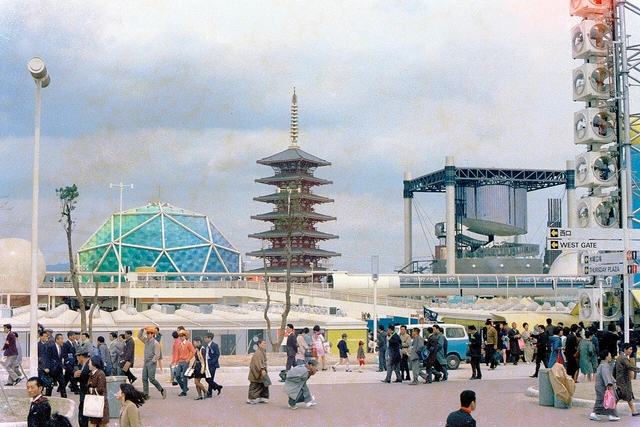
Designing the Future, Again: What the 55-Year Return of the World Expo to Osaka Reveals

The 2025 Osaka Expo has captured widespread attention—not only for its architectural ambition and spectacle, but also for breaking records and generating controversy. Its most iconic feature, a monumental timber ring designed by Sou Fujimoto, has already made headlines as a Guinness World Record-breaking wooden structure. Built on the reclaimed island of Yumeshima, the site has attracted praise and critique in equal measure. Beyond its awe-inspiring 2-kilometer circumference—parts of which extend dramatically over the water—the structure has also drawn concerns, including questions about health & safety, extreme heat, and swarms of insects that may affect the visitor experience.

This year also marks a significant anniversary: the 55th year since the 1970 Osaka Expo, held under drastically different socio-economic conditions. Comparing these two expos—both hosted in the same city—offers a rare opportunity to reflect on how the rhetoric, curatorial themes, and architectural ambitions of world expos have evolved over time. From "Progress and Harmony for Mankind" in 1970 to "Designing Future Society for Our Lives" in 2025, the shift in thematic focus reveals changing global priorities. Meanwhile, the scale and nature of architectural involvement have also transformed, from the futuristic visions of Japanese Metabolism to a more internationally dispersed group of designers concerned with sustainability, technology, and civic engagement.

Designing the Future, Again: What the 55-Year Return of the World Expo to Osaka Reveals - Image 1 of 4Designing the Future, Again: What the 55-Year Return of the World Expo to Osaka Reveals - Image 2 of 4Designing the Future, Again: What the 55-Year Return of the World Expo to Osaka Reveals - Image 3 of 4Designing the Future, Again: What the 55-Year Return of the World Expo to Osaka Reveals - Image 4 of 4Designing the Future, Again: What the 55-Year Return of the World Expo to Osaka Reveals - More Images+ 21

The UIA World Congress of Architects 2026 Barcelona Unveils Program and Speakers

The UIA World Congress of Architects is an international event for architectural dialogue organised by the International Union of Architects (UIA, by its French acronym), a non-governmental organisation that unites national associations of architects from over 100 countries, representing more than one million professionals. The first UIA Congress of Architects, which also marked the institution's founding, was held in Lausanne in 1948 during the post-war reconstruction period. Since then, UIA congresses have been held every three years in a different city within a member country, serving as the organisation's main recurring event. In 2026, the Congress will be held in Barcelona, and UNESCO has consequently designated the city as the World Capital of Architecture 2026. Each Congress focuses on a key topic relevant to the profession, articulated through a central theme. Recent themes include Copenhagen 2023: "Sustainable Futures. Leave no one behind." and Rio 2020–2021: "All the worlds. Just one World." The topic for 2026 is "Becoming. Architectures for a Planet in Transition," welcoming renowned figures in contemporary architectural thought and practice for a broad and critical overview of the possible futures of architecture.

The UIA World Congress of Architects 2026 Barcelona Unveils Program and Speakers - Imagen 1 de 4The UIA World Congress of Architects 2026 Barcelona Unveils Program and Speakers - Imagen 2 de 4The UIA World Congress of Architects 2026 Barcelona Unveils Program and Speakers - Imagen 3 de 4The UIA World Congress of Architects 2026 Barcelona Unveils Program and Speakers - Imagen 4 de 4The UIA World Congress of Architects 2026 Barcelona Unveils Program and Speakers - More Images+ 7

The Architecture Agenda: Inside the Key Events of 2026

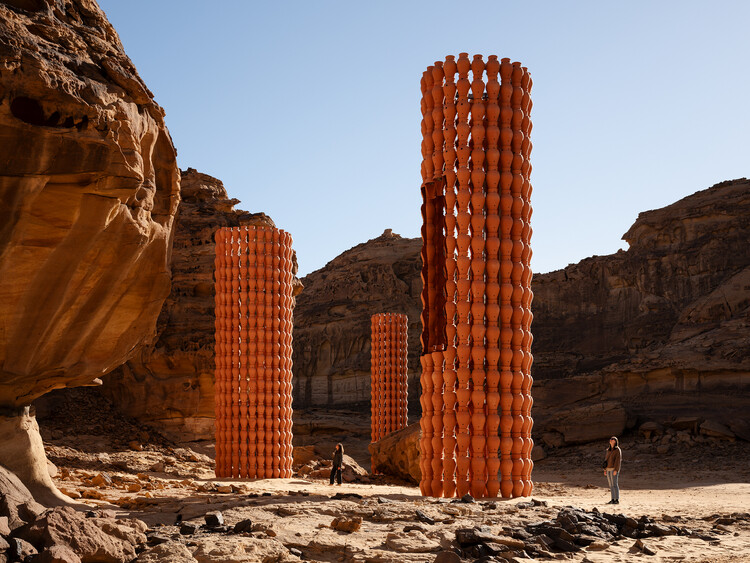
Architecture and design enter 2026 in a moment of renewed experimentation, urgent environmental reflection, and an expanded global dialogue on the built environment. As cities confront the pressures of climate adaptation, demographic shifts, and technological transformation, this year's international calendar offers a lens into how the discipline is responding, creatively, critically, and collectively. From long-standing biennials to newly established platforms, the events of 2026 spotlight architecture's evolving role as both a record of our changing world and a driver of more equitable, sustainable futures.

The Architecture Agenda: Inside the Key Events of 2026 - Image 1 of 4The Architecture Agenda: Inside the Key Events of 2026 - Image 2 of 4The Architecture Agenda: Inside the Key Events of 2026 - Image 3 of 4The Architecture Agenda: Inside the Key Events of 2026 - Image 4 of 4The Architecture Agenda: Inside the Key Events of 2026 - More Images+ 9

The 2025 Venice Architecture Biennale Ends, Marking the Event’s Most Visited Edition

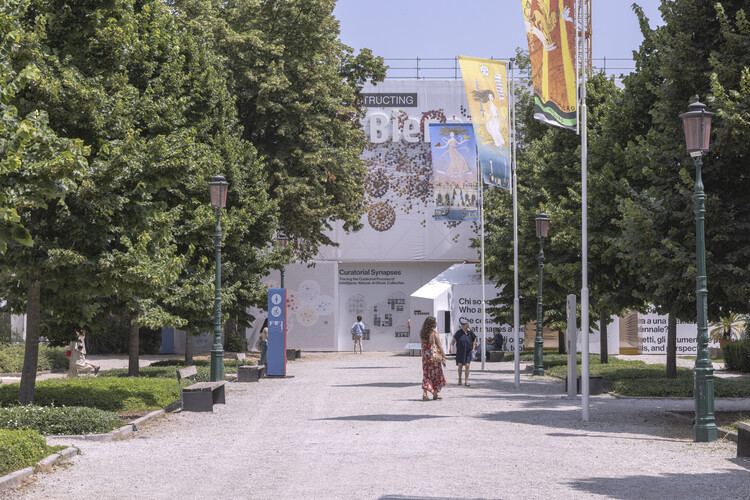
The 19th International Architecture Exhibition of La Biennale di Venezia, "Intelligens. Natural. Artificial. Collective.," curated by Carlo Ratti, closed on 23 November 2025 as the most visited Architecture Biennale to date. The exhibition recorded 298,000 visitors, in addition to 17,584 preview attendees, surpassing previous editions despite the temporary closure of the Central Pavilion for restoration. Bringing together 303 projects and 758 invited architects, along with 66 National Participations and 11 Collateral Events, the edition extended across the Giardini, Arsenale, and multiple sites throughout Venice.

The 2025 Venice Architecture Biennale Ends, Marking the Event’s Most Visited Edition - Imagen 1 de 4The 2025 Venice Architecture Biennale Ends, Marking the Event’s Most Visited Edition - Imagen 2 de 4The 2025 Venice Architecture Biennale Ends, Marking the Event’s Most Visited Edition - Imagen 3 de 4The 2025 Venice Architecture Biennale Ends, Marking the Event’s Most Visited Edition - Imagen 4 de 4The 2025 Venice Architecture Biennale Ends, Marking the Event’s Most Visited Edition - More Images+ 3

The Intelligens Biennale Gathers the Data, But Fails to Synthesize It

This article introduces our new Opinion section, a format for argument-driven essays on critical questions shaping our field.

The Venice Architecture Biennale has always been larger than itself. Never content with merely being an exhibition, it has always carried ambitions that expand beyond the grounds of Arsenale and Giardini. Rem Koolhaas's Fundamentals sought to deconstruct architecture into a universal grammar; Alejandro Aravena's Reporting from the Front reframed it as a tool for social justice on the ground; Lesley Lokko's The Laboratory of the Future set out to decolonize and decarbonize the architectural canon.

The Intelligens Biennale Gathers the Data, But Fails to Synthesize It  - Image 1 of 4The Intelligens Biennale Gathers the Data, But Fails to Synthesize It  - Image 2 of 4The Intelligens Biennale Gathers the Data, But Fails to Synthesize It  - Image 3 of 4The Intelligens Biennale Gathers the Data, But Fails to Synthesize It  - Image 4 of 4The Intelligens Biennale Gathers the Data, But Fails to Synthesize It  - More Images+ 13

20 Practices Shaping the Future of Architecture: Winners of the ArchDaily 2025 Next Practices Awards

ArchDaily is proud to reveal the winners of the 5th edition of Next Practices, recognizing 20 groundbreaking architectural practices from around the globe. These firms embody the creativity, innovation, interdisciplinary approach and social responsibility that are shaping the future of architecture and expanding its horizons.

UIA 2030 Award Launches Its Third Cycle Highlighting Sustainable Development Goals

The International Union of Architects (UIA), in collaboration with UN-Habitat, has announced the launch of the third cycle of the UIA 2030 Award. Introduced in 2021, the biennial international prize highlights the role of architecture in advancing the UN 2030 Agenda for Sustainable Development, with a particular emphasis on SDG11: Sustainable Cities and Communities and the New Urban Agenda. Organized by the UIA's UN 17 SDGs Commission, the award recognizes built projects that combine architecture with measurable contributions to the Sustainable Development Goals (SDGs). Structured to coincide with the schedule of the World Urban Forum (WUF), the award will run through five cycles.

UIA 2030 Award Launches Its Third Cycle Highlighting Sustainable Development Goals - Image 1 of 4UIA 2030 Award Launches Its Third Cycle Highlighting Sustainable Development Goals - Image 2 of 4UIA 2030 Award Launches Its Third Cycle Highlighting Sustainable Development Goals - Image 3 of 4UIA 2030 Award Launches Its Third Cycle Highlighting Sustainable Development Goals - Image 4 of 4UIA 2030 Award Launches Its Third Cycle Highlighting Sustainable Development Goals - More Images+ 1

Forming a Distinct Identity: How Brutalism Shaped American Architecture Education

By the mid-nineteenth century, American universities began to distinguish architecture from civil engineering and the applied sciences formally. Architecture was emerging as a discipline defined by both technical competence and conceptual inquiry, spatial imagination, and cultural agency. As this disciplinary identity evolved in the postwar decades, its built expression coalesced into the emerging architectural language of Brutalism.

Forming a Distinct Identity: How Brutalism Shaped American Architecture Education - Image 1 of 4Forming a Distinct Identity: How Brutalism Shaped American Architecture Education - Image 2 of 4Forming a Distinct Identity: How Brutalism Shaped American Architecture Education - Image 3 of 4Forming a Distinct Identity: How Brutalism Shaped American Architecture Education - Image 4 of 4Forming a Distinct Identity: How Brutalism Shaped American Architecture Education - More Images+ 12

An Unfolding Crisis with a Hopeful Outlook: Highlights from the Projects Exhibited at Venice Architecture Biennale 2025

Under Carlo Ratti's curatorship, the Venice Biennale's 19th International Architecture Exhibition delves into the theme "Intelligens. Natural. Artificial. Collective," with the explicit aim of transforming the city of Venice into a "Living Laboratory." In addition to the 65 national participations and a wide range of educational and collateral events, the exhibition features independent projects that directly respond to the overarching theme. With most of the exhibits showcased in the historic Corderie building, stretching along the south side of the Arsenale, the event offers a dynamic exploration of emerging architectural ideas and urban strategies.

An Unfolding Crisis with a Hopeful Outlook: Highlights from the Projects Exhibited at Venice Architecture Biennale 2025 - 1 的图像 4An Unfolding Crisis with a Hopeful Outlook: Highlights from the Projects Exhibited at Venice Architecture Biennale 2025 - 2 的图像 4An Unfolding Crisis with a Hopeful Outlook: Highlights from the Projects Exhibited at Venice Architecture Biennale 2025 - 3 的图像 4An Unfolding Crisis with a Hopeful Outlook: Highlights from the Projects Exhibited at Venice Architecture Biennale 2025 - 4 的图像 4An Unfolding Crisis with a Hopeful Outlook: Highlights from the Projects Exhibited at Venice Architecture Biennale 2025 - More Images+ 41

The Land Remembers: Lebanon’s Pavilion at the 2025 Venice Biennale Confronts Ecocide Through Architecture

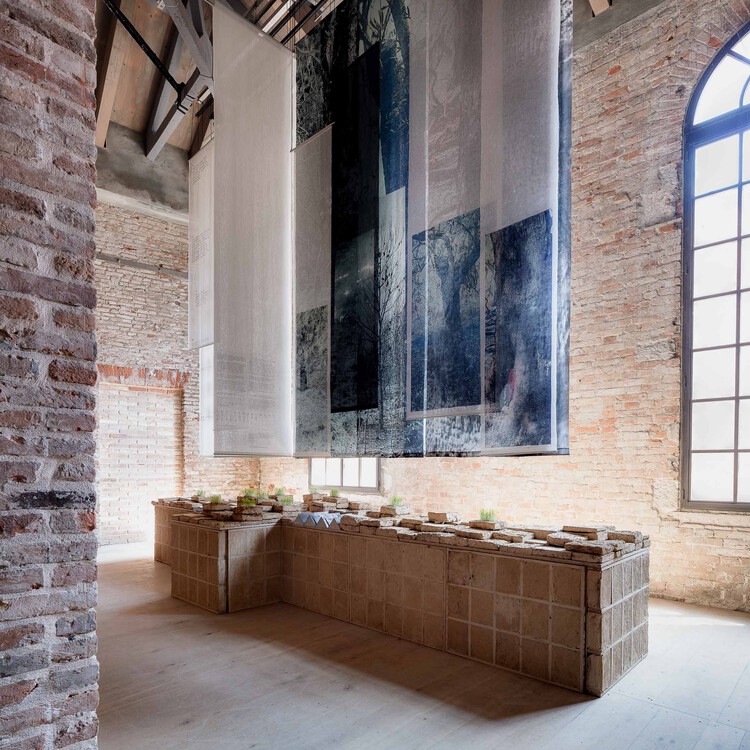
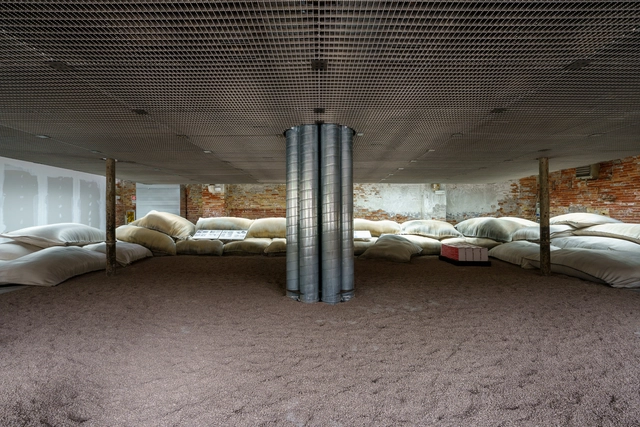
At the 19th International Architecture Exhibition of La Biennale di Venezia in 2025, the Lebanese Pavilion, curated by the Collective for Architecture Lebanon (CAL), presents "The Land Remembers," an exploration of ecocide and environmental healing. Selected by Lebanon's Ministry of Culture and the Lebanese Federation of Engineers, CAL is a non-profit organization co-founded in 2019 by Shereen Doummar, Edouard Souhaid, Elias Tamer, and Lynn Chamoun. Their curatorial vision aims to transform the pavilion into a fictional institution, the Ministry of Land Intelligens, dedicated to confronting environmental devastation and proposing strategies for ecological restoration.

The Land Remembers: Lebanon’s Pavilion at the 2025 Venice Biennale Confronts Ecocide Through Architecture - Image 1 of 4The Land Remembers: Lebanon’s Pavilion at the 2025 Venice Biennale Confronts Ecocide Through Architecture - Image 2 of 4The Land Remembers: Lebanon’s Pavilion at the 2025 Venice Biennale Confronts Ecocide Through Architecture - Image 3 of 4The Land Remembers: Lebanon’s Pavilion at the 2025 Venice Biennale Confronts Ecocide Through Architecture - Image 4 of 4The Land Remembers: Lebanon’s Pavilion at the 2025 Venice Biennale Confronts Ecocide Through Architecture - More Images+ 18

Bahrain Wins the Golden Lion for Best National Participation at the 2025 Venice Architecture Biennale

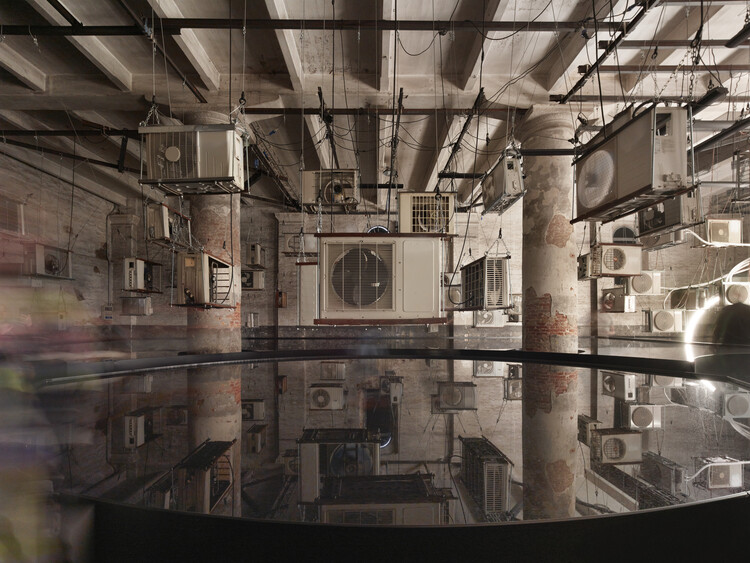
The Kingdom of Bahrain's Heatwave exhibition, curated by architect Andrea Faraguna has been announced as the winner of the Golden Lion for the Best National Participation at the 2025 Venice Architecture Biennale. The winner has been selected by an international jury comprising of Swiss curator, critic, and art historian Hans Ulrich Obrist as jury chair, South African architect, lecturer, and curator Mpho Matsipa, and Italian curator Paola Antonelli. The awards ceremony is broadcast live from the headquarters of the Biennale at Ca'Giustinian. The pavilion stands out for addressing the pressing issue of extreme heat through a site-specific installation that showcases passive cooling strategies rooted in Bahrain's climatic realities and cultural context.

Bahrain Wins the Golden Lion for Best National Participation at the 2025 Venice Architecture Biennale - 1 的图像 4Bahrain Wins the Golden Lion for Best National Participation at the 2025 Venice Architecture Biennale - 2 的图像 4Bahrain Wins the Golden Lion for Best National Participation at the 2025 Venice Architecture Biennale - 3 的图像 4Bahrain Wins the Golden Lion for Best National Participation at the 2025 Venice Architecture Biennale - 4 的图像 4Bahrain Wins the Golden Lion for Best National Participation at the 2025 Venice Architecture Biennale - More Images+ 7

Meet the Full List of the 65 National Pavilions at the 2025 Venice Architecture Biennale

Titled Intelligens. Natural. Artificial. Collective. and curated by Carlo Ratti, the 2025 Venice Architecture Biennale will be holding the 19th International Architecture Exhibition from May 10 to November 23, 2025.

The 2025 edition of the Venice Architecture Biennale is hosting a total of 65 National Pavilions. Among them, four countries, Azerbaijan, Oman, Qatar, and Togo, will be participating for the first time. The exhibition will unfold across three main locations: 26 pavilions at the Giardini, 22 at the Arsenale, and 15 spread throughout Venice's city center. The exhibition will bring together over 750 participants, forming interdisciplinary and multi-generational teams, and is anticipated to be the largest in the Biennale's history.

Meet the Full List of the 65 National Pavilions at the 2025 Venice Architecture Biennale - Image 1 of 4Meet the Full List of the 65 National Pavilions at the 2025 Venice Architecture Biennale - Image 2 of 4Meet the Full List of the 65 National Pavilions at the 2025 Venice Architecture Biennale - Image 3 of 4Meet the Full List of the 65 National Pavilions at the 2025 Venice Architecture Biennale - Image 4 of 4Meet the Full List of the 65 National Pavilions at the 2025 Venice Architecture Biennale - More Images+ 55

Everything You Need to Know about the Venice Architecture Biennale 2025

Next week, the world of architecture will focus its attention on Italy for the opening of the 19th edition of the Venice Architecture Biennale. This year’s edition, titled “Intelligens. Natural. Artificial. Collective,” promises to bring together over 750 participants in a multifaceted exploration of architecture’s role in adapting to climate change, shifting populations, and artificial forms of intelligence. According to the figures released, curator Carlo Ratti’s call is projected to be the largest Architecture Biennale ever held in Venice. Below, we answer 10 of the most frequently asked questions about the 2025 Venice Architecture Biennale.

Everything You Need to Know about the Venice Architecture Biennale 2025 - Image 1 of 4Everything You Need to Know about the Venice Architecture Biennale 2025 - Image 2 of 4Everything You Need to Know about the Venice Architecture Biennale 2025 - Image 3 of 4Everything You Need to Know about the Venice Architecture Biennale 2025 - Image 4 of 4Everything You Need to Know about the Venice Architecture Biennale 2025 - More Images+ 13