1. ArchDaily
  2. News

News

Santiago, Chile will host the international Prix Versailles 2018 awards ceremony

On Saturday, April 14, the continental award ceremony for the Prix Versailles will be held at Castillo Hidalgo in Santiago, Chile. The awards will honor the architecture and design of 24 completed retail, hotel, and restaurant projects across South America, Central America, the Caribbean, and North America.

Learn more about the event and past winners below.

Fernanda Torres and Fernanda Montenegro to Portray Lina Bo Bardi in a Film by Isaac Julien

Having previously been the subject of a 2015 art installation by Isaac Julien titled Stones Against Diamonds, Italian-Brazilian architect Lina Bo Bardi will now have her life portrayed on screen in the film Ghost of Lina Bo Bardi, directed by Julien.

The Plaza / Lucas Seré Paltzer and Sebastián Andrés Podestá (Buenos Aires) for Concéntrico 04

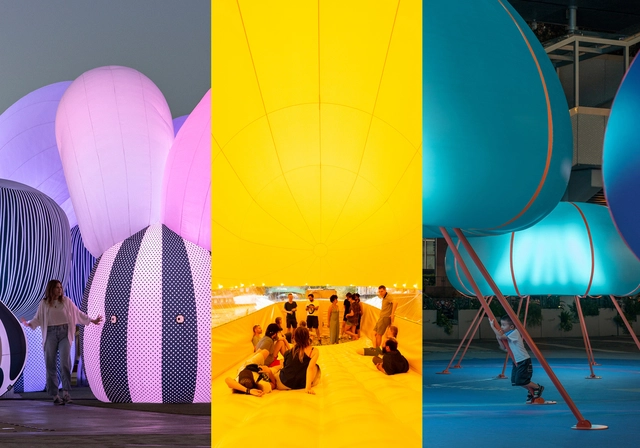
Concéntrico is an International Architecture and Design Festival that invites reflection on the city of Logroño (Spain) by revitalizing undervalued public spaces. Its latest edition, Concéntrico 04, takes place between April 27 and May 1, 2018, in the historic center of Logroño. The festival invites visitors to explore the city through installations, exhibitions, meetings, activities, and performances that connect venues, plazas, streets, courtyards, and hidden spaces that typically go unnoticed in daily life. Lucas Seré Paltzer and Sebastián Andrés Podestá explore the connection between space and people through reflection at Plaza de San Bartolomé.

The Plaza / Lucas Seré Paltzer and Sebastián Andrés Podestá (Buenos Aires) for Concéntrico 04 - Image 1 of 4The Plaza / Lucas Seré Paltzer and Sebastián Andrés Podestá (Buenos Aires) for Concéntrico 04 - Image 2 of 4The Plaza / Lucas Seré Paltzer and Sebastián Andrés Podestá (Buenos Aires) for Concéntrico 04 - Image 3 of 4The Plaza / Lucas Seré Paltzer and Sebastián Andrés Podestá (Buenos Aires) for Concéntrico 04 - Image 4 of 4The Plaza / Lucas Seré Paltzer and Sebastián Andrés Podestá (Buenos Aires) for Concéntrico 04 - More Images+ 23

The narrative behind the theater designed by Smiljan Radic, Eduardo Castillo, and Gabriela Medrano for the Biobío region in Chile

Ever since we announced the results of the competition for the "New Bío Bío Regional Theater," promoted by the Regional Government and the Architecture Area of the National Council of Culture and the Arts, we had been eagerly awaiting the completion of the winning proposal.
Rubén Moreira, a valuable legacy in Ecuadorian history and architecture

Subscriber Access | 

It is rare to find architects who engage with such a wide range of both the theoretical and practical dimensions of the profession. This is the case of Rubén Moreira [1], who approaches architectural design, research, criticism, architectural history, and teaching with equal and outstanding competence [2].

Rubén Moreira not only began his professional practice during a highly fertile period of Ecuadorian architecture, but also witnessed its key quests and transformations [3]. He was part of a generation of architects that reflected deeply on architectural processes, methods, and products [4]. His intellectual curiosity is clearly reflected in his postgraduate studies in Italy under two leading figures of architectural theory: Bruno Zevi and Manfredo Tafuri [5]. He taught design studio and history while pursuing research in architectural history. He also championed the creation of the MAE [6], as well as the Exhibition and Critical Guide of the "Architecture of Quito 1915-1985," which analyzes the context, authors, and landmark projects of each decade.

Rubén Moreira, a valuable legacy in Ecuadorian history and architecture - 1 的图像 4Rubén Moreira, a valuable legacy in Ecuadorian history and architecture - 2 的图像 4Rubén Moreira, a valuable legacy in Ecuadorian history and architecture - 3 的图像 4Rubén Moreira, a valuable legacy in Ecuadorian history and architecture - 4 的图像 4Rubén Moreira, a valuable legacy in Ecuadorian history and architecture - More Images+ 5

Juan Cristóbal Lara: 'Any place allows you to take a unique photograph'

Subscriber Access | 

With over 11,000 Instagram followers, industrial designer Juan Cristóbal Lara (@eljuancri) has transformed his account into a photographic essay of Santiago, Chile. His main subjects are the Andes Mountains, San Cristóbal Hill, and the Mapocho River, all bathed in the rich palette of colors that the sky paints as the hours pass.

Here, we invite you to take a closer look at his work, his personal interests, and his vision of the city he photographs. "On Santiago's hills, you can grasp the magnitude of where you live; they offer the true scale of who each of us is in the city," Lara says.

Juan Cristóbal Lara: 'Any place allows you to take a unique photograph' - 1 的图像 4Juan Cristóbal Lara: 'Any place allows you to take a unique photograph' - 2 的图像 4Juan Cristóbal Lara: 'Any place allows you to take a unique photograph' - 3 的图像 4Juan Cristóbal Lara: 'Any place allows you to take a unique photograph' - 4 的图像 4Juan Cristóbal Lara: 'Any place allows you to take a unique photograph' - More Images

Sculpture by Guto Requena Honoring the LGBT Community Vandalized in São Paulo

Meu Coração Bate Como o Seu, the sculpture designed by Guto Requena and built in downtown São Paulo at Praça da República in honor of the LGBT community, has had its wiring destroyed and its internal light bulbs stolen.

Conceived to celebrate 40 years of community activism in São Paulo, the act against his work is, for Requena, homophobic in nature: "The country is becoming too violent, so I have no doubt that the vandalism of my work was intended to target the LGBT community."

Bill requires buildings in Maringá to display the names of the responsible architects and urban planners

Municipal public buildings, licensed urban spaces, and private buildings of collective interest and use will be required to display the names of the authors of the architectural and/or urban design project, as well as the technical professional responsible for the construction. This is mandated by a bill recently approved by the Maringá City Council. The text now goes to the city's mayor, Ulisses Maia, for approval.
Ten commandments for creating better cities

Subscriber Access | 

In his book *Ten Ways to Design a City*, Catalan urbanist Joan Busquets outlines a decalogue of what he considers the best approaches for intervening in cities to make them more dynamic, sustainable, and better places to live.

The Compositional Balcony in the Work of Abraham Schapira and Raquel Eskenazi

Subscriber Access | 

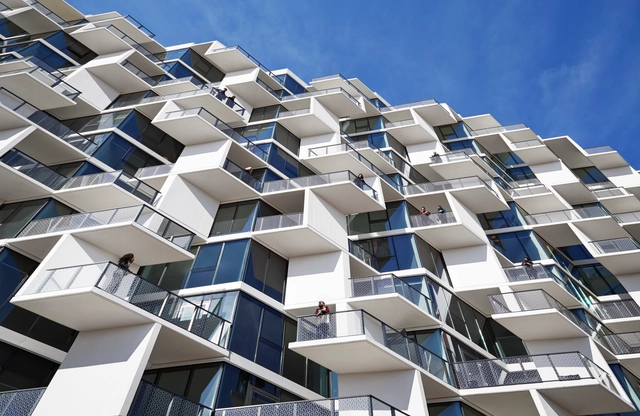
The practice of Chilean architects Abraham Schapira and Raquel Eskenazi is notable, among many other aspects, for its use of the balcony as a defining element in facade composition. Their work, located primarily in the municipalities of Providencia and Las Condes in Santiago, and in Viña del Mar, offers a rich diversity of typologies, uses, and layouts through formal treatment, engaging with Chile's modern urban proposals.

How to See and Photograph Architecture

Subscriber Access | 

Human beings are “seeing machines.” Except for those who lack this faculty, our eyes are our greatest generator of information. The brain then interprets these images accordingly… We must not confuse "looking" with the act of "seeing" something. Looking, an automatic and passive response, must become the act of seeing—of processing all those bits of information into something concrete and tangible. Sherlock Holmes observed an earlobe to deduce kinship; Proust, the hem of a dress or the nape of a neck to understand a woman profoundly… Where is the sign hidden? How do we know, in any image—whether verbal, visual, or auditory—which is the signifying part and which is the neutral, empty background, the noise to be discarded?

While our eyes capture and absorb this information, and our brain processes and translates it, it is photography—more specifically, our camera—that manages to retain it, freezing it in a photograph so that once our eyes have stopped looking, they can begin to see. As Le Corbusier simply put it, “one must see what one looks at.”

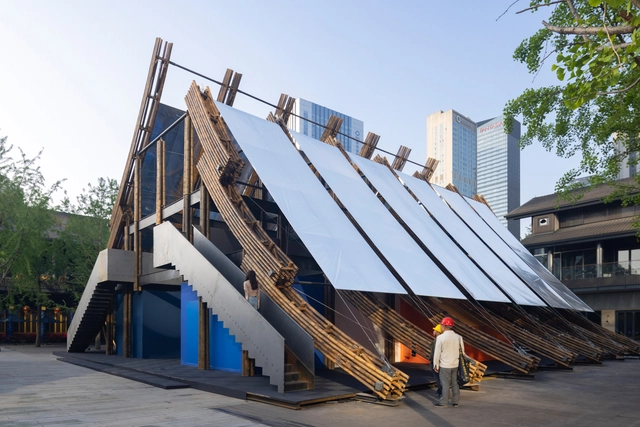
Dérive LAB Builds an Ephemeral Structure to Observe the City

Dérive LAB Builds an Ephemeral Structure to Observe the City - Featured Image
© Rodrigo Tijerina

Dérive LAB Builds an Ephemeral Structure to Observe the City - Image 1 of 4Dérive LAB Builds an Ephemeral Structure to Observe the City - Image 2 of 4Dérive LAB Builds an Ephemeral Structure to Observe the City - Image 3 of 4Dérive LAB Builds an Ephemeral Structure to Observe the City - Image 4 of 4Dérive LAB Builds an Ephemeral Structure to Observe the City - More Images+ 19

Dérive LAB is a multidisciplinary laboratory based in Santiago de Querétaro, Mexico, that seeks to explore, understand, and inspire alternative (new) ways of living and thinking about urban life. Through research, design, and action, they focus on developing art, architecture, urban design, and other disciplinary projects that impact three specific scales: public life, the built environment, and everyday objects.

Asunción, host of the upcoming XI Ibero-American Biennial of Architecture and Urbanism 2019

After establishing itself—with ten editions already—as a key reference event for understanding the current and future state of architecture and urbanism in the Ibero-American community, the XI BIAU will take place for the first time in the city of Asunción in October 2019. The program of activities will include the presentation of selected works, keynote lectures, specialized presentations, and panel discussions organized around the central theme: aĩ paragua y (I inhabit - water).

Discover the winning proposals of the 'National Ideas Competition: Plaza 3 Design' in San Isidro, Lima

The site where this new plaza will be created is currently underutilized as a public parking lot, failing to leverage the favorable pedestrian conditions of this location, which is surrounded by housing and commerce and strategically located at the intersection of Calle 3 Sur and Av. Del Parque Sur. This gave rise to the National Ideas Competition: Design of Plaza 3 - San Isidro, organized by the College of Architects of Peru alongside the Municipality of San Isidro, with the goal of promoting the development of a reclaimed public space for the benefit of the district's community by creating a welcoming gathering place. At the same time, the urban design proposal is expected to serve as a benchmark for future related competitions.

Joel Escalona presents his new 'Balance' series

Joel Escalona presents his new 'Balance' series - Featured Image

Description provided by the design team:

Ten pieces made of different materials challenge the laws of balance. Using the same typology at different scales, each composition in the Balance collection explores the equilibrium between technique, people, and the ideas that inspire us. Each piece was produced using various traditional crafts, artisanal techniques, and Mexican industrial technologies that Joel has explored at different points in his career.

Architects and engineers suggest a “SUS” for social housing

Architects and engineers have launched a call for free technical assistance in the design, renovation, or construction of social housing—already established by a 2008 law—to "be more than a law; to become a State Policy, as part of the social right to housing guaranteed by the Constitution."

The appeal was made at the opening of the Seminar on Technical Assistance for Social Housing, hosted by CAU/BR and the Federal Council of Engineering and Agronomy (CONFEA) in Brasília on the 15th of this month. If the proposal is adopted, Brazil would have the equivalent of a "SUS" (Unified Health System) for social housing. The proposal is part of the "Open Letter to Candidates in the 2018 Elections for the Right to the City," recently released by CAU/BR and the Institute of Architects of Brazil (IAB).

Discover how the vault of the Santiago Cathedral was restored

On the occasion of Pope Francis's visit to Chile, the Metropolitan Cathedral Chapter requested conservation work on the Cathedral's vaulted ceiling to improve safety and the condition of the ornamentation after recent earthquakes, aiming to safeguard the many faithful who visit the Cathedral daily.

When did Bustamante Park become a landmark in Santiago?

Subscriber Access | 

Today, Bustamante Park is one of the most frequented urban spaces in the municipality of Providencia. Completed in 1946, its design arose from the redevelopment of the former railway lines that once connected the old Pirque Station—the square that serves as our meeting point today—with the town of Puente Alto.

As one of the city's many linear parks, it is worth asking which qualities have turned Bustamante Park into a landmark in Santiago.

The Universalists, 50 Years of Portuguese Architecture (Part 2)

Subscriber Access | 

A Point of View

This text was written for the French edition of the exhibition catalog The Universalists: 50 Years of Portuguese Architecture, an event organized in Paris by the Delegation of the Calouste Gulbenkian Foundation to mark its 50th anniversary, in co-production with the Cité de l’architecture et du patrimoine. The exhibition is now being presented in Portugal, in 2018, at the Casa da Arquitectura in Matosinhos.

For ease of reading, the text has been divided into two parts. The first part was published yesterday.

Territories and Housing / Alberto Kalach

Subscriber Access | 

'Territories and Housing' is a project by architects Alberto Kalach and Carlos Zedillo that explores large-scale visions for different regions of the country, such as Yucatan, the Oaxaca Valley, the Trans-Mexican Volcanic Belt, and the Basin of Mexico, proposing to organize the national territory into just three zones: natural, agricultural, and urban.

Solano Benítez: Interpretation and Production of Urban Space

Subscriber Access | 

Solano Benítez participated in the 13th edition of the International Seminar "Architecture is a Way of Knowing," which focused on the interpretation and production of urban space as an essential part of learning in architecture and urbanism, reflecting on the specificity of the architectural perspective regarding the built environment and its relationship with other viewpoints.

Solano Benítez: Interpretation and Production of Urban Space - Image 2 of 4

The Place of Sharing: A House for Play and More...

“The Place of Sharing” is already taking shape on site. On the third day of work, foundations are being prepared and steel structures installed to support the Casa de Brincar e Não Só – Not Only a Playhouse, which is being built through August 10 at the Guarda Housing Complex (CHG) in Perafita, Matosinhos, Portugal. The initiative is part of the Self-Construction Laboratory organized by Casa da Arquitectura – Portuguese Center for Architecture.

Antonio Yemail and his collection of architectural models: 'They are the first construction of the construction'

Subscriber Access | 

In late 2017, Colombian architect Antonio Yemail and his team moved to a new office in Bogotá. After eleven years of working in a single, open-plan space where all activities overlapped, the move became an opportunity to inventory, reconstruct, destroy, and document design processes through their physical models.

Out of 150 models produced over the years, 90 were restored and photographed again. "It is the primary visual record of how our design inclinations have evolved and linked together, because as Álvaro Siza says, a project is the model for the next," Yemail explains in a conversation with ArchDaily.

Groningen: A Dutch Benchmark for Urban Mobility

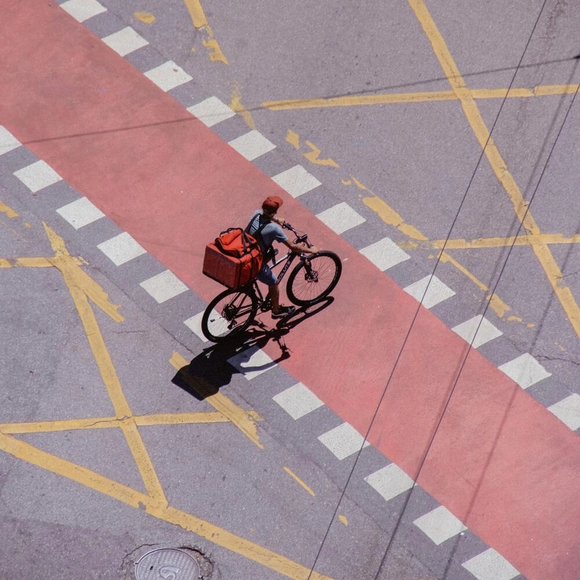
The city of Groningen, located in the north of the Netherlands, is an international benchmark for urban mobility. With just over 200,000 inhabitants, Groningen is considered the country's cycling capital—roughly 61% of all trips in the city are made by bicycle.

This shift in mindset dates back to the 1970s, when Dutch cities began to be dominated by cars and local realities were altered. The trend at the time was to redevelop older neighborhoods to make room for vehicles traveling to the center.

You've started following your first account!

Did you know?

You'll now receive updates based on what you follow! Personalize your stream and start following your favorite authors, offices and users.