
Update: We have now published our follow-up post featuring a collection of responses from readers. Read it here.
Update: We have now published our follow-up post featuring a collection of responses from readers. Read it here.

On April 17, Harvard GSD will host this year's annual interdisciplinary Doctoral Conference, "Data Across Scales: Reshaping Design." The conference invites design reachers and practitioners to examine the role and potential of data in design. Particularly apt for the technology-centric times of present, "Data Across Scales" focuses on the proliferation of information technologies within personal and professional contexts.
"We produce, share, collect, archive, use and misuse, consciously or unconsciously an immense amount of data," reads a statement on the conference's website, "This burst of data production and collection has already had a profound impact on the way we organize ourselves as a community."

In an article for the Financial Times (FT), writer and historian Simon Schama examines world conflict zones and the efforts to protect some of the world’s most vulnerable architectural and cultural sites. If history is a measure, then Schama's study of William “Basher” Dowsing - an Englishman who, in the winter of 1643, "made it his personal mission to obliterate as much as he possibly could of sacred art in the churches and colleges of East Anglia" in the name of religion - is pertinent now more than ever.

High Line co-designer, James Corner Field Operations has been selected to design the proposed 10-mile “Underline” in Miami. Chosen by a local jury from 19 submitted entries, JCFO has been asked to envision a bicycle route and linear park that will replace the threadbare M-Path under the Metrorail tracks from Dadeland to the Miami River. The project has yet to achieve funding, but it is hoped that JCFO’s plan will spark more investor interest.
Inside 2015 invites students and young professionals to submit a collection of their "inside" work comprised of up to three digital images. By submitting your work, we invite you to share your voice with the collective intelligence of a community of visual thinkers. The competition is open to all design disciplines including architects, interior designers, furniture designers, digital fabricators, graphic designers, lighting designers, product designers or any other creative field that creates for the inside. The competition is free to all entrants. Learn more, here.
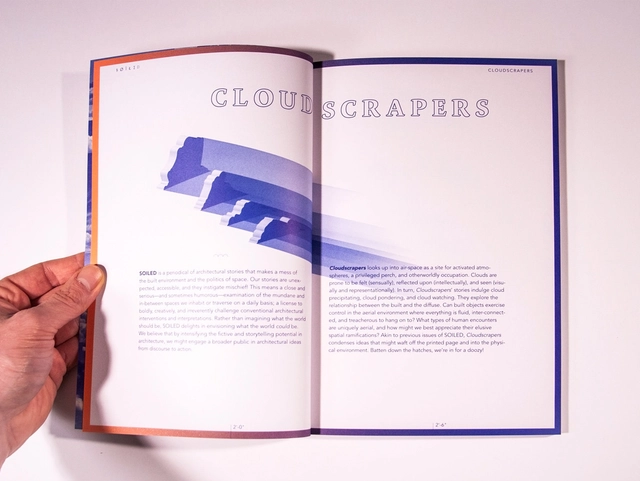
Self-described as "a periodical of architectural stories that [makes] a mess of the built environment and the politics of space," SOILED zine's 5th issue has been released, abounding with tales of the aerial. Entitled Cloudscrapers, the issue is the second in a series of limited-edition, locally produced publications by CARTOGRAM Architecture.

Tallinn Architecture Biennale has announced the vision competition “Epicentre of Tallinn” to find a design solution for intersections in the future, when only self-driving cars will drive on the city streets. The international one-stage architecture competition invites entries by the end of May. Read on to learn more.
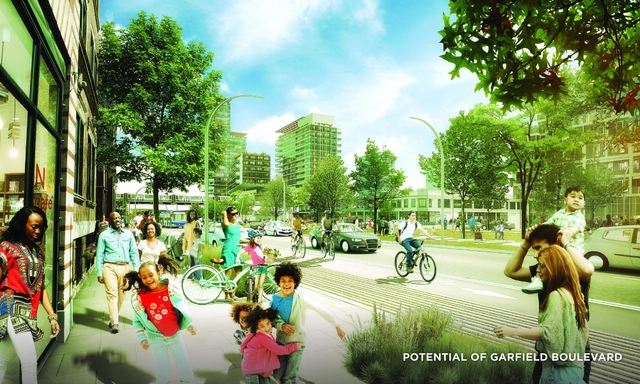
The competition to host the new Barack Obama Presidential Library has generated quite a stir, attracting proposals from cities across the United States with Chicago emerging as the current front runner. Amid the debate, that is expected to end with a decision later this month, a new controversy has surfaced on the coattails of the University of Chicago's speculative plan. The proposed concept involves a land transfer for the library to occupy one of two historic parks designed by iconic landscape architects Frederick Law Olmsted and Calvert Vaux in the 1870s. Read more about the heated debate over using public parkland to house the library, here.
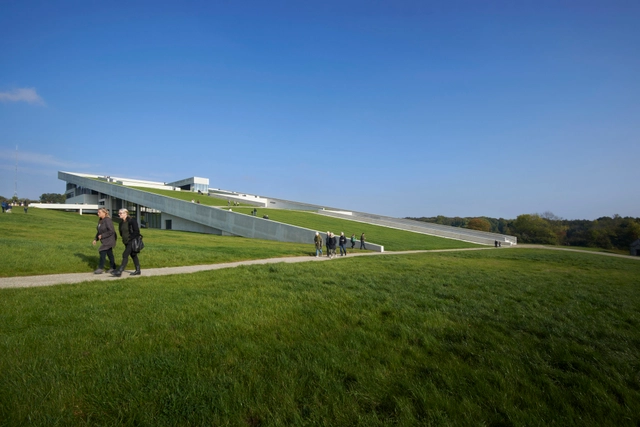
The winners of the 2015 Civic Trust Awards have been announced. Recognizing design excellence in all aspects of the built environment since 1959, the Civic Trust Awards span three categories and are granted to designs around the world. From the King's Cross Station renovation in London to the Via Verde in New York, this year's recipients represent a mix of ultra-modern structures, prized cultural sites, and innovative landscapes. See all the 2015 recipients, here.

The Royal Institute of British Architects (RIBA) has launched a call for applications for the 2015 RIBA Boyd Auger Scholarship. The generous scholarship, which has been awarded since 2008, supports the personal, professional and academic development of its student recipients by contributing towards their "imaginative and original research and travel."
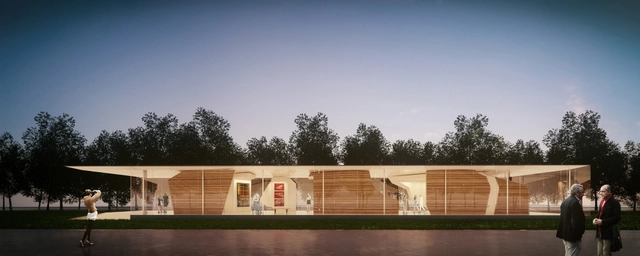
This active multi-use pavilion by Bence Pap and Parsa Khalili took second prize in the OUE Artling ArchiPavilion Design Competition in Singapore. Designed around the principles of continuity and flexibility, the Artling Pavilion provides an adaptable space that accommodates evolving programs and ensures constant adherence to the occupants' needs.
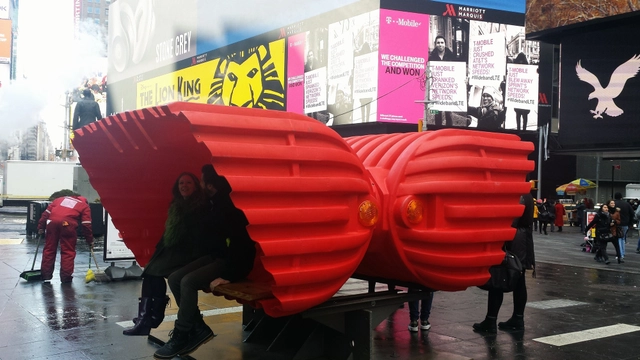
Stereotank’s HeartBeat filled the air in Times Square this past Valentine’s Day. Now that the love season is over, the Brooklyn-based practice has turned their clever installation into a welcoming “HeartSeat” by simply opening up their heart-shaped sculpture to the public and transforming it into a bench. The installation will remain on view through Sunday, March 8th. See a video of HeartSeat, after the break.
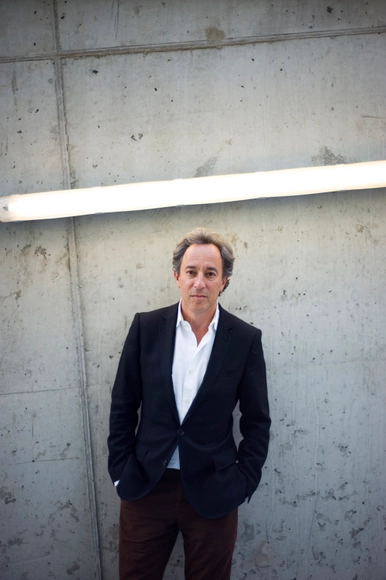
In an interview with Erika Allen for The New York Times, Michael Kimmelman discusses "architecture criticism and the dangers of demolition." Kimmelman, the NYT's architecture critic, has built a reputation as someone who advocates for buildings under threat, his most well known "fight" being against renovation plans drawn up by Foster + Partners for the New York Public Library in Manhattan. Referencing his latest column, in which he shows support for the threatened Orange County Government Centre, Kimmelman elaborates on his critical position and why he believes that speaking out for buildings at risk is "necessary."

The Negro Building Remembrance Competition invites architects, landscape architects, artists, playwrights, poets, musicians and writers from every discipline, as individuals, teams, students or professionals, to propose imaginative ways to commemorate the Negro Building, the forgotten landmark of the 1895 Cotton States and International Exposition in Atlanta, Georgia.
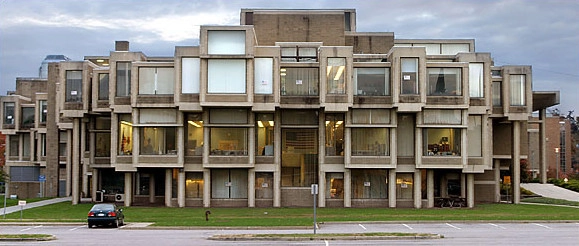
Tomorrow legislators are due to decided the fate of Paul Rudolph’s Orange County Government Center. The midcentury icon, listed on the World Monuments Fund’s global watch list, has been the center of a prolonged debate challenging its right to be preserved.
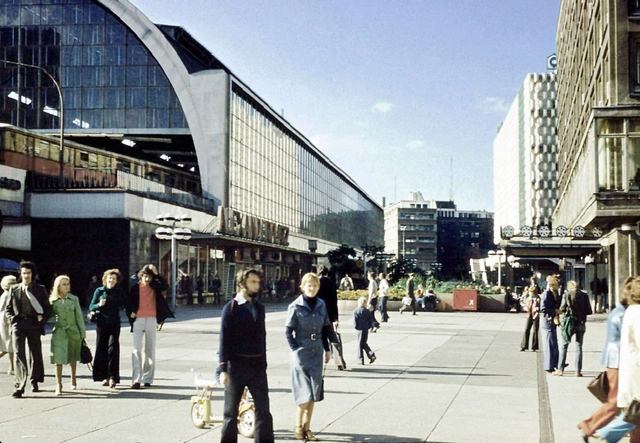
"Twenty-five years after the Berlin Wall’s demise, it is as though a large part of the twentieth century never happened," writes OMA principle Reinier de Graaf in his article for Metropolis Magazine "The Other Truth". "An entire period has been erased from public consciousness, almost like a blank frame in a film." Through the course of the article, de Graaf outlines how the West has rewritten the history of the cold war, erasing the "other truth" that existed for nearly half a century in East Berlin, the USSR, and other soviet-aligned states - a truth that we forget to our peril. It may not be immediately architectural, but the essay provides an interesting look into the political thoughts of de Graaf who, as the principle of one of architecture's most prominent research organizations in AMO, has an important influence on the profession's understanding of the wider world. Read the article in full here.

The Royal Institute of British Architects (RIBA)’s Future Trends Survey for January 2015 has revealed strong levels of optimism as workload forecasts remain strongly positive across all regions of the UK. Following little change in indexes between November and December 2014, the workload index has once again remained consistent at +29. Workload forecast balance figures have remained high, the highest numbers being reported from practices in Northern Ireland at +67 (from +50) and Scotland at +57 (from +75). Furthermore, practices of all sizes have been responding with positive workload prospects heading into the next quarter.
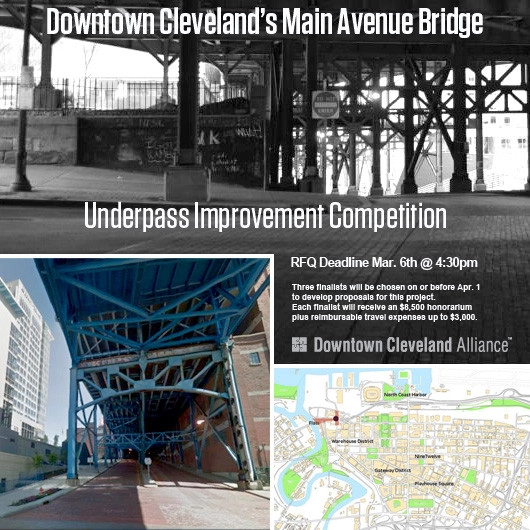
Downtown Cleveland Alliance seeks a creative professional or team (architect, designer, artist, engineer, landscape architect or combination thereof) to propose unique and attractive design solutions for the area under and around the Main Avenue Bridge Underpass, centered at the intersection of West 9th Street and Main Avenue in Downtown Cleveland. This location is a critical pedestrian, bicycle, and vehicular connection between the Warehouse District and the Flats East Bank, with infrastructure, history, and functional potential to inspire the highest level of creative treatments. Request for Qualifications are due Friday, March 6th by 4:30pm! More information, here.