


OMA / Reinier de Graaf and Squint/Opera have released a new video of the "Al Daayan Health District", a low-rise hospital prototype which responds to the medical field's rapid change through the potential of modularity, prefabrication, and automation. The project features prefabricated modular units, local farms for food and medicine, and high-tech facilities across gardens and water features.
Reinier de Graaf: The Latest Architecture and News
OMA and Squint/Opera Release Video of Qatar's Autonomous "Hospital of the Future"


https://www.archdaily.com/980062/oma-and-squint-opera-release-video-of-qatars-autonomous-hospital-of-the-futureDima Stouhi
OMA / Reinier de Graaf and Buro Happold Reveal Autonomous Design for Health District in Qatar

OMA / Reinier de Graaf and Buro Happold have unveiled their design for the Al Daayan Health District in Doha, Qatar. The project explores the "potential of modularity, prefabrication, and automation in relation to the rapid changes in medical science" on a 1.3 million-sqm plot with low cost, cross-shaped modular units that are prefabricated on site. In addition to the prefabrication of the units, a local high-tech farm will supply food and medical plants for medicine production, and a solar farm will allow the district to function autonomously.


https://www.archdaily.com/970437/oma-reinier-de-graaf-and-buro-happold-reveal-autonomous-design-for-health-district-in-qatarDima Stouhi
OMA Explores the Future of Hospitals and the Medical Field at the 2021 Venice Biennale

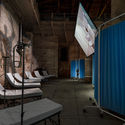
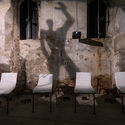
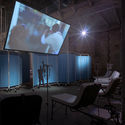
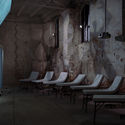
OMA / Reinier De Graaf have been invited to exhibit at the 17th International Architecture Exhibition - La Biennale di Venezia. Titled "Hospital of the Future", the installation explores how after years of medical preparations and technological advancements, one pandemic was able to hinder medical progress, and kill the hospital as we know it, envisioning a new form of medical architecture.

https://www.archdaily.com/964312/oma-explores-the-future-of-hospitals-and-the-medical-field-at-the-2021-venice-biennaleDima Stouhi
OMA's New Film Explores the Hospital of the Future

A new film by OMA / Reinier de Graaf titled “The Hospital of the Future” has been released as a part of the exhibition, Twelve Cautionary Urban Tales at Matadero Madrid Centre for Contemporary Creation. Dubbed a “visual manifesto”, the 12-minute short film questions the long-standing conventions in the field of healthcare architecture in terms of the methodology behind how hospitals are built and also why they are built in certain ways. Through an exploration of the role that disease has played in shaping cities, the film offers a lens into the future of what we might expect for healthcare design, especially as we emerge from the COVID-19 pandemic.
https://www.archdaily.com/955116/omas-new-film-explores-the-hospital-of-the-futureKaley Overstreet
OMA's Latest Fails to Live Up To Its Own Pedagogy

This article was originally published on Metropolis Magazine as "In His Latest Residential Building, OMA's Reinier de Graaf Doesn't Practice What He Preaches".
Last month in Stockholm, OMA partner Reinier de Graaf took a not-so-sly swipe at Bjarke Ingels: “I’m not a reincarnation of Harry Potter,” he said to a packed lecture theater at Stockholm’s KTH University.

https://www.archdaily.com/908027/omas-latest-a-pedagogical-failureGeorge Kafka
Caroline Bos, David Adjaye, Li Xiaodong and Many Others to Speak at 2018 World Architecture Festival

After two years in Berlin, the World Architecture Festival will move their 2018 edition to Amsterdam for three days of talks, design presentations, and award ceremonies featuring cutting-edge contemporary works and some of the most prominent figures in architecture today.
https://www.archdaily.com/898970/caroline-bos-david-adjaye-li-xiaodong-and-many-others-to-speak-at-2018-world-architecture-festivalJack McManus
Neufert: The Exceptional Pursuit of the Norm

In this excerpt from Reinier de Graaf's new book Four Walls and a Roof: The Complex Nature of a Simple Profession (Harvard University Press), the all-pervasive work and pedagogical practice of Ernst Neufert is put under the spotlight. Was he an architect, a teacher, or something larger than both? In examining Neufert's ardent pursuit of the "norm", De Graaf sheds light on the impact and enduring legacy of the author of Architect’s Data.
His built output—a few industrial complexes, some housing projects, and the Quelle Mail Order headquarters in Nuremberg—is not much to speak of, but his name is known to every practicing architect: Ernst Neufert, author of Architect’s Data, more commonly referred to as Neufert. [1] If the importance of an architect equals the extent to which his work lives on in others, Neufert is the most important of the twentieth century. There is probably no architect who has not used Neufert, whether as a didactic tool or as a volume of references. It contains all the necessary information to design and execute works of architecture. Neufert is enduringly popular. As of 2016, it is in its forty-first German edition, has been translated into seventeen languages, and has sold over 500,000 copies. [2]
https://www.archdaily.com/881889/neufert-the-exceptional-pursuit-of-the-normReinier de Graaf
Reinier de Graaf Discusses Moscow's Development and the "Major Stupidity" of Brexit
At the recently concluded Moscow Urban Forum, Renier de Graaf shared his opinion on a range of topics, from UK’s Brexit and the EU identity to OMA’s work in Russia, particularly in shaping the recent growth of Moscow. De Graaf is a partner at OMA and as director of the firm’s Think Tank, AMO, he produced The Image of Europe, an exhibition hoping to portray a “bold, explicit and popular” European Union. Thus, it comes as no surprise that De Graaf, along with Rem Koolhaas, is particularly outspoken about the recent events within the European Union.
https://www.archdaily.com/791481/reinier-de-graaf-discusses-moscows-development-and-the-major-stupidity-of-brexitJan Doroteo
Ulterior Motives: OMA/AMO's Reinier de Graaf on "Research," Europe and the 2014 Venice Biennale

The following interview with Reinier De Graaf was first published by Volume Magazine in their 48th issue, The Research Turn. You can read the Editorial of this issue, Research Horizons, here.
Architectural practice requires a degree of intimacy and insight into complex sets of forces. While building is architecture’s bread and butter, it’s not always the best format to make a statement. It’s sometimes not even the most appropriate language to respond to a brief. Volume spoke with Reinier de Graaf of OMA/AMO about how research and media can become a vessel for political agendas.

https://www.archdaily.com/789832/ulterior-motives-oma-amos-reinier-de-graaf-on-research-europe-and-the-2014-venice-biennaleReinier de Graaf
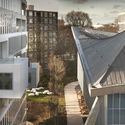
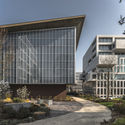
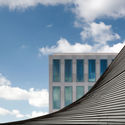
OMA Partner Reinier de Graaf on the Social Dimension of Luxury Housing at Holland Green

This week, OMA has unveiled their latest project in London, Holland Green. Working alongside Allies & Morrison, the firm has created three new luxury residential buildings on a site of significant cultural importance: the former home of the Commonwealth Institute, designed by Sir Robert Matthew, one of the founding partners of RMJM. As a result, OMA and Allies & Morrison’s Holland Green project involved much more than just adding fuel to the fire of London’s booming luxury residential market—it also involved an extensive conversion to the original 1962 Commonwealth Institute exhibition hall, funded through the scheme’s profitable residential offering, to prepare the heritage building for its new tenants the Design Museum.
ArchDaily spoke with Reinier de Graaf, the partner in charge of the project at OMA, to discuss the development’s social aspirations, the challenges of the London context, and the story behind the project.


https://www.archdaily.com/787372/oma-partner-reinier-de-graaf-on-the-social-dimension-of-luxury-housing-at-holland-greenRory Stott
50 Architects Tell Us What They Are Looking Forward to in 2016

As the first month of 2016 draws to a close, we decided to tap into our network and ask an esteemed group of architects, critics, theorists and educators to tell us what they are looking forward to this year in architecture.
What are you looking forward to in architecture this year?
https://www.archdaily.com/780498/50-architects-tell-us-what-they-are-looking-forward-to-in-2016AD Editorial Team
What Can Piketty Teach Us About Architecture?

Last year, Thomas Piketty's Capital in the Twenty-First Century took the world of economics by storm. His historical analysis and critique of the capitalist system fed perfectly into the wider narrative being constructed in the wake of the global financial crisis. But what lessons does Piketty hold for architects? In an article for The Architect's Newspaper, OMA partner Reinier de Graaf examines the way that the development of architecture in the 21st century mirrored that of economics, as the design of buildings became simultaneously a symptom and a cause of trends in capital. Read the full article - including de Graaf's question for the architects of the 21st century - here.
https://www.archdaily.com/775165/what-can-piketty-teach-us-about-architectureRory Stott
Kickstarter Campaign Launches to Fund the Forthcoming 'Real Review'
The Real Estate Architecture Laboratory (REAL) have today announced a Kickstarter campaign in preparation for the launch of their flagship publication, the Real Review. Produced by an independent team of editors and designers, this bi-monthly magazine intends to "revive the review as a writing form" to a general readership within the architectural sphere and its orbital subjects.
The Real Review will be "a printed object of exceptional quality, featuring engaging texts by leading international commentators," alongside providing "a highly visible platform for emerging writers." Confirmed authors at this time include, among others, Assemble, Pier Vittorio Aureli (Dogma, AA), Reinier de Graaf (OMA), Sam Jacob (Sam Jacob Studio), and a rostra of journalists including the Financial Times' architecture critic Edwin Heathcote.
https://www.archdaily.com/774523/kickstarter-campaign-launches-to-fund-the-forthcoming-real-reviewJames Taylor-Foster
Reinier de Graaf on Cultural Amnesia and the "Fall" of the Berlin Wall

"Twenty-five years after the Berlin Wall’s demise, it is as though a large part of the twentieth century never happened," writes OMA principle Reinier de Graaf in his article for Metropolis Magazine "The Other Truth". "An entire period has been erased from public consciousness, almost like a blank frame in a film." Through the course of the article, de Graaf outlines how the West has rewritten the history of the cold war, erasing the "other truth" that existed for nearly half a century in East Berlin, the USSR, and other soviet-aligned states - a truth that we forget to our peril. It may not be immediately architectural, but the essay provides an interesting look into the political thoughts of de Graaf who, as the principle of one of architecture's most prominent research organizations in AMO, has an important influence on the profession's understanding of the wider world. Read the article in full here.
https://www.archdaily.com/604882/reinier-de-graaf-on-cultural-amnesia-and-the-fall-of-the-berlin-wallRory Stott
Reinier de Graaf: Mayors Should Not Rule The World

This weekend, the first planning session of the Global Parliament of Mayors took place in Amsterdam: a platform for mayors from across the world, triggered by Benjamin Barber’s book: If Mayors Ruled the World: Dysfunctional Nations, Rising Cities.
In this book the current political system and its leaders is dismissed as dysfunctional. Defined by borders and with an inevitable focus on national interests, they are not an effective vehicle to govern a world defined by interdependence. Mayors, presiding over cities with their more open, networked structure and cosmopolitan demographics, so the book argues, could do it better.
It is of no surprise that this book has been welcomed by the same political class as the one it praises: mayors. As was apparent during the first planning session of the GPM: a conference about mayors, for mayors, attended by mayors, moderated by mayors and hosted by a mayor, all triggered by a book about mayors.
I recognize many of the book’s observations. Many mayors are impressive figures and time appears to be on their side. Nation states (particularly the large ones) have an increasingly hard time and, in the context of a process of globalization, cities, and particularly small city-states, increasingly emerge victorious. Cities have first-hand experience with many of the things that occur in globalization’s wake, such as immigration and cultural and religious diversity, and are generally less dogmatic and more practical in dealing with them.
So far so good.
https://www.archdaily.com/553119/reinier-de-graaf-mayors-should-not-rule-the-worldReinier de Graaf
AD Interviews: Reinier de Graaf

While the final products of OMA's oeuvre are well-documented and widely published, a large portion of the Dutch firm's work goes unrecognized and relatively unnoticed: the contextual, solution-oriented research undertaken by AMO. Although OMA’s lesser-known twin, AMO is vital to OMA’s approach, allowing the firm to delve into a world of context and explore possibilities beyond the built form.
It was with this in mind that we sat down with Reinier de Graaf, a partner at the firm. In addition to the building and masterplan projects he also manages on the OMA side of things, de Graaf has been the director of AMO since 2002, overseeing a diverse portfolio of projects. Over the past few years, AMO's energies have fueled the creation of the curriculum at Strelka; a "roadmap" for a de-carbonized power grid for the EU; and an exhibition that celebrated the architect as civil servant.
From our very first question (what is OMA's mission?), de Graaf answered with his characteristic aversion to "general terms," explaining that "[OMA's] mission is to explore unexpected subjects [...] without a preconceived mission."
https://www.archdaily.com/407313/ad-interviews-reinier-de-graafVanessa Quirk
Strelka Talks: Architecture and Community / Reinier de Graaf
"The Community" might be the most frequently used term over the last 50 years of Architectural and Urban discourse. For decades, "the community" has served as a legitimization for anything from Team X to New Urbanism, from Celebration to "vancouverism". But what is "the community"? Where should we look for the proper definition? How did communities appear in the past and how do they form today? Can 'the community" influence the design of its own space, territoiry or context? If yes, what could be the relationship between the community and architecture in the future?
In his Strelka talk Reinier de Graaf is trying to answer these and other, even more complex questions.
Via the Strelka Institute.
https://www.archdaily.com/377566/strelka-talks-architecture-and-community-reinier-de-graafKarissa Rosenfield
Venice Biennale 2012: Public Works, Architecture by Civil Servants / OMA

“Forty years ago the public cause proved a powerful source of inspiration. Given the numbers of architects that chose to serve it, one might even speak of a common ground. In the age of the ‘starchitect’, the idea of suspending the pursuit of a private practice in favor of a shared ideology seems remote and untenable. In the context of the 2012 Venice Architecture Biennale, this exhibition hopes to provide a small contribution towards finding that common ground once more…” – OMA Partner Reinier de Graaf, August 2012
Throughout Europe in the late 1960s and early 1970s, large public works departments employed architects to design a multitude of public buildings in an effort to serve the public cause. Reinier de Graaf describes this “heyday of public architecture” as “a short-lived, fragile period of naïve optimism – before the brutal rule of the market economy became the common denominator.”
https://www.archdaily.com/267491/venice-biennale-2012-public-works-architecture-by-civil-servants-omaKarissa Rosenfield