
Indian Architecture

Capital New Delhi

Language Hindi

Area 3,287,263 km2

Population 1,293,057,000

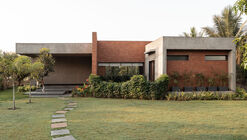
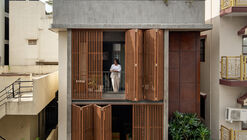
Indian architecture, primarily established through historical and cultural influences, is most recently a conversation about how best to modernize. India's architecture has to mediate rapid urbanization with respecting its climate, culture, and tradition. Questions of cultural preservation are especially pertinent in post-independence India after the dominance of western influences. India's architecture is highlighted in this page through interviews, news, and projects that look forward to a new revitalized urban landscape.
  1. ArchDaily
  2. Countries
  3. India

Latest projects in India

Latest news in India

From Coastal Reclamation to Data Centers: How India's Architecture Grows Around Water

Audio available

Architecture has treated water either as a backdrop or a problem: a view to be framed, a hazard to be drained, or a utility to be connected. In contemporary India, a more consequential relationship takes shape. Water remains a shared ecological resource, yet the land and infrastructure around it are increasingly financed and defended as economic assets. Coastlines are extended to carry traffic and lake edges become lucrative development zones. The decision to do so passes through multiple institutions with different vocabularies, thereby challenging who determines how water and its surroundings are used, and who faces the consequences.

The Mangrove as a Wall: Coastal Protection and Urban Development in India

Audio available

Along India's coast, the boundary between land and sea is not always a line of concrete. In places, it is a forest of tangled roots, tidal channels, and sediment, a landscape that changes character with the water. Mangroves influence how water moves, how shorelines evolve, and how coastal communities experience flood risk. Their role in coastal protection depends on the width and condition of the forest, the movement of tides, and the accumulation of sediment.

Architecture of Care: 6 Unbuilt Spaces for Childhood from the ArchDaily Community

Audio available

As cities change, so do our expectations of them. People are asking for more caring spaces: public places open to all ages and genders, nature within reach of every social class, and settings that foster connection. Few design intentions hold these together as well as spaces for children. This selection of unbuilt projects submitted by ArchDaily readers showcases different approaches to care-based architecture. Schools, daycare centers, a library, a youth center, and a new model for orphanages take on the mission of providing a safe and stimulating environment for children at every stage of their development. Not yet built but carefully designed, these proposals offer a glimpse into spaces for play, learning, and calm that fuel creativity in design for people of all ages.

From Relic to Infrastructure: Can India's Historic Water Systems Work Again?

Audio available

India's stepwells are usually encountered after their useful lives have ended. They are photographed, restored and interpreted as evidence of a water culture that once existed. Beneath the carved stone and descending stairs is a practical question: what happens when a structure built to manage water is put back to work? As Indian cities face water stress, seasonal rainfall and pressure on municipal systems, researchers and restoration efforts are examining whether traditional water structures can function again.

A New Lens on Modern Heritage: ArchDaily Partners with World Monuments Fund

Audio available

What makes a building worth preserving? Age is the most common answer, but not always the best one. A building from the 1950s or 70s may carry as much historical significance as a medieval cathedral; it simply demands a different framework, one that weighs political context, cultural meaning, and architectural innovation over the mere passage of time. This is especially true for modernist architecture across the so-called Global South, where the movement took on unique forms of expression.

Light Through the Wall: Indian House Interiors Shaped by Brick Jali

Audio available

A brick façade does more than define the façade of a house. When designed as a porous screen, it becomes an intermediary between inside and outside, shaping the atmosphere and environmental conditions of the spaces behind it. Across contemporary Indian residential architecture, brick jali — a perforated or lattice brick screen — has been reinterpreted with a contemporary sensibility, drawing on vernacular architectural elements.

20 Practices Expanding Architecture’s Agency: Winners of the ArchDaily 2026 Next Practices Awards

Audio available

ArchDaily is proud to announce the winners of the 2026 Next Practices Awards, recognizing 20 emerging and forward-thinking practices expanding the possibilities of architecture today.

Beyond the Replica: Digital Heritage and the Limits of Preservation

Audio available

A cave in Maharashtra can now be entered without travelling to it. Through a virtual reality experience developed around Ajanta, visitors can move through a digitally reconstructed version of the caves from somewhere else entirely. The project raises an architectural question: if architecture is experienced through movement, scale, sequence and perception, what happens when those experiences can be recreated outside the physical site? IITM Pravartak's Digital Ajanta project uses 3D scanning, filming, modelling and virtual reality to document the caves and translate that record into an immersive experience.

A Day in the Bazaar: When Architecture Is Observed in Time

Audio available

This article is part of "Thresholds", a special edition printed newspaper by Cobe Notes x ArchDaily.

Architecture is most often represented as a stable object: a building captured at a moment of visual clarity, isolated from surrounding contingencies. Plans, sections, and photographs promise legibility by suspending time. Yet many of the world's most enduring public environments resist this mode of representation altogether. They are not designed to be read instantaneously, nor do they reveal their logic through form alone. Their spatial intelligence emerges gradually, through repetition, occupation, and duration.

Building the India of the Imagination: Cinema and the Making of Place

Audio available

Some of India's most convincing architectural worlds have never existed outside a film set. Courtyards, palaces, streets and even entire neighbourhoods have been constructed, lit and framed for the camera, then dismantled when filming ends. Their images remain. For millions of viewers, these spaces become references for how cities look, how wealth is displayed and how particular neighbourhoods or versions of India are remembered. Cinema constructs spatial worlds, compressing complex histories into images that audiences can recognise almost instantly. Those images can later shape how physical places are understood.