Arguing that the previous thirteen Biennales have, "more or less, tried to predict what is going to happen over the next five years," "Rem Koolhaas has changed the paradigm:" Rem's Biennale is about "the past of the present". Jencks, who describes Koolhaas as "the Corbusier of our time", suggests that his Biennale is about analysis rather than total synthesis. He has, however, "shown that research can be creative."
In this TEDxTalk, the follow up to his popular TED Talk, "The Walkable City," urban planner Jeff Speck delves more deeply into his "General Theory of Walkability." The theory maintains there are four ground rules for increasing pedestrian traffic in urban areas: walking must be safe, comfortable, interesting, and - most importantly - there must be a reason to walk in the first place. Counterpointing this with America's fixation with accommodating the automobile, Speck shows us how beneficial a pedestrian city can be, both functionally and aesthetically.
In this video from our friends at Spirit of Space, Daniel Libeskind talks about his installation for the Venice Pavilion at the 2014 Venice Biennale, entitled 'Sonnets in Babylon'. The installation deals with drawing, an act that Libeskind believes is "the foundational art, and the mystery and the magic of all buildings and cities." To Libeskind, drawings are akin to religious materials, communicating meaning without the use of a fixed language and each with its own power to shape the way we understand the world around us. At the end he gives a hint as to why he is so attached to drawings: "I drew for many years before I even built a building. But I based those buildings that I built on the drawings I made... Every drawing is also a tool for the future."
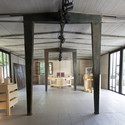
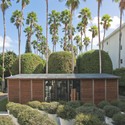
Beautell's video, which explores his recent works completed in the Canary Islands (including ArchDaily 2014 Building of the Year, St. John Baptist Chapel), provokes the viewer to consider the essence of architecture, smaller scales, and the tradition inherent in the architectural profession.
Enjoy the video above and make sure to revisit Beautell's stunning Building of the Year, the St. John Baptist Chapel.
How can the city be reinvented to save the world? Chinese business magnate Zhang Yue and Finnish professor Eero Paloheimo are two men with very contrasting answers to this loaded question. Zhang Yue's answer puts trust in pre-fabricated, high-density vertical development, whereas Paloheimo envisions a built-from-scratch, clean-tech sprawling utopia. Their grand ideas, met with both skepticism and excitement, are documented in a new film by Anna-Karin Grönroos. To watch the trailer and learn more about the bold proposals, continue after the break.
One of the 100 architects and offices taking part in the "Time Space Existence" exhibition, running parallel to the Venice Biennale, Studio MK27's Marcio Kogan has contributed to the exhibition with five videos that, often comedically and/or dramatically, portray the daily lives of the residents of his works.
Consisting of over 2,800 iPod Nano screens, "The Discovery Wall" at Cornell's Medical College in Manhattan was a 2.5 year long process in digital art, conceived by Squint/Opera and accomplished in collaboration with Hirsch & Mann. From a distance, the animated screen appears as a single, unified image. But take a closer look and every single screen has its own unique text. As a permanent piece, it shows the plausibility of digital art to integrate with the existing building fabric. Watch the video above and make sure to learn more about the creative process here.
The skyline of San Francisco is in the process of significant transformation. Projects such as OMA's 550-foot residential tower, as well as developments in the pipeline from Foster + Partners and Studio Gang, are sure to change the city dramatically - thankfully, the 3D printed model in this video is there to show exactly how. The 6x6 foot model shows 115 blocks of downtown San Francisco as it will appear in 2017, and was created by visualization company Steelblue and Autodesk. Claimed to be the largest 3D printed model of a city in the world, it can show much more than just how San Francisco's downtown will look: overlaid projections can show the status of each building, projected traffic patterns and more. Furthermore, each block is individually replaceable to keep the model up to date. Watch the video, and find out more about the model through this article from SFGate.
Through the passage of time and technology, models remain integral in Richard Meier's office. No only are they tactile, visceral objects that represent space in way a computer simply cannot, but they also serve as "remembrances" for Meier (after all, the clients get to keep the buildings themselves). In the video above, NOWNESS gives us a sneak peek into Richard Meier's Model Museum at Mana Contemporary in New Jersey, where many of Meier's 300+ models now call home. Enjoy!
Occupying an existing footprint in the heart of Zurich, Shigeru Ban Architects' Tamedia headquarters is distinct for its stunning timber structure. Beyond the environmental benefits of using wood as the main structural material, the wood's visibility "gives a very special character and high quality spatiality to the working atmosphere," as Ban once described. Take a look in the Spirit of Space video above for a good understanding of what if feels like to be inside the space.
Thanks to state of the art mobile laser scanners, scientists can now document the greatest architecture in history, from The Pyramids to St. Paul's Cathedral, as digital models with pinpoint accuracy. The digital representations take you inside, around and through the buildings, which means researchers can study and analyze sites without being in the field. The technology is already proving its worth - watch the trailer above to see how Petra was constructed and more!
Believing the lack of dignity is a motivator of crime, MASS Design Group has dedicated their fourth Beyond the Building video series to the notion that architecture has the capacity to build peace. Focusing on how the building process can foster dignity, as well as economic and social justice, MASS encourages architects to ask themselves: “How can we use architecture to contribute to peace, conflict resolution, instill dignity, and promote justice?” Watch the video above and share your thoughts on how architecture can go #beyondthebuilding.
This time-lapse montage by Ricardo Oliveira Alves Photography explores the passage of light through the Fragrante House, a project in Lisbon, Portugal defined by its skylights and green garden-walls. Excerpts from an interview with architect Luís Rebelo de Andrade are included, illustrating the many features that make this house unique, and how Lisbon's quality of sunlight adds a natural beauty to the interior.
Produced by The Bartlett Centre for Advanced Spatial Analysis, this somewhat hypnotic video charts the development of London from its origins as the Roman settlement of Londinium to the present day. It maps the changes in the city's road network and built environment, and catalogs the thousands of historic structures which are now protected by either listing or scheduling. Among the fascinating thing revealed by the video is how historic events continue to have a profound effect on the city's built environment: for example a law passed after the Great Fire of London determined that new buildings had to be built from brick, resulting in the large number of Georgian buildings that have survived to the present day.