1. ArchDaily
  2. Articles

Articles

Dust, Cracked Walls, and Enchanting Artwork

Subscriber Access | 

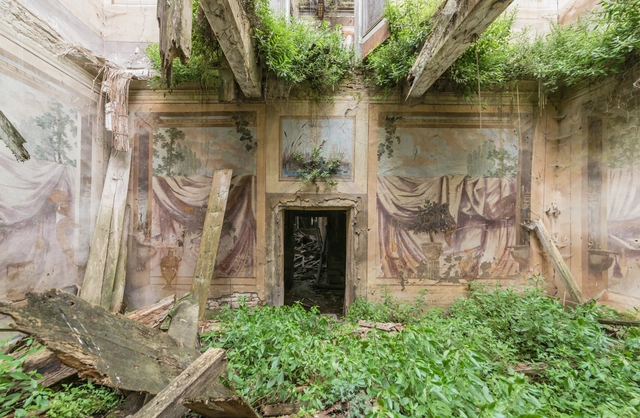
Magic lies in architectural ruins. Beneath the dirt and mold, fractured walls and deserted rooms still stand, preserving the remains that have lingered long after their owners' departure.

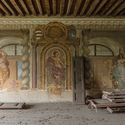
During his explorations of abandoned places across Europe, photographer Romain Veillon stumbled upon enchanting frescoes and paintings that were left to fade in the parlors of the aristocrats. Veillon became keen on finding more of these imaginary museums across the continent, and to his chance, managed to discover many in France, Germany, Italy, Ireland, and Portugal.

Before their art is forgotten and their houses quietly rust away, Veillon captured the murals found in these haute bourgeoisie family houses, which illustrate stories of the cities they lay in and the people they once belonged to.

Dust, Cracked Walls, and Enchanting Artwork - Imagen 1 de 4Dust, Cracked Walls, and Enchanting Artwork - Imagen 2 de 4Dust, Cracked Walls, and Enchanting Artwork - Imagen 3 de 4Dust, Cracked Walls, and Enchanting Artwork - Imagen 4 de 4Dust, Cracked Walls, and Enchanting Artwork - More Images+ 32

The Many Faces of Hudson Yards' Vessel

Subscriber Access | 

Hudson Yards’ Large Honeycomb… Hudson Yards’ New Shawarma Sculpture…”
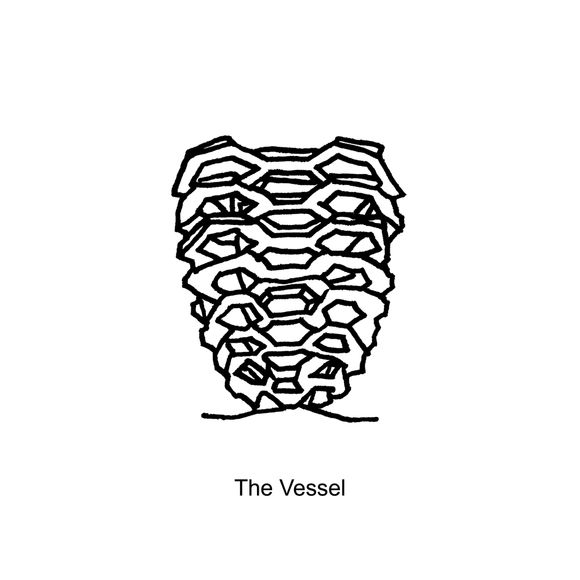
Call it what you want, but the Vessel has created quite a buzz over the past couple of weeks, and it is not just because of its impressive architecture, or the panoramic view at the top (to which some claimed that getting there was an uncalled for work-out).

After coming across different nicknames of Hudson Yards’ now-famous point of attraction, architectural designer and illustrator Chanel Dehond selected some of the most amusing ones and transformed them into sketches.

Tell us, ArchDaily readers, what do you call the Vessel?

The Many Faces of Hudson Yards' Vessel - Imagem 1 de 4The Many Faces of Hudson Yards' Vessel - Imagem 2 de 4The Many Faces of Hudson Yards' Vessel - Imagem 3 de 4The Many Faces of Hudson Yards' Vessel - Imagem 4 de 4The Many Faces of Hudson Yards' Vessel - More Images+ 6

DARP, Second Place in the Memorial Design for the Former Monaco Building in Medellín

Subscriber Access | 

Colombian firm DARP has won second place in the design competition for the memorial space at the former Mónaco Building in Medellín, Colombia. Organized by the EDU and the Colombian Society of Architects (SCA), the international competition sought to design a space of memory and reflection on the period between 1983 and 1994, located on the site of the demolished building that was once the home of drug trafficker Pablo Escobar.

Public Valparaíso: 50 axonometrics of elevators, stairs, and alleys

Subscriber Access | 

The Chilean city of Valparaíso is comprised of 42 hills overlooking the Pacific Ocean. Its unique topography has prompted—or forced—residents to build a creative network of elevators, staircases, and alleys, connecting every corner of the city despite its rugged terrain.

A Sustainable Solution for South Africa's Toilet Crisis by the Community, for the Community

Subscriber Access | 

This article was made in partnership with Design Indaba, a website and annual festival that uncovers innovation for good. Global Graduate Nicole Moyo presented her project Day 1 of the 2019 festival. Click here to learn more about the annual event.

Our planet is home to almost 7 billion people. Out of these 7 billion, more than 5 billion have access to mobile phones, but less have access to working toilets, and more than 1 billion still discharge waste in the open.

A Sustainable Solution for South Africa's Toilet Crisis by the Community, for the Community - Image 2 of 4A Sustainable Solution for South Africa's Toilet Crisis by the Community, for the Community - Image 3 of 4A Sustainable Solution for South Africa's Toilet Crisis by the Community, for the Community - Image 4 of 4A Sustainable Solution for South Africa's Toilet Crisis by the Community, for the Community - Image 1 of 4A Sustainable Solution for South Africa's Toilet Crisis by the Community, for the Community - More Images+ 11

Felipe Lavín explores solitude amidst the crowd of the Berlin Metro

Subscriber Access | 

Whether seeking distraction, escape, or reflection, metro passengers shorten their commutes by checking their phones, reading books, or listening to music. For Chilean photographer and civil engineer Felipe Lavín, this conceals a contradiction. "Commuting en masse is a highly social act, yet at the same time, it is deeply solitary. As Marc Augé notes, in the metro we constantly brush against the lives of others without ever truly encountering them," Lavín says in conversation with ArchDaily.

Arquicast #68: Interview with ArchDaily Brazil

Subscriber Access | 
Arquicast #68: Interview with ArchDaily Brazil - Imagem 1 de 4

Officially debuting the partnership between ArchDaily and Arquicast, episode #68 Interview: ArchDaily Brasil is now live. In this episode, three of the editors from the Brazilian platform—Pedro Vada, Eduardo Souza, and Matheus Pereira—share a behind-the-scenes look at what it is like to work for the world's most visited architecture and urbanism website. The challenges of adapting to a new kind of career in architecture, the speed of industry transformations, and the role of technology and collaboration are among the topics discussed in this casual and informative conversation, which can be accessed here!

Heritage Restoration in the Theaters of Córdoba

Subscriber Access | 

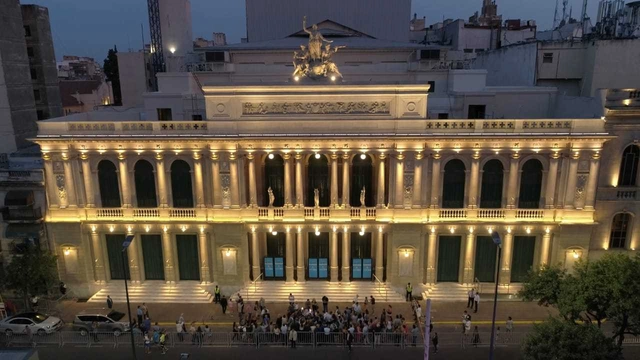
The construction of theaters in the Province of Córdoba, Argentina, was closely tied to the second wave of immigration that arrived between 1880 and 1930, alongside the expansion of the country's railway network. Today, the city boasts a large number of theaters, most of which date back to this period and form an integral part of Córdoba's cultural heritage, despite having suffered for many years from the neglect of successive governments.

On overtourism in the Valle de Guadalupe area of Baja California, Mexico

Subscriber Access | 

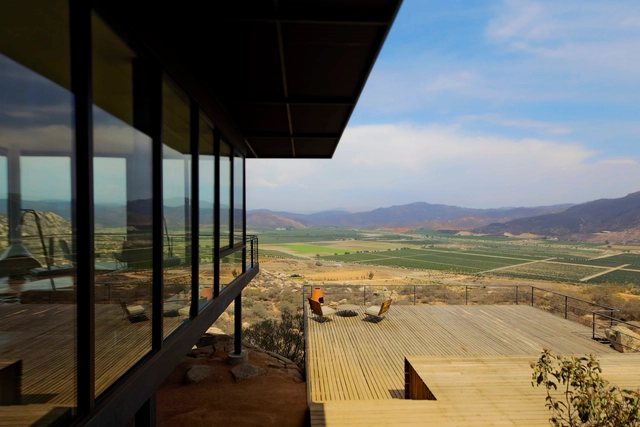
Valle de Guadalupe is a region in the state of Baja California, Mexico, with a climate ranging from arid to Mediterranean, which has allowed it to become one of the country's most important wine-producing areas. In recent years, however, it has been threatened by overtourism and real estate speculation.

Why Do Architects Love Designing Houses?

Home. Our shelter. Our private space. In an urbanized world with dense megalopolises like Tokyo, Shanghai, and São Paulo, homes are getting smaller and more expensive than ever. If you are claustrophobic, Marie Kondo is your best ally in the quest to earn some extra space.  And even though private backyards have become a luxury for most, our data shows that single-family houses are still the most popular project type on ArchDaily. Why is this? (Especially when it seems incongruous given the reality of today’s crowded cities.) Why do some universities still insist on designing and building houses as academic exercises? Wouldn’t it be more creative—and more useful—to develop architecture in small-scale spaces? Would it be more rewarding to develop solutions on bigger scales?

Integration: The Latest Architectural Visualization Trend of 2019

 | Sponsored Content

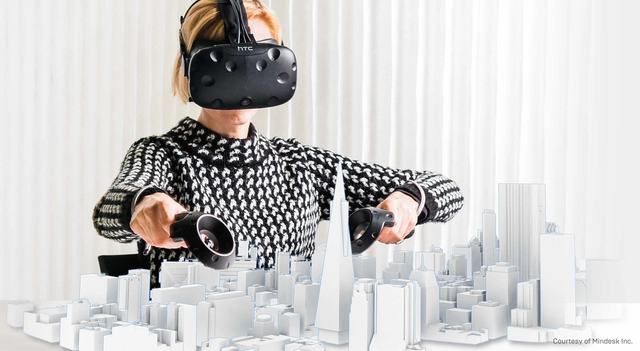
As more and more visualization professionals adopt real-time rendering for presentation and collaboration, we’re seeing yet another trend in this emerging field: the integration of various technologies to serve a wide variety of workflows.

Every firm has different needs for compatibility with their chosen CAD programs. No one wants to learn a new process from scratch when they've already spent countless months setting up a design-to-presentation process that works for them.

Exploring Architecture through Performance, Photography and Fashion

Subscriber Access | 

Exploring Architecture through Performance, Photography and Fashion - Image 1 of 4Exploring Architecture through Performance, Photography and Fashion - Image 2 of 4Exploring Architecture through Performance, Photography and Fashion - Image 3 of 4Exploring Architecture through Performance, Photography and Fashion - Image 4 of 4Exploring Architecture through Performance, Photography and Fashion - More Images+ 48

The purpose of architectural photography is to show a design in the best possible way, with the artform often characterized by perspective correction and atmospheric lighting. However, few architectural photographers have experimented with other artistic disciplines. Miguel de Guzmán, Paul Vu and Jules Couartou are among those who have challenged the limits of this form of photography, generating an interesting crossover between architecture photography, fashion and performances. In their images, the relationship between space and the user is shown through a scene designed to register an effect on the viewer. The results are images which are full of creativity.

Cardboard: From Industrial Workhouse to Shigeru Ban’s Master Material

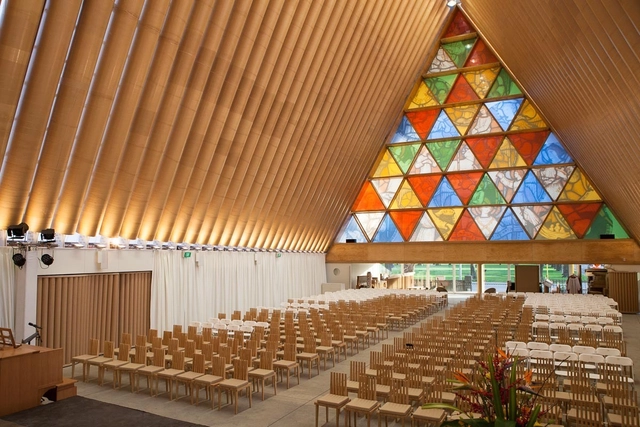
Cardboard tubes are so commonplace that we may no longer even notice them. Yet they are everywhere: in a roll of toilet paper, in the packaging of the college diploma, in fireworks, and in the tissue and paper industries. And now, more and more, they can be found in unusual places, such as on the walls of houses and buildings. The material is part of modern life and is being produced for a multitude of industrial applications and consumer products. The vast majority are used as structural cores in winding operations. Immediately after manufacturing, paper, film or textiles are rolled directly onto cardboard tubes resulting in a stable roll that is easily stored and transported.

Cardboard: From Industrial Workhouse to Shigeru Ban’s Master Material - 1 的图像 4Cardboard: From Industrial Workhouse to Shigeru Ban’s Master Material - 2 的图像 4Cardboard: From Industrial Workhouse to Shigeru Ban’s Master Material - 3 的图像 4Cardboard: From Industrial Workhouse to Shigeru Ban’s Master Material - 4 的图像 4Cardboard: From Industrial Workhouse to Shigeru Ban’s Master Material - More Images+ 3

The Best Architecture Graduation Projects in Peru 2018

Subscriber Access | 

The final thesis project represents a major milestone in earning an architecture degree, and one of the fairest ways to honor it is through promotion and visibility. To discover the valuable output of Peruvian universities, in January we launched our open call, inviting architects to submit their respective final graduation projects (PFC) defended through 2018. Although we originally published a compilation of undergraduate theses in 2015, this is the first official call in Peru on par with previous editions held in other Latin American countries such as Argentina, Mexico, Colombia, and Brazil, placing us at the heart of this international dialogue.

This first edition received 75 submissions from 17 universities across various cities nationwide. After an exhaustive evaluation, 15 final projects were selected by the editorial jury of ArchDaily en Español. The selection values precision and detail, a cohesive line extending from the design to its presentation, and above all, the boldness to advance revolutionary ideas in the face of a seemingly harsh yet diverse reality. They do not necessarily result in a building; rather, they suggest the promise of architecture without limits, demonstrating critical thinking and a firm stance on the country's major (and urgent) issues. In doing so, they pave the way for multidisciplinary, collaborative work that strongly emphasizes the social role of the architect. All of these architectural projects maximize the capacity to imagine, experiment, and design, proving to be not only the culmination of a well-learned academic chapter but also the beginning of building those dreams. Let us not forget this transformative spirit as we cross the threshold.

Below, explore the selected projects in detail.
Photographer Documents “Non-Social Interest” Housing in Mexico City’s Peripheries

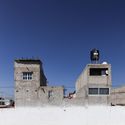
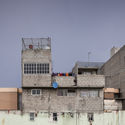
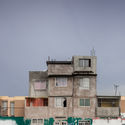
Photographer Documents “Non-Social Interest” Housing in Mexico City’s Peripheries - Image 5 of 4
© Zaicks Moz

Photographer Documents “Non-Social Interest” Housing in Mexico City’s Peripheries - Image 1 of 4Photographer Documents “Non-Social Interest” Housing in Mexico City’s Peripheries - Image 2 of 4Photographer Documents “Non-Social Interest” Housing in Mexico City’s Peripheries - Image 3 of 4Photographer Documents “Non-Social Interest” Housing in Mexico City’s Peripheries - Image 4 of 4Photographer Documents “Non-Social Interest” Housing in Mexico City’s Peripheries - More Images+ 7

In 2005, as a way to increase its competitiveness, the government of the state that borders Mexico City – named Estado de México– launched a program called “Bicentenary Cities,” a nod to the 200th anniversary of the Mexican Independence.  This program proposed careful land-use planning and the creation of a state structure for key population centers selected based on location, capacity for population increase, potential to host infrastructure and strategic equipment, and the possibility to create adequate communication lines to enable regional, statewide and national integration.

A Space of Contemplation and Sanctuary by WOJR

Subscriber Access | 

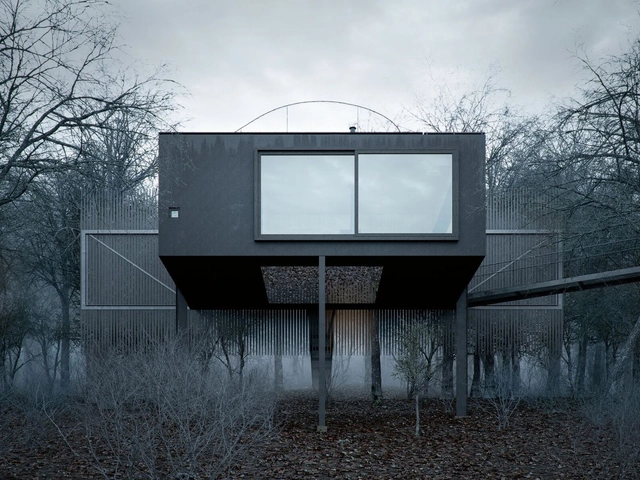
Architecture, just like art, has the ability to detach the individual and provoke a sense of intrigue and inspiration. Some buildings leave a greater mark, especially if the project or the site it is built on has a story of its own. 

The Mask by WOJR is developed for an individual who lost his younger brother in a lake in Ithaca, New York. After the tragedy, the lake became a zone of detachment from the everyday world, transforming the structure from just a house on a lake, to a space of contemplation.

A Space of Contemplation and Sanctuary by WOJR - Image 1 of 4A Space of Contemplation and Sanctuary by WOJR - Image 2 of 4A Space of Contemplation and Sanctuary by WOJR - Image 3 of 4A Space of Contemplation and Sanctuary by WOJR - Image 4 of 4A Space of Contemplation and Sanctuary by WOJR - More Images+ 14

Socially-Organized Housing: Design That Establishes Emotional Ownership

Developed by Nikos A. Salingaros, David Brain, Andrés M. Duany, Michael W. Mehaffy, and Ernesto Philibert-Petit, this series of articles offers here a set of evidence-based optimal practices for social housing, applicable in general situations. Varying examples are discussed in a Latin American context. Adaptive solutions work towards long-term sustainability and help to attach residents to their built environment. 

They propose, then, new insights in complexity science, and in particular the work of Christopher Alexander on how to successfully evolve urban form. By applying the conceptual tools of “Pattern Languages” and “Generative Codes”, these principles support previous solutions derived by others, which were never taken forward in a viable form. 

Opinion: Women in Architecture Need a New Set of Role Models—Beyond the Star System

Opinion: Women in Architecture Need a New Set of Role Models—Beyond the Star System - 1 的图像 4
Sesc Pompéia / Lina Bo Bardi. Image © Nelson Kon

This article was originally published on CommonEdge as "Women in Architecture Need a New Set of Role Models—Beyond the Star System"