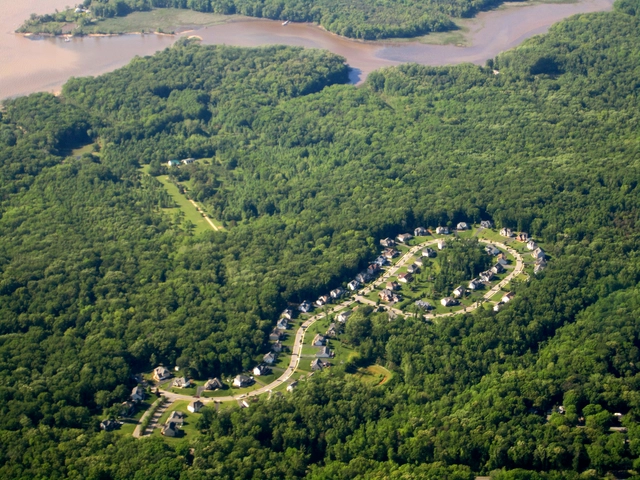
Suburban expansion into remnant habitat / La Citta Vita, via Flickr, licensed under CC BY-SA 2.0
The export of American culture is one of the most influential forces in our interconnected world. From Dakar to Delhi, American pop music, movies, and artery-clogging cuisine are ubiquitous. However, one of the most damaging exports is the American suburb. When the 20th century model for housing the swelling populations of Long Island and Los Angeles translates to 21st century Kinshasa and Kuala Lumpur, the American way of life may very well be our downfall.
https://www.archdaily.com/943939/suburban-sprawl-increases-the-risk-of-future-pandemicsMichael Grove
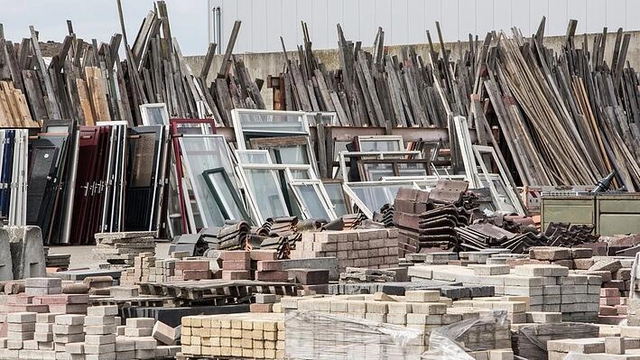
Stockyard of recycled building materials waiting for reuse . Image Courtesy of NY Engineers
“Out with the old and in with the new,”....or so they say. In the United States, a cloud of dust and debris paired with a wrecking ball and bulldozer tends to represent signs of forward progress, innovation, economic activity, and the hope for a better future through architectural design.
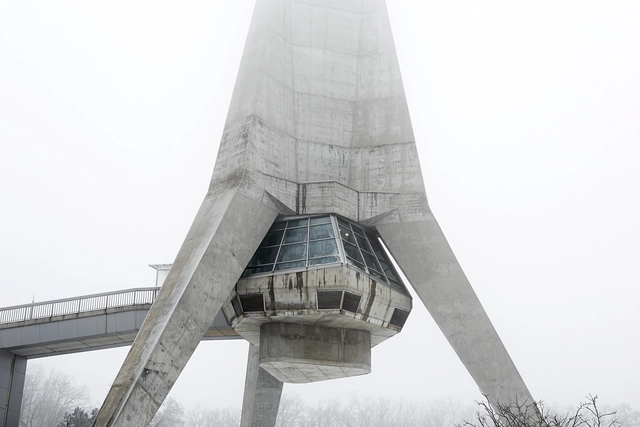
The Manifesto of Futurism, written by Italian poet Filippo Tommaso Marinetti in 1909, was the rallying cry for the avant-garde movement driven by the writers, musicians, artists, and even architects (among them Antonio Sant'Elia) in the early 20th century. After the manifesto's publication, Futurism quickly came to the forefront of public conscience and opened the way for many other cutting edge movements in the art world and beyond.
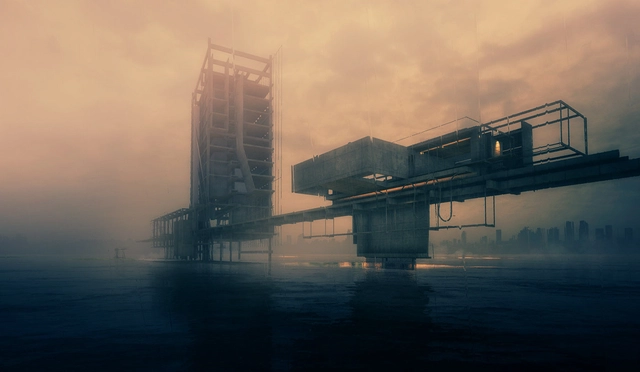
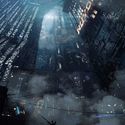
While the movement would undergo a significant decline in the years following World War II, it reinvented itself decades later during the Space Age, when faith in technology and industry were at a fever-pitch and the world's powers were racing to put humans on the Moon. All of a sudden, humanity had a new cultural panorama that inspired every facet of society--from musicians, to scientists, to architects. With the combination of engineering and art, not to mention the bountiful scientific achievements of the time, works of architecture turned into works of science fiction.
We've recently passed the halfway point of 2020, and to date, we've published hundreds of residential projects featuring distinct ways of living on ArchDaily. In a year marked by the worst health crisis that humanity has experienced in the last century, the Covid-19 pandemic, the house has gained new meanings and values, reiterating that no matter how diverse its program, a home's purpose is to shelter its inhabitants.
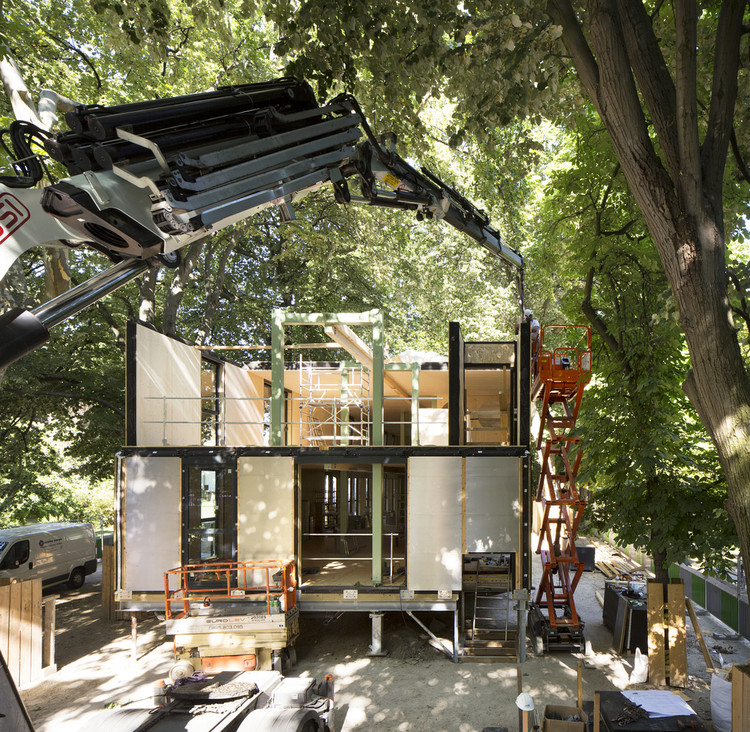
The concept of Design for Disassembly (DfD for short) gained increasing traction in recent years, as it addresses the growing concern around the high consumption of resources and low recycling rate within the construction industry. The following article details on the method and features guidelines for a design process that facilitates the dismantlement of future buildings, with the scope of providing a better understanding of this principle within the broader framework of the current practice and circular economy.
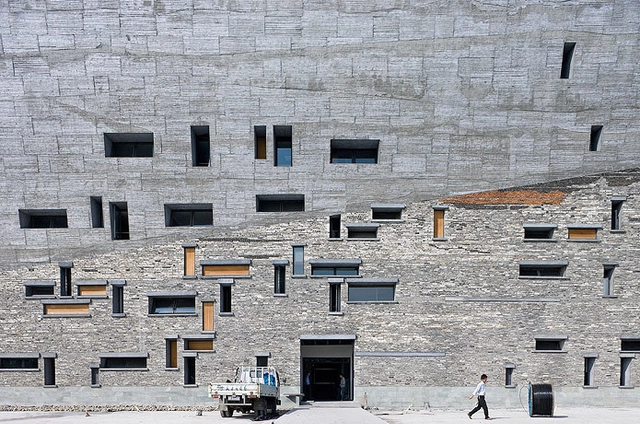
Amateur Architecture Studio, Ningbo History Museum, 2008. . Image Courtesy of Louisiana
Over the past two centuries, cities in China have multiplied and expanded on a large scale, under accelerated urbanization. Mass demolition of the old city fabric, occurring everywhere, is leaving industrial debris and fragmented cultural artifacts buried forever, under shiny new skyscrapers. As old Chinese cities are collapsing and new urban centers are outspreading, a part of the city was lost, the old demolished landscape. Wang Shu and Lu Wenyu, the first Chinese citizens to win the Pritzker Architecture Prize, responded to this past-present relation by working with recycled materials and traditional know-how. In the following, we explore some of this couple's renowned works such as Ningbo History Museum, Ningbo (2008), Xiangshan Campus of China Academy of Art, Hangzhou (2004), and Ningbo Contemporary Art Museum (2005), to examine his humanistic approach to the city.
Architecture is defined by stories. Told through diverse mediums, these narratives shape how we understand our built environment. At the same time, drawings and visualizations can be architecture in their own right, a way of discovering what we see or what could be. For Vienna-based urbanist, architect and illustrator Alexander Daxböck, drawings are a way to imagine new futures together.
Representation of the real world is, without any doubt, in the genesis of cinema, an art originated from photography, by creating a sequence to convey the impression of movement to the viewer. In fact, the earliest known film recording is from 1895, picturing the arrival of a train at Ciolat station in France, a trivial event in the daily life of 19th-century European cities.
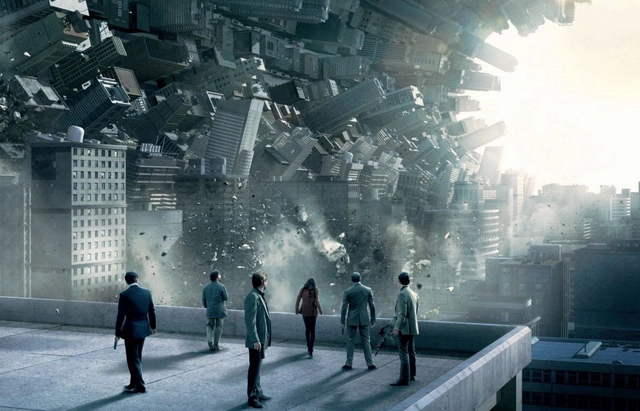
However, even though tangible reality plays a big role in cinema, one cannot ignore that the fascination caused by this art comes, to a great extent, from its capacity to create imaginary worlds, to activate mental spaces, and to unleash emotions. In this sense, the real world may often provide insufficient fuel, inspiration, or background for the directors' and screenwriters' storytelling, so the art direction and scenic design teams are required to create other intangible realities that serve as a basis for the narrative.
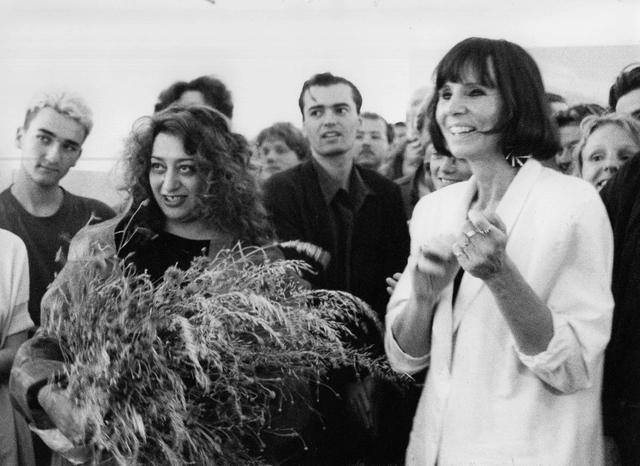
During the peak of Postmodernism, and the uprising of notions such as urban renewal and public participation, Aedes Architecture Forum, the first private architecture gallery in the world, opened in 1980 in Berlin. Founded by Journalist Kristin Feireiss and Helga Retzer, both neither architects nor regularly engaged with architecture at that time, Aedes aspired to encourage an international dialogue around the subjects of urban environment, space, and society.
Shortly after its inception, the center became an integral part of the contemporary international architectural scene, carrying out debates, seeking fresh ideas, showcasing the avant-garde, and highlighting young talents. Providing architects with a compelling space to present their architectural and urban ideas, Aedes hosted exhibitions for Zaha Hadid, Venturi Scott Brown, Cedric Price, John Hejduk, OMA (Office for Metropolitan Architecture), Peter and Alison Smithson, and Bernard Tschumi to name a few.
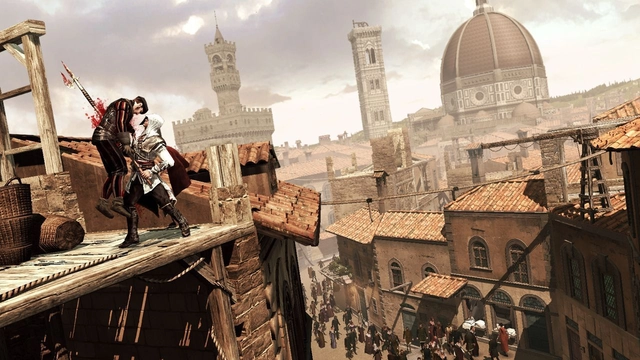
We’ve asked our ArchDaily readers about which video game has impressed them most in terms of architectural visualization, and why. Hundreds of various answers later, it became evident that there isn’t one element that makes a video game stand out, but the virtually-built environment is almost always a key factor in how the game is experienced.
In video games, architecture plays a much bigger role than just being a backdrop of a virtual city or an authentic render of an existing one, it is, in fact, a fundamental component of transcending gamers into a virtual world that feels just as authentic as the real world does, but with extra adrenaline.
(WARNING: the videos and images featured in this article may potentially trigger seizures for people with photosensitive epilepsy)
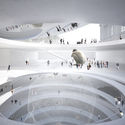
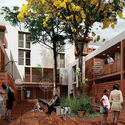
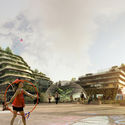
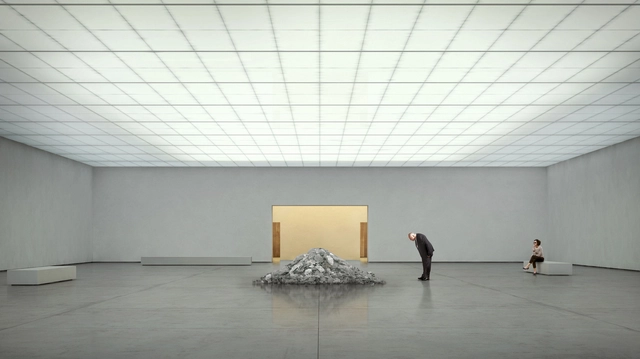
In architecture, professionals must constantly deal with the challenge of representing a project clearly and understandably before it is built, making the space somehow more perceptible to people who are often not specialized in the field. Rendering is one of the most popular methods of three-dimensional representation among architects because it portrays the project more realistically. Reality, however, implies the presence of people and their ways of inhabiting spaces, which can be depicted through human figures, that must be coherent with the intended picture and interpretation of the architecture, the place it is located in, and the way it is inhabited.
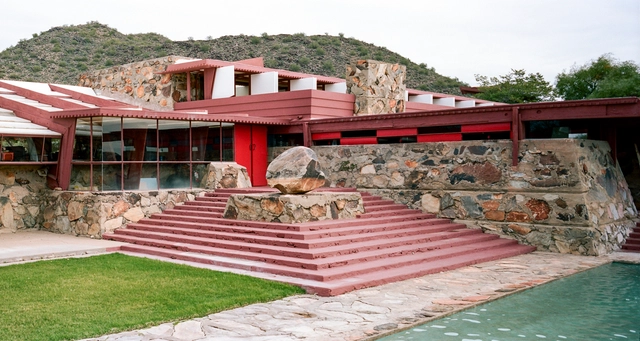
The Architect's Newspaperhas learned that the college formerly known as the School of Architecture at Taliesin will change its name and move summer classes to Cosanti and Arcosanti, with plans to try to make Cosanti its permanent home.
The move comes after a protracted back-and-forth with the Frank Lloyd Wright Foundation that spilled out into public view earlier in January when the school announced it would be closing after 88 years. After an outpouring of support from alumni and funding commitments, the school reversed its vote to close at the beginning of March but will need to vacate both Taliesin campuses—West in Scottsdale Arizona and East in Spring Green, Wisconsin—and can no longer use the Frank Lloyd Wright or Taliesin name, though it will retain its accreditation and students. The last time the school changed its name was in 2017 after it split from the foundation as part of the accreditation process, and after July 31 of this year, any remaining association will be formally severed.
Rebelarchitette has created a new tool that aims to detox architecture from inequalities, an interactive public world map showcasing 732 outstanding women architects from all over the world.
Peter Zumthor, in one of his most emblematic works, gives concrete an almost sacred dimension. The work in question is the small Bruder Klaus Field Chapel, located in a small village in Germany, a construction that is both robust and sensitive. Built with white cement, which was mixed with stones and sand from the region, the chapel is composed of 24 layers of concrete that were poured day after day by local labor, and compressed in an unusual way. The building's flat and smooth exterior contrasts with its interior, which was initially made of inclined wooden logs forming a triangular void. To remove these internal forms, the logs were set on fire in a controlled process, reducing them to ash and creating a carbonized interior that varied between black and gray and retained the texture of the negatives of the logs. The result is a masterpiece of architecture, a space for reflection and transformation, in which the same material appears in diametrically opposing ways.
As the world is slowly reopening, easing lockdown measures, everyone is adapting to new realities. Imposing drastic adjustments to our lives, the coronavirus has introduced a new “normal”, changing our perceptions and altering our priorities. Driven towards questioning and evaluating our environment, we are constantly reacting and anticipating a relatively unknown future.
A casual conversation between two editors at ArchDaily generated this collaborative piece that seeks to investigate the current trends, predict the future, and offer insights to everyone/everything related to the architectural field. Tackling the evolution of the profession, the firms, and the individuals, especially young adults and students, this article, produced by Christele Harrouk and Eric Baldwin, aims to reveal what is happening in the architecture scene.
In February of this year, I gave a short talk to our Yale students about the economy and their employment prospects, suggesting that while all indicators remained strong and jobs were plentiful, it had been quite some time since our last downturn. Having seen several during my career I suggested that they would likely see a recession sometime in theirs, but cast doubt on whether we’d ever see anything as serious as 2008. If only…
It’s too early to be making nuanced arguments about the future, as we face down what is undoubtedly going to be a much more serious situation in the second half of 2020. So, here are ten first thoughts about how our profession may be impacted, and potentially transformed, as a result. Choose two or three as prompts to consider the future once the crisis has passed.
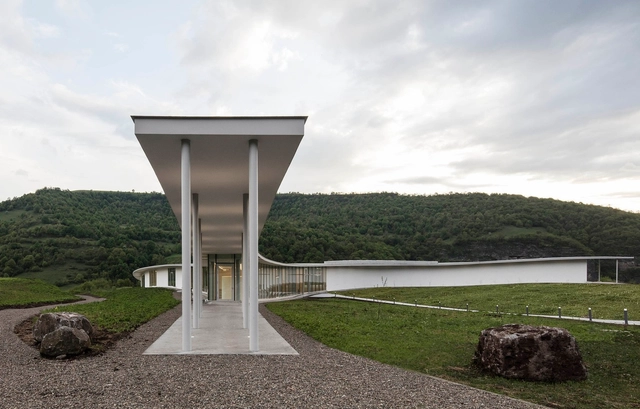
The architecture of Armenia responds to both past traditions and the country's earthquake-prone geography. Known for medieval churches, Armenia has also become home to modern projects that reinterpret familiar construction methods and organizational principles. Acknowledging a reputation for sturdy concrete and stone structures, the country's contemporary architects are experimenting with different materials to create lighter and more open structures.
ArchDaily has become one of the 1,000 most visited websites on the Internet, according to the latest Alexa Internet ranking -- an Amazon-owned company that measures the popularity of all Internet sites.
More than 360,000 users visit our flagship English-speaking platform every day, which when combined with our network of Spanish, Portuguese, and Chinese sites, creates a daily global audience of 650,000 people: the most visited architecture network in the world.
But why is this relevant? Why do these numbers matter?
When we started this project 15 years ago, we knew that the expansion of cities would become the biggest challenge for humanity, and that architects, with better access to knowledge, had the ability to radically improve the quality of life of billions of people. That is why we envisioned ArchDaily as a global source of inspiration, knowledge, and tools to help architects face this challenge. A carefully curated, objective, categorized database of projects and knowledge, paired with a stream of globally diverse content.
But architecture is bigger than architects, and it has become - to our joy - a transversal subject. We have all, as a society, understood the importance of our built environment, how it can shape our mindset, improve our well being, form our education, and drive opportunities and set the grounds for a more egalitarian society. Moreover, a bounty of changes in urban and economic dynamics is also molding architecture into something more relevant, more recognizable, and more democratic. That is why our profession and craft are permeating into Netflix and Apple TV shows, becoming an object of admiration on Instagram, and representing something that you can dream of, aspire to, and work towards catalogues such as Pinterest.











.jpg?1591280425 "© Archstorming")