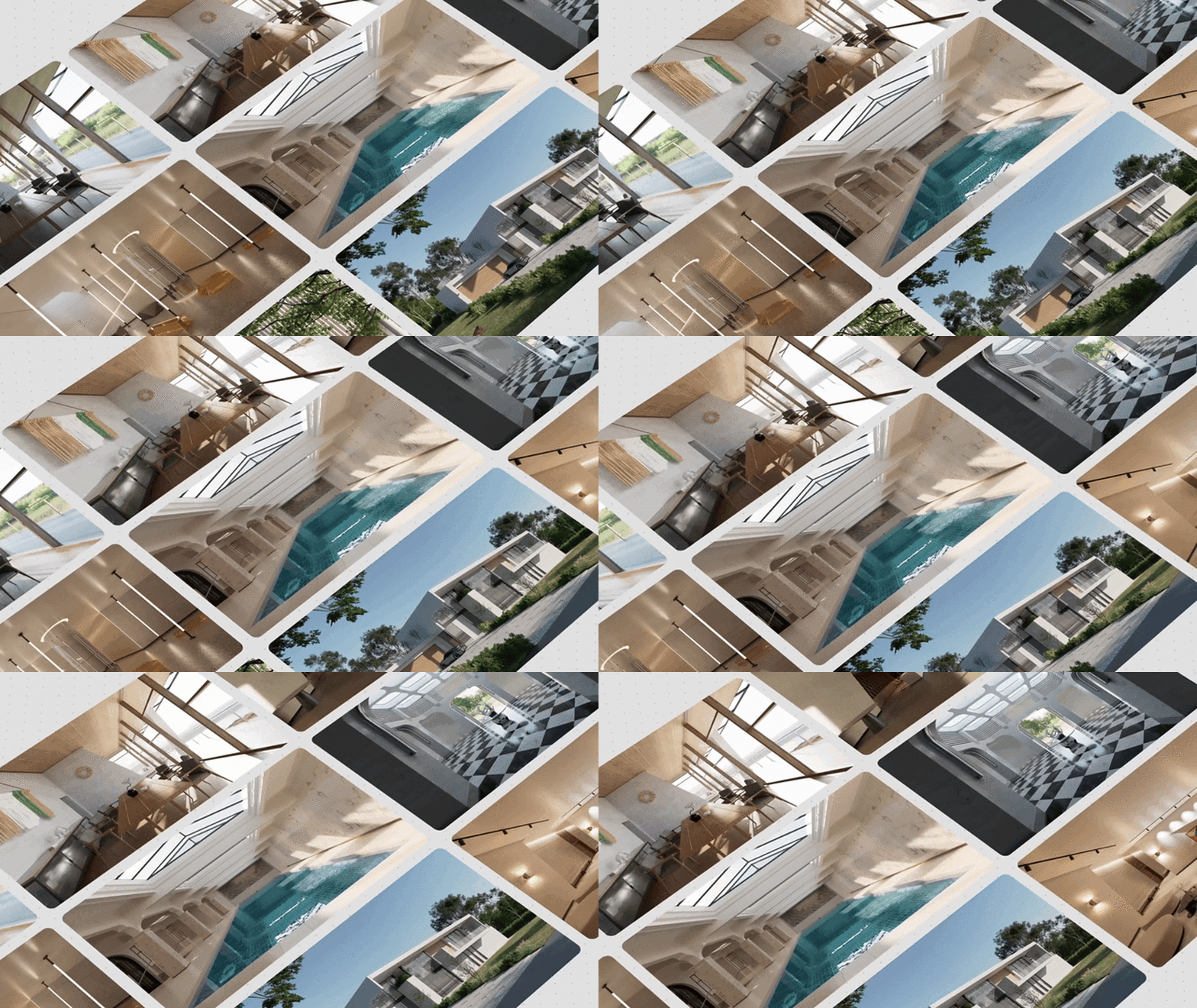
How to visualize architectural concepts in SketchUp using D5 Lite for faster design exploration.
How to visualize architectural concepts in SketchUp using D5 Lite for faster design exploration.
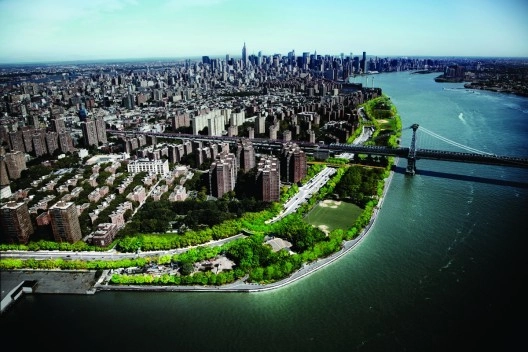
Immediately after Hurricane Sandy hit the North American Eastern seaboard last October, NYC embarked on a debate on the ways in which the city could be protected from future storms that climate scientists predict will escalate in frequency. Engineers, architects, scientists from myriad disciplines came up with proposals, inspired by international solutions, to apply to this particular application. We were presented ideas of sea walls, floating barrier islands, reefs and wetlands. Diverse in scope, the ideas have gone through the ringer of feasibility. Should we build to defend or build to adapt?
On Tuesday, NYC Mayor Bloomberg announced a plan that includes $20 billion worth of both: a proposal of removable flood walls, levees, gates and other defenses that would be implemented with adaptive measures such as marshes and extensive flood-proofing of homes and hospitals. We have learned over the years that resilience must come with a measure of adaptability if we are to acknowledge that climatic and environmental conditions will continue to challenge the way in which our cities are currently being developed.
What does this plan entail and what can we imagine for the future of NYC? Find out after the break.
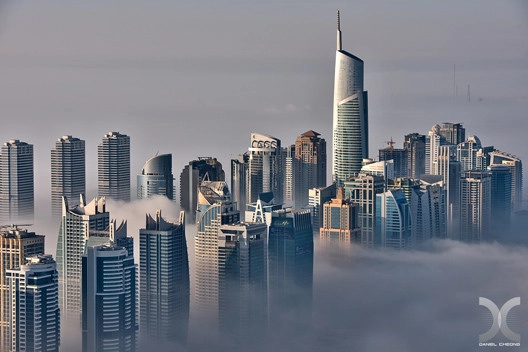
We have entered an era of ‘modernization’, led by the Western world. In our times of unprecedented demographic expansion, infrastructural development is racing to meet demand with supply. As architects and designers, we have been pressured to embrace consumerism. Globalization has been adopted as a solution to the problem. Developing countries have equated economic prosperity and success to the adoption of ‘contemporary architecture’ in a bid to demonstrate leadership and innovation. And voila, we have a palette of sleek buildings to meet the population’s needs, as well as to “modernize” our landscape. Surely, mimicking the formula of technologically advanced countries will project us into the public eye.
Well it certainly does, but not necessarily in a positive way. It is creating a global architectural uniformity as designs promoted by Western ‘architectural gurus’ are being replicated around the world. We are neglecting vibrant contextual elements and hence constructing a generic world lacking humane facets of design. Would it not be a tragedy if Paris, Venice and Barcelona all looked similar? Would we not mourn the vibrancy of Parisian streets around the Eiffel Tower, the romanticism of Venetian waters and the monumental Sagrada Familia that dominates the skies of Barcelona? Do we really want a world that is basically a mirror image of the US?
More after the break...
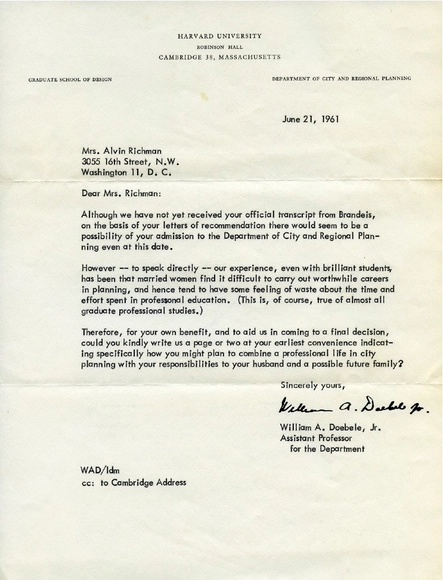
In 1961, Phyllis Richman, a student at Brandeis University, was considering applying to the Harvard Graduate School of Design's Department of City and Regional Planning. The response from Professor Doebele, which you can read above, was to question the validity/practicality of her desire to enter into higher education, being, as she would surely be, a future wife and mother.
While today it sounds almost quaint in its blatantly sexist assumptions, Ms. Richman's letter remains, unfortunately, all too relevant. In her article for The Washington Post, Richman says: "To the extent, Dr. Doebele, that your letter steered me away from city planning and opened my path to writing [a career Richman later describes as "remarkably well-suited to raising children"], one might consider that a stroke of luck. I’d say, though, that the choice of how to balance family and graduate school should have been mine."
She's absolutely right, of course; the decision was hers and hers alone to make. However, there's no avoiding that Richman eventually found success in a job that allowed her to live flexibly as a professional and parent. How many women, and for that matter men, can claim that of architecture? How many architects are convinced, just like Ms. Richman, to pursue success in other, more flexible careers?
More about Richman's letter, and where Denise Scott Brown comes in, after the break...
In this interview by Hugo Oliveira, Álvaro Siza presents his ideas on the link between obsolescence and quality in architecture, and the role that a design's flexibility plays in this relationship. He argues that the convent is perhaps the best example of a typology which is both fit for purpose and very flexible, allowing myriad other uses when its lifespan as a convent has ended. He also laments the current tendency to design a building for a very short period of time - intended to last only as long as it is needed for its original function. He links this tendency back to the Futurists of the early 20th century, where the idea was that "each generation makes its own environment which is later destroyed", an idea he dismisses since "it also allows you to build badly because it only needs to last twenty years".

In addition to honoring renowned architect Ray Kappe with a Lifetime Achievement Award, the Los Angeles Business Council has awarded thirty-one local projects for their design excellence, sustainability and community impact at the 43rd annual LA Architectural Awards.
The 2013 Los Angeles Architectural Award Winners:
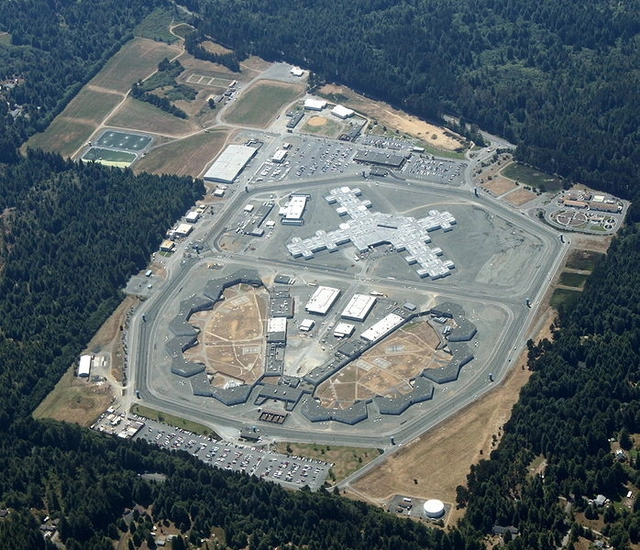
In the latest episode of his 99% Invisible podcast, Roman Mars bravely takes on a very sensitive topic: the design of prisons which contain execution chambers or house prisoners in solitary confinement. More specifically, the podcast discusses whether architects have a moral duty to decline these commissions and whether, as a profession, architecture should have a code of ethics which prevents registered architects from participating in such designs.
He compares architecture to the medical profession, where the American Medical Association imposes an ethical code on its members which all but forbids them from taking part in execution by lethal injection, based on medicine's general aim of preservation, rather than destruction of life. The American Institute of Architect's ethical code is both generic and meager in comparison: “Members should uphold human rights in all their professional endeavors.”

The title “intern” should be banished from the profession of architecture. It’s about time. It has run its course. It’s outmoded and contributes to a culture of exploitation in the guise of opportunity. Frankly, it makes us look so nineteenth century.
More importantly, I’m tired of seeing articles decrying the state of interns every summer when “intern season” kicks in. Can we just be done with this? It’s depressing. Don’t exploit the interns! Pay the interns! No free labor! Class action lawsuit! Solidarity! FU pay me! All very well and good. However, if labor laws and ethics have not fixed the problem, maybe getting rid of the title will. It’s just a title, but it sets a bad precedent.

Today, SANAA (Sejima & Nishizawa and Associates) unveiled plans for a 400,000 square-foot building in Jerusalem that will form a new, interdisciplinary downtown campus for the Bezalel Academy of Art and Design. The competition-winning proposal, designed by the 2010 Pritzker laureates in collaboration with Israel’s Nir -Kutz Architects, features an array of stacked horizontal slabs that react to the area’s topography and surrounding context in order to create a series of outdoor terraced viewing platforms and multi-level interior spaces where students and teachers can meet, study and display their work.
More on the new SANAA-design downtown campus after the break...
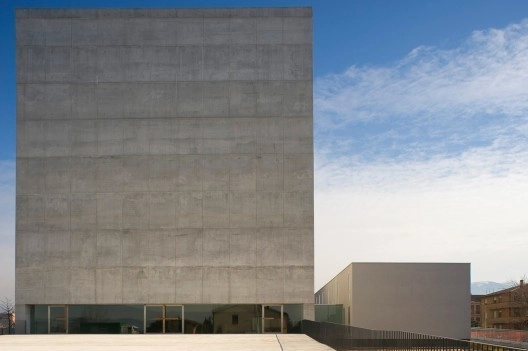
"Space, lines, light and sound" are the essential components of the experience of architecture and the most profound buildings have captured these moments through thoughtfully orchestrated design. Recently, architects that have designed churches with these primary elements in mind have come under criticism by the Vatican for diverting from the traditional form and iconography of churches. According to a recent article in The Telegraph, Massimiliano and Doriana Fuksas' design for a church in Foligno, Italy has been labeled as problematic by the parish and Cardinal Gianfranco Ravasi, head of the Vatican's Pontificial Council for Culture for its resemblance to a museum instead of a place of worship - based on traditional Catholic values placed on the altar and imagery. Regardless of the Vatican's criticism of the aesthetic approach of architects that break with tradition, this seems more of an issue of miscommunication between the architects and the congregations that have commissioned the projects that are being criticized.
More on this after the break.
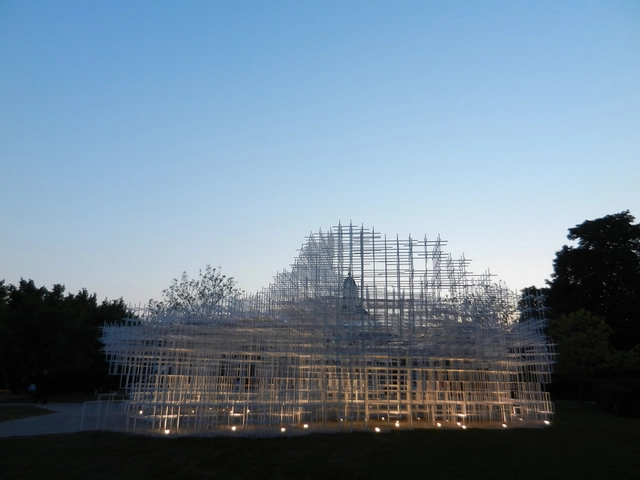
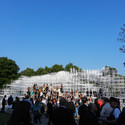
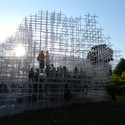
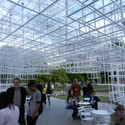
This Thursday, the official opening of the Serpentine Pavilion, by Sou Fujimoto, took place in Hyde Park, London. It was the first time the public could interact with the structure.
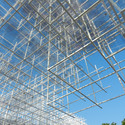
The pavilion, which has already gotten its "cloud" nickname because of its shape and lightness, is generated through a three-dimensional steel grid of about 40 centimetre modules which morphs on each side. The structure is broken to allow people access as well as to generate different uses around, below and upon it.
More pictures and the architect's statement after the break.

After four years of high-brow debate, the demise of the controversial Hirshhorn ‘Bubble’ has been confirmed. The decision, made by Smithsonian Secretary G. Wayne Clough and Undersecretary Richard Kurin, comes shortly after the Hirshhorn board’s split vote resulted in the resignation of director Richard Koshalek - the man behind the ‘Bubble’.
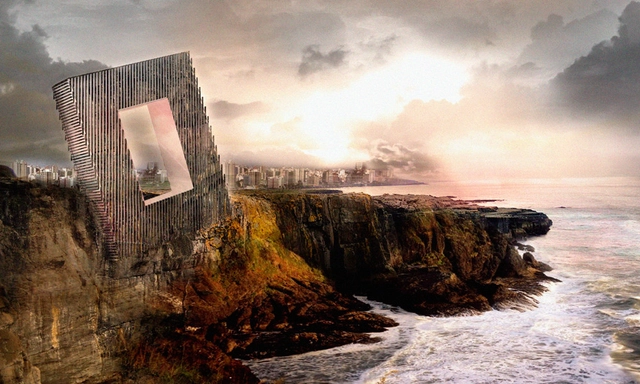
At the opening of his latest article for The Guardian, Olly Wainwright finds himself observing a slew of thesis projects produced by the best and brightest students of the UK. But Wainwright is most struck - not by the display of technical skill or imagination - but by the sheer lack of connection these projects had with actual, built, imperfect architecture: “Time and again, the projects seemed intent on fleeing the real world of people and places, scale and context; retreating instead into fantasy realms of convoluted forms with no seeming purpose.”
It’s a trap that many Architecture schools have fallen into, in the UK and around the world, but it’s not just a symptom of the misguided nature of architecture education. It’s also symptomatic of Architecture’s obsession with the image of architecture, an image completely detached from reality.
More after the break...
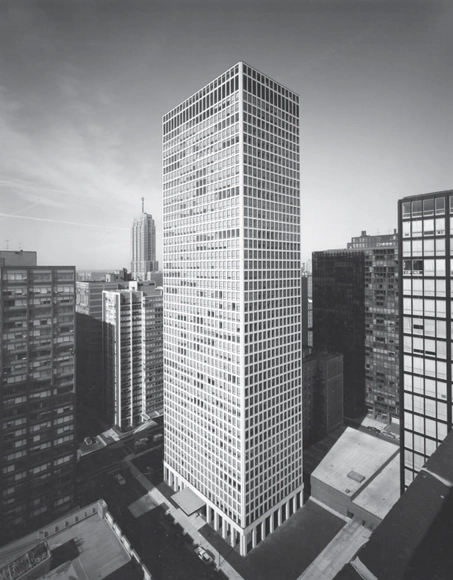
SOM has come up with a structural system for skyscrapers that uses mass timber as the main structural material and minimizes the embodied carbon footprint of the building. The firm believes that their proposal is technically feasible from the standpoint of structural engineering, architecture, interior layouts, and building services and would revolutionize the traditional skyscraper as we know it.
Read on to learn more about The Timber Tower Research Project.
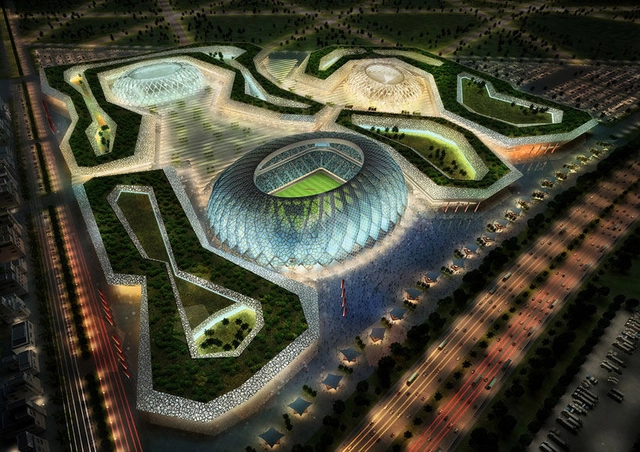
Zaha Hadid Architects have been selected to work alongside AECOM for the design and construction the Al Wakrah Stadium and Precinct of the 2022 FIFA World Cup Qatar. The 45,000-seat stadium will be nestled within a rich cultural fabric of traditional Islamic architecture, historical buildings, distinctive mosques and archeological sites that belongs to one of the oldest inhabited areas of Qatar, just south of Doha. As noted by the Qatar 2022 Supreme Committee, embracing the identify of this cultural heritage will be a crucial part to the success of the stadium.
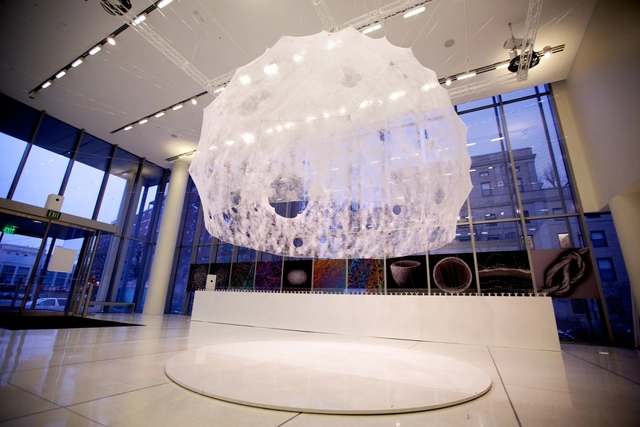
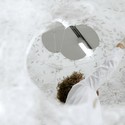
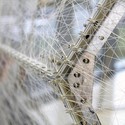
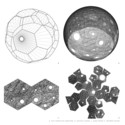
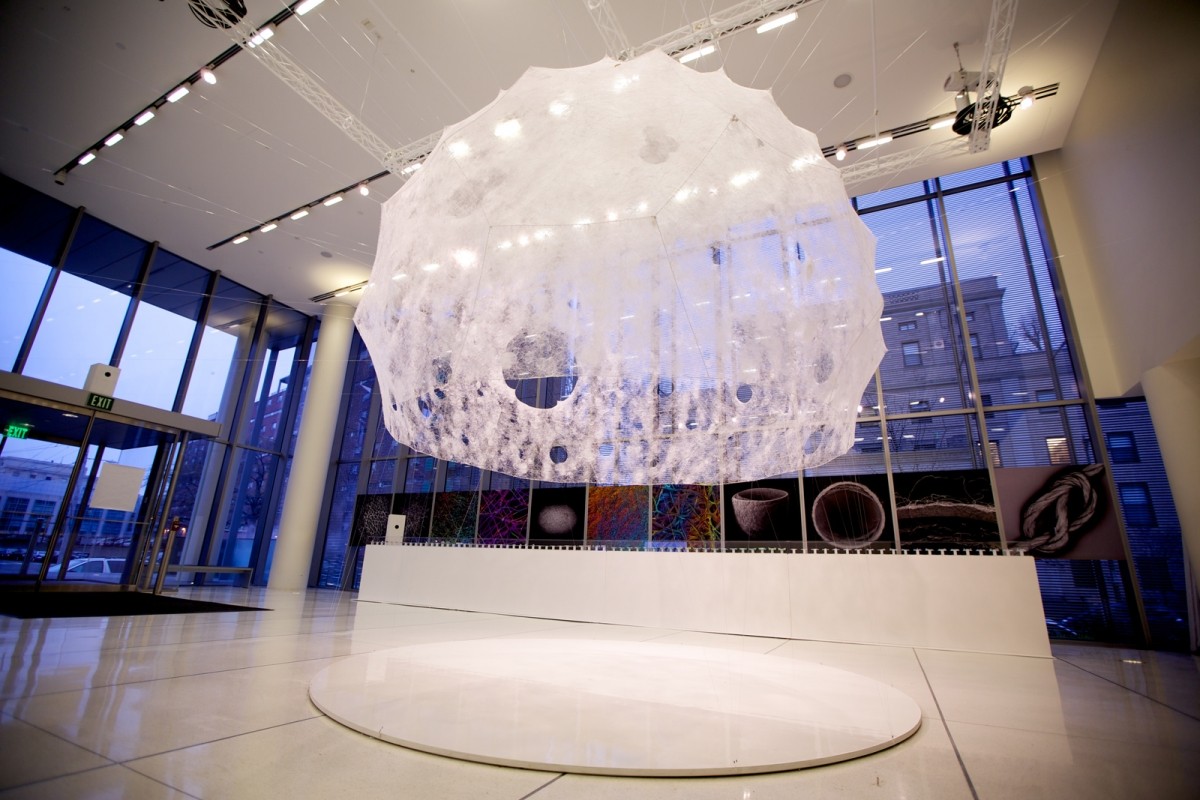
"Our research integrates computational form-finding strategies with biologically inspired fabrication", claims the 'about' page of MIT Media Lab's Mediated Matter Group. Though this may sound like run-of-the-mill architectural boasting, you are unlikely to find any more exemplary combination of scientific research, digital design and biomimetic construction than their recently completed Silk Pavilion.
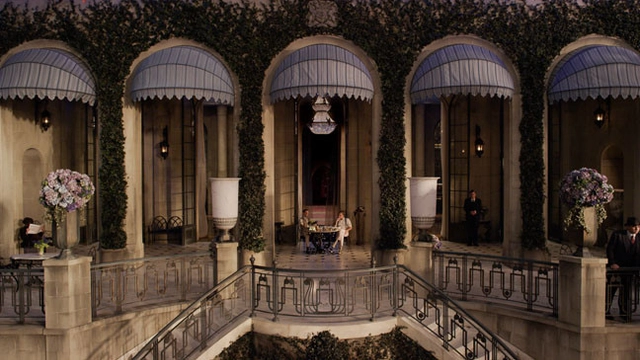
The work of a Production Designer has many parallels with that of an Architect. Both are tasked with bringing to life a conceptual environment, keeping true to that concept through budgets, time pressures, logistics and regulations. Both share a similar creative process, developing the ideas and then collaborating and coordinating with a team of professionals to give those ideas physical form. However, Production Designers are concerned with creating environments to be captured on film only for a matter of moments. Not something a standard Client is likely to request from an Architect.
While the freedom of not having to fully resolve building details – just making it look that way (not to mention the added bonus of avoiding the inevitable callbacks for defects), may seem appealing, consider having to dismantle everything you have created at the end of the process. Somewhat of an anticlimax you would think.
Not so, says Catherine Martin, veteran Production Designer, two time Academy Award winning Art Director, and the creative force behind the sets and costumes of Baz Lurhmann’s films.

Coming at a crucial time in which Los Angeles is at risk of “losing its reputation as a center for innovative architecture,” museum director Michael Govan and Swiss architect Peter Zumthor have unveiled preliminary plans for what they hope will be the new home of the Los Angeles County Museum of Art (LACMA). If approved, this $650 million proposal - nearly five years in the making - would replace the dated William Pereira-designed campus and its 1986 Hardy Holzman Pfeiffer Associates-designed addition with an organically-shaped, dark-grey concrete and glass Zumthor original.
More information after the break, including Peter Zumthor’s project description...
Light matters, a monthly column on light and space, is written by Thomas Schielke. Based in Germany, he is fascinated by architectural lighting, has published numerous articles and co-authored the book „Light Perspectives“.
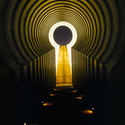
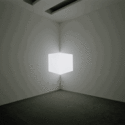
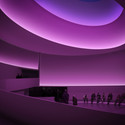
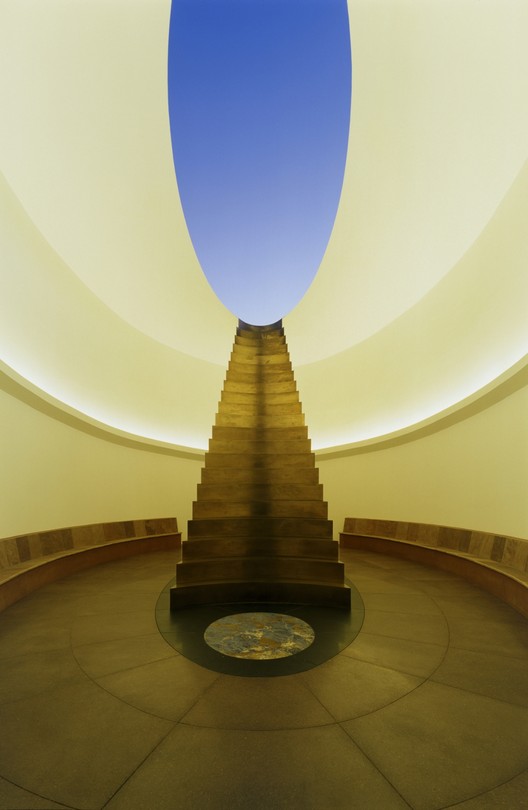
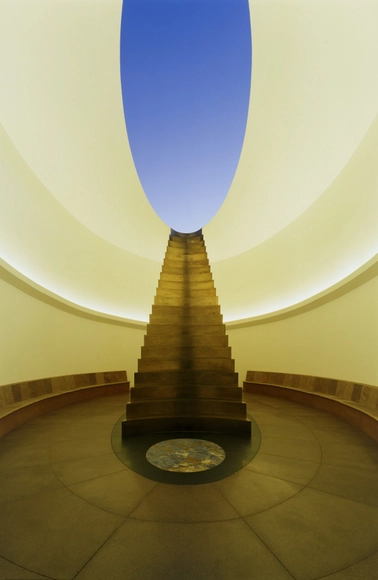
From early nocturnal studies in a lonely hotel room to transforming a volcano in the world’s biggest landscape art project to, most recently, lighting up the Guggenheim in New York, the American artist James Turrell is driven by his fascination with light. He explores perception for visual experiences where light is not a tool to enable vision but rather something to look at itself.
More Light Matters, after the break…