B.S. in Architecture and Master of Architecture from Ohio State Knowlton School. Master of Science in Real Estate Development at Columbia University. Senior Contributor at ArchDaily. New York, NY. Interested in strategic development of cities at the intangible scale.
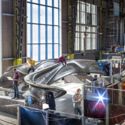
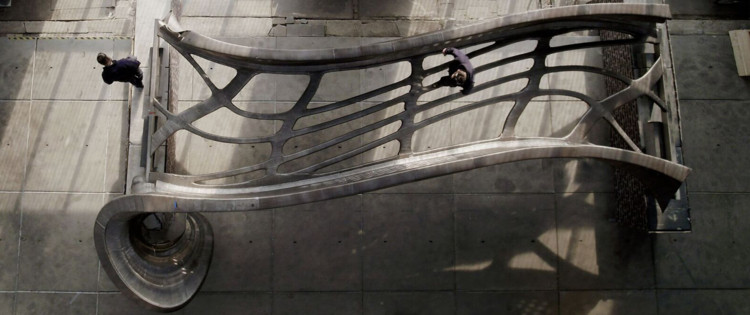
Late last year, we reported on the progress of world’s first 3D printed steel bridge designed by Netherlands-based MX3D. With the design now finalized, the start-up company has announced that the span of the bridge is now complete.
The final round of structural tests is expected to take place this summer, just three years after the project was first announced. After the structural integrity has been tested, the final design will be modified and the completion of the bridge will follow only a few months after. MX3D hopes to showcase the potential of their multi-axis 3D printer during the Dutch Design Week, and the first of its kind bridge is planned to be installed into its final location in a canal in Amsterdam sometime next year.
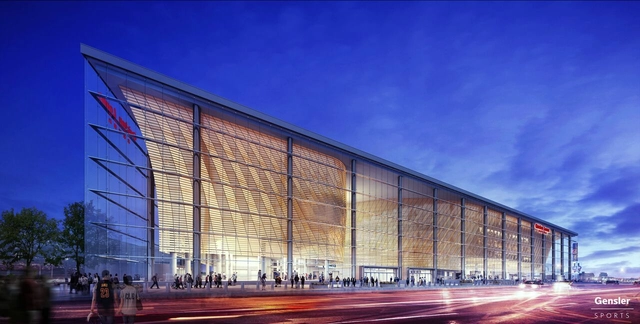
The rust-belt city of Cleveland, Ohio is home to a number of famous architectural icons including Farshid Moussavi'sMuseum of Contemporary Art, Rafael Vinoly’s Cleveland Museum of Art, and Frank Gehry’s Peter B. Lewis Building at Case Western Reserve. Cleveland is also the site of the oldest publicly-owned NBA arena in the country that has yet to receive a major renovation. However, Quicken Loans Arena, home court to LeBron James and the Cavaliers, will be undergoing a large transformation to be spearheaded by Gensler.
This new design, which will greatly improve the visitor experience and serve as a catalyst of the growth in Cleveland, will have all Cavalier fans excited to “Defend The Land” once the renovations are complete in 2019.
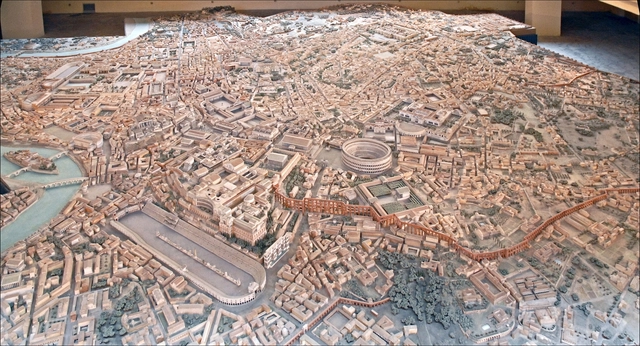
The city of Rome attracts millions of visitors each year to explore its ancient ruins and to learn about how the culture and architecture has transformed over thousands of years. Now, after many years of tedious construction, visitors will be able to see the city as it has never been seen before, through a 1:250 model of imperial Rome, known as the Plastico di Roma Imperiale. The plaster model, which was commissioned by Mussolini in 1933 and completed in 1971, depicts Rome as it stood in the 4th century under the reign of Constantine I.
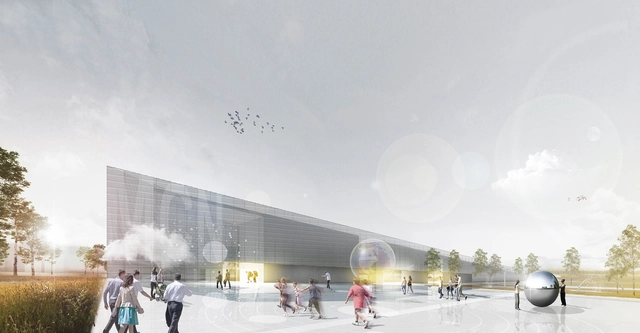
London-based AIM STUDIO’s entry for the Małopolska Science Center in Krakow, Poland, was recently awarded second place. Responding to the competition's call for an iconic design for the center, the team proposed a structure that creates a new landmark which blurs the boundaries between landscape and building, while also taking into consideration the important historical context of the site.
Heinle, Wischer und Partner's design for a triangular shaped building has been awarded first place in a competition to design the Małopolska Science Center in Krakow, Poland. The competition brief, which called for a design which would be both iconic and innovative, was responded with a proposal by the team that creates a new landmark for the Malopolska region of Poland.
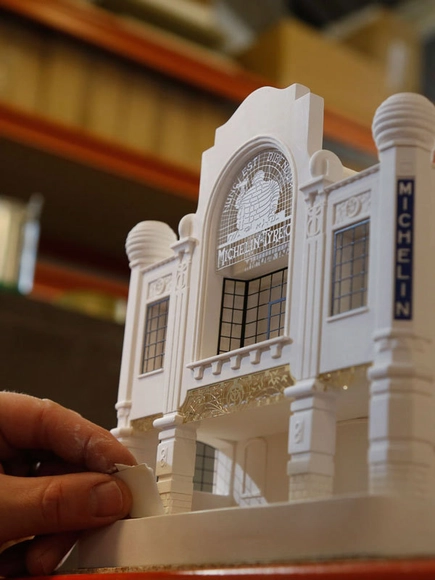
Have you ever wanted a miniature model of the Flatiron Building, Burnham and Root’s famous Monadnock building, or even a 3D map of Amsterdam? Would you want to have your home transformed into a dollhouse-sized replica? UK-based Chisel & Mouse is reconstructing these architectural icons and custom pieces, and bringing them right to your shelf or mantle.
Belgian architect Aude-Line Dulière has been selected as the winner of Harvard University Graduate School of Design’s 2018 Wheelwright Prize. The $100,000 award supports travel-based research and investigative techniques to further explore contemporary design. Dulière’s winning proposal Crafted Images: Material Flows, Techniques, and Uses in Set Design Construction, aims to “examine construction methods and supply systems in the global film industry, engaging the space-making elements of film and set design as well as potential innovations around material use and reuse throughout architecture and construction generally.”
Digital technology has broken into the timber construction scene at ETH Zurich, where a research team is using programmed robots to construct load-bearing timber modules. These modules are being used to stabilize the top two levels of their DFAB HOUSE project, a three-story residential unit located in Dübendorf, which aims to bring a variety of digital construction methods together under one roof.
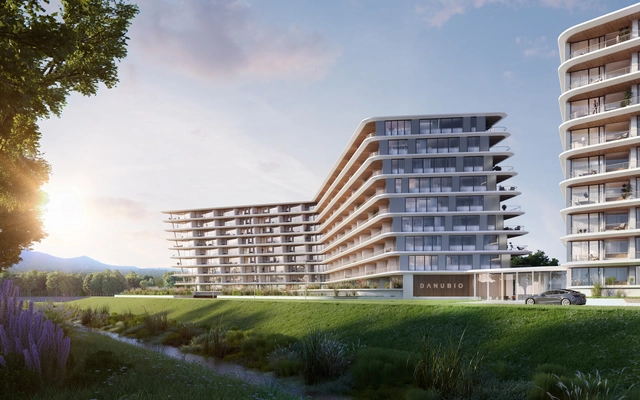
Imagine having input in the design process for your custom apartment built alongside the second largest river in Europe. T2.a Architects has unveiled their design for DANUBIO, a new residential development in Budapest, which aims to do just that.
The driving concept behind the development of DANUBIO is to give the freedom of design back to the residents, inviting them to give input into the configuration of units within the building. Using Grasshopper, a Rhinoceros plug in, a script was developed to allow creative flexibility in the design of each resident’s future home. This algorithm is altered every time a new resident enters the community by allowing them to define the typology, orientation, and location of their future home during the design process.
Last week, the City of Arlington, Texas announced plans to collaborate with Populous in transforming the city’s convention center into North America’s first Esports Stadium. This 100,000-square-foot venue will be designed to draw in both competitive players and fans from around the world, and create the most immersive experience in the live esports market.
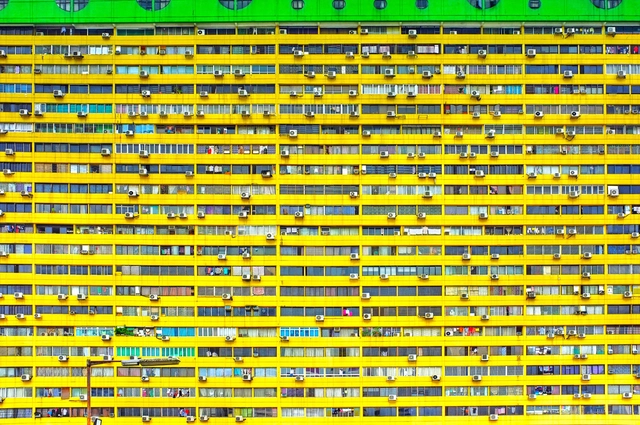
What if your apartment was more than just a place to live? What if it was a catalyst for social interactions? Or what if it removed the everyday tedious tasks of cleaning, paying bills, and buying furnishings? Co-living, a modern form of housing where residents share living spaces, is aiming to do just that.
Co-living is growing in popularity in major cities such as London and New York, where increasing housing prices are forcing residents to look at new and adaptive ways to rent in the city. When we discussed the ambitions and inspirations behind the co-living movement in 2016, it was still a concept that was in its relatively experimental stages. Today, co-living is more focused in its mission, and has found success by pushing people together through a collection of common themes: a yearning for social connection, participation in an increasingly shared economy, and the affordability of a convenient housing solution.
New York-based Stephen B Jacobs Group has almost completed construction on a pair of towers at 29-26 Northern Boulevard in Long Island City. Dubbed the QE7 for its adjacency to the Q, E, and 7 trains (not to mention its cruise ship-like amenities), the pair of towers will contain 467 units, including 13 floors dedicated to the largest co-living development in North America. What makes this building so unique, however, is how the architects and engineers devised a solution to overcome noise generated by the three neighboring subway lines.
Modern cities, especially New York, are always looking for ways to increase density, which often means building in locations that were once overlooked due to their particular site conditions. We spoke with SBJGroup principal Isaac-Daniel Astrachan to find out how his firm managed to reduce noise levels on this site.
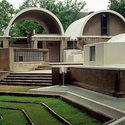
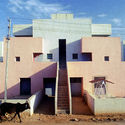
Earlier today, B.V. Doshi was named the winner of the 2018 Pritzker Prize, the profession’s highest accolade. For the past 70 years, Doshi has shaped the discourse of architecture and urban design, with a particularly strong influence in his native India, through projects including private residences, schools, banks, theaters, and low-income housing developments. Here are seven examples of this work that exemplifies Doshi’s respect for eastern culture and his desire to contribute to his country through authentic designs that enhance people's quality of life.
The argument, made by architectural historian Charles Jencks in the introduction for the recently released book Postmodern Design Complete, that Postmodern styles never truly left the architectural profession is stronger than ever. The movement from the late 70s and 80s which began as a reaction against the utopian canon of modernism has recently been re-entering the architecture scene and defining our present moment of architectural culture.
This brings up an important question: What is the current movement of architecture? And what came directly after postmodernism? If anything, it was an immediate cry of “No more Po-Mo,” followed recently by a wave of “save Po-Mo” perhaps best demonstrated by the rallying to save Philip Johnson’s AT&T Tower from a Snøhetta makeover. Even Norman Foster claimed that although he was never a fan of the postmodern movement, he understood its importance in architectural history. Postmodernism is making its recursive return with Stirling-esque rule-breaking jokes and pictorial appearances.
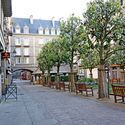
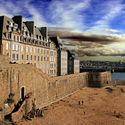
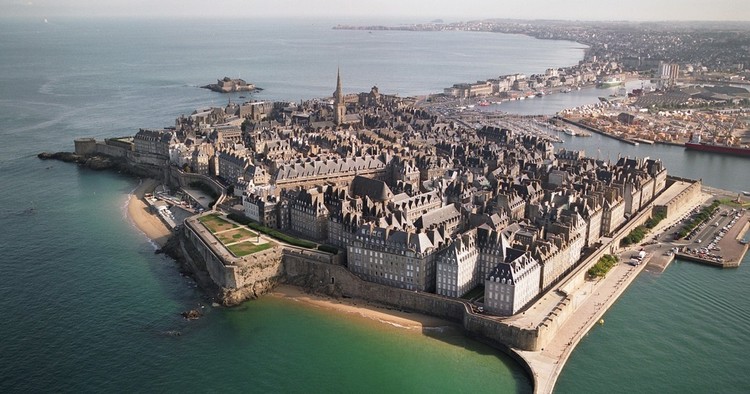
The protective fortress, winding cobblestone streets, and medieval urban layout are all characteristics of many coastal European towns. But when exploring the French town of Saint-Malo, it is difficult to believe that this is hardly the original city. What separates Saint-Malo from many other European towns located by the sea—aside from its striking location jutting out from the coastline—is the complex history of how it was heavily destroyed in World War II, but rebuilt to its original aesthetic.
The office of Santiago Calatrava, known for their incredible feats of architecture and engineering, has come under scrutiny for the failures of three cable connectors on their Margaret McDermott Bridge in Dallas, Texas, which has been delayed in opening due to the failures that occurred in Spring of 2016. However, while the office has taken heat for the malfunction, as the Dallas Observer reported, a newly released set of documents show that Calatrava’s team tried to insist on testing the strength of the cables, even going so far as offering to loan money for these tests, but these offers were declined by the city.
A new National Geographic documentary is set to reveal a newly discovered Mayan "Megalopolis" in what is being called a “major breakthrough” in Mayan history. Over 60,000 homes, infrastructure systems, and man-made features that were once hidden underneath the dense jungles of Guatemala are now being revealed to the world, painting a picture of ancient cities that were both much larger and much denser than previously thought.














.jpg?1521561138&format=webp&width=640&height=580)

.jpg?1520365081&format=webp&width=640&height=580)

.jpg?1520367849 "CEPT University. Image © Laurian Ghinitoiu")
.jpg?1520365081)