

Produce personalized presentation boards that distill complex concepts into simple visual representations with a few helpful tools and effects.
Articles
How to Create Architectural Presentation Boards
| Sponsored Content
https://www.archdaily.comhttps://www.archdaily.com/catalog/us/products/37234/how-to-create-architectural-presentation-boards-lumion
21st Century New York: What Would Jane Jacobs Do?
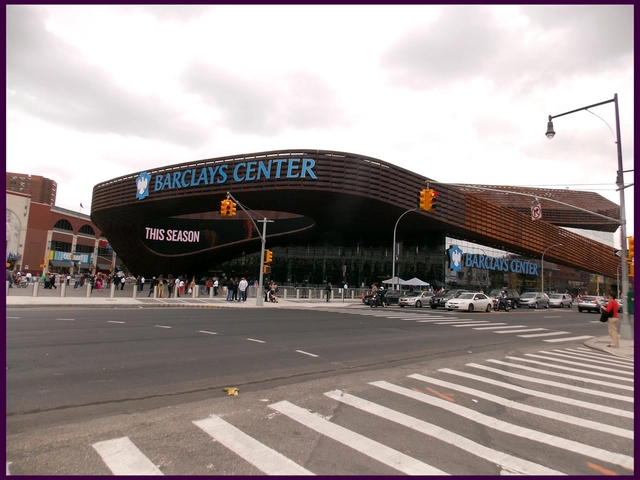
It has been over fifty years since Jane Jacobs' book, The Death and Life of Great American Cities, revolutionized discourse on urban planning, and her words still carry a huge influence today. But in the intervening decades New York City has changed in ways Jacobs could never have imagined when she was writing in the 1960s. In a recent article for City Journal, Judith Miller tries to imagine how Jane Jacobs would have responded to some of New York City's recent projects - taking as examples the imminent domain actions and tax breaks that made Brooklyn's Atlantic Yards (now also known as Pacific Park) possible, the cluster of skyscrapers and public venues planned for Hudson Yards on the west side of Manhattan, and the supertall luxury condo towers that are beginning to cast their long shadows over Central Park. Read Miller's article in full here.
https://www.archdaily.com/779357/21st-century-new-york-what-would-jane-jacobs-doDavid Douglass-Jaimes
150 Weird Words Defined: Your Guide to the Language of Architecture

Back in September, we asked our readers to help us make the definitive list of weird words used by architects, and we got an astonishing response. The resulting article, 150 Weird Words that Only Architects Use was one of our most popular of the year, ranking highly in our most read articles of 2015 and our editors' picks of the best articles of the year. But while it was well received, a number of people commented that something was missing in our list: definitions of all the words, to both aid readers' comprehension of the list and to debate over how different people had interpreted the same word. With that in mind - and considering that it is the time of year for generosity - we've revisited our list to bring you fun definitions for all 150.
If you're looking for an architectural reference dictionary, we assure you that this isn't it. But we hope you'll have fun all the same.
https://www.archdaily.com/779463/150-weird-words-defined-your-guide-to-the-language-of-architectureRory Stott
In Defense of Kohn Pedersen Fox’s Petersen Automotive Museum
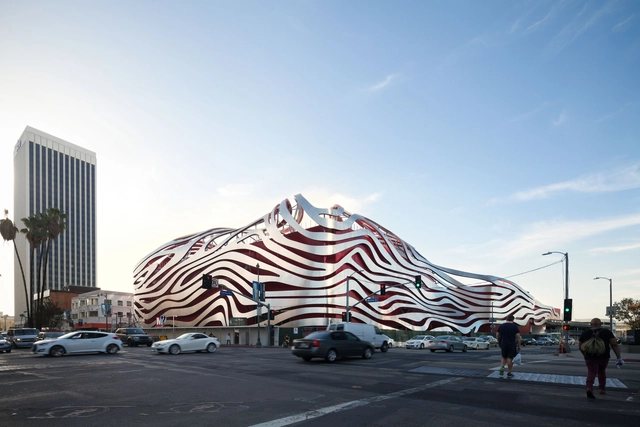
It’s a rare event when a public building is striking enough to grab the attention of most Angelenos. It’s even more curious when that building is almost unanimously panned by the critics. Barring the so-called “iconic” buildings that our city has collected over the last 15 years, Los Angeles seldom received exciting public architecture. Because of this, every new major addition gets placed under a cultural microscope. Now, with Kohn Pedersen Fox’s redesign of the Petersen Automotive Museum nearing completion, architecture critics have sharpened their knives: reviewers have called it “kind of hideous,” "the Edsel of architecture," and “the Guy Fieri of buildings.” But these gripes completely miss the point of what a car museum on the Miracle Mile should be.

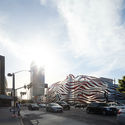

https://www.archdaily.com/779321/in-defense-of-kohn-pedersen-foxs-petersen-automotive-museumThomas Musca
How Morphogenesis Plans to Revitalize Delhi by Rejuvenating its Polluted Waterways

The city of Delhi has a transportation problem. The streets are crowded and dangerous, and with 1,100 new vehicles being added to the roads each day the city is suffering from the consequences. Last year, New Delhi was rated the most polluted city in the world by the World Health Organization, with nearly 3 times the particulate matter of Beijing. Noise levels throughout the city consistently exceed regulations set by the Indian Central Pollution Control Board, and heavy traffic means increased travel times and perilous pedestrian conditions. Even walking the last mile from a bus stop to a destination has become a game of chance.
At the same time, the river upon which the city was founded, the Yamuna (a main tributary of the Ganges), has been polluted to the point where it has become little more than a glorified sewer drain. Illegal settlements without sewage systems pollute the river directly, and even within the regulated systems, 17 sewage drains empty directly into the Yamuna. For a city already struggling with water shortages, polluting a main water source is akin to throwing salt into a wound. However, a proposal by Dehli-based Morphogenesis Architects attempts to tackle all of these issues through the revitalization of the river and its canals, known as nullahs.


https://www.archdaily.com/779124/morphogenesis-urban-plan-revitalizes-delhi-through-nullah-rejuvenationPatrick Lynch
Trailer for Ballard-Inspired "High Rise" Film Shows Life Inside a Brutalist Megastructure
“Ever wanted something more?” asks Robert Laing, the character played by Tom Hiddleston in the new trailer for “High Rise” - an upcoming film based off of the 1975 novel by new wave science fiction author J.G. Ballard. Filmed as a advertisement for the brutalist tower, the complex boasts that with its numerous amenities, “there is almost no reason to leave,” prefiguring the story's unsettling premise.
Befitting the architecturally-inspired tale, the architecture seen in the snapshots shows off a concrete megastructure, with beautiful board-formed concrete walls elegantly highlighting and contrasting with the modernist furniture and shag surfaces of the interiors. Not unlike the real-life brutalist residential megastructure The Barbican, the High Rise features a supermarket, gym, swimming pool, spa, and school. Perhaps that is why Laing describes the film’s setting as “distinctly and definitively British.” Watch the video for a first look at film, to be released in theaters in 2016, and find out more at the tongue-in-cheek website for the building's fictional designer, anthonyroyalarchitecture.co.uk.
https://www.archdaily.com/778927/trailer-for-ballard-inspired-high-rise-film-shows-life-inside-a-brutalist-megastructurePatrick Lynch
Connected Lighting: From Ethernet to Li-Fi Internet
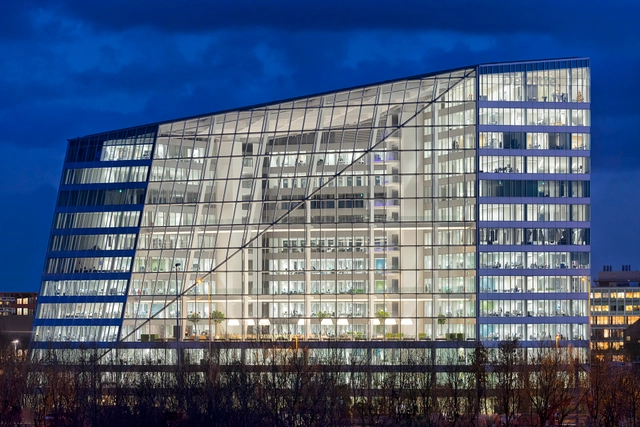
How will our buildings change when your mobile device can receive huge amounts of data flowing from the luminaires above you? Not only has LED brought us a highly efficient light source, but a promising instrument for visible light communication (VLC) as well. Therefore light will not only be a medium to support vision, but it will also be an essential means of data communication. With the low energy consumption of LED one can even set up luminaires without mains cables for the power and just install Ethernet cables. Welcome to the world of digital lighting.
https://www.archdaily.com/779169/connected-lighting-from-ethernet-to-li-fi-internetThomas Schielke
These Drone Photographs Reveal the Hidden Geometries of Late Soviet Modernism
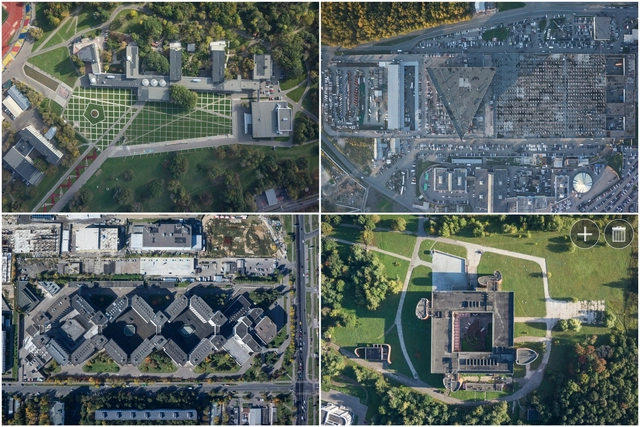
Though the ahistorical dogma of modernism would seem a perfect fit for the Soviet Union’s mandated break with traditions, the architectural history of the USSR was somewhat more complex. Stalin’s neoclassically-inflected socialist realism superseded the constructivist heyday of the early Soviet Union, only to be replaced by a return to modernism under Khrushchev, facilitated by an opening to the West. Architectural photographers Denis Esakov and Dmitry Vasilenko recently used a drone to capture photographs of several landmark structures of the Khrushchev-era return to modernism, focusing on how these aerial views reinforce their rational geometries and regimented forms. Until the recent advent of satellite imagery and commercially available drones, these were views that were only ever seen by the architects, and the officials who reviewed the plans. Even so, the photographer notes that these methodical forms must have been very attractive to the state officers tasked with implementing Khrushchev’s mandated aesthetic.
The photographs, taken in and around Moscow, include works by several prominent Soviet architects. Leonid Pavlov’s long career spanned the full spectrum of state-sponsored architectural styles, starting as a constructivist, and moving into more historicist designs under Stalin, before emerging as one of the Soviet Union’s most prominent post-war modernists. Similarly, Yuri Platonov’s work received extensive state recognition, earning him the title of “People’s architect of the USSR,” as well as awards such the Silver Medal of the Arts Academy of the USSR, the USSR State Prize, and the State Prize of Russia.


https://www.archdaily.com/779042/these-drone-photographs-reveal-the-hidden-geometries-of-late-soviet-modernismDavid Douglass-Jaimes
Abeer Seikaly’s Structural Fabric Shelters Weave Refugees’ Lives Back Together
.jpg?1450044828&format=webp&width=640&height=580)
Whether from political unrest or natural disaster, refugee crises around the world seem to fill the headlines of late. These events inspired interdisciplinary designer Abeer Seikaly’s conceptual emergency shelter, entitled “Weaving A Home,” which received a Lexus Design Award in 2013. The collapsible structural fabric shelter can adapt to various climates, while also providing the comforts of contemporary life such as heat, running water, and electricity.
.jpg?1450044946 "Courtesy of Abeer Seikaly")
.jpg?1450045021 "Courtesy of Abeer Seikaly")
.jpg?1450044961 "Courtesy of Abeer Seikaly")
.jpg?1450044809 "Courtesy of Abeer Seikaly")
.jpg?1450044828)
https://www.archdaily.com/778743/abeer-seikalys-structural-fabric-shelters-weave-refugees-lives-back-togetherDavid Douglass-Jaimes
4 Photographers Speak on the Role of Photoshop in Architecture
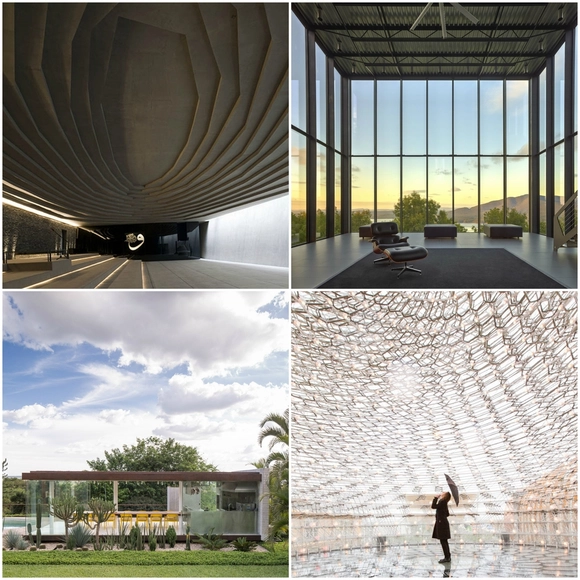
One of the most controversial stories to hit the architectural news last week was the revelation by Blair Kamin of the Chicago Tribune that one of the winners of the AIA Chicago chapter's Design Excellence Awards was given on the basis of an image in which unsightly elements of the building's design had been removed in Photoshop.
The "war on reality" (as one commenter ironically referred to it) is a topic that polarizes even the most level-headed people, with many arguing over the effect that such Photoshop trickery has on our perception of our world. However, with many people unaware of what goes on behind the scenes, we decided to reach out to some photographers for a candid look at exactly what role Photoshop has in the everyday processes of architectural photography, and where they draw the line regarding the ethical documentation of buildings. Read on to find out what they had to say.
https://www.archdaily.com/779061/4-photographers-speak-on-the-role-of-photoshop-in-architectureRory Stott
Architecture’s Most Inspiring Leaders, Projects & People in 2015
.jpg?1450380794&format=webp&width=640&height=580)
5,000 3D cameras to help preserve the architecture of a country torn by war; A team of Latin American architects that moved into Venezuela’s most dangerous neighborhoods in order to design and build with the community; A legendary architect who understood architecture’s relationship to the transformation of technology -- and whose projects have celebrated technology across a trajectory of multiple decades. These are the projects, initiatives and people who have proven to be leaders in 2015.
ArchDaily’s editorial team wanted to recognize these projects for their commitment to promoting practices in architecture that serve many, in all corners of the globe -- from Bolivia to London, from Chicago to Venice, from public spaces in favelas to projected drone-ports in Africa. These are the stories that have inspired us in 2015, and whose influence we hope to continue to see into 2016.
https://www.archdaily.com/778937/architectures-most-inspiring-leaders-projects-and-people-in-2015AD Editorial Team
The 15 Best Articles of 2015

In 2015, we've focused on expanding ArchDaily's editorial content in a number of different directions. We've opened new avenues to bring high-quality architectural content to our readers - whether that's through our many fantastic publishing partnerships with organizations such as The Architectural Review and Metropolis Magazine, by working more closely with our sister sites in Spanish, Portuguese and Chinese to bring articles with a global outlook such as our article celebrating "The Best Student Work Worldwide," or by reaching out to people who have expressed strong opinions on our stories, as was the case when we published Mark Hogan's article "What’s Wrong With Shipping Container Housing? Everything."
We've also experimented with article formats, including a combined infographic and feature article in "7 Architects Designing a Diverse Future in Africa," two complementary articles to mark the first anniversary of MVRDV's Markthal in Rotterdam, and articles that amplify the voices of our readers in our AD Discussion series. And of course, we've also continued to bring our readers more traditional articles and interviews, with responses to trending debates such as Matthew Johnson's article "Architecture Doesn’t Need Rebuilding, It Needs More Thoughtful Critics" and standout examples of favorite series such as our AD Classics section.
With all of these developments, it was a challenge to narrow down a full year's worth of articles to just 15 shining examples. Read on to find out which lucky 15 made the cut.
https://www.archdaily.com/778934/the-best-articles-of-2015Rory Stott
The Landscape Architecture Behind the Lowline
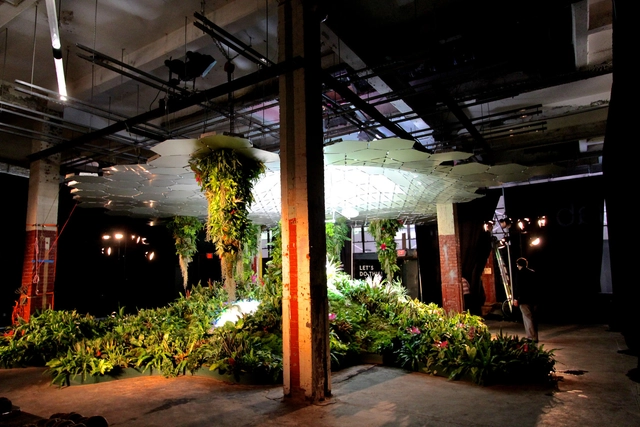
In 2013 New York City ranked 14th among high density cities in the United States in parkland per 1,000 residents with only 4.6 acres/1000 residents. With almost 8.5 million people living in New York and more commuting on a daily basis, NYCers are finding it harder and harder to get outside and experience nature. The harsh winter and constant demand for growth and construction only make this more challenging.
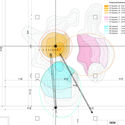
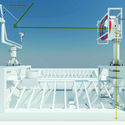
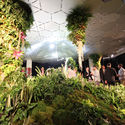
In recent years New York has become famous for an unusual method of bringing green space to the city, the hugely popular “High Line” which reused industrial infrastructure in the creation of a new park. But as unconventional as the High Line is, it’s nothing compared to James Ramsey's of Raad Studio and Dan Barasch’s state-of-the-art proposed counterpart, the subterranean “Lowline." Working alongside others including Signe Nielsen, principal at Matthew Nielsen Landscape Architects, and John Mini, the pair recently opened the Lowline Lab, an environment similar to that of the actual Lowline site that gives the team a space to put their theories and ideas to the test, gather results and make final decisions. I had a chance to catch up with Ramsey and Nielsen to discuss the landscape of their test space.


https://www.archdaily.com/778856/the-landscape-architecture-behind-the-lowlineLuca Ameri
ArchDaily's Top 20 Most Read Articles of 2015

Over the past 12 months at ArchDaily, we've been working hard to bring our readers more articles that will interest, inspire and aid them, and our most read articles of the year reflect a few trends that have characterized the year. Firstly, they show the success of our attempts to bring our readers’ favorite articles from the past back into the limelight through social media and other means, with 7 of our top 20 articles from the year published earlier than 2015. Secondly - perhaps more obviously - it shows the continuing popularity of lists. And what do we do when 75 percent of our most popular articles of the year are lists and rankings? Why, we make a list of them of course. So put your countdown cap on and keep reading to see our top 20 most read articles of the year - including everything from the world's top 100 universities, to 19 notable former architects, to 22 websites you didn't know would be useful to you.
https://www.archdaily.com/778925/archdailys-top-20-most-read-articles-of-2015AD Editorial Team
What Should Architecture Schools Teach Us? ArchDaily Readers Respond

Architecture is a subject that takes decades to master. Just look at the field’s consensus masters - it is not uncommon for an architect to work through his or her fifties before receiving widespread acclaim. So it should come as no surprise that architecture schools simply don’t have the time to teach students all there is to know about architecture. School is the place where future architects are given a foundation of skills, knowledge and design sensibility that they can carry with them into their careers - but what exactly that foundation should contain is still a hot debate within the field.
In an attempt to come closer to pinpointing what an education should give you, we asked a group of people with a wide range of experience as students, professionals and teachers - our readers - "what do you wish you had learned in architecture school?"
https://www.archdaily.com/778846/what-should-architecture-schools-teach-us-archdaily-readers-respondPatrick Lynch
INTERIORS: Star Wars

Interiors is an online film and architecture publication, published by Mehruss Jon Ahi and Armen Karaoghlanian. Interiors runs an exclusive column for ArchDaily that analyzes and diagrams films in terms of space. Their Official Store will carry exclusive prints from these posts.
Star Wars (1977) is more than a film. It’s a worldwide phenomenon. The Star Wars saga is its own universe, and with such distinct characters and mythology, even talking about Star Wars: Episode IV - A New Hope as a standalone film (which is part of such a larger whole) is a fascinating exercise. It’s quite remarkable that for a film that takes place in space, in worlds outside of ours, it still holds up, architecturally.
https://www.archdaily.com/778763/interiors-star-warsINTERIORS Journal
Need Help With Basic Sketching Techniques? Let These Videos Teach You
We’ve all heard the story of the cocktail napkin sketch that inspired a masterwork. Architecture is all about communicating ideas visually, and there is no better way to quickly express an idea than through sketching. But for many students just starting on the path of architecture, the skills to actually create such sketches don't come naturally, and mentors who will take the time to explain such basics can be hard to find.
Geared towards young and aspiring architecture students, a new youtube channel, Themodmin, provides short, free tutorials on how to get the most out of your sketches in their series Architecture Daily Sketches. Covering topics from lineweight to perspective to adding people to your drawings, the videos follow a simple format that is easy to follow. Watch a few of the videos below and head over to their youtube page here for more tutorials.
https://www.archdaily.com/778594/youtube-videos-provide-tips-and-tricks-for-introductory-architectural-sketchingPatrick Lynch
A Skyscraper, a Stadium, and a Sixties Throwback For London
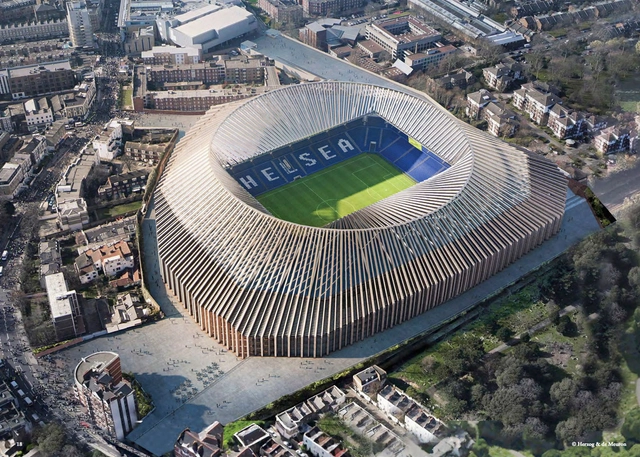
In the past two weeks, it seems all the big stories have been emerging from London: this week, the crowning tower of the City of London’s skyscraper cluster, a restrained design by Eric Parry Architects, was unveiled; last week, it was the Chelsea Stadium plans by Herzog & de Meuron that grabbed attention; and almost as if to demand attention for a brief that wouldn’t otherwise make headlines, at the start of the month Will Alsop’s aLL Design unveiled a characteristically outlandish residential tower in Vauxhall.
The resulting conversations from our readers touched on everything from the coherence of London’s future skyline to Will Alsop’s design lineage. Read on to find out what they had to say in the latest installment of our "ArchDaily Readers Debate" series.
https://www.archdaily.com/778734/a-skyscraper-a-stadium-and-a-sixties-throwback-for-londonRory Stott
Judging Architecture by Altered Photos: Has Photoshop Gone Too Far?
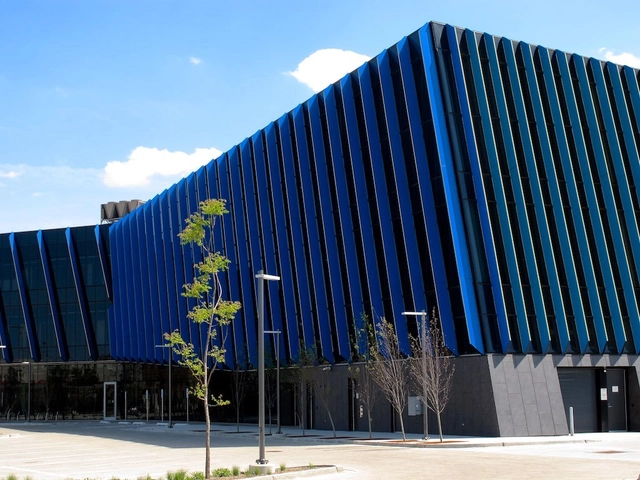
How much editing is acceptable in architectural photographs? And what if those edited photographs are the basis of judging a design competition? Chicago Tribune architecture critic Blair Kamin explored these questions in a recent column after an altered photo led to a Design Excellence Award from the Chicago chapter of the AIA. The building in question, the El Centro campus of Northeastern Illinois University designed by Juan Moreno, was one of five recipients of the chapter's honor award, the highest level of recognition. But one of photos submitted to the award jury had been digitally altered by the photographer to remove a prominent row of large air handling units on the roof that marred one of the best views of the building.
https://www.archdaily.com/778583/judging-architecture-by-altered-photos-has-photoshop-gone-too-farDavid Douglass-Jaimes
The Architecture Software Revolution: From One Size Fits All to DIY
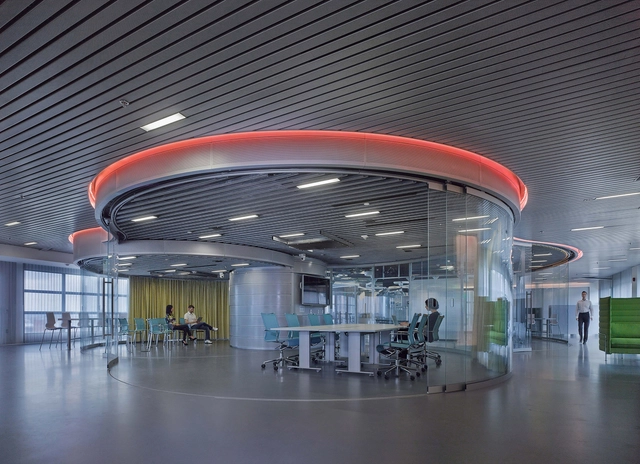
We’ve always been a profession of hackers. Every building is a one-off made up of countless elegant hacks, each bringing disparate materials and systems together into a cohesive whole. But when it comes to the software that designers have come to rely on, most of us have been content with enthusiastic consumerism, eagerly awaiting the next releases from software developers like Autodesk, McNeel (Rhino) and Bentley (MicroStation).
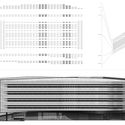
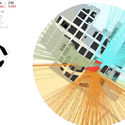
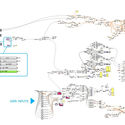
It’s been 5 years since we officially launched our research program at the Yazdani Studio of Cannon Design, and during that period we’ve come to understand the evolution of our process reflects the larger, changing relationship architects have with their means of production. Specifically, we've noticed that in late 2007 something changed. McNeel introduced a visual programming plugin called Grasshopper, and more and more architects began to hack their tools as well as their buildings.

https://www.archdaily.com/778619/the-architecture-software-revolution-from-one-size-fits-all-to-diyYan Krymsky
Gallery: Philharmonie de Paris Photographed by Danica O. Kus
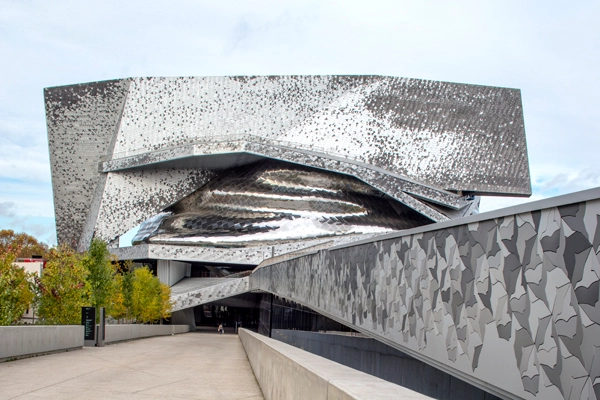
Opened in January 2015, the Philharmonie de Paris was designed by Jean Nouvel, though he later distanced himself from the project. The concert hall, a 2400 seat venue, seeks to "invent a model all its own," according to the Philharmonie de Paris website. It breaks from the pack of concert halls by mathematically creating a more intimate space -- "the distance between conductor and the farthest spectator is only 32 metres (compared to 48 metres at the Salle Pleyel for a smaller audience)." The architect worked with various acoustic experts to "develop a bold system of cantilevered balconies and floating clouds, combining envelopment, intimacy and spaciousness." Here we see the project as photographed by Danica O. Kus. Read on for the full set.
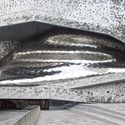
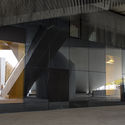
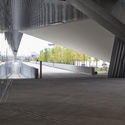
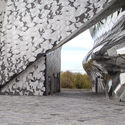

https://www.archdaily.com/778425/gallery-philharmonie-de-paris-photographed-by-danica-o-kusLuca Ameri
"Link" by Gensler and FilzFelt Brings Color and Texture to Screens and Wallcoverings

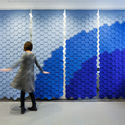
Developed by FilzFelt and Gensler’s LA office, “Link” modular felt panels can be used for a variety of applications, from room partitioning, to shading, to acoustical dampening, to adding textural interest to a wall surface. The panels were designed to tackle a particular design problem at Gensler’s LA office, where red glazed panels acting as an architectural statement to be viewed from the street had been casting a harsh light into the interior conference room space behind. Searching for a flexible, free-form solution, and a soft material to contrast with the hard glass, Gensler designers discovered wool felt. Enter “Link.”





https://www.archdaily.com/778523/link-by-gensler-and-filzfelt-brings-color-and-texture-to-screens-and-wallcoveringsPatrick Lynch
Moscow's Urban Movement: Is There Hope for a Better Future?
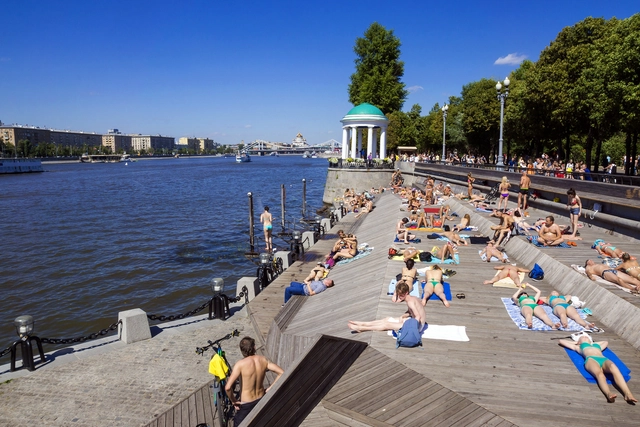
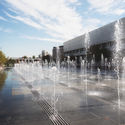
In 2010, following the election of a new mayor, the Moscow city government began to work towards a comfortable urban environment in which citizens would feel like residents rather than mere users of the city. The emphasis was on creating public spaces in which Muscovites could fulfill their potential and feel that the city was their home.
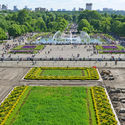
Gorky Park was at the forefront of the changes. During the 1990s, the "Central Park of Culture and Leisure" accumulated a collection of fairground rides and became a sort of amusement park popular principally among visitors from other cities; Muscovites hardly went there. Three years ago, the city government made it their mission to overturn the park's image and bring Moscow's residents back. A full-scale reconstruction and restoration began in spring 2011.
Today, Gorky Park is a new level of urban space – one centered around people and boasting a scrupulously conceived infrastructure. All of the changes were aimed at creating a comfortable environment for life - for strolling and sport, work and study, culture and leisure. Moreover, in a short time the park has developed an effective economic model whereby it receives one half of its budget from the city and generates the other half itself.


https://www.archdaily.com/778531/moscows-urban-movement-is-there-hope-for-a-better-futureMari Chichagova
How Energy Modeling Will Impact the Design Process

It’s a topic that cannot be avoided for any longer. The ongoing Paris Climate Conference has seen an unprecedented amount of participation - even before the summit began, over 150 countries submitted national plans of action to the United Nations - and there seems to now be a global consensus that we must cut back on our energy use and reliance on carbon polluting fossil fuels, or risk causing irreversible damage to our planet. By the end of the conference, an agreement will likely outline energy-reducing strategies by which all countries must abide. For architects, this means fundamentally changing the ways we design buildings and determine their success. Traditional building and construction methods consume large quantities of natural resources and account for a significant portion of the greenhouse gas emissions that affect climate change. In the United States, the building sector accounts for 41 percent of the country’s energy usage, according to the U.S. Green Building Council.
But this information is hardly new, and thankfully, our profession has been preparing for this change for some time. In 2006, the American Institute of Architects became the first adopters of the 2030 challenge, a call for all new buildings, developments, and major renovations to reach carbon-neutrality by 2030, with milestone goals of reduced dependence at 10-year intervals along the way. Each year, the AIA releases a progress report outlining the current standing of energy consumptions and take-aways from their findings. This year’s key conclusion? We must start integrating energy modeling techniques earlier into the design process.
https://www.archdaily.com/778309/how-energy-modeling-will-impact-the-design-processPatrick Lynch
When Art, Architecture and Commerce Collided: The BEST Products Showrooms by SITE
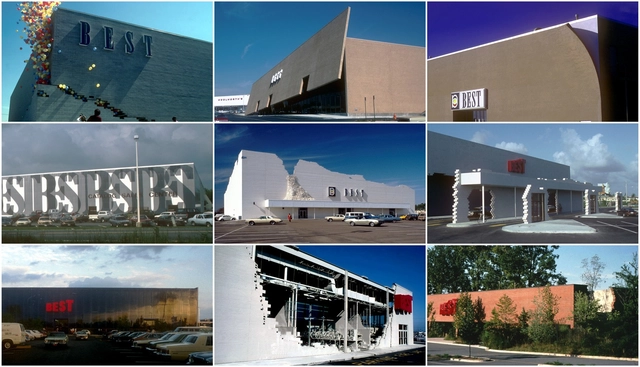
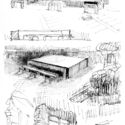
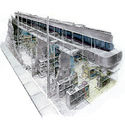
According to one survey, images of the BEST Products Showroom in Houston, Texas, designed by SITE (Sculpture in the Environment), appeared in more books on 20th-century architecture than any other building. The intentionally crumbling brick at that Houston store, known as “Indeterminate Façade,” and the eight other showrooms SITE designed, were simultaneously iconic and controversial, and most importantly for BEST, they brought in customers. Although SITE-founder James Wines never considered himself a Postmodernist architect, his designs for BEST, completed between 1972 and 1984, steeped in whimsical social commentary, came to symbolize the essence of Postmodernism. Today, all but one of the BEST showrooms have been demolished or altered beyond recognition, but they set a lasting precedent, and continue to influence the use of architecture in corporate branding today.


https://www.archdaily.com/778003/the-intersection-of-art-and-architecture-the-best-products-showrooms-by-site-sculpture-in-the-environmentDavid Douglass-Jaimes